American investors and their families are moving to Latin America faster than to any other region on earth right now. The pull is not sunshine, it is a combination of time zones, proximity, tax structure, upside, and quality of life that no other bloc packages together in the same way. This piece walks through the five structural reasons behind the shift and the exact eight programs that our US clients are using in 2026, with the plain trade-offs on each.
Or watch the deep dive here:
The Five Reasons Americans Are Picking Latin America
1. Time Zones
The single most underrated reason, and the one that decides whether a Plan B is livable or a vacation. Most of the region, from Mexico all the way down to Tierra del Fuego, aligns with US Eastern or Central time, with no daylight-saving shuffle to track. Your 9 AM stays your 9 AM.
Move to Lisbon, Bangkok, or Istanbul and you live half a day out of sync with your team, your clients, and your family. Move to Panama, Colombia, Mexico, or São Paulo and your workday barely changes. For anyone managing a business or a portfolio of investments from abroad, this single fact does more to decide whether the plan works than any tax rate does.
2. Proximity
From most US cities, Latin America is a few hours by air. Mexico is reachable by car from a lot of US states. Mexico City is three hours from Houston. Medellín is three hours from Miami. A base you can reach for a long weekend is a base you will use. Proximity turns optionality into something you live with day-to-day rather than a hedge you visit twice a year.
3. Tax Structure, Territorial Versus Worldwide
The received wisdom is that Latin America is "cheap." A modest life, yes, but a premium one costs close to US prices. The penthouse in Buenos Aires's Puerto Madero or El Poblado in Medellín, private international schools, top-tier private medicine, the arbitrage most explanations promise mostly evaporates at the high end.
So set cost of living aside. For a client with assets, the real question is how income gets taxed, and the eight jurisdictions split into two camps:
- Territorial tax systems: Panama, Costa Rica, Uruguay, and the Dominican Republic. Foreign-source income is not taxed at home. This is the cleanest overlay with a US tax position.
- Worldwide tax systems: Mexico, Brazil, Colombia, and Argentina. Once you cross local tax-residency thresholds (typically 183 days in a calendar year or a rolling 365-day period), your global income is taxable locally, softened in practice by the US treaty and foreign tax credits, but real.
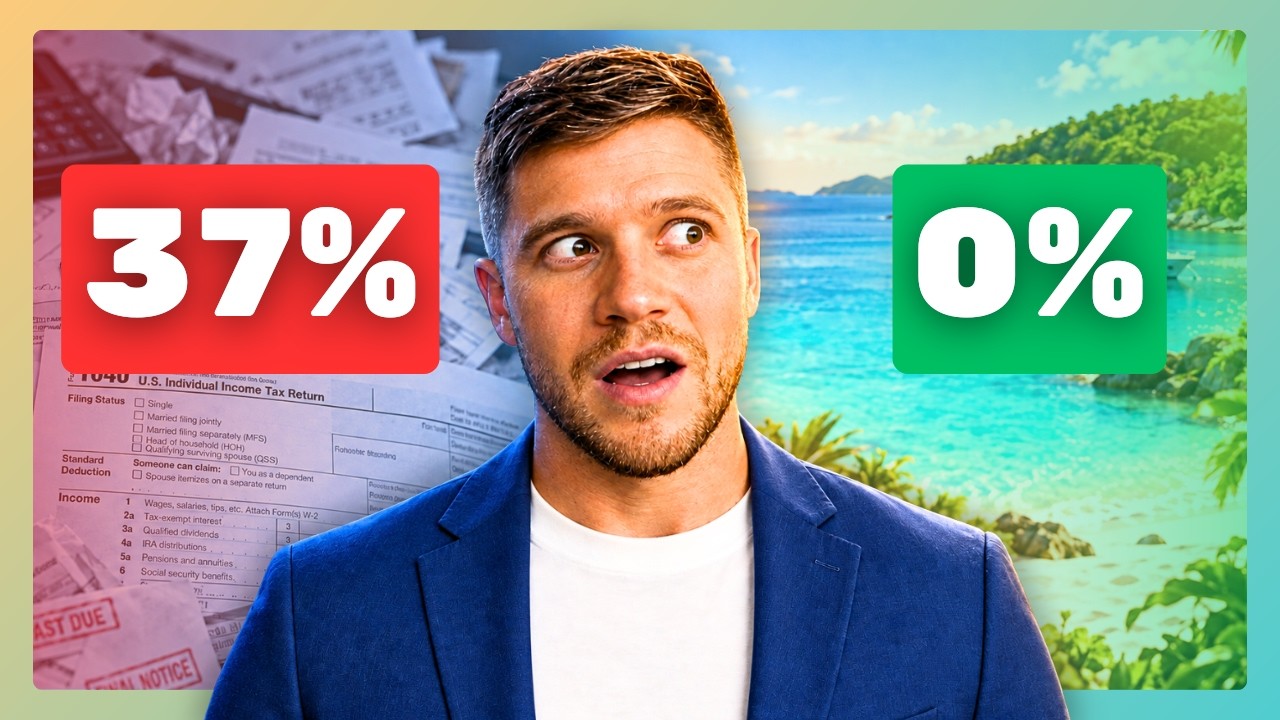
The one obligation none of these programs removes is your US filing. The United States taxes its citizens on worldwide income regardless of where they live, where they bank, where they earn, or how many passports they own. A second passport delivers mobility and optionality, it does not lower what a US citizen owes the IRS. Read every program below through that lens.
4. Emerging-Market Upside, with Real Volatility
Several of these markets can appreciate in ways a mature US market rarely does anymore. Rental yields in the right neighborhoods can beat US numbers, Colombian property routinely yields near 10% in the well-chosen submarket, and dollars go further in currencies that have already taken a haircut.
The other side of that trade is that emerging markets swing hard. Argentina has some of the most beautiful cities on earth and a currency history that has wiped people out more than once, not just locals, but expats too. Manage it by deploying capital you can leave parked, and by refusing to over-concentrate in any one fragile currency. That is the whole point of diversification in the first place.
5. Quality of Life
Lands last on the spreadsheet, first in daily life. Costa Rica's Nicoya Peninsula is one of only five documented Blue Zones on earth, where the local population routinely crosses 100 years old. Across the region you get sun most of the year, food grown down the street, and a slower rhythm than the US, plus a sense of community where people know your name. We do not lead with lifestyle in a jurisdiction recommendation because structure has to make sense first. Once it does, though, the lifestyle piece compounds without fanfare. You do not notice it day-to-day, and one day you notice you would never move back.
The Eight Jurisdictions Our US Clients Are Using in Practice
Mexico, Economic Solvency Visa
The closest to home. Mexico has a single program with two practical tracks under the Economic Solvency Visa. Prove monthly income of about $4,400 or savings of about $74,000 and you get immediate temporary residency. If you are of retirement age, a caveat that lives in practice, not in the written rules, income of $7,400 a month or savings of about $300,000 typically unlocks permanent residency from the start.
Most engagements start on temporary residency, convert to permanent at year four, and open the citizenship petition at year five, one of the quicker naturalization clocks in the hemisphere for clients relocating in earnest. The trade is tax. Cross 183 days and you become a Mexican tax resident on worldwide income at rates climbing to 30-35%. US treaty and FTC mechanics typically prevent double taxation, but Mexico lands on the heavier side of the eight. You choose it for proximity, climate variety within a single country, and a surprisingly strong passport.
Costa Rica, Investor Visa (Inversionista)
Costa Rica's Inversionista Visa has three qualifying capital paths: $150,000 in property (home, land, or business), $200,000 in a Costa Rican business, or $100,000 into an approved reforestation project, the last of which locks capital for 10-15 years tied to timber and carbon returns.
Costa Rica has a territorial tax system. Your foreign income while you live in-country (at least six months a year to trigger residency) is not taxed locally. Residency converts to permanent at year three, and the passport opens at year seven for clients living there. The downside is presence and paperwork, Costa Rica is not a bureaucratic paradise, and you will spend meaningful time on the ground and in queues. What you buy is stability: no standing army since 1948, calm politics by regional standards, a climate you can customize by microregion, and Blue Zone community benefits. The premium is real, Costa Rica is not as affordable as its neighbors.
Panama, Qualified Investor, Friendly Nations, and Rentista
Panama has three programs in the same passport family, sized to different budgets.
The Qualified Investor Visa is the premium route: $300,000 in property, $500,000 in Panamanian-listed securities, or a $750,000 bank deposit. Any of the three grants immediate permanent residency, typically under 90 days end-to-end, in a dollar economy on US Eastern time. One in-country visit every two years maintains it. Panama's territorial tax means your foreign income is not taxed locally.
The trade-off with Panama is the passport, not the residency. Naturalization is discretionary and politically variable, the president signs off on each grant, which makes citizenship a patient move rather than a foregone conclusion.
For smaller budgets, the Friendly Nations Visa starts near $200,000 in property or bank deposit (or by opening a Panamanian company and employing yourself through it), and the Rentista Visa requires $1,000 a month in demonstrable passive income, proof only, not capital deployment. Treat Panama as an elite residency program with citizenship as an upside that may or may not land.
Dominican Republic, Investor Residency
The overlooked speed play. The Dominican Republic's Investor Visa has three equal-priced $200,000 routes, qualifying business, bank deposit, or local property, and grants permanent residency on day one. From there, a two-year clock to citizenship, among the fastest anywhere on earth.
The Dominican Republic has a territorial tax system and lies two hours from Miami. The trade-offs are two: you have to spend about 183 days per year in-country across the two-year window to naturalize (a deliberate move, not passive optionality), and the passport is modest at about 75 visa-free destinations. As a standalone travel document it is light, but paired with a US passport as a fast, low-cost second nationality, it is one of the more efficient plays on the board.
Colombia, Investor Visa (M-6)
One of our most-recommended residency programs, especially where lifestyle counts. Colombia's Investor Visa has one of the lowest financial bars in the region: about $50,000 into a Colombian business or about $165,000 in property (both pegged to Colombia's minimum wage, so the dollar figure moves with the peso). The presence rule is the lightest in the region, enter Colombia once every six months, roughly two days a year, to maintain the visa.
The price of that lightness is patience. The M-visa converts to permanent residency (R-visa) at year five, and the citizenship petition opens at year 10, the longest clock on this list. That timeline collapses to two years if you marry a Colombian citizen or have a Colombian-born child. The tax overlay to know: cross 183 days in any rolling 365-day period and you become a Colombian tax resident on worldwide income. Walk in knowing the Colombian passport is a marathon, not a sprint.
Brazil, VIPER Investor Visa
The strong-passport, short-clock play. Brazil's VIPER Investor Visa grants permanent residency from day one for about $100,000 into a local business or about $140,000 into local property. That threshold is often recovered in savings within a few years of living there.
The naturalization clock is about four years, and the Brazilian passport opens roughly 170 destinations, compare that to the Dominican Republic's 75 and the strength jumps into view. The four-year clock drops to two with documented Portuguese proficiency, and to one year with a Brazilian-born child (the child is Brazilian at birth, and the fast track applies to both parents, not just the primary applicant). For clients privately weighing a renunciation window, few residency-to-citizenship programs pack this much strength on this short a clock.
Trade-offs: worldwide tax past 183 days, roughly 180 days a year of presence to maintain the visa, and a central-bank registration step on the capital transfer.
Uruguay, Rentista (Independent Means)
The Switzerland of South America. Uruguay's Rentista Visa requires demonstrable passive income of about $1,500 a month, proof, not deployed capital, for permanent residency on day one (with an 8-to-12-month approval window on the front end). Citizenship opens in three years for married applicants living there, five for single ones.
Uruguay tops the region for rule of law and political stability. Waves of European immigration have shaped Montevideo into a city that feels closer to southern Europe than its neighbors, cafe culture, a calm civic rhythm, an unhurried pace that surprises first-time visitors. On tax, Uruguay offers a 10-year holiday on foreign income, then a flat 12% on foreign dividends and interest, with foreign capital gains exempt indefinitely. The tax-holiday-triggering investment is higher than it used to be; we walk clients through the current threshold on the first call.
Argentina, Rentista Now, CBI Incoming
The one to watch. Today's most popular route into Argentina is the Rentista Visa at about $1,500 a month in stable passive income (we recommend closer to $2,000 for a safe application). It leads to citizenship in three to four years, the quickest naturalization clock in the hemisphere alongside the Dominican Republic, and to a passport that opens 170+ destinations plus Mercosur settlement rights across South America.
A small quirk on the Argentine naturalization mechanic: you do not file with a government agency and wait in a queue. You petition the federal courts and argue your case before a judge. It sounds intimidating and moves faster than the administrative grind across most of the region.
The second piece is the one to watch this year. President Javier Milei, a self-described libertarian on a mandate to drag the country out of decades of inflation and state control, signed a decree in 2025 creating a citizenship-by-investment program expected to open in 2026 near $500,000 in strategic sectors (no residency requirement) or as a donation. The move you can make now is the Rentista, with the forthcoming CBI as potential upside. The caveat is the macro picture: world-class cities and a currency with a long history of crisis. If Milei's experiment works, Argentina could be the comeback story of the decade. If it stalls, you will be glad you only deployed capital you could afford to risk.
A Quick Framework for Choosing
There is no single "best" country in Latin America. There is a best country for your structure, your goals, and your family. The rough sorter:
- Fastest passport: Argentina, the Dominican Republic
- Foreign income untaxed locally: Panama, Costa Rica, Uruguay, the Dominican Republic
- Proximity plus a surprisingly strong passport: Mexico
- 170-destination passport on a short clock: Brazil
- Lightest presence rule for maintaining the visa: Panama, Colombia
Most engagements land on two or three of these axes counting more than the others. That is where the plain conversation starts.
How to Start
If you are weighing several of these jurisdictions and don't yet know which one fits your situation, the Freedom Consult is the right next step, a 60-minute working session where we model the tax picture with US-licensed counsel and Latin American counsel together, and we point you toward the right program (or, about a third of the time, tell you the fit is not there yet). We do not earn more if you pick one program over another. If you already know your target country and program and just want to start, the fifteen-minute chat is the fastest way through.
Book a call when you are ready.