Freedom FilesFreedom Files
← All destinations
Latin AmericaResidencyCitizenship

Argentina

A two-year residency clock to citizenship, the fastest in the Western Hemisphere, paired with European-feel cities, US-aligned time zones, and a cost of living that has rewarded the patient dollar for two decades.

Population
46 million
Language
Spanish (English in expat hubs)
Currency
Argentine Peso (ARS)
Time zone
ART (UTC−3, no DST)
Capital
Buenos Aires
GDP per capita
~US$14K
  1. Two years of residency, then citizenship

    Argentina has the shortest naturalization clock of any major destination, two years of legal residency, then you can petition for citizenship. The clock starts when your temporary residency is approved. For families building a second-passport plan from a Latin American base, no other country in the hemisphere is faster.


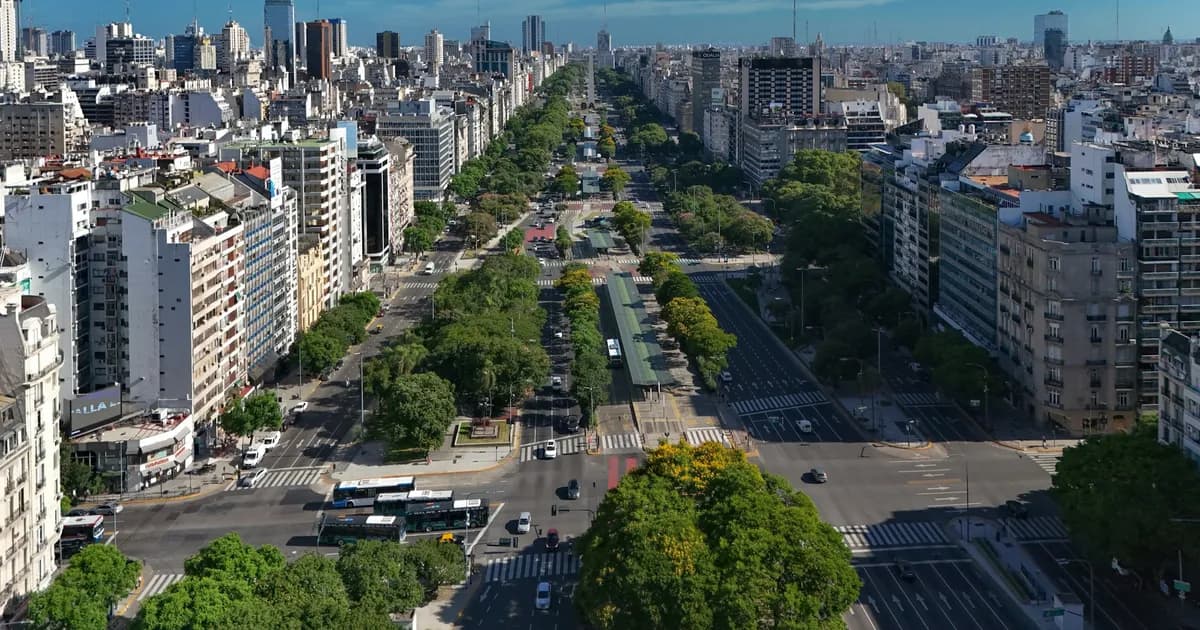
  2. Buenos Aires follows European logic

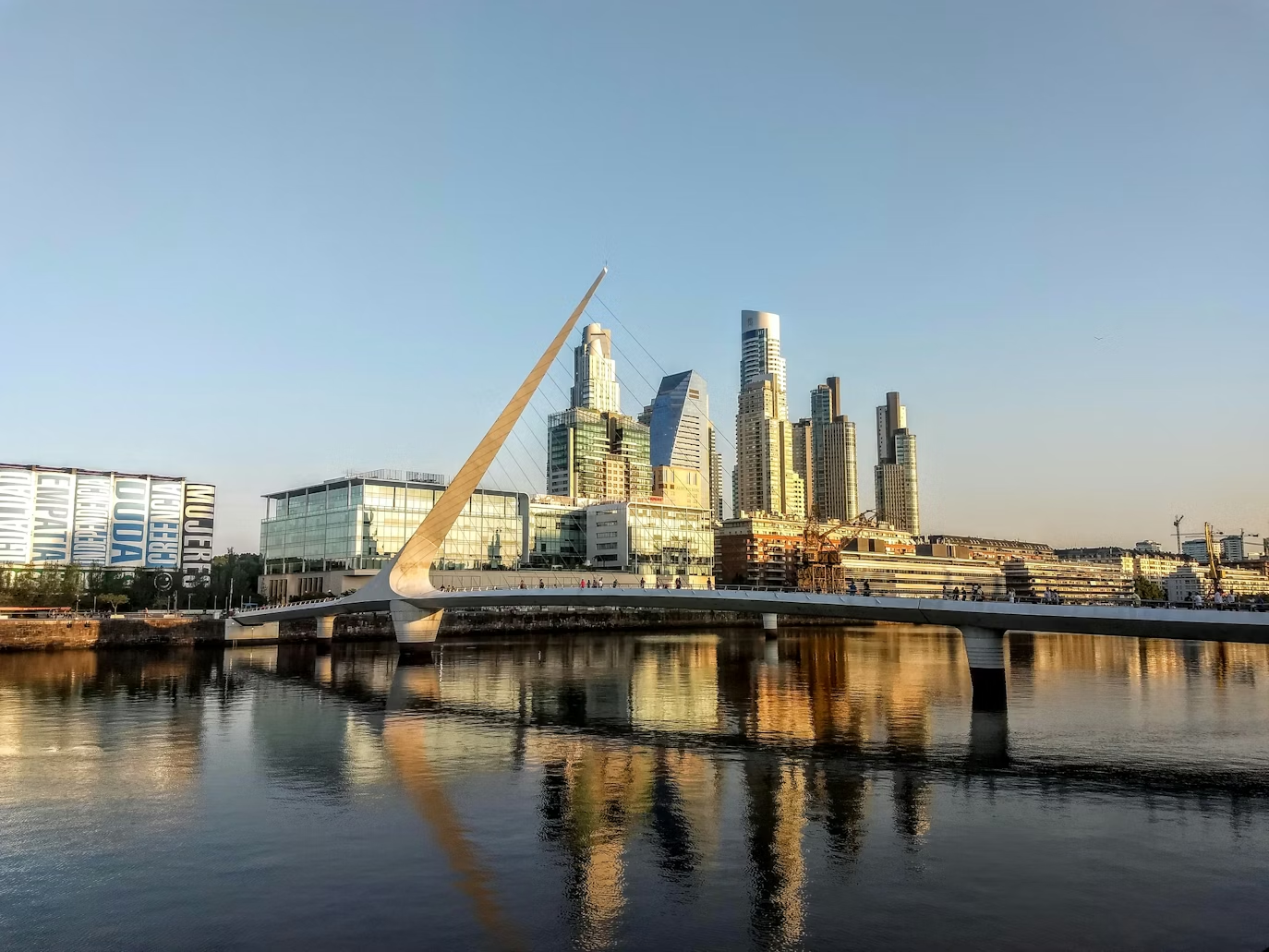
    Wide boulevards, café culture, a theater scene, a literary tradition, and a Mediterranean food rhythm, long lunches, late dinners. Most clients describe the city as Paris on a different continent. The architecture, the parks, the bookstores, and the porteño tempo deliver a European life at a fraction of European cost.

  3. A cost-of-living arbitrage that has lasted for two decades

    Despite, and partly because of, currency volatility, dollars have bought outsize value in Argentina for twenty years without pause. A premium two-bedroom in Recoleta or Palermo costs $1,000 to $1,800 a month. A long steak dinner with wine for two is $30 to $50. The financial logic of remote work paid in USD is hard to beat.

  4. Same time zone as the US East Coast

    Argentina is one hour ahead of New York. Your nine AM is the East Coast's eight AM. Remote work, family calls, and US business operations all stay in sync with no calendar gymnastics.

  5. A robust investor-citizenship route on the legislative horizon

    Argentina is actively drafting a formal Citizenship by Investment framework under recent legislative discussion. The current naturalization route via two years of residency works today; the CBI route may shortcut even that in the near term. We brief active clients within days of any announced terms.

  6. An American community already on the ground

    Buenos Aires, Mendoza, and Bariloche each have growing American expat communities. The schools, the gyms, the visa-savvy attorneys, and the co-working spaces already exist. You arrive into infrastructure, not a frontier.

Programs

Two routes into Argentina

Each route below is a live client engagement we have advised. Figures and timelines reflect the current state of each program; we update them whenever policy moves.

  • Citizenship by Investment

    Citizenship

    Argentina is drafting a formal investor-citizenship framework under recent legislative discussion. The structure, thresholds, and timeline have not yet been published. We are tracking the process closely and will brief qualifying clients within days of any confirmed terms.

    Financial requirement
    Thresholds to be announced
    Timeline
    Forthcoming
  • Rentista Visa

    Residency

    Long-established passive-income residency. Two years of temporary residency, convertible to permanent at year two; citizenship petition can be filed after two years of legal residency. The lowest passive-income threshold in the region and the shortest path to a Latin American passport.

    Financial requirement
    $1,500/mo passive income
    Timeline
    4 to 6 months
  • Argentina editorial photograph

Several routes, several ideal profiles. Which is right for you? The Freedom Consult is where we figure out your ideal path forward, and whether Argentina is even the right country.

Get my Blueprint

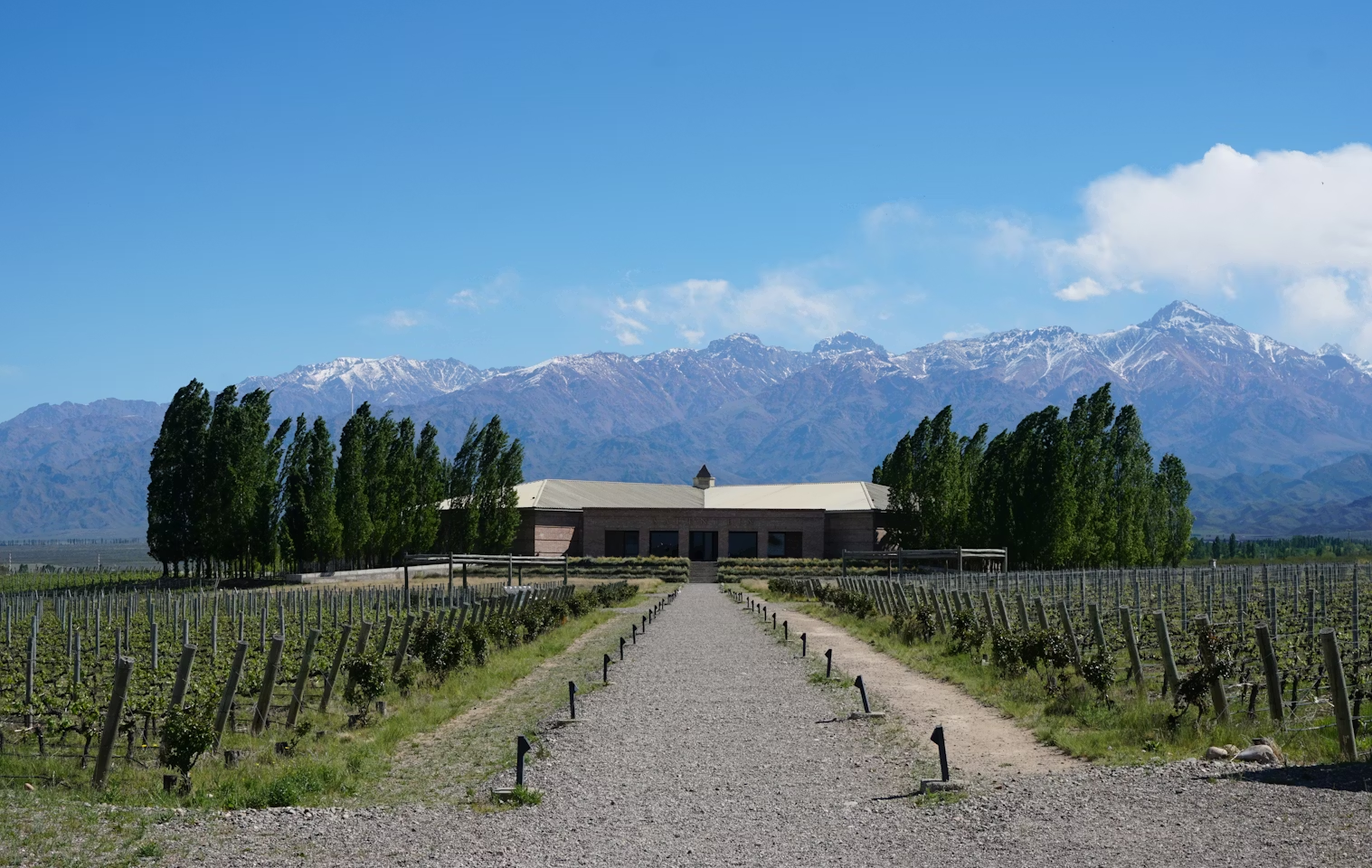
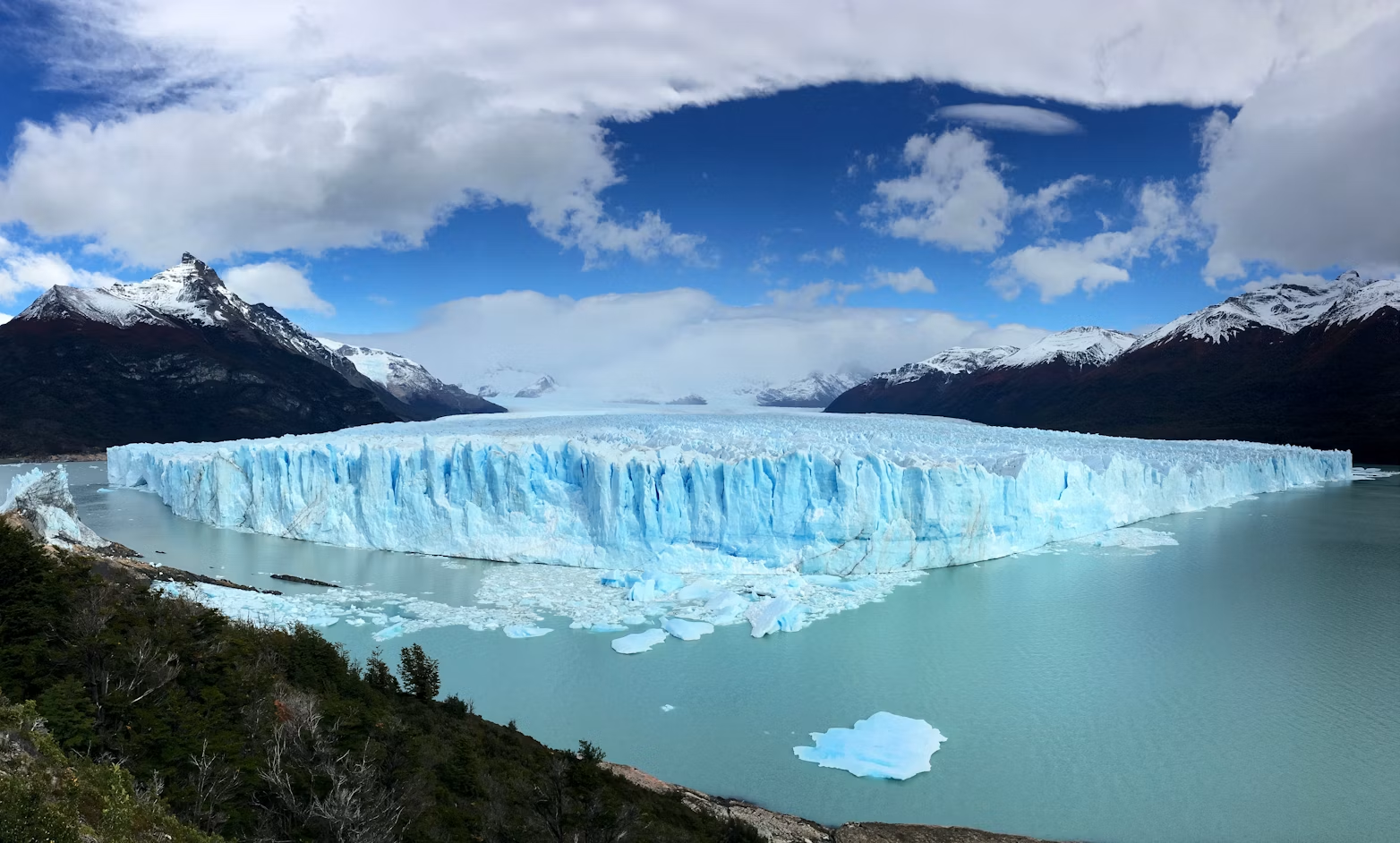
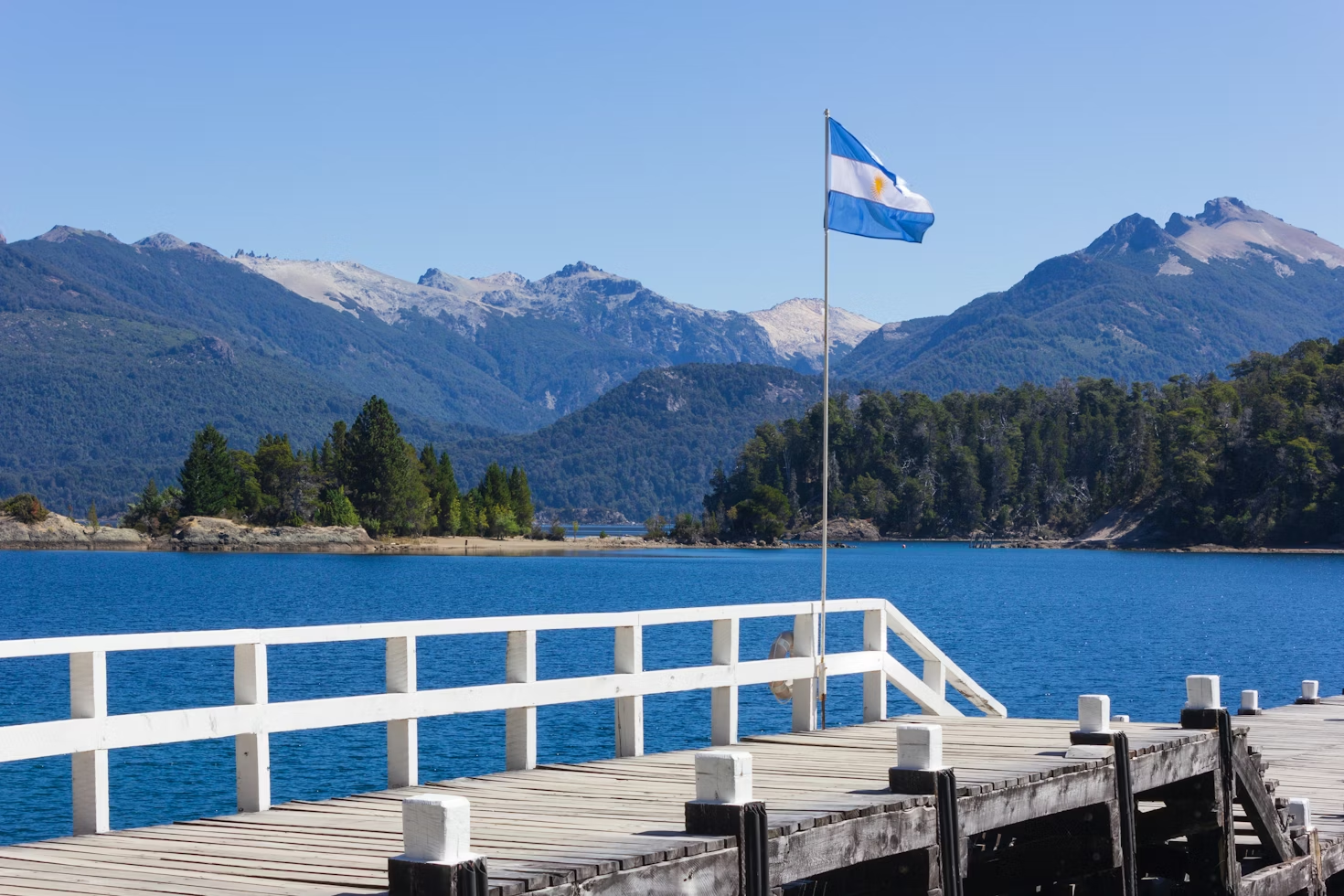
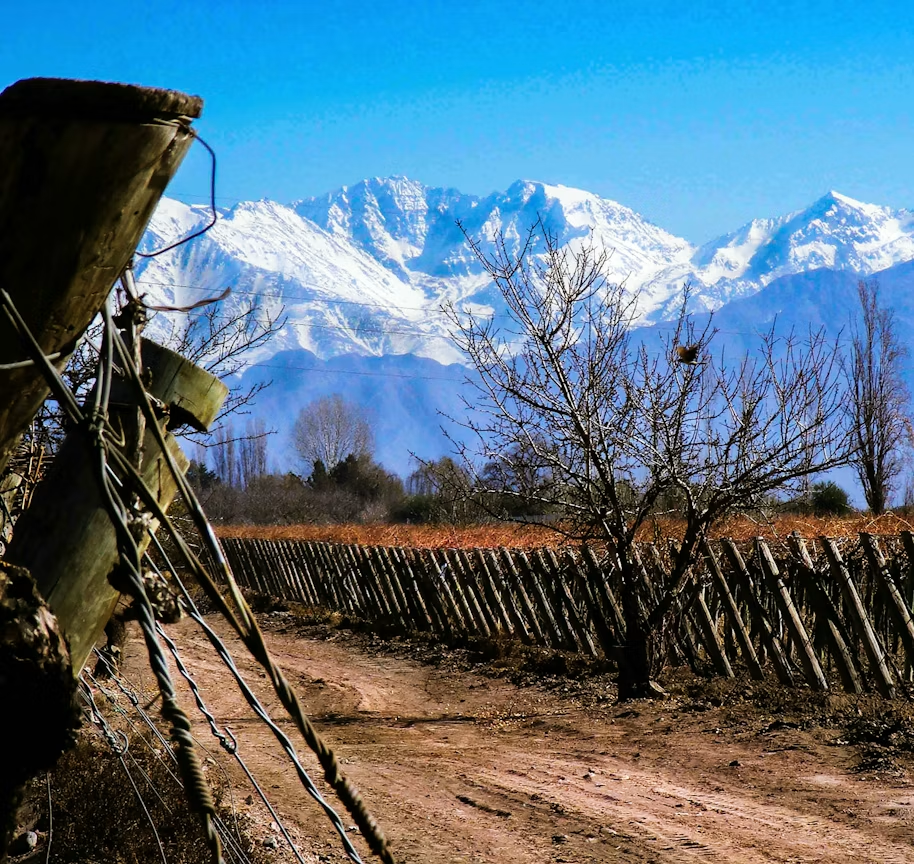
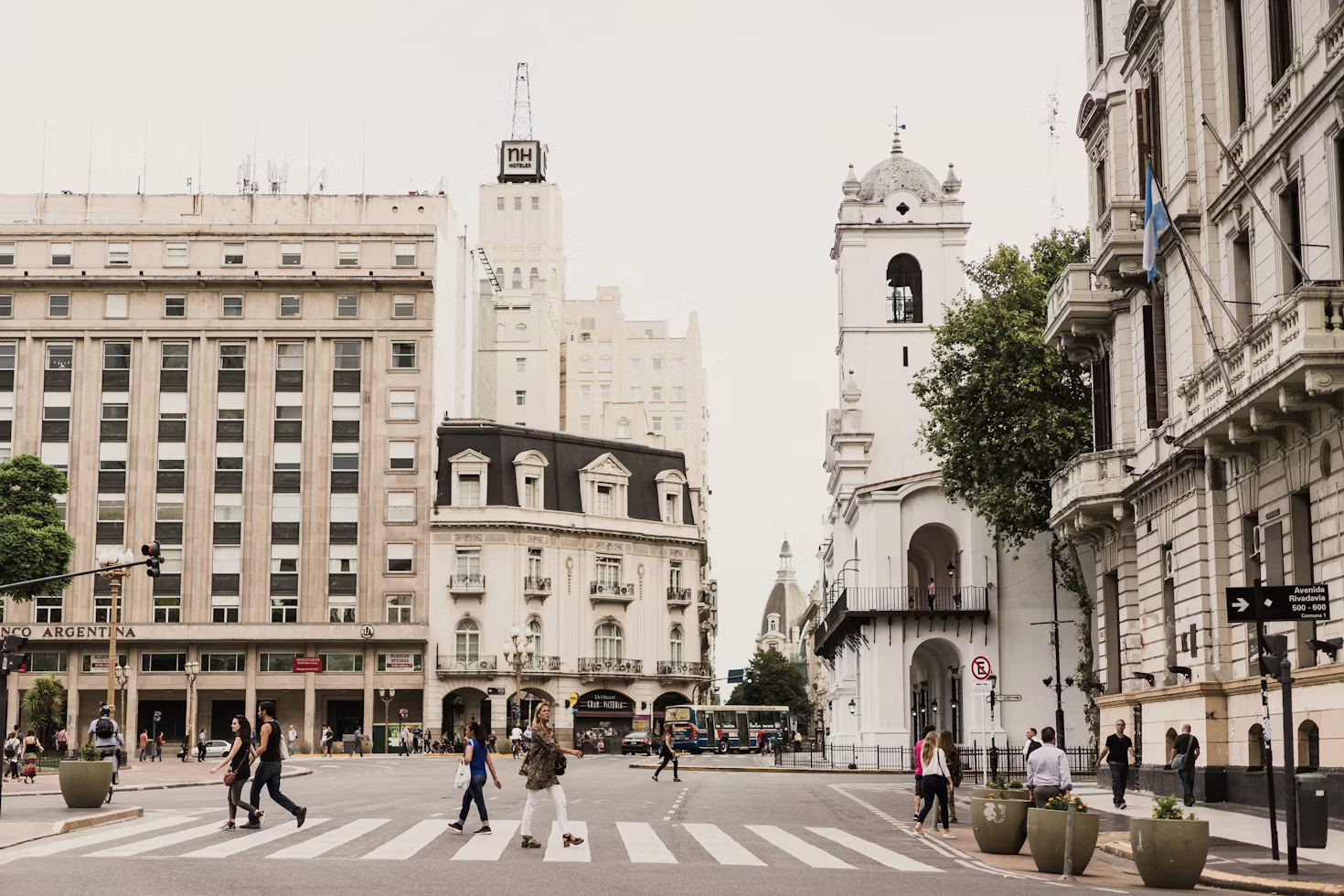
A taste of Argentina

Argentina editorial photograph 1
Argentina editorial photograph 2
Argentina editorial photograph 3
Argentina editorial photograph 5Argentina editorial photograph 6Argentina editorial photograph 7Argentina editorial photograph 8

How does the two-year citizenship clock work?

Argentine law allows naturalization after two years of legal residency, counted from the date your temporary residency is approved. The two years can be Rentista-based or based on another visa category. After two years, you submit a citizenship petition to the federal courts. The petition itself can take 12-24 months to process, so the realistic end-to-end horizon is three to four years from the first visa approval. We coordinate with Argentine-licensed counsel through the court phase.

What is happening with the planned CBI program?

The Argentine government has been drafting a formal investor-citizenship framework under recent legislative discussion. Public details have varied across drafts: investment thresholds, qualifying categories, and timelines are not yet finalized. If passed, this would offer a faster route than the two-year naturalization track. We track every public draft and brief active clients the moment terms are confirmed.

What about Argentina's currency volatility?

Argentina's peso has been chronically volatile for two decades, with periods of high inflation and tight currency controls. For Americans earning in USD, this has consistently been an arbitrage, dollar-priced budgets buy outsize value. We help clients structure income and assets to avoid forced peso conversion. Most US residents store and spend in USD via fintech and informal channels that are well-established within the expat community.

Do I have to learn Spanish?

Daily life in Palermo, Recoleta, and Mendoza's expat zones works with intermediate Spanish; English is widely spoken in business, hospitality, and most service contexts. The naturalization process involves interviews in Spanish, so a working level of the language is necessary by the time you petition.

What happens to my US taxes once I move?

The United States taxes citizens on worldwide income regardless of residency. Argentina taxes residents on worldwide income after 183 days, with a US-Argentina foreign-tax-credit overlap that mitigates double taxation in most cases. We coordinate with US-licensed counsel to plan the filing overlap.

Can my family come with me?

Yes. Spouses or registered partners, dependent children, and dependent parents qualify under a single application. Each family member receives the same residency rights and the same two-year clock to citizenship eligibility.

Will I have to give up my US citizenship?

No. The United States and Argentina both permit dual citizenship. You can have both passports indefinitely.

How life compares

Eight factors, against the US baseline

The dimensions that decide whether a place is workable once the visa lands.

English

Strong in business and tourism

Buenos Aires works in English across most professional and tourist-facing contexts. Mendoza and Bariloche similarly. Outside the major cities, Spanish becomes necessary.

Cost of living

Dramatically lower for USD earners

Argentina comes in 50-70% below US coastal-city benchmarks for those earning in dollars. A comfortable urban lifestyle for a couple costs $2,500 to $4,000 per month including premium housing.

Taxes

Worldwide after 183 days

Progressive resident rates topping at 35%. US-Argentina foreign-tax-credit mechanics typically prevent double taxation in practice. US filing continues regardless.

Quality of life

European cadence at Latin cost

Buenos Aires is consistently ranked among South America's most livable cities. The food, the wine, the theater, the architecture all deliver disproportionate value.

Safety

Neighbourhood-specific

Recoleta, Palermo, Belgrano, and Puerto Madero are statistically safer than many US urban areas. Other zones require situational awareness. We brief on geography during onboarding.

Travel connectivity

Strong to the Americas and Europe

Buenos Aires is a major South American hub with direct service to most US cities, Madrid, Rome, Frankfurt, and London. Twelve hours from New York; nine from Miami.

Infrastructure

Strong in major cities

Major-metro utilities, internet, and transit are reliable and modern. Healthcare is excellent in the major cities. Rural infrastructure is materially weaker.

Healthcare

High quality, low cost

Private healthcare in Buenos Aires is excellent and inexpensive by US standards. Comprehensive private insurance costs $150 to $300 per month for adults; outcomes are on par with major US private hospitals.

Read & watch on Argentina

Deeper coverage of Argentina from the Freedom Files library - long-form articles and short video deep-dives.

Articles

Videos

  • 18 min

    Flag Theory Explained: How Wealthy Americans Use Residencies and Citizenships to Reduce Country Risk

    Almost everything you own answers to a single government: Your passport, your bank accounts, your business, your laws. You would never accept that much concentration in your investment portfolio, so why accept it here? This breakdown covers flag theory from Harry Schultz's original three flags to W.G. Hill's five, the difference between residency, tax residency, and citizenship, four residency programs compared (Mexico's economic solvency visa, Argentina's rentista, Portugal's golden visa, Greece's FIP), all five paths to a second citizenship, and why the Exclusive Citizenship Act is going nowhere.

    • Deep dive
    • Fundamentals
    • Residency
    • Citizenship
    • Tax
  • 15 min

    EU Orders Caribbean Citizenship by Investment to Phase Out by 2028: Is a Caribbean Passport Worth It in 2026?

    The European Commission has asked all five Caribbean citizenship by investment programs, Antigua & Barbuda, St Kitts & Nevis, Grenada, Dominica, and St Lucia, to phase out by June 1, 2028 or lose visa-free access to the Schengen Area. That ultimatum changes what a Caribbean passport is worth in 2026, especially for American investors buying it for the travel access. This breakdown covers what the EU demanded, the Vanuatu precedent that proves the threat is real, the two very different buyers of a second passport, and the three cheaper citizenship by investment programs worth pricing against the Caribbean, plus one outcome for these programs nobody has floated yet.

    • Market update
    • Citizenship
    • Caribbean
    • Comparison
  • Why Americans Are Moving to Latin America: 5 Reasons and the 8 Countries They Choose in 2026

    American investors and their families are moving to Latin America faster than to any other region, Mexico, Costa Rica, Panama, Dominican Republic, Colombia, Brazil, Uruguay, and Argentina. Here are the five reasons driving the shift plus the exact residency and citizenship-by-investment programs Americans are using in 2026, warts and all.

    • Market update
    • Comparison
    • Residency
    • Citizenship
  • The 7 Cheapest Citizenships You Can Buy in 2026 (Plus Argentina's Forthcoming Program)

    The cheapest legal citizenship on earth costs under $100,000 in 2026, less than a nice new vehicle, and several more land just above that threshold. Here's the ranking of the seven cheapest CBIs you can act on today, ordered by real cost rather than sticker price, plus a preview of Argentina's forthcoming route that could become the strongest passport ever sold this way.

    • Comparison
    • Citizenship
    • Market update

The Argentina briefing

The facts, programs, and comparison

A PDF briefing covering everything on this page plus the comparison framework we use internally. Delivered straight to your inbox.

No spam ever! Unsubscribe in one click.

Click for access to a full Argentina briefing

Get your custom Plan B Blueprint

Most people spend 100+ hours researching residency and citizenship options before they realize they were looking at the wrong programs. We compress that into 10 questions, 90 seconds, and a single report.