Freedom FilesFreedom Files
← All destinations
Latin AmericaResidency

Brazil

A four-year naturalization clock, a one-year fast-track for parents of Brazilian-born children, and a tropical-Atlantic lifestyle delivered at a fraction of US cost.

Population
215 million
Language
Portuguese (English in expat hubs)
Currency
Brazilian Real (BRL)
Time zone
BRT (UTC−3, no DST)
Capital
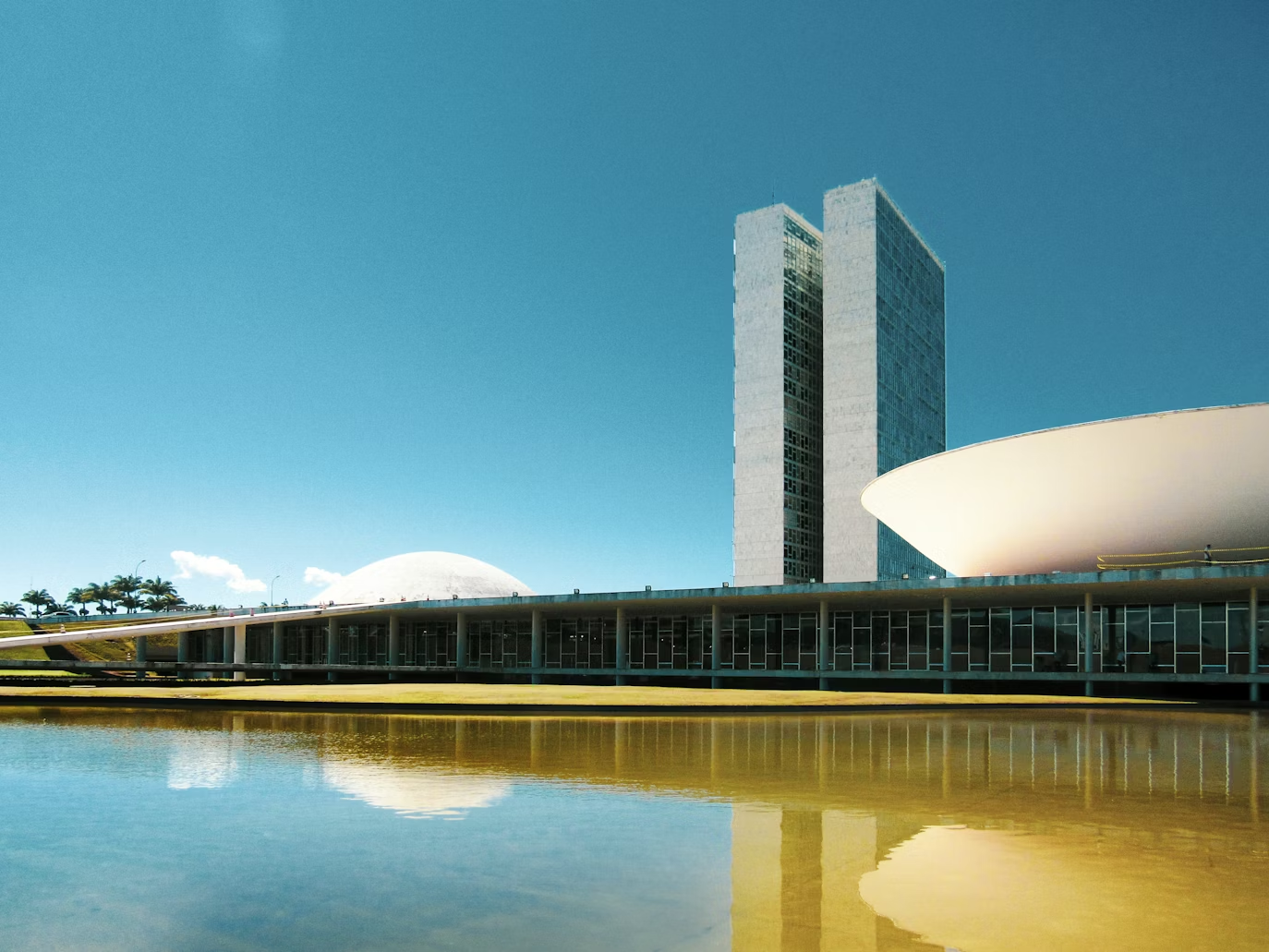
Brasília
GDP per capita
~US$10K
  1. A four-year residency clock to citizenship

    Brazilian law allows naturalization after four years of legal residency, dropped to two with proven Portuguese proficiency and Brazilian connections, and to one year for parents of a Brazilian-born child. Few countries reward early commitment this quickly.
  2. Jus soli – children born in Brazil are Brazilian

    Any child born on Brazilian soil acquires Brazilian citizenship automatically and unconditionally, regardless of the parents' nationality. Parents of Brazilian-born children qualify for a one-year naturalization track. For young families planning a second-passport strategy, this is among the most efficient pathways in the world.

  3. Cost of living that rewards the dollar

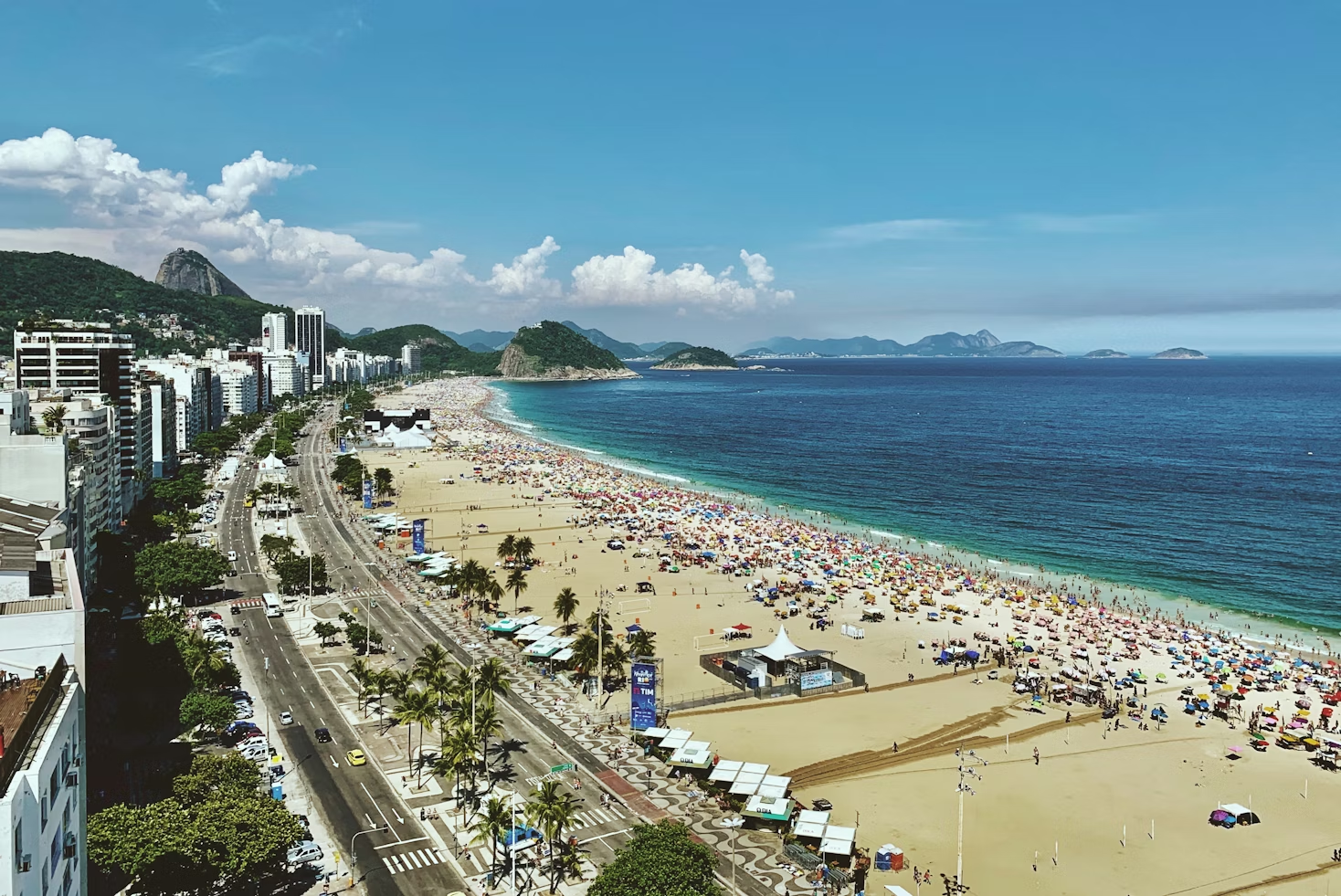
    São Paulo, Rio, and Florianópolis run 60-70% below US coastal-city benchmarks. A premium ocean-view apartment in Ipanema or Leblon runs $1,500 to $2,500 a month. Long dinners with quality wine cost $40 to $60. Healthcare, schooling, and household help are all materially cheaper.

  4. Same time zone as the US East Coast

    Brazil sits on UTC−3 year-round, no daylight saving. Two hours ahead of Eastern Standard Time in summer, one hour ahead in winter. Remote work, business calls, and US family stay in sync.

  5. A passport that opens roughly 170 doors

    Brazilian citizenship grants visa-free or visa-on-arrival access to roughly 170 destinations including the Schengen Area, the United Kingdom, Japan, and most of Latin America. For families seeking a second passport with broad practical mobility, Brazil punches well above its GDP weight.

  6. A lifestyle most clients underestimate until they visit

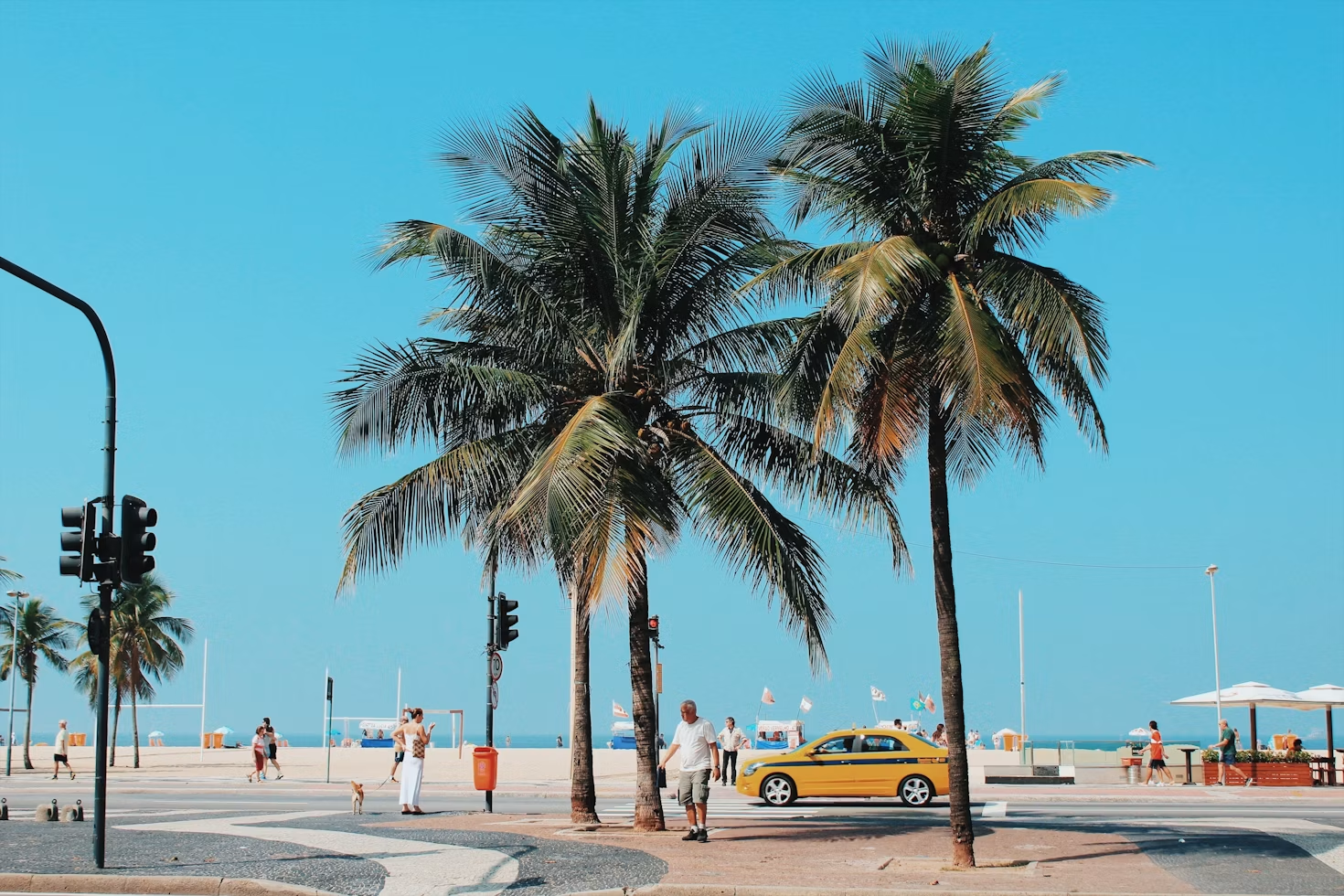
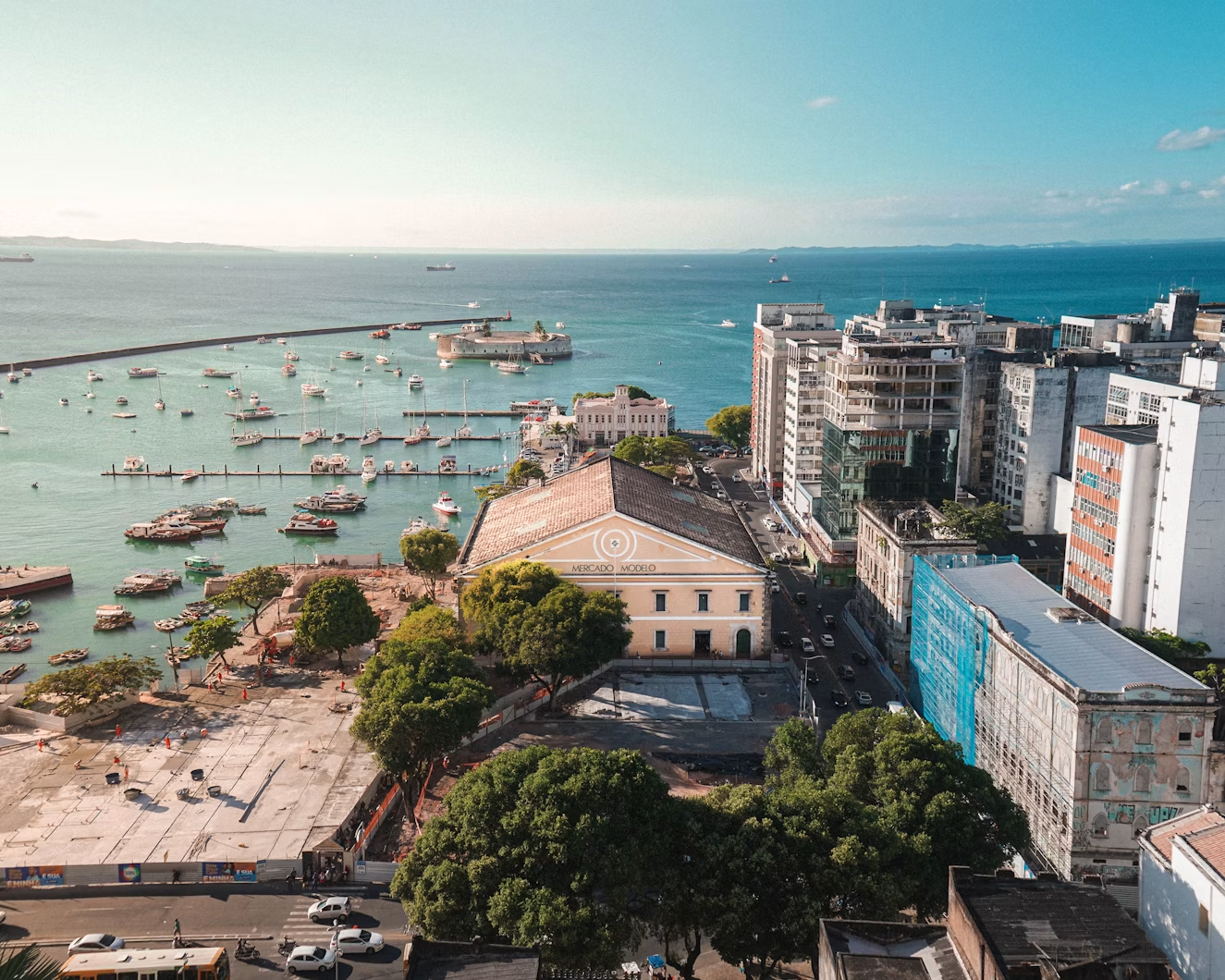
    Tropical-Atlantic climate, world-class beaches, a music and food culture that needs no apology, and major cities that increasingly cater to remote-working Americans. The mistake first-time visitors make is assuming Brazil is harder to live in than it is.

Programs

Three routes into Brazil

Each route below is a live client engagement we have advised. Figures and timelines reflect the current state of each program; we update them whenever policy moves.

  • Investor Visa

    Residency

    Permanent residency through investment in a Brazilian business or qualifying real estate, denominated in Brazilian Reais and indexed to current USD equivalents. Path to naturalization in four years; faster with Brazilian-born children or Brazilian spouse.

    Financial requirement
    $100K business or $140K real estate
    Timeline
    4 to 6 months
  • Retirement Visa

    Residency

    Permanent residency for retirees with stable foreign-source pension or annuity income. Family inclusion at incremental income thresholds per additional dependent. No physical-presence minimum to maintain status.

    Financial requirement
    $2,000/mo passive income
    Timeline
    3 to 5 months
  • Digital Nomad Visa

    Residency

    One-year visa for remote workers and contractors with foreign-source employment or contract income, renewable for a second year. Convertible into other residency categories on renewal – a low-friction entry route into the naturalization pipeline.

    Financial requirement
    $1,500/mo active income
    Timeline
    2 to 3 months

Several routes, several ideal profiles. Which is right for you? The Freedom Consult is where we figure out your ideal path forward – and whether Brazil is even the right country.

A taste of Brazil

Brazil editorial photograph 1
Brazil editorial photograph 2
Brazil editorial photograph 3
Brazil editorial photograph 5Brazil editorial photograph 6Brazil editorial photograph 7Brazil editorial photograph 8

How does the four-year clock actually work?

Brazilian law allows naturalization after four years of legal residency, counted from the date your residency is approved. The clock drops to two years with proven Portuguese-language proficiency and demonstrated Brazilian connections, and to one year for parents of a Brazilian-born child. We map the right strategy on the consult call.

If we have a baby in Brazil, what does that mean for the family?

Any child born on Brazilian soil acquires Brazilian citizenship automatically and unconditionally. The parents of a Brazilian-born child qualify for an accelerated one-year naturalization track. For young families planning around this, we coordinate the timing with US-licensed counsel and Brazilian-licensed counsel together.

Do I have to learn Portuguese?

Naturalisation requires a Portuguese-language assessment. Daily life in São Paulo, Rio, and Florianópolis runs comfortably in English in business, hospitality, and most expat-oriented service contexts, but Portuguese makes everything materially easier. Brazilian Portuguese is close enough to Spanish that English speakers with any Spanish background pick it up quickly.

What about safety?

Brazil's headline-crime perception is heavier than what daily life delivers in the neighborhoods Americans actually live in – Leblon, Ipanema, Jardim Botânico, Vila Nova Conceição, Itaim Bibi, Jurerê Internacional. Petty theft requires the usual urban discipline; violent crime is rare in those neighborhoods. We brief on geography during onboarding so the right zones are matched to your priorities.

What happens to my US taxes once I move?

The United States taxes citizens on worldwide income regardless of residency. Brazil taxes residents on worldwide income after 183 days, with foreign-tax-credit overlap that mitigates double taxation in most cases. The US-Brazil treaty position is technical; we coordinate with US-licensed counsel.

Can my family come with me?

Yes. Spouses or registered partners, dependent children, and dependent parents qualify under a single application. Each family member receives the same residency rights. Children born in Brazil during the residency period become Brazilian citizens automatically.

Will I have to give up my US citizenship?

No. The United States and Brazil both permit dual citizenship. You can hold both passports indefinitely.

How life compares

Eight factors, against the US baseline

The dimensions that decide whether a place is workable once the visa lands.

English

Strong in cities, weaker elsewhere

São Paulo, Rio, and Florianópolis run comfortably in English in business and tourism. Outside those zones, Portuguese is essential. Brazilian Portuguese is approachable for English speakers.

Cost of living

Dramatically lower for USD earners

Major Brazilian cities run 60-70% below US coastal-city benchmarks. A premium urban lifestyle for a couple costs $2,500 to $4,500 a month including ocean-view housing in Rio.

Taxes

Worldwide after 183 days

Progressive resident rates topping at 27.5%, with US-Brazil foreign-tax-credit overlap mitigating double taxation in most cases. US filing continues regardless.

Quality of life

Underrated until experienced

Tropical-Atlantic climate, deep beach culture, a music tradition that defines the country, and major cities increasingly oriented toward remote-working Americans. Outsized return on lifestyle dollar.

Safety

Neighbourhood-specific

Major-city expat neighborhoods are statistically safer than many US urban areas. Outside those zones, situational awareness is required. We brief on geography during onboarding.

Travel connectivity

Major hub for South America

São Paulo and Rio host daily direct service to most US cities, Madrid, Lisbon, London, Frankfurt, and Johannesburg. Eight hours from Miami; nine from New York.

Infrastructure

Strong in cities, uneven elsewhere

Major-metro utilities, internet, and transit are reliable. Rural and inland infrastructure is materially weaker, which determines where most Americans choose to base.

Healthcare

Excellent private system

Brazilian private healthcare in São Paulo and Rio is on par with major US private hospitals and a fraction of the cost. Private insurance runs $200 to $400 per month for comprehensive coverage.

The Brazil briefing

The facts, programs, and comparison

A four-page PDF covering everything on this page plus the comparison framework we use internally. Delivered to your inbox, and the next briefing every week.

No spam ever! Unsubscribe in one click.

Get your custom Plan B Blueprint

Most people spend 100+ hours researching residency and citizenship options before they realize they were looking at the wrong programs. We compress that into 10 questions, 90 seconds, and a single report.