
A six-month clock to citizenship
Direct investors can apply for naturalization after six months of legal residency, counted from the date your investor residency is approved, among the fastest clocks in the hemisphere.
Permanent residency from day one and citizenship eligibility after six months of legal residency, among the fastest clocks in the hemisphere. $200K through a business, bank deposit, or property via a registered Dominican company, no minimum presence, and two hours from Miami on US Eastern time.
The Dominican Republic Investor Visa grants permanent residency on first issue through any of three equal-priced $200K routes, each made through a duly registered Dominican company: a qualifying business, a bank deposit, or property. You file through the Dominican consulate covering your US state, register at the Dirección General de Migración within 90 days of arrival, and receive a Cédula de Residencia (foreign-resident ID). Direct investors can apply for citizenship after six months of legal residency, and maintaining residency asks for no minimum presence, only on-time renewals of your residency card.
The Dominican Republic pairs permanent residency on first grant with the shortest naturalization clock in the hemisphere for direct investors: Eligibility after six months of legal residency. Three equal-priced routes lead to the same status and the same timeline, residency asks for no minimum presence, and the territorial tax system leaves your foreign income untaxed in the DR. Add the US Eastern time zone, the two-hour flight from Miami, and an established American expat community, and few Caribbean bases are this efficient.
The outcomes the Investor Visa actually delivers, beyond the headline numbers. The six that matter most to our clients.
Direct investors can apply for naturalization after six months of legal residency, counted from the date your investor residency is approved, among the fastest clocks in the hemisphere.
The investor visa issues permanent residency on first grant. There's no temporary phase, no conversion application, and no risk of non-renewal along the way.
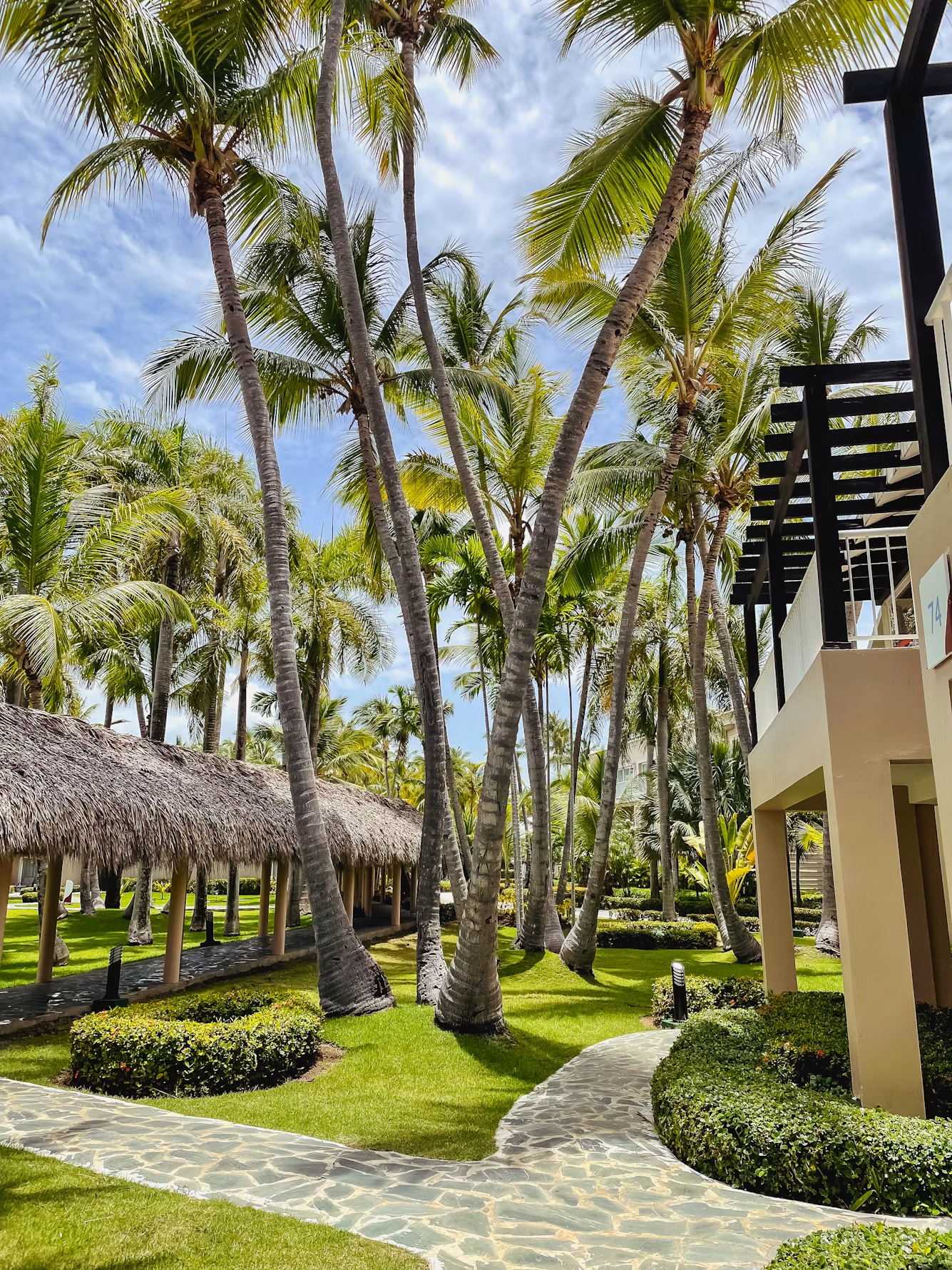
$200K as a bank deposit, property, or business investment through a registered Dominican company. Each brings the same residency, the same timeline, and the same path to citizenship.
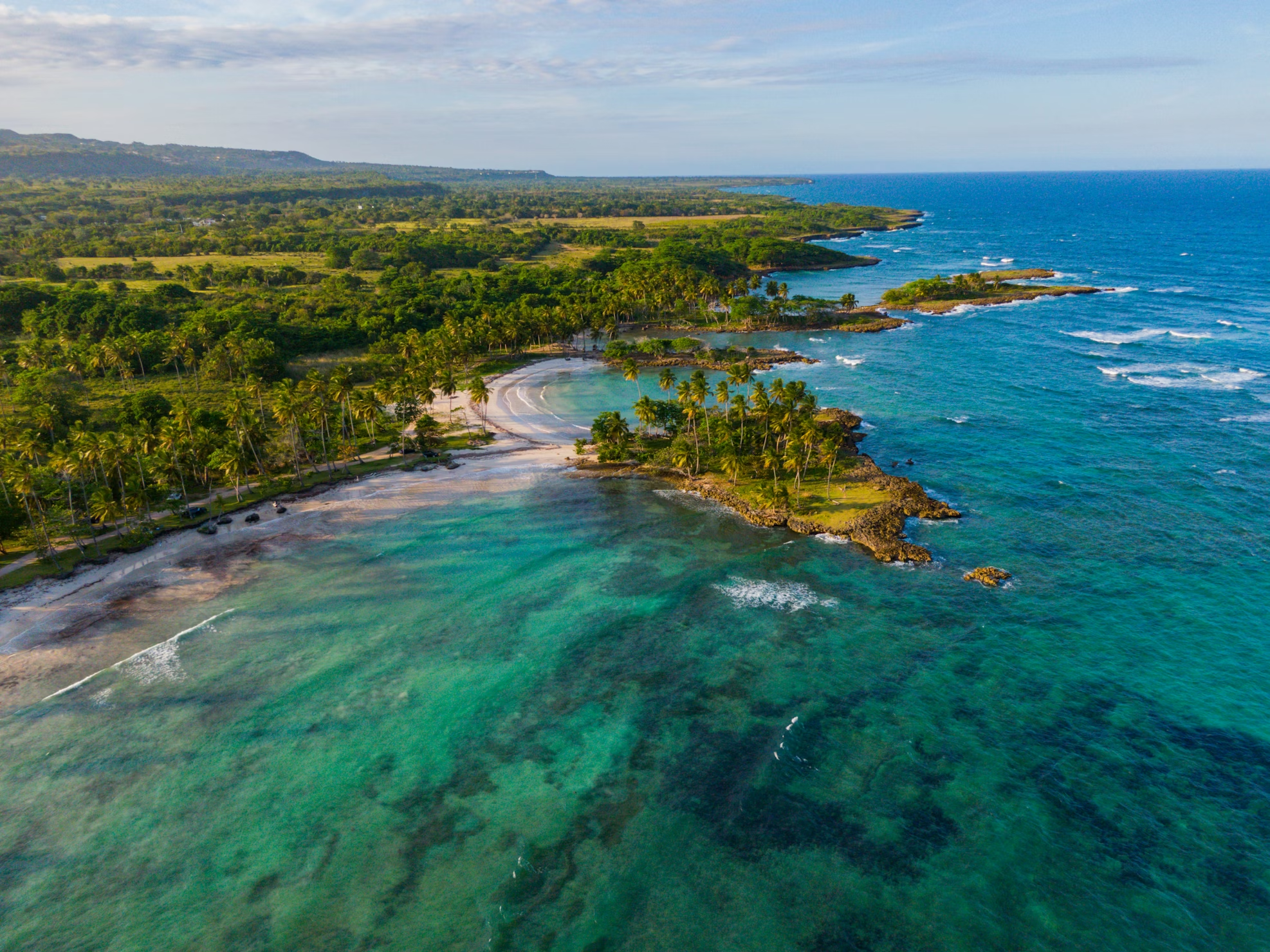
Legal residency asks for no minimum time in the country. Renew your residency card on time and you're free to travel. The 183-day rule applies only if you want a Dominican tax residency certificate.
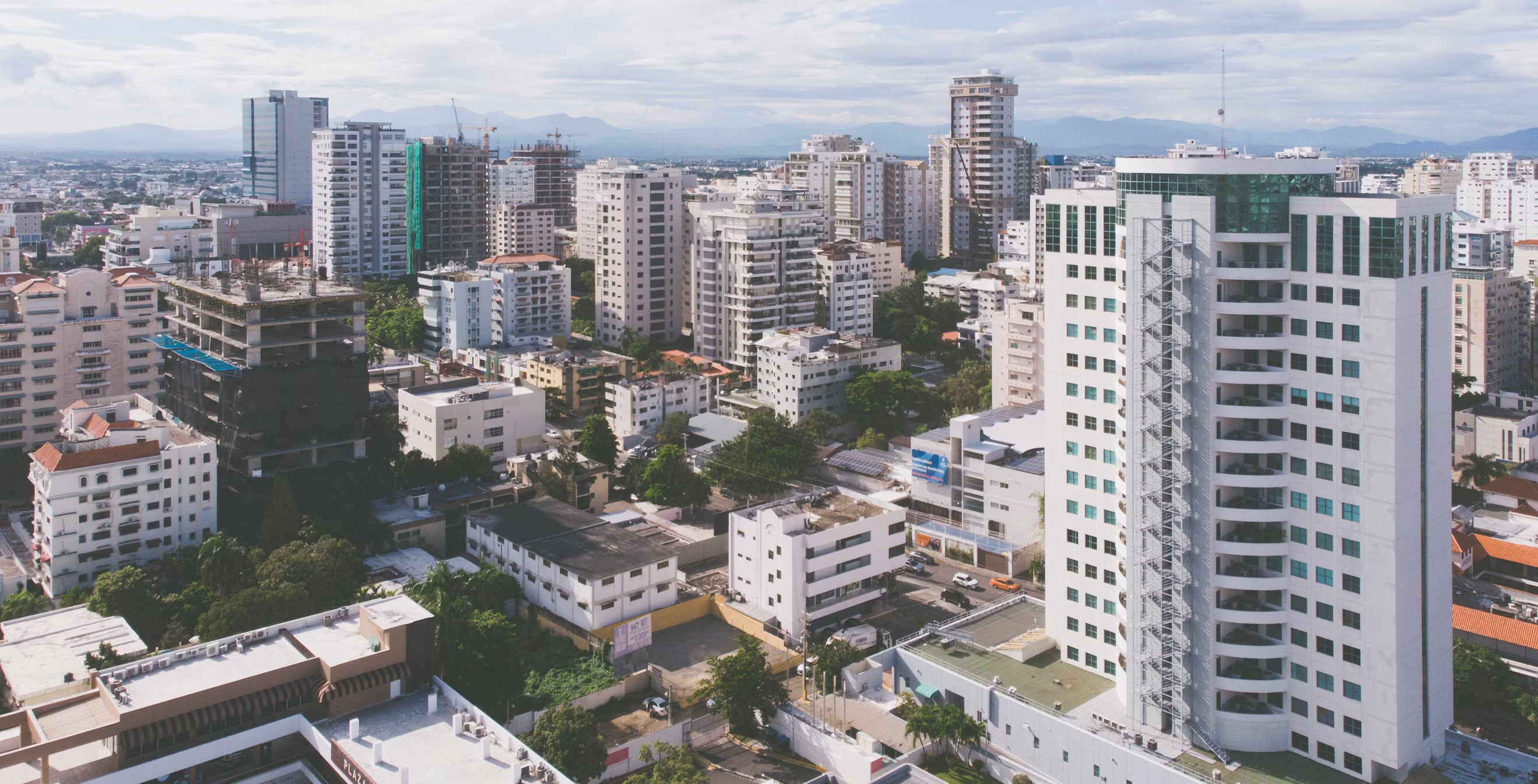
Spouse or registered partner, dependent children, and dependent parents qualify as beneficiaries, each with the same permanent residency and the same clock to citizenship.

The DR taxes only Dominican-source income, so your US earnings aren't taxed there. It's on UTC-4 year-round, two hours from Miami with daily direct flights.
3 routes into the same residency. Each fits a different financial picture.
$200,000
Property bought through your registered Dominican company, not in your personal name. The most common route. Recoverable on resale, subject to capital-gains treatment.
$200,000
A fixed-term certificate in the corporate bank account of your registered Dominican company, typically 24 months. The lowest-friction route, with no property or business overhead, recoverable at maturity.
$200,000
A capital injection into a Dominican company with active commercial activity, properly registered with the DGII (the Dominican tax authority).
Choosing the right route is half the work. We model the comparison against your portfolio in the Consult.
Get my BlueprintReach out and tell us about your situation. From there, you'll either book a Freedom Consult (if you're weighing the DR against other countries) or get started on this route directly (if you already know it's the right fit).
We coordinate the document pack: An apostilled FBI background check, civil certificates, US tax returns, source-of-funds documentation, and a power of attorney for Dominican counsel.
Counsel sets up your registered Dominican company, and the $200K goes in through it as a deposit, property, or business, with registration handled for you.
File through the Dominican consulate covering your US state. Most consulates process complete files in 60 to 90 days.
Enter the DR on the visa, register at the Dirección General de Migración within 90 days, and receive your Cédula de Residencia in 30 to 60 business days.
No minimum presence is required. Renew your residency card on time and you're free to travel while the six-month clock counts down.
After six months of legal residency, petition the Office of Naturalization with a Spanish-language assessment and a basic civics exam. The petition usually processes in 12 to 18 months.
Processing
Permanent residency
Eligibility
Citizenship
4-6 months
On grant
Month 6
+12-18 months
How this program stacks against the closest credible options for the same visitor. We don’t earn more if you choose one over another.
| Dimension | Dominican Republic Investor Visa | Dominican Republic RentistaLearn more | Panama Qualified Investor |
|---|---|---|---|
| Minimum financial bar | $200K through a Dominican company | $2,000/mo passive income | $300K new-build property |
| Capital recoverable | Deposit and property, yes | Income-based (n/a) | Property, yes |
| Processing | 4-6 months | Short | 30-90 days |
| Status on grant | Permanent | 1-year permit, then 4-year renewals | Permanent |
| Presence required | None to maintain | None | Once / 2 years |
| Time to citizenship | Eligible at 6 months | 2 years | 5 years |
| Tax system | Territorial | Territorial | Territorial |
The investor visa reaches citizenship eligibility fastest, at six months, and asks for no minimum presence. The Rentista suits a steady passive income and asks for no capital, with citizenship at two years. Panama costs more and naturalizes in five years, but grants permanent residency almost immediately. All three tax only local income. We don't earn more if you pick one over another.
Want a Dominican Republic briefing covering everything on this page plus the comparison framework we use internally?
Three reasons families pick Freedom Files over the do-it-yourself path or a single-jurisdiction agent.
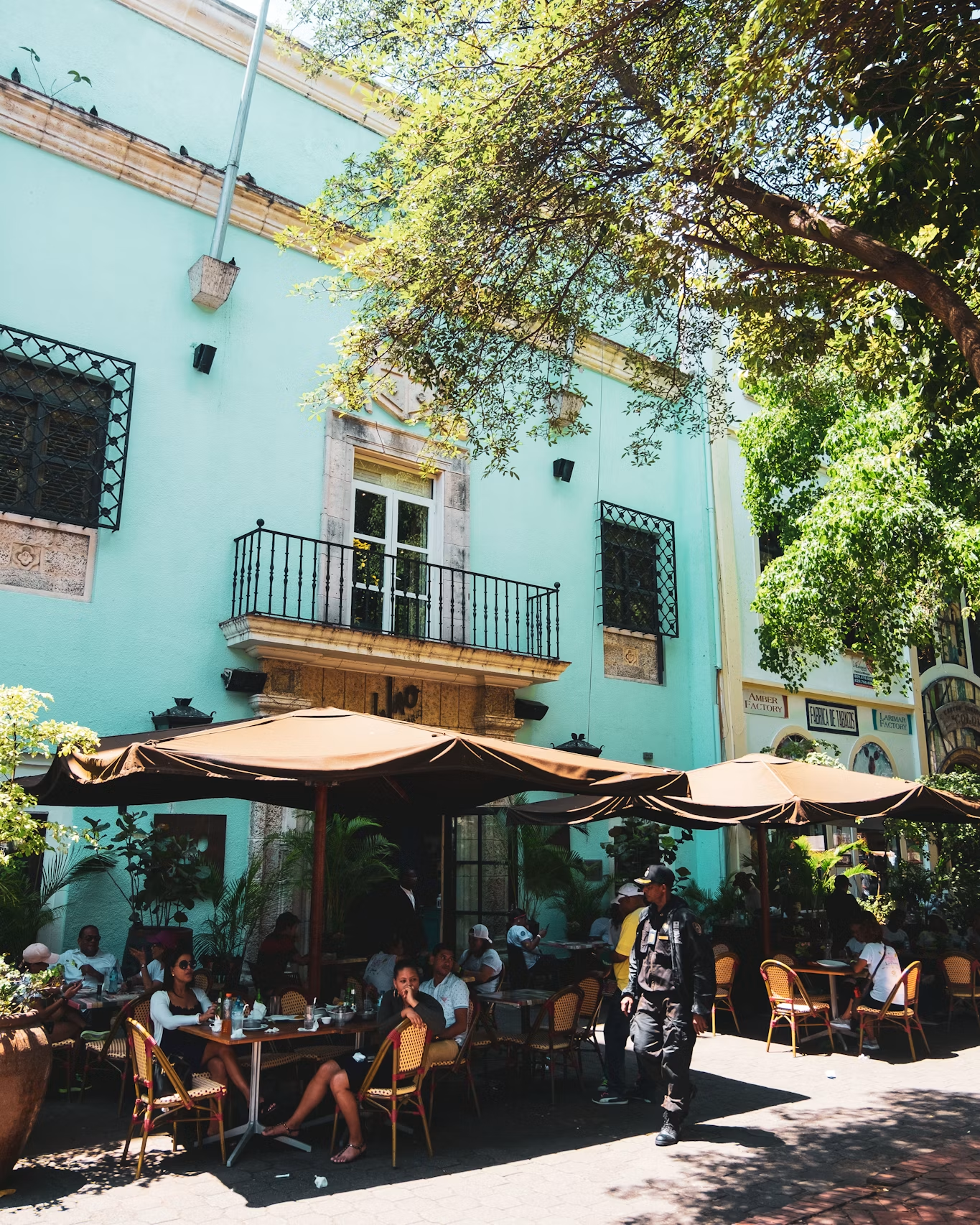
We know the consular cadence, the company setup, and the Cédula process from active engagements. The DR Investor Visa looks simple until source-of-funds documentation or DGII registration stalls.
About a third of Dominican Republic inquiries end with our recommendation to wait, or to look at a Caribbean CBI or Paraguay, because the fit isn't there yet.
Every engagement moves forward with US-licensed counsel from the first call. The territorial-tax interaction with US worldwide filing is mapped before residency is triggered.
Direct investors can apply for naturalization after six months of legal residency, counted from the date your investor residency is approved, with no time in the country required. You then petition with a Spanish-language assessment and a basic civics exam. The petition itself usually processes in 12 to 18 months.
No. Legal residency has no minimum presence requirement, as long as you renew your residency card on time. The 183 days a year applies only if you want a Dominican tax residency certificate.
Each of the three routes is made through a duly registered Dominican company: The deposit is placed in the company's corporate bank account, the property is bought in the company's name, and the business investment flows through it. Our Dominican counsel sets up the company and handles registration as part of the engagement.
All three require $200K and lead to the same residency and timeline. The deposit is the lowest-friction route, a fixed-term certificate of typically 24 months, recoverable at maturity. Property is the most common and recoverable on resale. The business route suits clients who plan to build a Dominican company. We model the right fit during the Consult.
The United States taxes citizens on worldwide income regardless of residency. The Dominican Republic taxes only Dominican-source income, so your US salary, dividends, and rental income aren't taxed in the DR. We coordinate with US-licensed counsel on the US side.
It opens roughly 75 destinations visa-free, modest next to a European or Caribbean CBI passport. The value is the fast citizenship beside your US passport, not the standalone mobility.
No. The United States and the Dominican Republic both permit dual citizenship, so you have both passports indefinitely.
Deeper coverage of Dominican Republic from the Freedom Files library - long-form articles and short video deep-dives.

There are 7 ways to get a second passport, and 4 of them cost little more than filing fees: Descent, birth, marriage, and naturalization. Here's how each route works, what it costs, how long it takes, and the catch, plus the fast track that gets some Americans an EU passport in 2 years.

Non-Americans can drop their total tax rate to 0% by establishing tax residency in the right jurisdiction; US citizens simply avoid a second tax bill on top of the IRS. Here are all 19 tax-friendly countries across 4 systems, from the UAE and the zero-tax island citizenships to Panama's territorial system, Turkey's new 20-year exemption, and the Irish and Maltese non-dom regimes, plus the residency or citizenship route into each.
Move money from a domestic bank account to an international one and walk away with legal residency in 6 countries, and direct citizenship in 2 more. From Ecuador's $48,000 certificate of deposit to Turkey's $500,000 citizenship deposit, here is how residency by bank deposit works in Panama, the Dominican Republic, Ecuador, Latvia, the UAE, Thailand, Egypt, and Turkey, and the currency fine print that decides which fits you.

Europe has raised golden visa thresholds, raised taxes, and closed residency and citizenship programs altogether. The countries that want your capital are somewhere else. Here are five emerging-market residency by investment programs with real investment upside in 2026, from Ecuador's $48,000 investor visa to Panama's Qualified Investor Visa before its threshold jumps to $500,000 in October.

American investors and their families are moving to Latin America faster than to any other region, and the reasons go well beyond sunshine. Here are the five structural drivers behind the shift, plus the exact residency and citizenship-by-investment programs in Mexico, Costa Rica, Panama, the Dominican Republic, Colombia, Brazil, Uruguay, and Argentina that our US clients are using in 2026. With the plain trade-offs on each.
 23 min
There are 7 ways you can get a second passport in 2026: Through citizenship by descent, birth, marriage, naturalization, a preferred nationality fast track, citizenship by investment, and citizenship by merit, and 4 of them cost almost nothing. This breakdown covers how each one works, how long it takes, and which ones fit your goals. The last route is the one I expect to replace citizenship by investment in the future.
 35 min
If you're not a US citizen and don't have a green card, you can drop your tax bill to zero by establishing tax residency in a zero-tax jurisdiction; if you're a US person, these countries simply won't add a second tax bill to your US one. This breakdown covers 19 tax-friendly countries worldwide across 4 systems, zero income tax (UAE, St Kitts and Nevis, Antigua and Barbuda, Vanuatu, Nauru), territorial tax (Costa Rica, Georgia, Paraguay, Grenada, Panama), tax holidays from 3 to 20 years (Chile, Uruguay, Cyprus, Turkey), and conditional non-dom systems (Dominica, St Lucia, the Dominican Republic, Ireland, Malta), plus how to get residency or citizenship in each and reduce your total tax bill to as close to zero as possible.
 20 min
You can simply move your money from one domestic bank account to an international one and walk away with legal residency in 6 countries and even direct citizenship in 2 more. This breakdown covers residency by bank deposit in Panama ($200,000 Friendly Nations Visa or the $750,000 Qualified Investor Visa), the Dominican Republic ($200,000 CD with a 2-year citizenship clock), Ecuador ($48,000, the cheapest deposit residency anywhere), Latvia (€280,000, Europe's last bank-deposit golden visa, closing soon), the UAE (2 million dirhams for a 10-year Golden Visa), and Thailand ($100,000 LTR visa), plus citizenship by bank deposit in Egypt and Turkey at $500,000 each, and the currency fine print that decides whether those two make sense. This is likely the easiest way to qualify for residency overseas, apart from simply showing your income.
 18 min
Europe has raised investment thresholds, raised taxes, and ended golden visa and citizenship programs altogether. The EU has made it clear it does not want wealthy investors. The countries that do are somewhere else. This breakdown covers five emerging-market residency by investment programs with real investment upside in 2026: Ecuador's $48,000 investor visa with citizenship at year 3, Paraguay's new $200,000 investor path to direct permanent residency, Colombia's investor visa amid a pro-business political turn, the Dominican Republic's $200,000 route with the fastest citizenship clock in the hemisphere, and Panama's Qualified Investor Visa before the threshold jumps to $500,000 in October 2026.
Two paths in. If the Investor Visa is clearly the right program for your family, start with the Blueprint and qualified applicants receive a Freedom Consult invitation inside the report. If you’re weighing this against other programs, the Blueprint routes you to the right conversation faster.
The consult is free for qualified applicants while we onboard our first cohort.
Most people spend 100+ hours researching residency and citizenship options before they realize they were looking at the wrong programs. We compress that into 10 questions, 90 seconds, and a single report.
“You come across as very genuine, authentic, and easy to deal with. Most experiences I've had with others are like, 'Send me money and I'll tell you what to do.'”