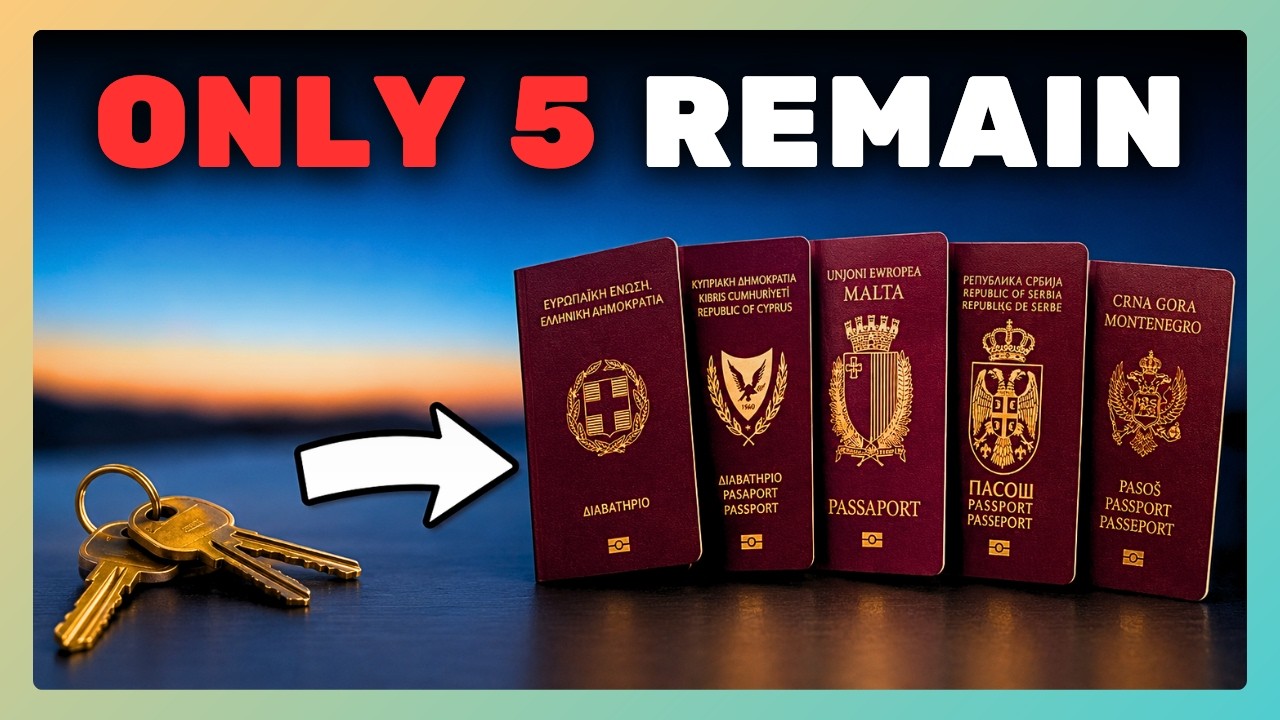
A lot of Americans look to Europe for golden visas, but the EU answers by raising prices and closing programs. They don't want your capital. The countries that do are somewhere else. I left the US almost 10 years ago, have lived in over 15 countries, and have helped hundreds of families plant flags around the world. In this video, I'll show you five emerging markets and the numbers that back them up. And by the way, go to freedomfiles.co/begin and answer 10 quick questions, maybe after this video, and you'll get a custom report on the countries and programs that fit your goals.
Before we get into the programs and data, let me explain why these programs even exist. Why are we looking at these five emerging markets?
For a century, American capital had no reason to leave home. The S&P compounded, your property appreciated, and leaving was for eccentrics. A large economy didn't have to offer you anything, because the opportunity was the offer. Two things broke that logic. First, concentration. If your assets, your income, your businesses, your legal system, and your tax regime all depend on one government, one country, you don't own a portfolio. You own a single position, and you're reliant on a single state. Second, the rest of the world learned that capital and talent are mobile. Work went remote, money went digital, and a founder in Austin can leave Texas and close deals from Panama City by lunch.
So the smaller countries changed their offer. They stopped waiting for capital to show up and started bidding for it. The tool they bid with is investment migration: residency by investment, what you may call a golden visa, and citizenship by investment. You bring capital, they hand you legal status, and in the well-structured programs, a tax position, a path to a passport, and an appreciating asset on top.
This is not fringe behavior, and the data is straightforward. The United Arab Emirates pulled a record net inflow of almost 10,000 millionaires in 2025, with about $63 billion in wealth attached, more than 2,000 ahead of the United States in second place. The UK posted minus 16,500, the largest millionaire outflow in the decade this report has tracked. And in the 2026 report, the US shows up on both sides of the ledger: a top destination for people coming in, and simultaneously the largest source of outbound residency and citizenship demand on Earth. As American families build international options in numbers nobody has recorded before, money and talent drain out of the places that punish them and pool in the places that court them. Supply and demand. Tens of thousands of households a year revealing their preference. Drop a comment, by the way: which country do you think will be next on the millionaire-outflow list in 2027?
That doesn't explain Europe's position, though. Watch what the traditional destinations have done in just the last few years. Spain closed its golden visa in 2025. Malta sold the last true EU citizenship by investment until the European Court of Justice ruled the program illegal in 2025 and shut it down. Portugal's golden visa survives through funds, but the government has doubled the naturalization wait, eliminated the special tax regime that attracted thousands of investors, and moved investors to the back of the line in more ways than one. Every one of those changes moved the same direction. They can raise the threshold without asking you. They can close the program without warning you. And they can change the rules while you're in line.
You might say: come on, these are the strong passports, of course they have leverage. Fair. A Portuguese passport lets you live and work in 27 countries, and an Ecuadorian one doesn't. But in most of these programs you aren't buying a passport. You're buying a foothold, a tax position, and an asset that produces income in a market growing faster than the one you already own.
Let's talk through all five.
One: Ecuador. Ecuador grants investor residency for $48,000. Complete files process in roughly 60 to 90 days, and citizenship opens at year 3 of legal residency. The threshold is 100 times the minimum wage, so it recalculates every January, and the 2026 number is up $1,200 from 2025. Like in many jurisdictions, waiting has a price attached.
This is the deepest contrarian bet on the list. Ecuador has been through an energy crisis, gang violence, and a homicide rate that spiked to records this year. But that's also why prices are soft. When a market is calm, you pay full price. When there's blood in the streets, you get paid to take the risk. What separates Ecuador from every other distressed market is the currency: the country adopted the US dollar in 2000, so there is no local peso to devalue underneath your asset. That could be an advantage or a disadvantage depending on your view of the dollar. One of the three qualifying routes is a certificate of deposit at an Ecuadorian financial institution, and those have been paying 7 to 9% annually. The other routes are property or shares in a local company. And trust me, I've spent enough time in Ecuador to know that Quito and Cuenca trade at a fraction of the prices in Medellín, let alone Mexico City. The government is pushing hard the other way, with an IMF program, a $30 billion investment drive, and new free trade zones. If the security turn takes, today's entry prices will look absurd in a decade. If it doesn't, you own a cheap dollar asset in a volatile country. If you want the cheapest legitimate foothold in the hemisphere and you can tolerate volatility, this may be your entry. Investors can lose money here, but the discount exists because of that.
Two: Paraguay, under the investor path launched this year in 2026. The real estate route requires a $200,000 investment, but you can file once 30% has been paid. That's $60,000 down, with the balance documented as a commitment to the developer over the construction period. There's also the older business route, the SUACE, at $70,000 into a local Paraguayan company. Either way, what comes back is direct permanent residency, not a temporary permit, and one visit every 3 years maintains it. Nearly every golden visa on Earth wants the full amount before you get anything: Greece, Portugal, Panama, the Caribbean programs, all of them. Paraguay went the other way deliberately, to push capital into preconstruction projects where staged payments are normal and supply builds housing for the local population.
The country underneath the program is a strong case as well. Paraguay's median age is about 27 against a global average near 31 and rising. The population is young and urbanizing, and GDP growth is in the 3.5 to 4% range in 2026, strong for the Americas. Immigration is climbing fast: roughly 47,000 residency applications were filed in 2025, and the first quarter of 2026 ran about 85% ahead of the year before. Corporate tax is a flat 10%, but that's not why people move. Foreign income is not taxed in Paraguay. Electricity is cheap. And the country is at the geographic center of South America inside Mercosur, the trade and settlement bloc that lets citizens of member countries live and work across member states. We'll come back to another Mercosur member in a second.
Two things here. This is a residency by investment program, not a citizenship program. Naturalization opens at 3 years of permanent residency, though in practice the court process stretches it to four or five, and judges want to see roots before they hand you citizenship. And the $200,000 threshold applies per applicant, not per family, so a couple who both want residency in their own names are documenting about $400,000 combined. If you want direct permanent residency for the smallest cash outlay on this list and you're comfortable with developer risk on an off-plan unit where the deed can take one to two years, Paraguay gets my vote at this budget.
Three: Colombia. I have a soft spot in my heart for Colombia, as you may know if you've watched this channel for a while. I invested here. I married here, in short. Colombia's investor visa requires about $175,000 in registered property, which can be land, or roughly $55,000 into a local Colombian company. The presence rules are some of the lightest in the Americas: enter once every 6 months to maintain the visa.
In a big change, Colombia just changed gears completely, which explains the bullishness. In June, the country elected Abelardo de la Espriella, an unapologetically pro-business, pro-security lawyer turned president, ending four years of leftist government; he takes office in August. The peso rallied about 7% between the election rounds and has traded at its strongest level in more than six years, one of the world's strongest currencies in 2026. Foreign investment fell by about a third under the last government, and the setup now points the opposite direction.
Underneath the politics is drastically improving infrastructure. Bogotá's metro line 1 is around 70% built, and corridor neighborhoods are already repricing. Where I invested, I've seen roughly a doubling in value. Medellín has one of the world's great transportation systems thanks to a pro-business local government. Gross rental yields in the best Medellín neighborhoods, like El Poblado and Laureles, land in the 7 to 12% range, and Bogotá residential prices rose about 7% nominally over the past year. This is a country of 52 million people on US East Coast time, 3 hours from Miami, very well connected. I bought my base in Medellín, so take both sides from someone with skin in the game. The downside: the citizenship clock is 10 years, the longest in the region. Five years to the permanent R visa, then five more until naturalization. By the way, if breakdowns like this are useful, subscribe and turn on notifications. About 90% of you are not subscribed. Let's change that.
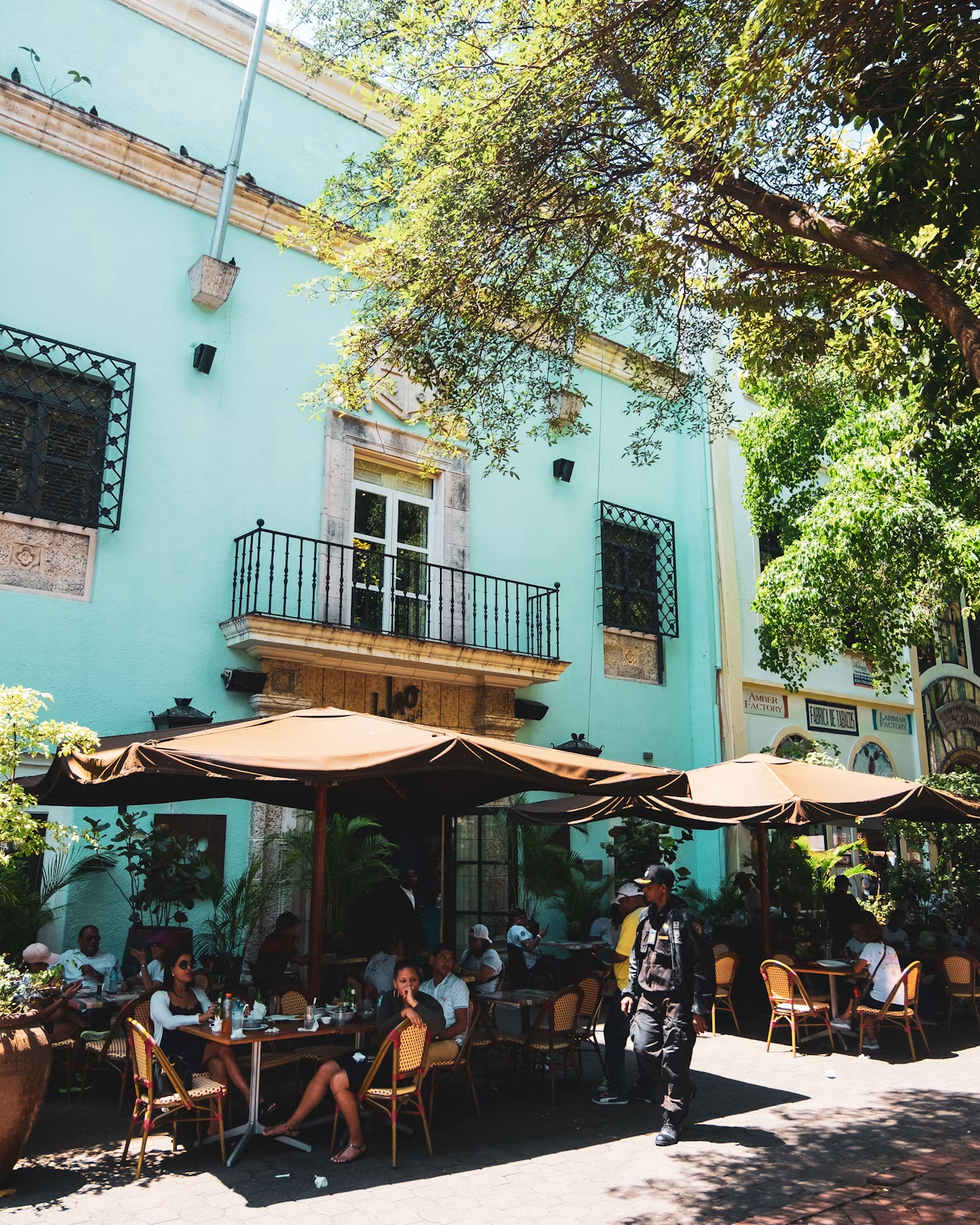
Four: La República Dominicana, the Dominican Republic. The DR grants permanent residency from day one for a $200,000 investment into local property, a business, or a bank deposit. All three routes at the same price. And perhaps the most appealing part: the citizenship petition opens after just 2 years. That is the fastest citizenship clock in the hemisphere apart from Argentina's very similar setup.
The economics behind the asset are strong. The country took in almost 12 million visitors in 2025 and closed the first half of 2026 at 6.6 million, up 7.7% year over year, on track to pass 12 million for the first time. Tourism is around 16% of GDP, roughly $21 billion a year. Foreign direct investment hit a record $5 billion in 2025, the fourth consecutive annual record, and 2026 GDP is projected to grow between 4 and 4.8%, at the front of the region. Apartment prices rose about 11% year over year, gross yields in tourist areas come in between 7 and 12%, and Punta Cana rents to a market arriving on direct flights from more than 25 US cities. Then there's CONFOTUR: buy inside a qualifying tourism project and you get a 15-year property tax exemption plus a waiver of the standard 3% transfer tax, which on a $200,000 purchase is $6,000 back at closing.
Two things to weigh. That 2-year clock to citizenship asks for presence, roughly 183 days per year, so this is a relocation move rather than a paper flag you can maintain from abroad. That's less painful than it sounds, because the Dominican Republic does not tax foreign-sourced income, just like Paraguay. And the passport itself opens about 75 destinations, so what you're buying is speed to citizenship and a plan B beside your US passport, not strong mobility. If you want tourism yield and the fastest legal route to a second passport, this is a strong option.
Five: Panama. Panama's Qualified Investor Visa grants permanent residency on $300,000 in real estate, processed in about 60 to 90 days, with almost no presence required whatsoever. That threshold rises, and this is important, to $500,000 after October 2026. Same program, same residency, $200,000 more for anyone who moves after that date. We don't know for certain it will happen, but as of right now, it will.
The citizenship timeline in Panama is 5 years but discretionary. Decree 193 set the reduced figure, and a decree can extend it, or not. As we see whenever the EU pulls visa-free access from an emerging market or forces price increases on a program, rules like these change with no vote from you.
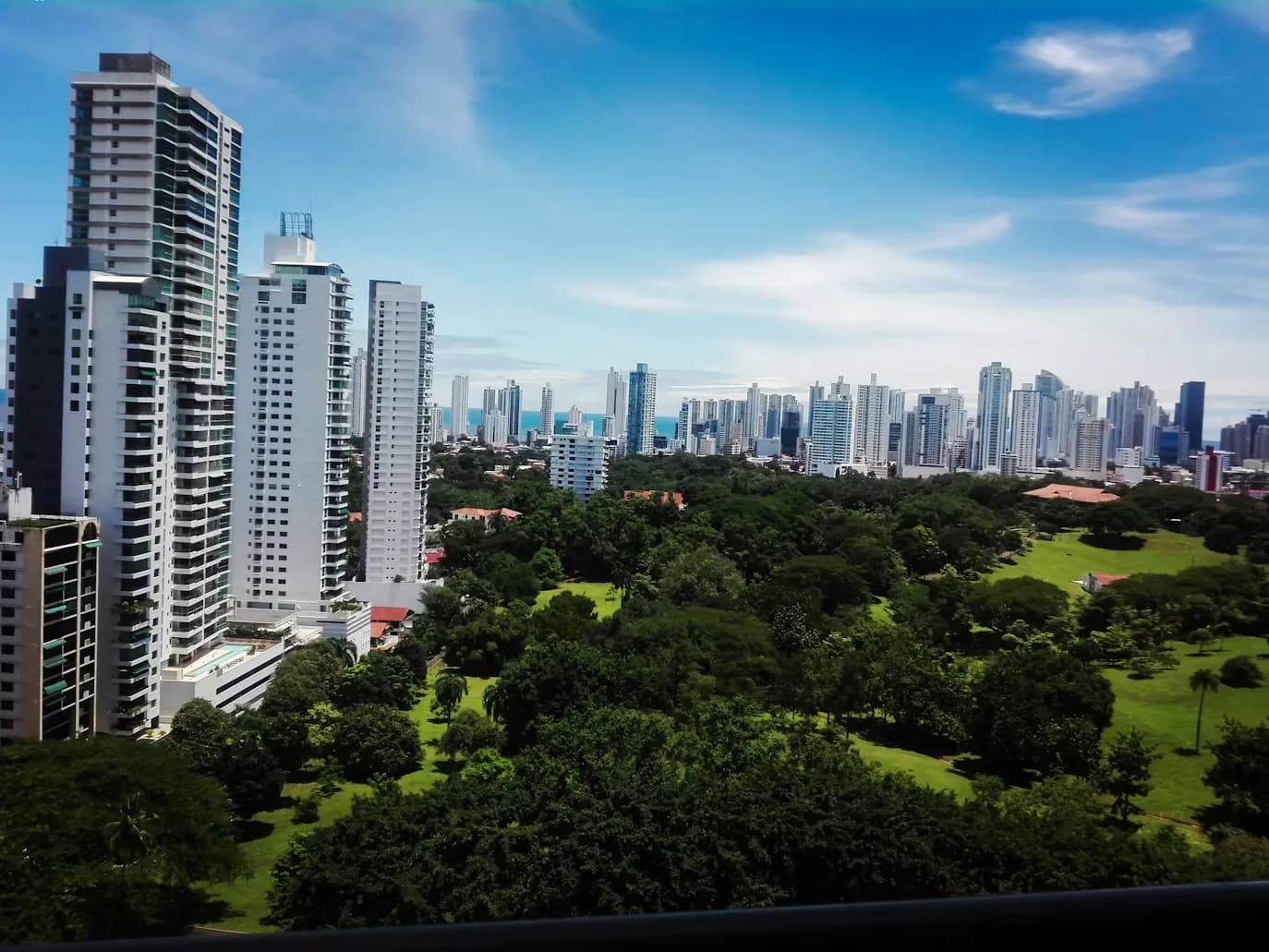
Panama is the banking and logistics hub of Latin America. Having spent a lot of time here, I know it well. It's dollarized, and the Panama Canal generates revenue no neighbor can match, although Nicaragua is trying. Panama City gross residential yields averaged around 7.8 to 8% in the most recent Global Property Guide survey, and prices are turning up after several soft years, from what I hear on the ground. GDP growth is projected near 3.5 to 4% for 2026 and a little above that in 2027. If infrastructure is a proxy for your thesis, the fourth bridge over the canal is a $2 billion project about 20% complete and scheduled for October 2028, with metro line 3 heading west on a similar timeline. And like Paraguay and the Dominican Republic, Panama taxes only Panama-sourced income.
The trade-offs are equally clear. Panama City has a long history of rental oversupply, because plenty of buyers here purchase for safety rather than yield. You notice it when you walk through the city: plenty of skyscrapers, few lights on. Citizenship is reachable at year five but slow and discretionary; the president literally has to sign off. So treat this as a very legitimate residency and banking play with a passport as a bonus rather than a promise. If you want the cleanest permanent residency in the Americas and you're buying property you'd want anyway, I might take that $300,000 window while it's open. And I'm curious: comment below with which of these five you'd pick.
So where does that leave you? Different investors, different answers, different profiles. We're program agnostic over here. We simply want the perfect fit for you, your family, and your assets. Here's your next step: go to freedomfiles.co/begin. Ten questions, 90 seconds, and you get a custom Plan B Blueprint on the routes that fit your goals and timeline. Qualified applicants also get a free 60-minute Freedom Consult with yours truly. If you already know your program and you're ready to start, book a call and we'll get moving.
Before you deploy capital anywhere in these five emerging markets, watch my breakdown of the cheapest second citizenships you can get in 2026. It's on your screen now. Talk to you soon.