Buy real estate, get a golden visa. That promise lives on in just a few European countries. And contrary to what you may think, Portugal and Spain are not on this list anymore. In this video, you'll learn about five unique European residency programs, two underrated ones, what they cost, and if they fit your goals and situation. Number five, by the way, is my personal favorite, because permanent residency comes with tremendous tax benefits as well.
Quick reframe before we get into the meat of things. Portugal pulled property from its qualifying Golden Visa investment options in October of 2023, and Spain closed its whole visa program in 2025. So we'll cover just the existing programs in this video. We get asked all the time about property and tangible assets when our clients are thinking about investing in Europe. While most golden visas offer lots of capital options, like bank deposits, fund investments, or riskier startup funding, there remain a few property-linked golden visas in the region. You park capital in a hard asset. It gives you a permit for as long as you own it. And when you sell, the principal and any appreciation along the way comes home. Not a bad way to get a plan B residency.
First, Cyprus. The Cypriot Golden Visa requires €300,000 in property and issues direct permanent residency in just a few months. And while we can't say the same about Greece later in this video, permanent truly means permanent here. No renewals or annual fee. You just have to visit the country once every 2 years to maintain your residency. Big difference from most of Europe. Now, what kind of conditions does this property investment come with? I'll tell you. The property has to be a new build or a first resale bought from a developer, not a secondary-market apartment you found yourself. And the €300,000 is before VAT, so roughly it comes out to about $400,000, let's say. You also must show €50,000 a year in income from outside of Cyprus, with additional income required for each dependent you add to your application. Finally, you have to own the property for at least the first 3 years. Again, this is particularly lenient compared to some other options on this list.
And a small caveat here in Cyprus: While it is in the European Union, it's an EU member, and citizenship there would give you residency rights across 30 countries in the region, it is not yet in the Schengen area. Accession is in progress and could happen within the next month or year, who knows? So what does this mean? It means that if you don't already have visa-free access to the Schengen area with your citizenship stack today, for example, Americans do, Canadians do, obviously Europeans do, residency in Cyprus does not automatically give you travel access to the region the way residency in EU and Schengen member Greece would. On tax, Cyprus could be the strongest of the five for the right profile. Wait for the last country for probably the best overall. If you move your tax home there as a non-domiciled resident, and FYI, American citizens have their tax domicile in the US, so this is fine, you pay no Cypriot tax on worldwide dividends, interest, or rent for 17 years, and there's no inheritance tax either. So who does Cyprus fit? If your income is mostly dividends and interest and you want a mostly English-speaking, common-law base inside the EU without having to move there, but the option to do so, of course, Cyprus is a fantastic option. Worth mentioning is that the typical naturalization path requires 8 years, where you're a legal resident for 7 years, which you have with a golden visa, and fully present in the last year before applying. You also have to learn A2 Greek, Cypriot Greek that is, but not B1 like Greece later in this video requires. If you're a highly skilled professional and have employment in the country, listen up: You can qualify for citizenship in just four to 5 years. Now, where Cyprus falls short against the other four we'll cover: It is not a Schengen area member yet, and you're limited to investing in new property and developer stock, so the property choice is a bit narrower than in Greece or Serbia, say.
Okay. Number two technically has the lowest price here. Serbia has no minimum purchase price at all. In fact, you can buy an apartment or house anywhere in the country, register your address, and you qualify for a temporary residency permit in under two months. And livable flats start near 50,000 outside the big cities and near 100,000 in Belgrade. The market has significantly grown in the last few years as the country gets more and more attractive, not only from a demographic standpoint, if you compare it to the rest of Europe, but an economic one too. Serbia is growing. The residency permit is issued for up to 3 years. Permanent residency opens at year 3 and a passport about 3 years after that, but that step requires relocation to the Balkan country. And a couple wrinkles here. The property has to be your home. So if you rent it out, the basis for your permit can be removed at renewal. Granted, this is not strictly enforced, but it's always best not to play games, let alone with the Serbs. And Serbia is not in the EU, not in Schengen, and has open relationships with Moscow and Beijing that Brussels does not love. For a lot of you guys, that's a con. But for many investors and many of our clients, that's the whole point of investing in Serbia. This is a diversification play.
So who does Serbia fit? If your whole life lives inside one legal system, one economic bloc, and one military alliance, a base in a country that trades with both the East and West and has open conversations is a different kind of geopolitical hedge from a second EU permit. And it costs less than any other flag in Europe. This is the same reason a lot of our investors are interested in Turkish direct citizenship by investment. Now, where Serbia falls short is the fact that this residency is temporary and rests on your active involvement to renew it before permanent residency and before citizenship. This is unlike Cyprus or Malta, which we'll discuss last in this video. Also, as I mentioned, residency in Serbia does not open travel freedom around the Schengen area for non-Western clients who don't have that visa-free access to Europe, nor does it open residency rights in the European Union upon citizenship. And lastly, I'll add that a lot of change in Serbia has been priced in, as with the next country on this list. So if you're looking for the yield and appreciation you could have gotten by investing 10 years ago in Serbia, you may want to look elsewhere, but it remains a growing market.
Number three is Serbia's neighbor and perhaps the most interesting on this list for a couple reasons. Like Serbia, a lot of market movers jumped into Montenegro a decade ago, even 5 years ago. But even today, as Montenegro vies for accession to the European Union, and we'll come back to this in a second, residency in the country requires €150,000 in property and issues a one-year residence permit pretty quickly. This €150,000 threshold is new as of 2026, and it's the taxable value the tax authority assigns to that property, rather than your purchase price. The permit renews each year up until permanent residency in year five and does not technically allow work or active business while you're in Montenegro. So why does this one get my attention? Podgorica is targeting EU accession in 2028, and Brussels has put Montenegro at the front of the Western Balkans pack. If that happens, the residency you bought for €150,000, and got a tangible asset for as well, all of a sudden becomes residency in the European Union. And if you claim citizenship down the road, that's a highly beneficial passport with residency rights in 30 countries in Europe. And if you're in Montenegro for the returns, consider that Croatia's coastline properties rose 30 to 40 to 50% in value in the years after it joined the EU a little more than 10 years ago. It's Singapore in the 70s, if you'll allow me that stretch.
Now, you might say, come on, a permit from a country that isn't in the EU yet, on a promise from a prime minister? Totally fair. First, 2028, which is the target date for their accession to the European Union, can slip, and we've seen this movie before. It could realistically be 2030 before Montenegro is admitted, or they're never admitted at all if they don't follow through on their promises to Brussels. Second, the EU has a lot of leverage here. It pushed Montenegro to close its own citizenship by investment program at the end of 2022, and it killed Malta's in the European court just last year. So a property route could get squeezed after Montenegro joins. Who knows? That's why it's best to get in early and secure that residency, even if early means after the crowd of Russians and Chinese who came a few years ago. And a quick aside here: If you're weighing a base like this against the safer EU permit or any other programs worldwide, go to freedomfiles.co/begin. Answer 10 quick questions and you'll get a fully custom report on the residencies and citizenships that fit your goals. You can even book a call with me after you do so.
Okay, so you might be asking for whom this is the right fit. If you have a 5 to 10 year horizon and you want emerging-market upside, granted, there's a little of that priced in already, but residency in a potential EU member state all the same, a beautiful base on the Mediterranean, and a euro-denominated coastal asset at half the Greek entry price, Montenegro is a good fit. Where I'd hesitate, though, is that the residency is a single year that must be renewed a bunch before you get permanent status in the country. Citizenship takes 10 years, and Montenegro does not technically recognize dual citizenship, so the passport could cost you your original one. Treat it as a residency play from day one. And by the way, if you want to hear more about these dark horse, sleeper picks like Serbia and Montenegro, we have lots up our sleeve. Comment something down below and we'll add it to the content calendar.
All right. Number four is, if not the most popular program with our clients, top three for sure. The Greek Golden Visa is the most flexible golden visa in all of Europe. It has a whole slew of qualifying investment options, but in this video we're talking about property, so let's focus on that. You have a few choices here. €250,000 in converted property or a restoration project. You don't literally have to get on your hands and knees and knock down walls or anything. We work with partners with finished, beautiful homes that you'd never know were previously commercial buildings or historical sites. This is definitely the favored tier. Next, an investment in a regular apartment or home at €400,000 outside of the prime zones like Athens, Thessaloniki, Mykonos, Santorini, the popular islands. And finally, €800,000 anywhere in the country, including those zones I just mentioned. And since the 2024 rules, here's a caveat: A Golden Visa qualifying property cannot be put on short-term rental platforms. You're going to get a big fine and risk your residency permit. But you can rent through an agency or long-term all you'd like. The Golden Visa issues a residence permit in under a year, and by the way, each month this processing time speeds up, with no minimum time in the country each year. This is technically Greece's version of permanent residency, but you must maintain the investment and renew every 5 years. That's the rare EU permit you can own from wherever you are now.
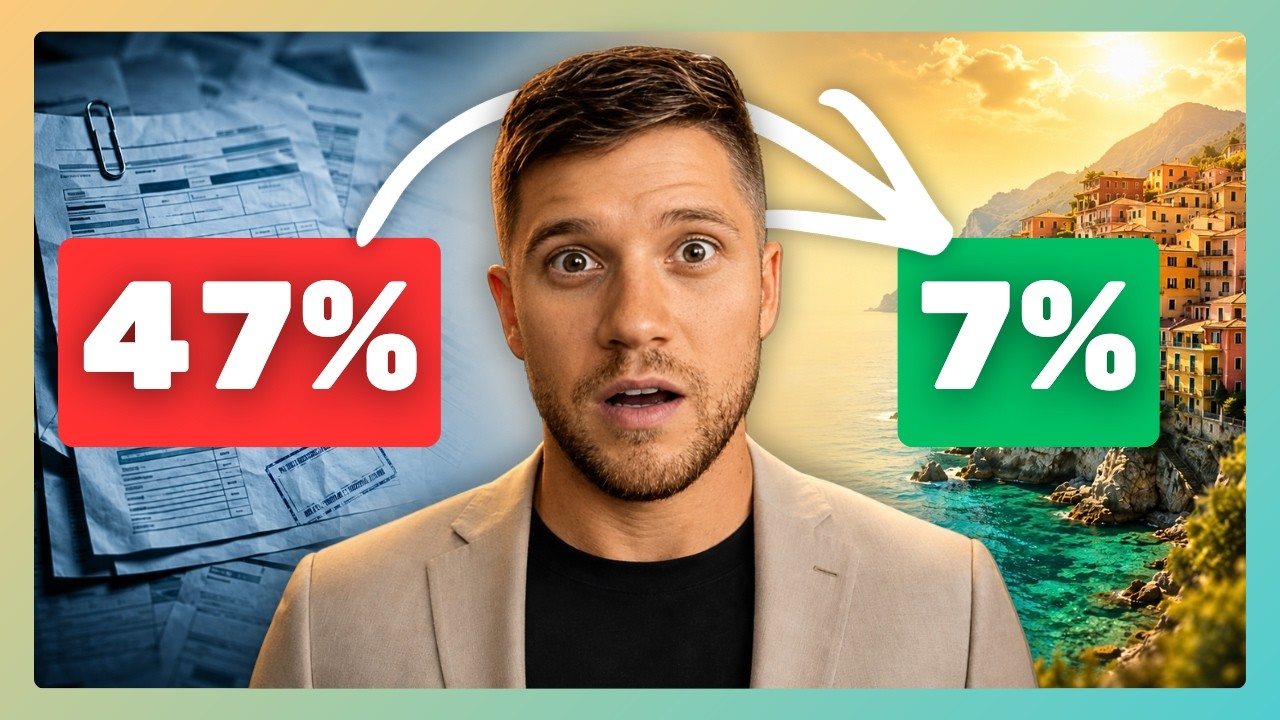
Also, the citizenship path in Greece is 7 years, the fastest in Southern Europe, faster than Portugal, Spain, Italy, and so on. But you essentially have to build a new life in Greece to qualify. You have to be proficient in Greek, you have to pay taxes in those seven years, and you have to prove ties to the country. This is the part that gets me excited about Greece for our clients. Greece has two of the best new-resident tax deals in Europe. One, a flat 7% on all foreign income for those with pension-like income, and that works really well with the US-Greece double tax treaty and could come farther down from that 7%. And two, a €100,000 annual tax cap for high earners. Both last 15 years. The latter requires an investment in the country of at least 500,000, though, so most golden visa investors just top up if they hadn't already invested that 500,000 in order to qualify for that lump sum. Neither one comes with the golden visa. To use them, you have to become a Greek tax resident, which means at least 183 days a year in the country. So that 7-year road to citizenship, where presence is required, may not be such a bad thing if you qualify for either of these tax regimes. So investors typically own the permit from afar and skip the tax breaks, or they move, pay low taxes, and qualify for citizenship in 7 years after learning a little Greek. Good luck. If breakdowns like this are useful, subscribe and turn on those notifications. Then you'll never miss any of these deadlines, program price increases, or investment opportunities. By the way, we covered Greece, the three residency routes in that country, how to get citizenship, and the three tax deals in excruciating detail in the video linked at the end of this video, so watch for that.
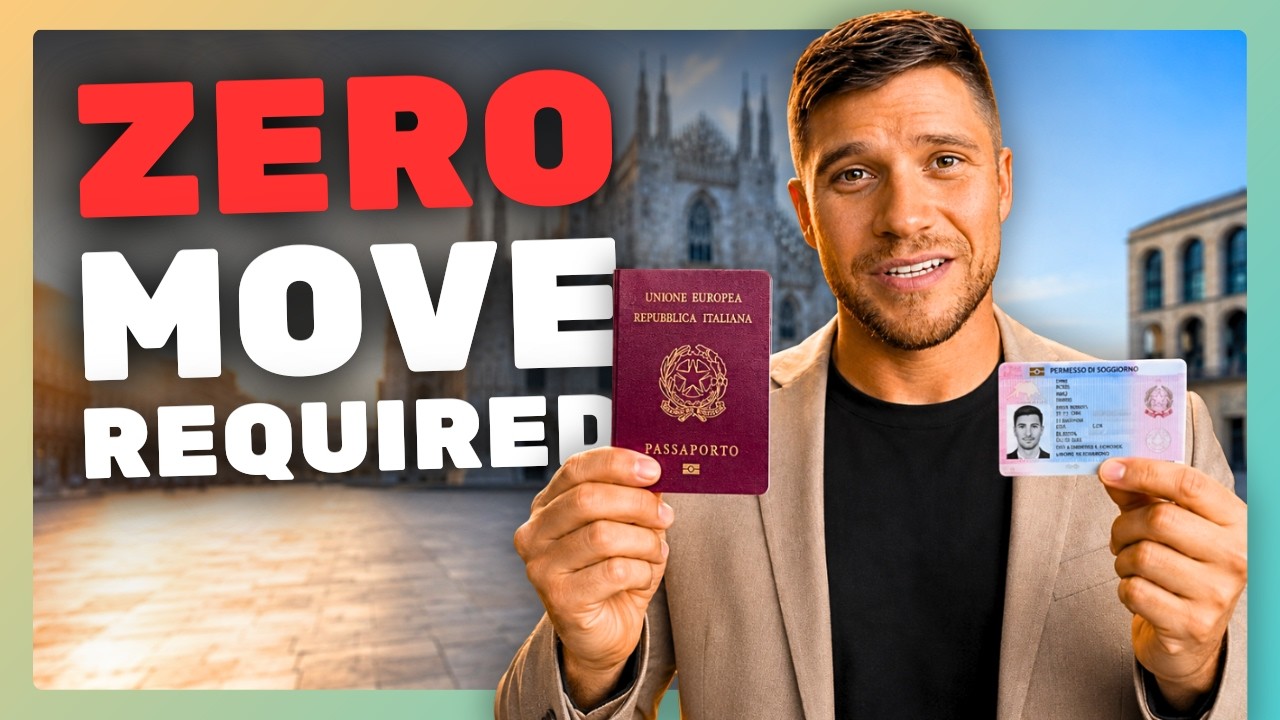
Number five is the only residency program where you really have no maintenance requirements past the required ownership term. This one is nice. The EU member state and Mediterranean island country of Malta. The direct permanent residency program requires one of two property options: Either a €14,000-a-year lease in the country or a €375,000 property purchase. And there are additional fees that add another 50 to €100,000 to the bottom line for both of those options. But comparatively, this is a fast, cheap permanent residency program. And why do I say permanent? Because it's a grant for life. There's no presence requirement past the investment. It comes with full Schengen travel access, and English is an official language, which is the case in just a couple of EU member countries, Malta, Ireland, maybe one other. Now, if you're purchasing property in Malta, this program is quite flexible. You can rent the property out from day one, and after 5 years you can sell it. So your cash gone for good on the purchase is simply the required donation and administrative fee, which totals a little under €100,000.
Now, the con in Malta is a rather big one. This residency and the attached property do not lead to Maltese citizenship directly, however long you own it. On paper, the citizenship timeline in Malta is 5 years, but in practice, this is more like 15 to 20 years. This is the value of working with people like us. And you really have to spend all of your time there, become Maltese, and get your neighbors to vouch for you. If you want direct citizenship, though, Malta eliminated their citizenship by investment route last year and now offers citizenship by merit, which is a separate route, not a program, that requires either a 1 to 1.5 million euro donation or a significant knowledge transfer to the country and gets judged case by case. So Malta is a residency play for most people, unless you're an exceptional individual and want immediate citizenship, well, in 18 months. That's how long it takes. On tax, Malta charges residents on Malta-source income and on foreign income you bring into the country. Money you leave outside the islands generally goes untaxed locally. Malta is the most tax-friendly country on this list, right up there with Cyprus, but without the time limit on its benefits. So if you make Malta your home, you're in for a tax treat.
So, which is best for you? I would ask myself these questions. One, are you buying a permit, an appreciating asset, a tax position, or a path to citizenship? And two, do you plan to live there or own it from a distance? Those two answers pick the country for you. If you're undecided, book a call with us at freedomfiles.co/consult. Save 100 hours of research and walk away with an exact recommendation for your goals. Whether it's here in Europe or the Gulf or Latin America, we work in more than 40 jurisdictions worldwide, so we know our stuff. And for the Greece crowd, I promised this earlier. We made a full deep dive on the Hellenic Republic, why you should move or invest there, and everything else you need to know about the country, including taxes. It's on your screen now. Three ways to get Greek residency in 2026, from €0. Watch that one next. Thanks for watching, and don't forget to subscribe if you got some value from this.