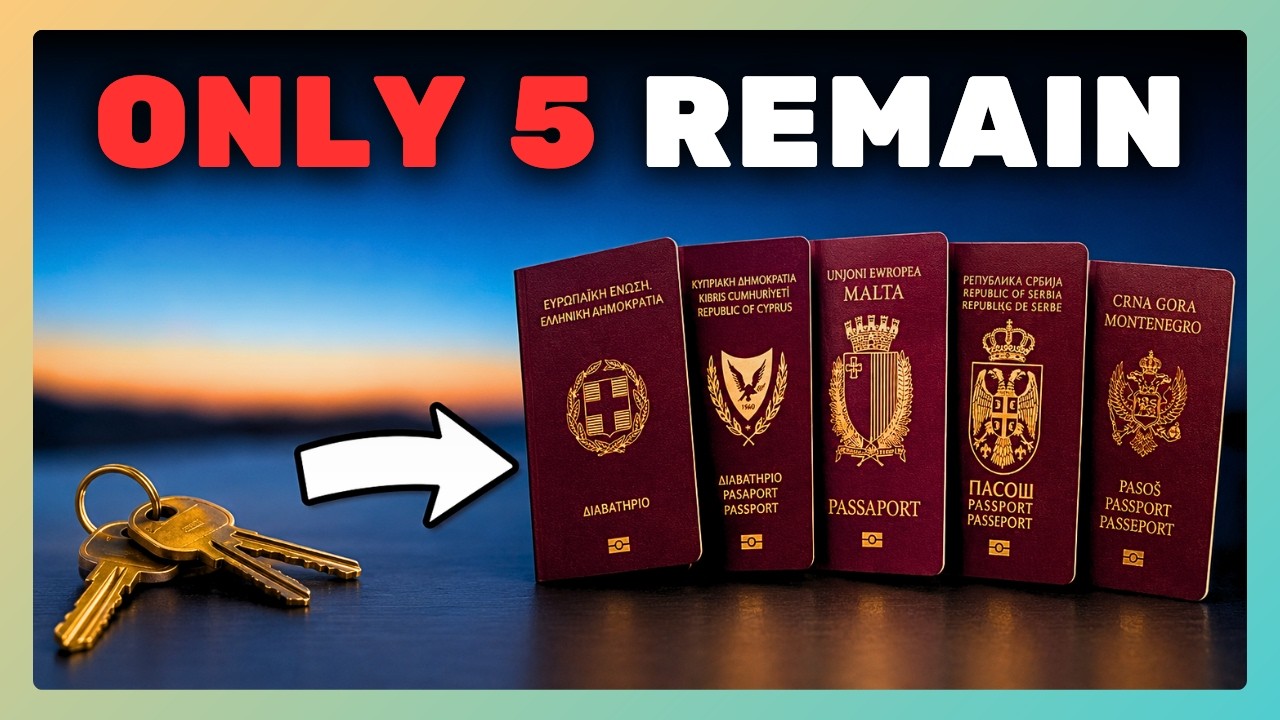
Buy real estate, get a golden visa. The promise survives in exactly 5 European countries in 2026, and contrary to what most research turns up, Portugal and Spain are no longer among them: Portugal pulled property from its golden visa in October 2023, and Spain closed its program entirely in 2025. What remains is a short list with real differences in price, permanence, and tax treatment. You park capital in a hard asset, the asset anchors a residence permit for as long as you own it, and when you sell, the principal and any appreciation come home. This guide covers all 5 property-linked routes, who each one fits, and the non-dom and flat-tax regimes that reward the investors who relocate.
Or watch the full breakdown here:
Cyprus: €300,000 for permanent residency that means it
The Cypriot Golden Visa takes €300,000 (before VAT, so plan on roughly $400,000) in a new build or first resale bought from a developer, and issues direct permanent residency in a few months. Permanent means permanent: No renewals, no annual fee, just one visit every 2 years. Applicants also show €50,000 a year of non-Cypriot income, more per dependent, and must own the property for the first 3 years. Two caveats: Cyprus is in the EU but not yet in Schengen (accession is in progress), and the qualifying property pool is narrower than Greece's or Serbia's. The tax story is the draw for the right profile: A non-domiciled resident pays no Cypriot tax on worldwide dividends, interest, or rent for 17 years, with no inheritance tax, and US citizens conveniently already have their tax domicile in the US. Naturalization typically takes 8 years with A2 Greek, or as few as 4 to 5 for highly skilled professionals employed in the country.
Serbia: No minimum price, and a different kind of hedge
Serbia is the price floor of Europe: There is no minimum purchase at all. Buy an apartment or house anywhere in the country, register the address, and a temporary residence permit follows in under 2 months, with livable flats from about 50,000 outside the big cities and 100,000 in Belgrade. Permanent residency opens at year 3 and a passport about 3 years after that, though citizenship requires relocation. The wrinkles: The property must be your home (renting it out can cost you the permit's basis at renewal), and Serbia is outside the EU and Schengen, with open relationships toward Moscow and Beijing. For many investors that's the whole point: A base that trades with East and West is a different geopolitical hedge than a second EU permit, at the lowest cost of any flag in Europe, the same logic that draws investors to Turkish citizenship by investment.
Montenegro: €150,000 ahead of possible EU accession
Montenegro's new 2026 threshold is €150,000 in property, measured by the tax authority's assigned taxable value rather than purchase price, for a 1-year permit that renews annually until permanent residency at year 5. The reason it earns attention: Podgorica is targeting EU accession in 2028, and Brussels has put Montenegro at the front of the Western Balkans pack. If accession lands, a €150,000 coastal asset becomes an EU residency, and Croatia's coastline rose 30 to 50% in the years after it joined. The sober counterweights: 2028 can slip to 2030 or never, the EU already forced Montenegro to close its citizenship by investment program in 2022 and could squeeze the property route after accession, the permit allows no work or active business, citizenship takes 10 years, and Montenegro does not technically recognize dual citizenship. Treat it as a residency-plus-upside play, never a passport play.
Greece: The most flexible golden visa in Europe, from €250,000
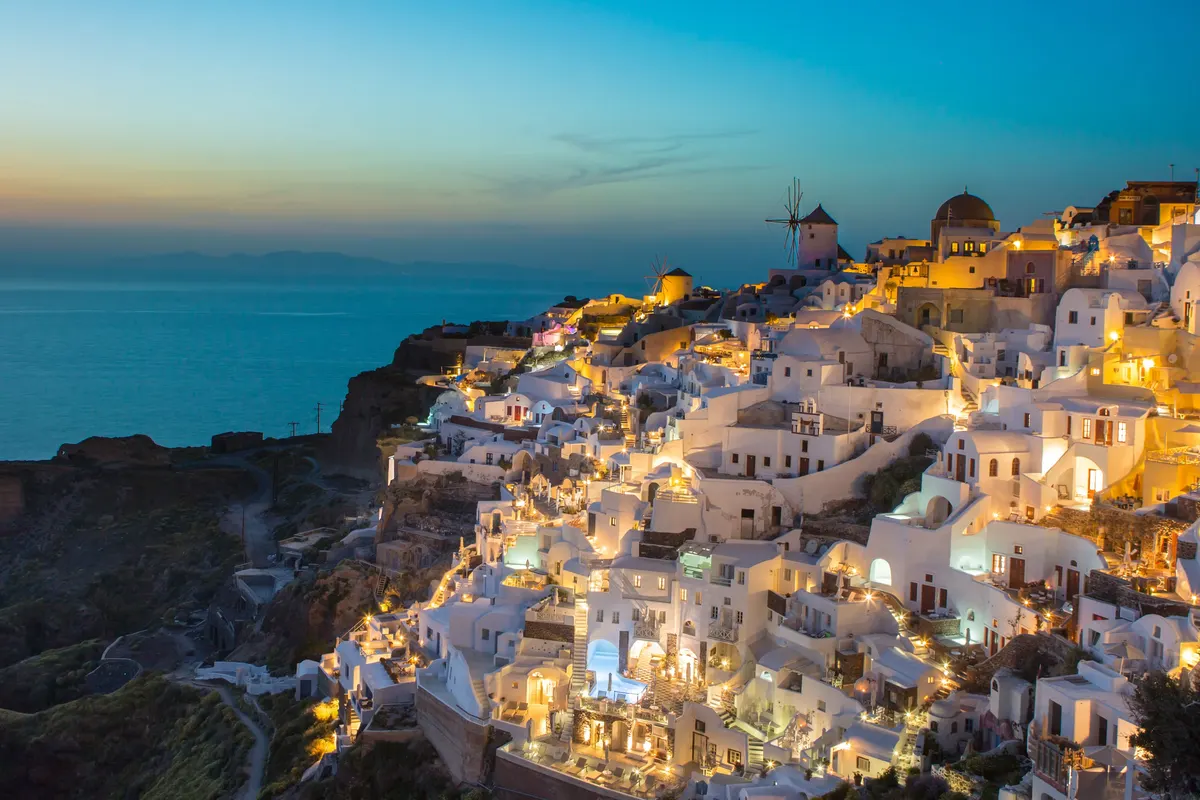
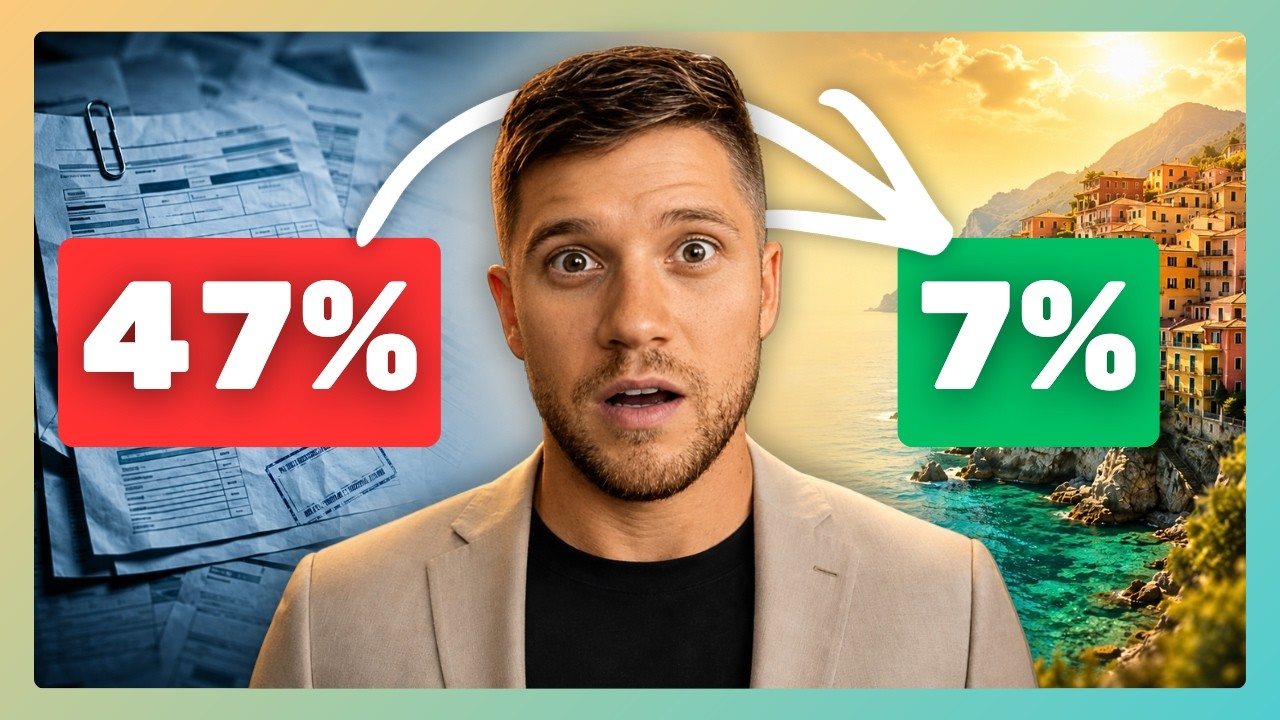
The Greece Golden Visa's property tiers: €250,000 in a commercial-to-residential conversion or restoration project (finished, move-in-ready homes through partners, and the favored tier), €400,000 for standard property outside the prime zones, and €800,000 anywhere including Athens, Thessaloniki, Mykonos, and Santorini. Since the 2024 rules, qualifying properties cannot be listed on short-term rental platforms, though agency and long-term rentals are fine. The permit arrives in under a year with zero required days in country and renews every 5 years while the investment is maintained, the rare EU permit ownable entirely from abroad. Citizenship opens at 7 years, the fastest in Southern Europe, but demands real relocation, Greek proficiency, and tax residency, which is where Greece's two new-resident deals earn their reputation: A flat 7% on foreign income for pension-like earners (often pushed lower by the US-Greece treaty credit) and a €100,000 annual cap for high earners with €500,000 invested in the country, both for 15 years. Golden visa buyers often just top up to reach the cap's threshold. Our full Greece guide covers all three residency routes and all three tax regimes.
Malta: A grant for life, from a €14,000-a-year lease
The Malta Permanent Residence Programme qualifies through either a €14,000-a-year lease or a €375,000 property purchase, plus fees that add roughly €50,000 to €100,000. What you get is unique on this list: A grant for life with no presence requirement past the investment period, full Schengen access, and English as an official language. Property buyers can rent the unit out from day one and sell after 5 years, leaving the true sunk cost at a little under €100,000 in donation and fees. The plain-spoken limitation: The MPRP does not lead to citizenship in practice (the paper timeline says 5 years; reality says 15 to 20 with full-time life in Malta), and Malta's replacement for its ended golden passport is a case-by-case citizenship by merit route at 1 to 1.5 million or exceptional-contribution level. On tax, residents pay on Malta-source income and remitted foreign income only, with money left outside the islands generally untaxed locally, and unlike Cyprus's 17 years, no expiry date.
Which property route fits you
Two questions pick the country. First, are you buying a permit, an appreciating asset, a tax position, or a path to citizenship? Cyprus and Malta sell permanence, Greece sells flexibility and the strongest tax pairing, Serbia sells the cheapest flag and a non-Western hedge, Montenegro sells accession upside. Second, will you live there or own it from a distance? Zero-presence buyers gravitate to Greece, Cyprus, and Malta; relocators unlock the 7% flat tax, the non-dom regimes, and the citizenship clocks. For the full field beyond property, our guide to 9 golden visas with no relocation required and our breakdown of all 15 European special tax regimes cover the rest, and the free regimes PDF compiles them in one place.
To see which of the 5 fits your goals, budget, and timeline, take the 90-second Plan B Blueprint for a custom report, then book a free Freedom Consult and leave with an exact recommendation. Already know your program? Book a call and we'll get moving.