
Territorial tax system
Costa Rica taxes only Costa Rica-source income. Foreign-source earnings, US dividends, US property rent, foreign business income, are generally not taxed by Costa Rica. US worldwide-tax filing continues regardless.
Costa Rica's investor residency. From $100K into a government-approved reforestation project (or $150K into property or a business), two-year renewable temporary residency, and a seven-year path to a Costa Rican passport.
The Inversionista Visa is Costa Rica's investor residency. You commit qualifying capital through one of three active routes, at least $100,000 into a government-approved reforestation project, $150,000 into Costa Rican property, or $150,000 into a Costa Rican operating business, apply through the Costa Rican consulate that covers your US state, and receive a two-year renewable temporary residency. The visa converts to permanent residency at year three, and citizenship petition becomes possible after seven years of legal residency.
Costa Rica delivers a stable democracy with seventy-five years of peaceful continuity, a respected universal healthcare system, US-aligned time zones, and a territorial tax system that does not tax foreign-source income. The Inversionista threshold is mid-range for the region; the lifestyle and political stability are top-tier. For clients who can wait the seven-year citizenship clock, the trade-off lands cleanly.
The outcomes the Investor Visa actually delivers, beyond the headline numbers. The six that matter most to our clients.
Costa Rica taxes only Costa Rica-source income. Foreign-source earnings, US dividends, US property rent, foreign business income, are generally not taxed by Costa Rica. US worldwide-tax filing continues regardless.
Costa Rica abolished its military in 1948 and consistently ranks at the top of regional happiness and stability indices. For families prioritizing institutional reliability, few Latin American jurisdictions match.
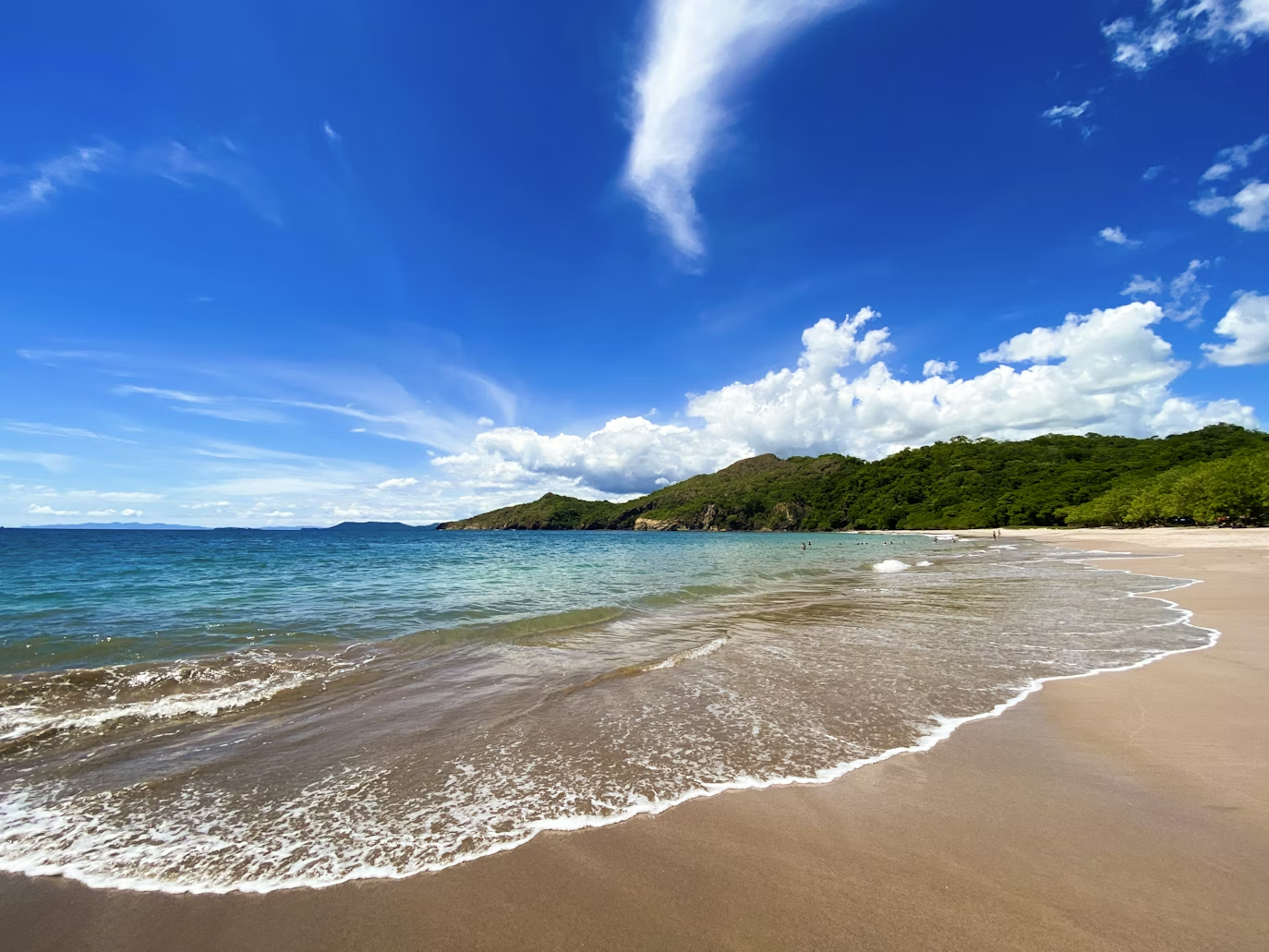
Seven years of legal residency on the Inversionista clock unlocks naturalization. Five years for citizens of Spanish-speaking countries and Spain.
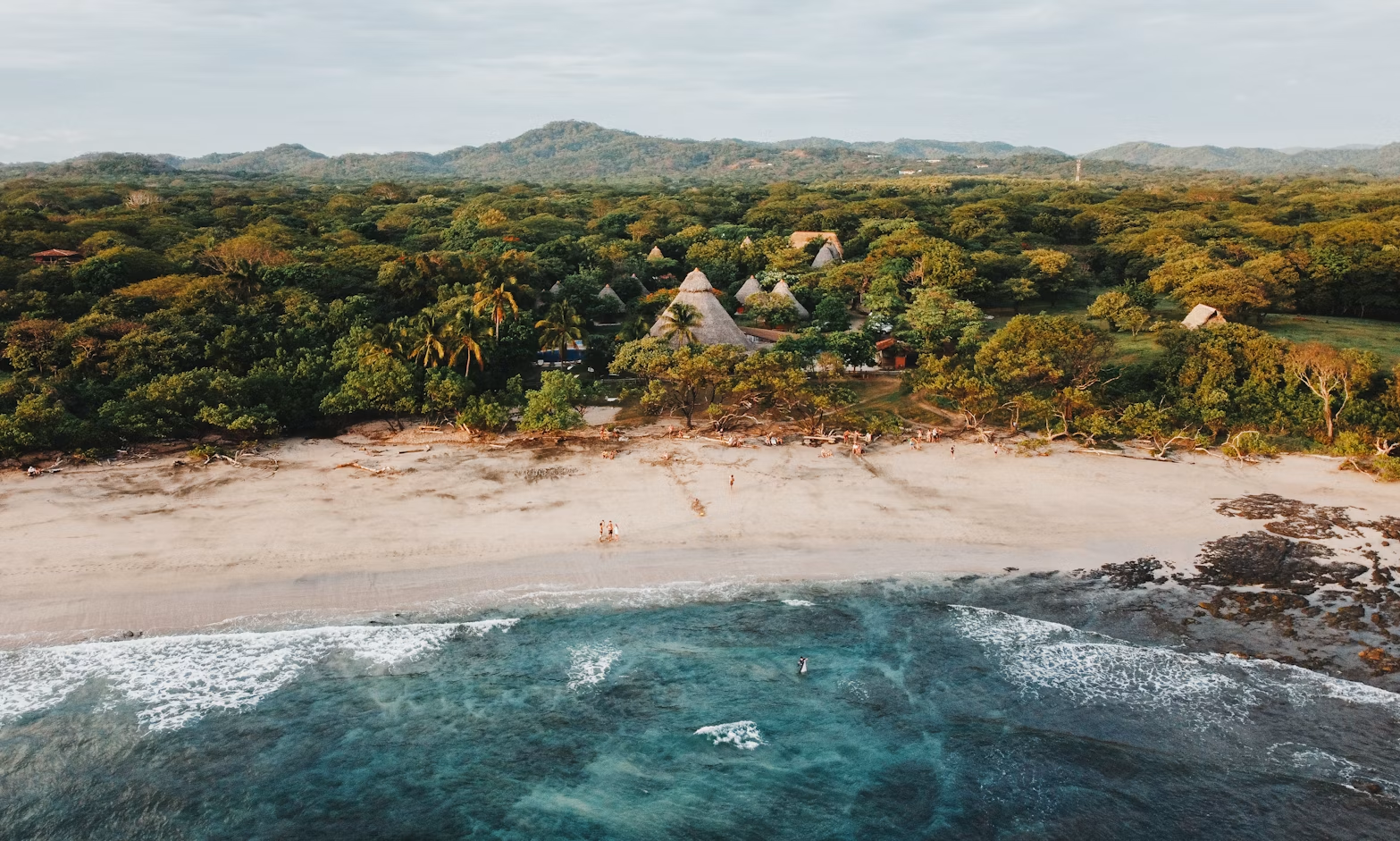
Costa Rica sits on UTC-6 year-round. Same time as US Central in summer, one hour behind US Eastern in winter. Remote work and US business operations stay on cadence.
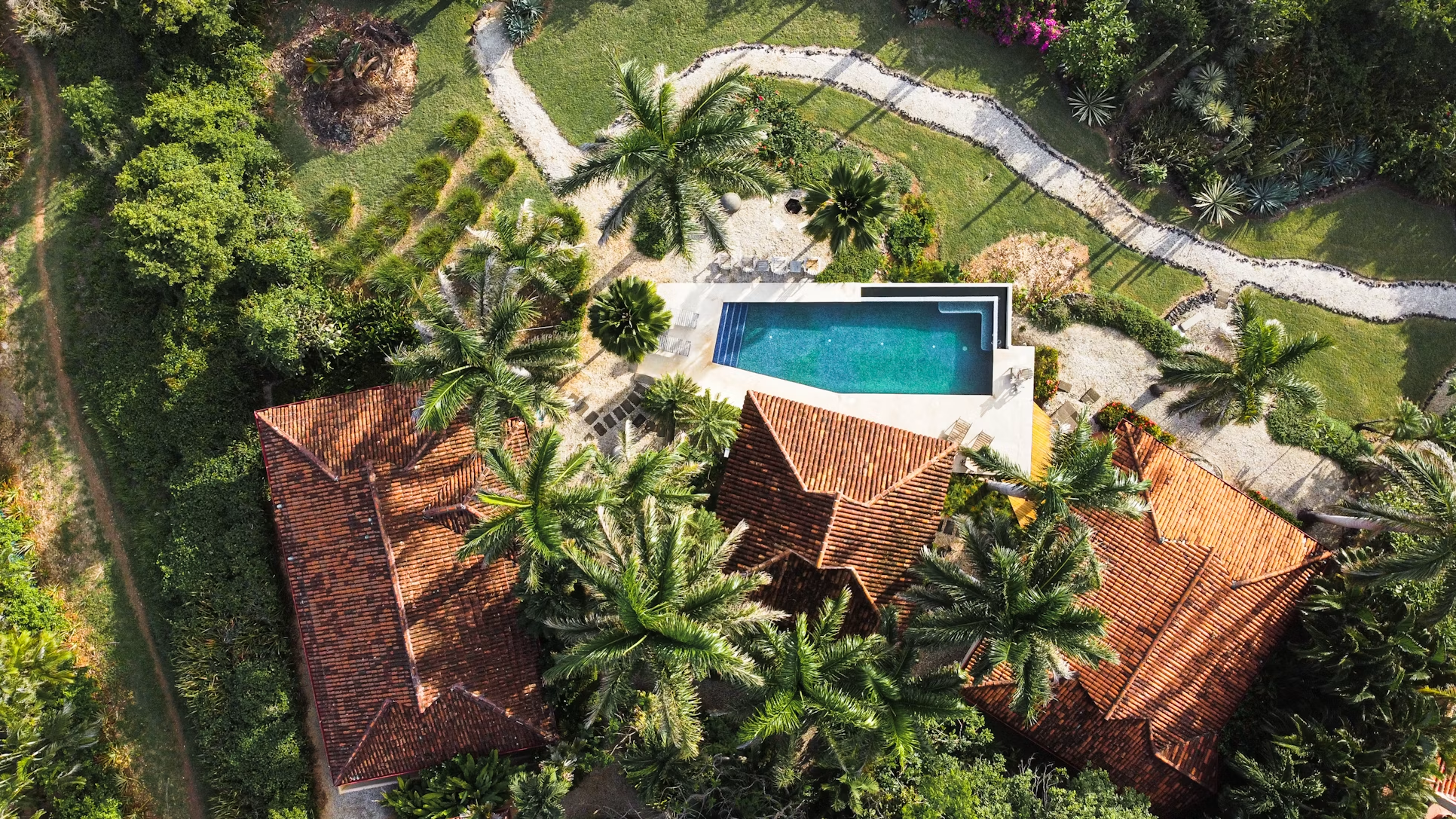
Spouse or registered partner, dependent children, and dependent parents qualify on the principal application. Each family member receives the same residency rights and the same seven-year clock to citizenship.
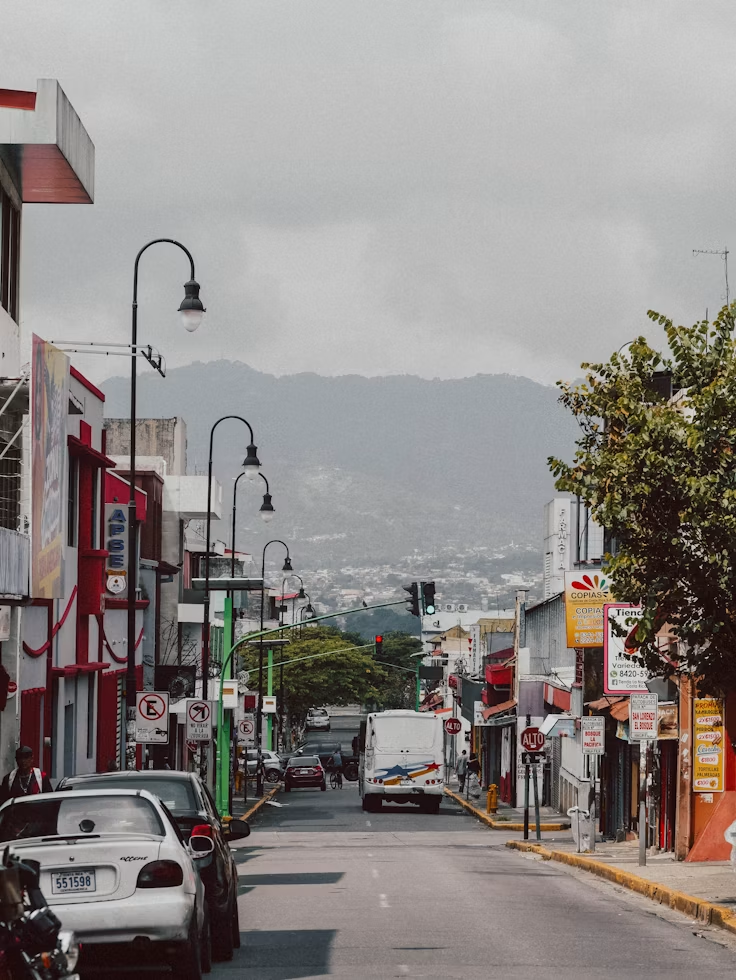
Universal public coverage available to legal residents. Most expats add comprehensive private insurance at $150-300/month for faster access. Private healthcare in San José is high quality; medical tourists routinely fly in from the US.
3 routes into the same residency. Each fits a different financial picture.
$150,000
Acquire Costa Rican residential, commercial, or development property valued at $150K+ in your name. The property must be properly titled and registered with the Registro Nacional. Recoverable on resale, subject to capital-gains tax and market conditions.
$100,000
Investment in a government-approved Costa Rican reforestation or forestry project. The lowest threshold of the three routes and structurally aligned with Costa Rica's environmental policy. Capital is held for the project term (typically 10-15 years) with returns tied to timber growth and carbon credits.
$150,000
Inject $150K into a Costa Rican operating company that conducts active commercial activity. The business must be properly registered with the Ministry of Finance and operating within 90 days of investment.
Choosing the right route is half the work. We model the comparison against your portfolio in the Consult.
Get my BlueprintReach out and tell us about your situation. From there, you’ll either book a 60-minute Freedom Consult (if you’re weighing options across countries) or get started on this route directly (if you already know it’s the right fit).
We coordinate the document pack: FBI background check (apostilled), birth and marriage certificates, US tax returns, source-of-funds documentation, and the Costa Rican-counsel power of attorney.
Coordinate the property purchase through Notarial channels, or register your Costa Rican company with the Ministry of Finance. The investment must clear and be properly registered before the visa application is filed.
Submit your visa application through the Costa Rican consulate covering your US state. Most consulates process complete Inversionista files in 60 to 90 days.
You enter Costa Rica on the visa stamp. Within 90 days of arrival, register at the Dirección General de Migración and apply for your DIMEX (foreign-resident card). The DIMEX arrives within 60 to 120 days.
Maintain the qualifying investment. Enter Costa Rica at least once per year to keep the visa active. Renew at year two. Convert to permanent residency at year three; petition for citizenship at year seven.
Processing
Temporary residency
Permanent residency
Citizenship
6-8 months
Years 1-3
Years 3-7
Year 7+
How this program stacks against the closest credible options for the same visitor. We don’t earn more if you choose one over another.
| Dimension | Costa Rica Inversionista | Costa Rica PensionadoLearn more | Costa Rica Digital NomadLearn more |
|---|---|---|---|
| Minimum financial bar | From $100K (forestry, property, or business) | $1,000/mo passive income | $3,000/mo active income |
| Presence required | Once per year | Once per year | 180+ days / year |
| Processing | 6-8 months | 3-5 months | 2-3 months |
| Time to citizenship | 7 years | 7 years | 7 years (post-conversion) |
| Right to work in Costa Rica | Yes (your own business) | No (passive income only) | No (foreign income only) |
| Family inclusion | Spouse, children, parents | Spouse, children, parents | Spouse, children |
| Capital recoverable | Property: yes. Business: equity | Income-based (n/a) | Income-based (n/a) |
The Inversionista fits clients deploying capital. The Pensionado fits retirees and pensioners. The Digital Nomad Visa fits remote workers in the short term but typically converts to a longer-term route to reach the citizenship clock. We don't earn more if you pick one over another.
Want a Costa Rica briefing covering everything on this page plus the comparison framework we use internally?
Three reasons families pick Freedom Files over the do-it-yourself path or a single-jurisdiction agent.
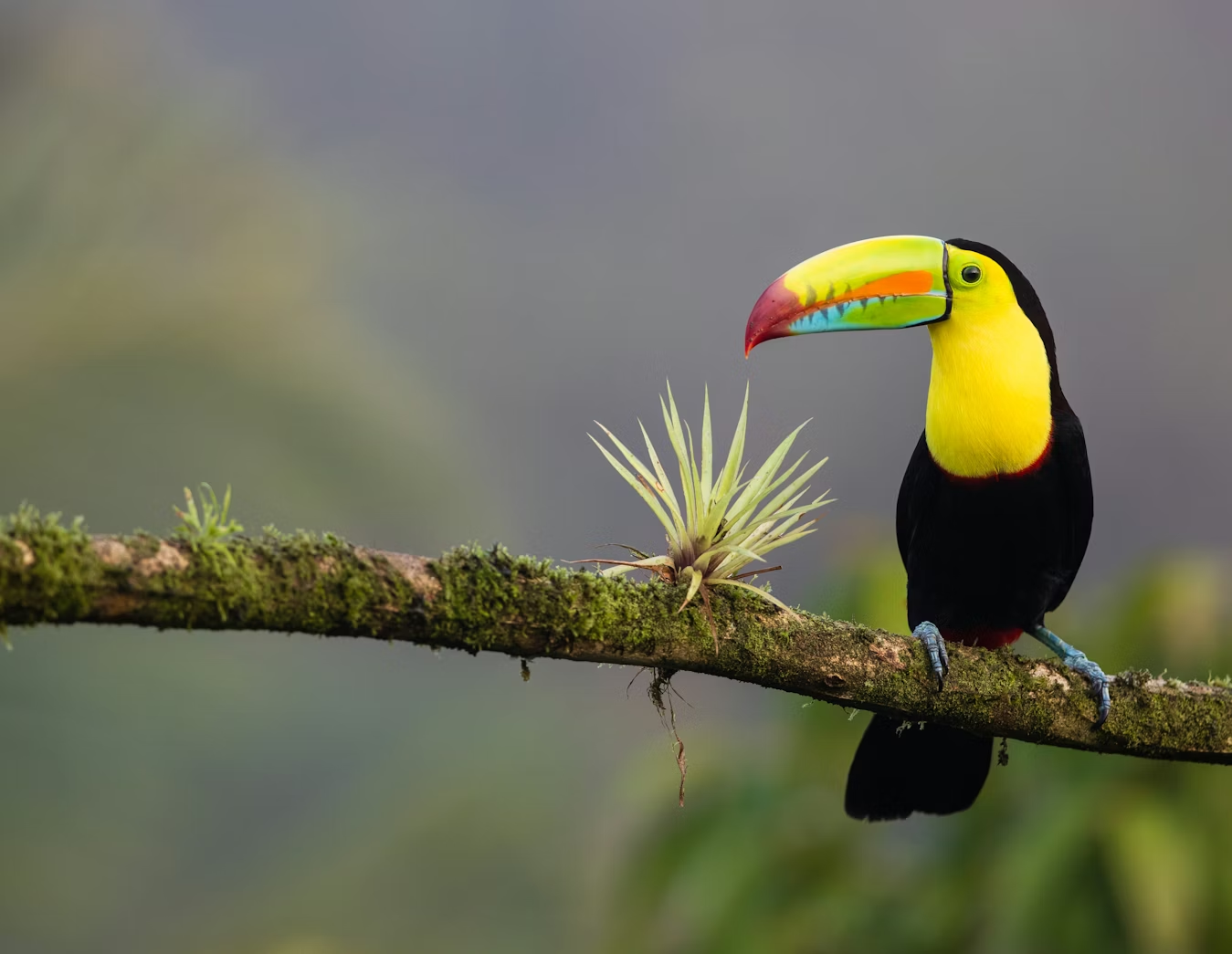
We know the consular cadence in Washington, Houston, and LA, and we know which document combinations move. The Inversionista looks simple until property-title verification or Ministry of Finance filings stall.
About a third of inquiries end with our recommendation against engagement. We tell you when the Pensionado, Panama, or Mexico fits cleaner.
Every engagement runs with US-licensed counsel from the first call. The territorial-tax-system interaction with US worldwide filing is planned before residency is triggered.
Both routes require $150K of qualifying capital. The property route is simpler: buy Costa Rican residential, commercial, or development property at $150K+ in your name. The business route requires injecting $150K into a Costa Rican operating company conducting active commercial activity. Most clients pick property unless they have a specific Costa Rican operating venture in mind.
To maintain the Inversionista status, you need to enter Costa Rica at least once per calendar year, among the lightest day-count rules in the region. To accumulate the seven years of legal residency for citizenship, however, you need substantial Costa Rican presence; the naturalization application requires evidence of a genuine connection to the country.
Costa Rica operates a territorial tax system: only Costa Rica-source income is taxable to Costa Rican residents. Foreign-source income, US dividends, US property rent, foreign business income, is generally not taxed by Costa Rica. US worldwide-income filing continues for US citizens. The interaction is technical; we coordinate with US-licensed counsel.
Plan on $2-3K in government and administrative fees (visa, DIMEX, family-member fees), $6-10K in Costa Rican legal fees through our partner counsel, $1-2K in translation and apostille costs, and (for property purchases) 1.5-2% in transfer and registration fees on the property value. Total non-investment cash outlay typically lands in the $12-18K range.
Daily life in Escazú, Santa Ana, Tamarindo, and Nosara runs comfortably in English at most service providers, hospitals, and restaurants. The citizenship application at year seven requires a Spanish-language assessment and a Costa Rican civics exam. Most clients build practical Spanish through immersion plus formal tutoring during the seven-year window.
Yes. Spouse or registered partner, dependent children, and dependent parents qualify on the principal application. Each family member receives the same residency rights and the same seven-year clock to citizenship.
No. The United States and Costa Rica both permit dual citizenship. You can hold both passports indefinitely if you complete the naturalization process.
Deeper coverage of Costa Rica from the Freedom Files library - long-form articles and short video deep-dives.
Non-Americans can drop their total tax rate to 0% by establishing tax residency in the right jurisdiction; US citizens simply avoid a second tax bill on top of the IRS. Here are all 19 tax-friendly countries across 4 systems, from the UAE and the zero-tax island citizenships to Panama's territorial system, Turkey's new 20-year exemption, and the Irish and Maltese non-dom regimes, plus the residency or citizenship route into each.
Europe is rearming, Germany is sending military questionnaires to every man born in 2008 or later, and starting December 18, 2026, the US automatically registers men 18 to 25 with the Selective Service. Here are 12 countries with no military draft: 6 direct citizenships you can get today, from $90,000, and 6 residencies that naturalize into a draft-free passport, plus the popular programs whose fine print attaches conscription.
American investors and their families are moving to Latin America faster than to any other region, and the reasons go well beyond sunshine. Here are the five structural drivers behind the shift, plus the exact residency and citizenship-by-investment programs in Mexico, Costa Rica, Panama, the Dominican Republic, Colombia, Brazil, Uruguay, and Argentina that our US clients are using in 2026. With the plain trade-offs on each.
 35 min
If you're not a US citizen and don't have a green card, you can drop your tax bill to zero by establishing tax residency in a zero-tax jurisdiction; if you're a US person, these countries simply won't add a second tax bill to your US one. This breakdown covers 19 tax-friendly countries worldwide across 4 systems, zero income tax (UAE, St Kitts and Nevis, Antigua and Barbuda, Vanuatu, Nauru), territorial tax (Costa Rica, Georgia, Paraguay, Grenada, Panama), tax holidays from 3 to 20 years (Chile, Uruguay, Cyprus, Turkey), and conditional non-dom systems (Dominica, St Lucia, the Dominican Republic, Ireland, Malta), plus how to get residency or citizenship in each and reduce your total tax bill to as close to zero as possible.
 24 min
As regional conflicts seemingly convert to global ones in Europe, Asia, and the Middle East, Europe is mobilizing its draft-age population, and starting December 18, 2026, the US automatically registers young men for a potential draft. So which citizenships don't require conscription? And which can you get today versus naturalize into over time? This breakdown ranks 12 countries that won't draft your kids: 6 direct citizenships from $90,000 (St Kitts and Nevis, Antigua and Barbuda, Grenada, Nauru, Vanuatu, and Malta's citizenship by merit), 6 residencies that naturalize without a draft (Argentina, Uruguay, Paraguay, Panama, Costa Rica, and Portugal), plus the fine print on popular programs that DO attach military service, from Turkey's buyout to Greek naturalization.

American investors and their families are moving to Latin America faster than to any other region, Mexico, Costa Rica, Panama, Dominican Republic, Colombia, Brazil, Uruguay, and Argentina. Here are the five reasons driving the shift plus the exact residency and citizenship-by-investment programs Americans are using in 2026, warts and all.

Expats are subtly abandoning one of Central America's favorite retirement spots, and the reason isn't what you'd guess. I spent a year living in both Panama and Costa Rica to find out which one is winning Americans over and which one is fading.
Two paths in. If the Investor Visa is clearly the right program for your family, start with the Blueprint and qualified applicants receive a Freedom Consult invitation inside the report. If you’re weighing this against other programs, the Blueprint routes you to the right conversation faster.
The consult is free for qualified applicants while we onboard our first cohort.
Most people spend 100+ hours researching residency and citizenship options before they realize they were looking at the wrong programs. We compress that into 10 questions, 90 seconds, and a single report.
“You come across as very genuine, authentic, and easy to deal with. Most experiences I've had with others are like, 'Send me money and I'll tell you what to do.'”