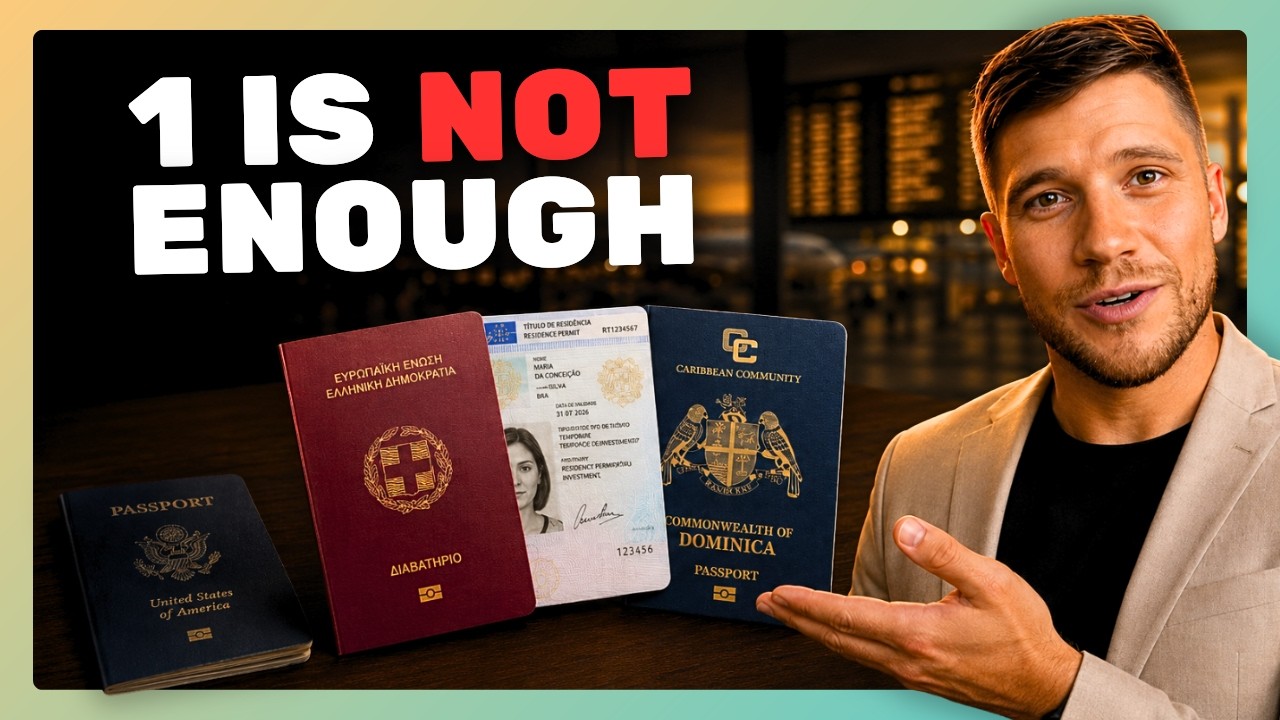
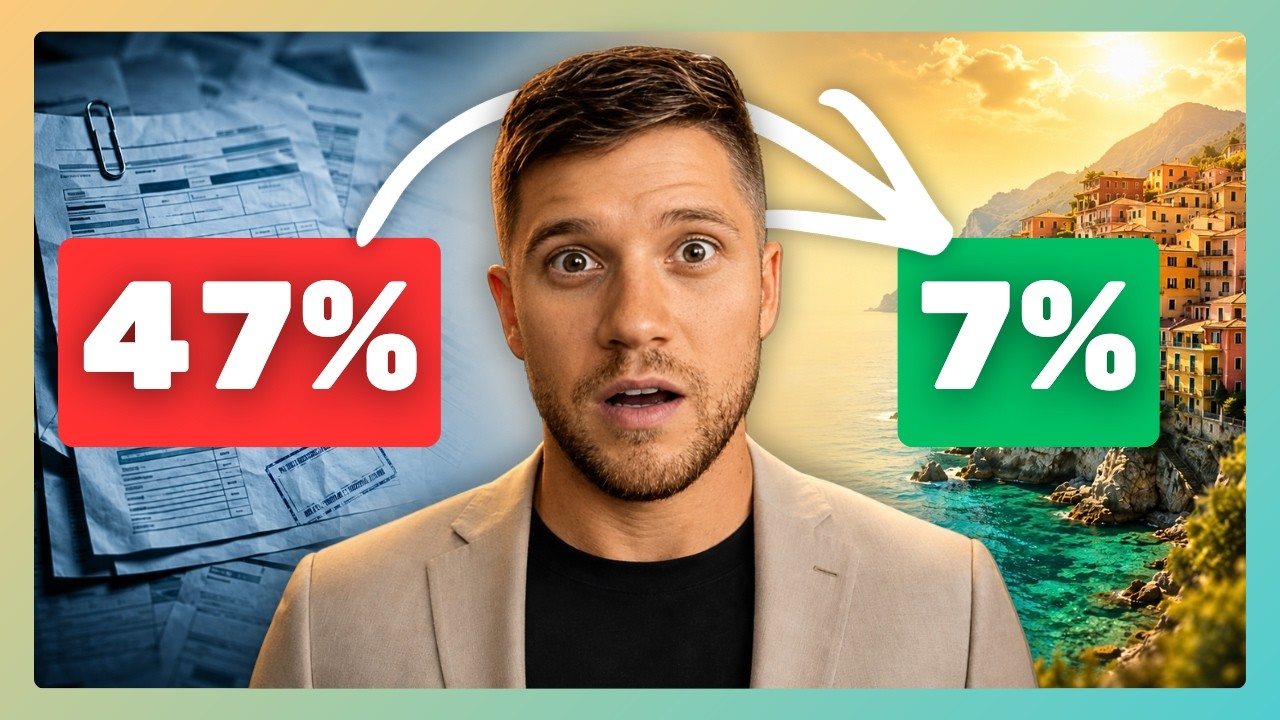
19 countries will charge you 0% tax on your foreign income, and five of them don't tax income at all. This will likely be the most detailed video you watch on this subject. I have used this knowledge myself to reduce my effective rate down to single digits. Expect to learn in this video about all 19 and, of course, how to get residency or citizenship in each, including the surprising country that just introduced a 20-year tax exemption, and our client favorite, saved for last. By the way, don't take notes. Everything in this video we compiled in a free guide for you at freedomfiles.co, linked below and in a pinned comment.
Now, every policy we cover in this video applies on the local side if you become a tax resident there. So if you're a US citizen, the US will continue to tax you on your worldwide income wherever you live, and a move to any of these countries simply removes a second tax bill, which, if you compare these countries to jurisdictions like Spain or Portugal, could be significant savings. Canadians and Europeans, you play by a different game. If you sever your tax ties at home and establish yourself in one of these places while earning from abroad, your total tax rate can drop to 0%. Notice the second half of that sentence: Establish yourself. Your home country lets go of you when you leave properly, but you must have tax residency somewhere, which usually means living in the new country most of the year, but we'll talk about that later. A second citizenship by investment does not automatically confer tax residency. You need to create ties with another jurisdiction, and we'll talk about how that differs across these jurisdictions.
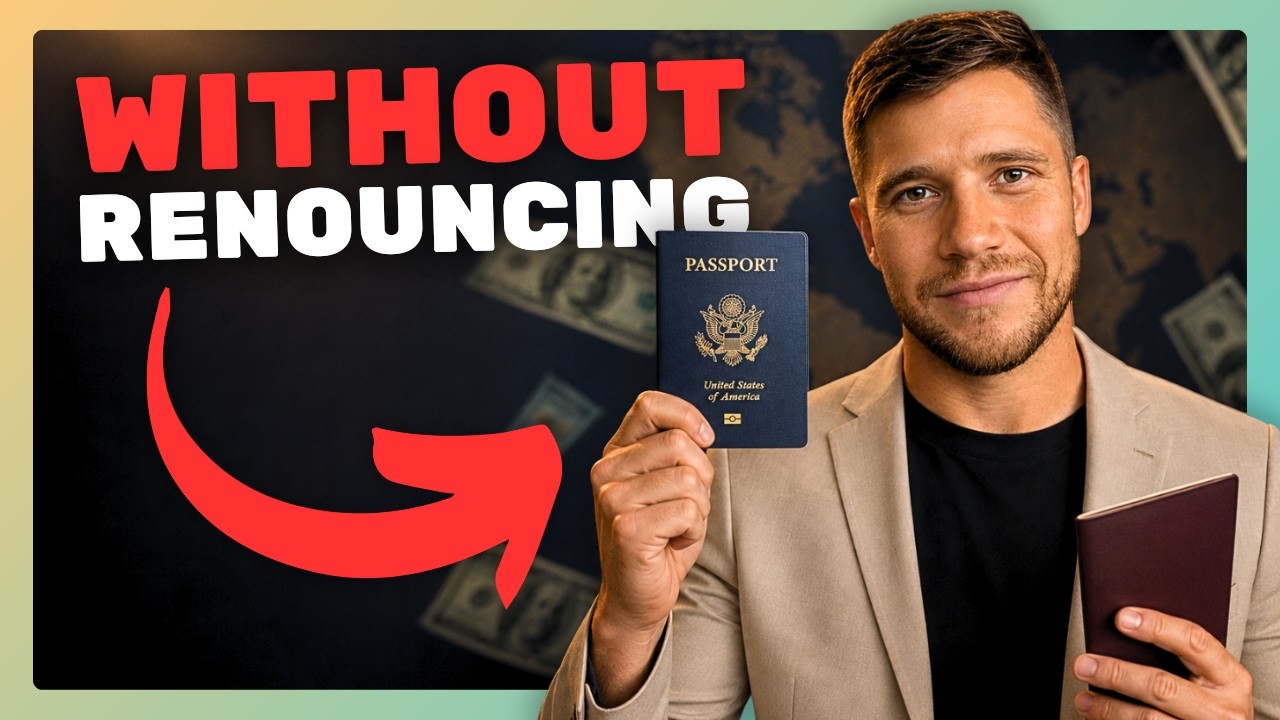
Now, back to Americans. You have two major tools at your disposal if you want to reduce your income tax. First, the Foreign Earned Income Exclusion removes about $130,000 US per spouse of earned income from US tax once you establish tax residency in another country or spend fewer than 35 days in the US in any 12-month rolling period. So a working couple can exclude over $260,000, and more with the housing exclusion and foreign tax credits. The key here, though, is earned income. Pensions, Social Security, dividends, interest, and capital gains don't qualify. So those with a salary or business income, you can save a boatload. The other tool at your disposal is a bit more dramatic. Zero US taxes exist only in the case of renunciation, a largely irreversible step that we help our clients with in the event it makes sense for their goals.
Now, in the event you want to live abroad but don't want to pay big bucks in taxes to two countries, not just the United States, you have options. We've broken these 19 countries down into four distinct groups. One, zero income tax, period. Two, territorial tax systems. Three, tax holidays that last a defined period of time. And four, conditional systems that may be the most appealing for your situation. And by the way, I am not a financial or tax adviser. Consult the professionals we work with in all these jurisdictions to help you.
Now, these first five countries tax no one's personal income, local or foreign. The concept of an income tax return simply does not exist here. The UAE opens this first group at $550,000 for a 10-year golden visa in property from a licensed developer or a regulated fund, processed in under three months. It's relatively quick, with a single 2-to-3-day trip for biometrics and the Emirates ID. Now, you don't technically need to invest in the UAE in order to establish tax residency, but if you aren't an Emirati citizen or resident, you must live there at least 183 days to become tax resident. And if you're a citizen or a resident on the Golden Visa or another program, you only need to spend 90 days in the country per year to establish those ties, to establish tax residency. This is a huge advantage if you lead a global business and don't want to, or can't, spend more than 6 months in the Middle East annually. Personal income tax does not exist in federal law, so your salary, dividends, rent, and gains remain untouched. Business owners meet the only levy that exists in the Emirates: A 9% corporate rate, introduced in 2023, on profits above 375,000 dirhams, or about $100,000. Now, two wrinkles complete the picture in the Emirates. Citizenship is off the table here, so the Golden Visa offers the temporary right to reside in Dubai or Abu Dhabi, but nothing more, renewable at year 10. And premium housing and international schools price at or above US coastal cities, so part of the tax savings definitely funds the lifestyle for a high earner in peak years. Let's say the cleanest zero on the map is attached to likely the weakest long-term end point.
Now, the Caribbean island nation of St Kitts and Nevis has no income tax statute. Rather, the state collects revenue through duties and consumption taxes and its long-lasting citizenship by investment program. To become an instant citizen of the country, St Kitts and Nevis requires a $250,000 donation for a family of up to four, $325,000 in approved property on a 7-year term, or a $600,000 private home purchase, and this processes in 4 to 8 months through the world's oldest citizenship by investment program. So, you know, it's stable. By the way, these investment thresholds doubled a few years ago under US and EU pressure, and it seems the goalposts are moving even more in the future. Across the board, this remains the strongest travel document you can purchase through citizenship by investment in the world, with visa-free access to more than 150 destinations. But again, that may change in the future, as our video on Caribbean citizenship pointed out. Both St Kitts and Nevis and our next country on this list require at least six months of presence to create those tax ties, the tax residency.
Now to St Kitts's neighbor of Antigua and Barbuda, which also administers an attractive citizenship by investment program. Antigua and Barbuda's direct citizenship by investment program prices a family of four at a $230,000 donation. This one processes in 6 to 12 months and charges no personal income tax since its tax policy update in 2016. Now, one feature makes this program unique compared to your alternatives in the region: The family inclusion policy is the most generous in the Caribbean. Spouse, children, parents, and siblings on a single application, no need for more investing. And families of six or more shift to the University of the West Indies route at $260,000, which again beats the standard donation route per head at that family size and includes a year of tuition if you want to educate your kids in tropical paradise. Typically, our bigger, multigenerational, complex family clients lean Antigua and Barbuda, while investors chasing maximum mobility lean St Kitts and Nevis.
Here's another country that offers absolutely zero personal income tax and immediate citizenship upon investment in the country: Pacific island nation Vanuatu. And their citizenship by investment program moves faster than any other on Earth right now. Once you donate $130,000, you'll have a naturalization certificate and passport in hand in under 3 months. Now, if you're a family of four, the total nears $200,000, but for the speed, it's incredible. Now, as we're known for on this channel, we always cover the warts just as much as the benefits of these programs. Let's be clear about what Vanuatu offers here. Almost no investor relocates to the country. So although they won't tax your income, the system's role in a comprehensive strategy is to add nothing on top of the citizenship. The product is speed and a solid plan B or plan C in most portfolios. Also, Vanuatu doesn't offer the strongest travel document on the market, because the EU suspended their Schengen visa-free access a few years ago and the UK followed. But you do have mobility to about 90 destinations, against the Caribbean's 140 to 150, until they too lose travel access to the European Union, which is on the table. In most cases, we position Vanuatu as a fast insurance policy beside your original citizenship, your first-world developed-country citizenship, and a residency in a more developed, more connected hub like southern Europe: Spain, Portugal, Italy, Greece, Malta, Cyprus, and so on.
Now, the last of the completely zero-tax countries is another island nation that offers direct citizenship in the Pacific region at the budget end of the market. Nauru's program requires a non-refundable contribution of $90,000 for a single applicant, in around 6 months to a passport. And a cool tidbit here: The proceeds fund coastal protection in one of the world's most climate-exposed countries, one of the few programs where the money maps to a visible national purpose. If they relocate to the smallest island country on Earth, individuals face no tax on income, gains, wealth, or estates. The same candor applies here as it does in Vanuatu: Almost no one ever visits this country, so the tax benefits are trivial, and the plan C or plan D citizenship is the deliverable, optionality. Hey, by the way, if breakdowns like this are useful, we publish several each week, so subscribe and you'll be notified every time a new one drops. Otherwise, we can't guarantee you'll see these ever again.
The second five countries tax local income only. These are called territorial tax countries, and they don't care about your foreign earnings even if you move there. These countries are a bit more livable as well than, let's say, the island countries we've covered up to this point, apart from the UAE. In fact, I myself have lived in several of these countries and can confirm their attractiveness. Foreign income in natural paradise Costa Rica is not taxed while you're a tax resident, spending more than 6 months a year there. So how do you get the privilege to spend so much time there? Because your US passport or your Canadian passport gives you 180 days, not the 183 required for that tax residency. One, you can invest at least $150,000 in property in the country and get immediate residency, or simply show proof of about $1,000 in pension income, which most Social Security recipients clear on the SSA award letter alone. If you don't qualify for the letter but have passive recurring income, you can place $60,000 in a local bank and take monthly distributions to prove that stable income. I've personally spent a cumulative year in Costa Rica, and from clients who spend a lot of time on the ground as well, we've noticed that crime has ticked up a notch in the past decade due to the drug trade. Even so, Costa Rica remains a pretty safe haven relative to its Central American neighbors to the north. As you know if you've been watching this channel for a while, we cover both the pros and the cons of life abroad. Now, if you spend significant time in Costa Rica and are searching for a citizenship path, you can qualify after seven continuous years of residency, with a Spanish test and a civics exam at the end, also with tax benefits along the way.
Georgia's Article 82 of the tax code exempts a resident's non-Georgian income from local tax, while local-source income pays a flat 20% and registered small businesses pay 1% of turnover up to about 500,000 lari, almost $200,000, among the lightest tax regimes anywhere. In order to become a tax resident of Georgia, you need to be physically present in the country for more than 183 days in any rolling 12-month period, not a calendar year. You can also qualify for tax residency as a wealthy individual without spending a single day in Georgia if you have residency in the country, have at least $500,000 in a Georgian bank, and can prove either $1.1 million in worldwide assets or at least three continuous years of more than $75,000 in annual income. Then you can also qualify for tax residency, again, without any physical presence in Georgia. Now, Americans get a full visa-free year to try Georgia on for style, very similar to Albania in the Balkans, before committing a single dollar or more time to a certain residency program. But once you're convinced this emerging market is for you, you can qualify for residency with a property purchase of at least $100,000.
Paraguay is often pitched by people in our industry as a tax-free Southern Cone haven with a low cost of living and a government that won't bother you. Why? Because it's true. Paraguay does not tax any foreign-source income and will give you immediate permanent residency for about $70,000 injected into a local business, an investment of about $150,000 in a local tourism project, or $200,000 in local real estate purchases. On that last item, you can even put $60,000 down on a financed property with a three-year commitment to pay the rest to the developer. Or, if you'd like the free route, you can qualify for temporary residency simply by showing you're alive. In reality, we expect clients to prove they make at least $1,500 a month in income, active or passive. A residency can take 30 to 90 days, can be done in one or two trips, and one visit every 3 years maintains your status. Once you have permanent residency in Paraguay, you can qualify for Paraguayan citizenship in just 3 years. Granted, the courts will want to see some visible roots, language proficiency, presence, and so on, so budget four to 5 years and plan to show up, especially right before you apply. This is a great back-pocket paper residency, and if the proverbial crap were to hit the fan in the West, a great destination to get away from it all.
Caribbean island Grenada has a direct citizenship by investment program and does not tax foreign-source income. Nice. If you seek citizenship in a tax-free tropical paradise, this is a contender. You have a few options to qualify: A $235,000 non-refundable donation, $270,000 in hotel shares or units, or $350,000 in personally titled real estate. And despite recent delays, you're looking at a citizenship certificate and passport in hand in less than 12 months. Now, one important fact here. A lot of people will tell you that if you're interested in renouncing American citizenship, this is the citizenship to invest in. Why? Because Grenada has E-2 visa treaty access with the United States. But what they often leave out of the details is that you must domicile in Grenada for at least 3 years before applying for that visa. So if you're willing to relocate to the country, its potential access to the United States and territorial tax treatment survive that move, which none of the conditional Caribbean programs later in this list can say. Another unique facet of Grenadian citizenship is that it passes by descent, so your children and grandchildren inherit it without re-qualifying or reinvesting in the country. This is a permanent family asset and a unique factor when it comes to Grenadian citizenship.
Panama closes this territorial tax group as perhaps the most tax-friendly country in the Western Hemisphere and one of the most popular jurisdictions with our clients. Before we get to how taxes work here, let's first walk through the residency routes that allow you to become a tax resident, that allow you to stay more than 6 months a year. The Panama Golden Visa, or the more technical term I like to call it, the Qualified Investor Visa, requires a $300,000 investment in property and grants permanent residency in under 90 days. Super quick. You could also deposit $750,000 in a local bank and get the visa that way as well. If you're looking for a lower threshold to qualify for residency and want the ability to stay as long as you'd like, the Friendly Nations Visa opens at $200,000 in property, or simply self-employing yourself in the country. But this is a temporary residency program that leads to permanent residency after year 2, so a lot of our clients opt for the direct permanent residency route in the form of the Qualified Investor Visa. The Pensionado Visa is designed for retirees and requires $1,000 a month in documented passive income, one of the most accessible bars in the region. This is also direct permanent residency, like the Golden Visa. Once you have permanent residency in Panama, you can qualify for citizenship after 5 years. While it's not required to maintain the visa, we generally recommend spending most of your time here in the two years before naturalization, so you're able to prove your ties to Panama before becoming Panamanian. This is a subjective process and even requires the president's signature. But as this video points out, spending a lot of time can be a boon to your wallet. If you spend more than six months a year in this well-connected financial hub of a country, you wouldn't owe any tax on your foreign-source income, dividends, or capital gains.
By the way, if you're weighing multiple jurisdictions in this video or more, and want an expert's take on the perfect long-term fit for your goals, go to freedomfiles.co/begin and you'll get a custom report on the residency or citizenship programs that match your goals, and then you can book some time with us to discuss them and get a tangible recommendation.
Okay. The third group grants new residents a time-defined term at zero tax, from 3 years to 20. First up is Chile. Chile gives every new tax resident 3 years of zero foreign income tax automatically, extendable in qualifying cases for another 3 years. And if you're a retiree watching the Freedom Files videos, foreign pensions remain exempt even after that window closes, as is the case in many Latin American countries. Colombia has that same model. If you don't rely on just a pension for your income, though, after that initial 3-or-6-year window you're hit with worldwide taxation at rates up to 40%. The full Chilean experience. Now, Chile surprises a lot of people. If you've not visited the country or don't know much about it, Chile is the most developed non-Anglo country in the Americas. If it's any indication of its political and economic stability, Chile's is the only passport in all of Latin America with visa-free access to the United States. Maybe Argentina will change that soon, but as of right now, this is the strongest citizenship in Latin America by far, in my opinion. Additionally, Chile is one of just a few countries worldwide with a Mediterranean climate along its coast, similar to California's and Portugal's. Food for thought. But before citizenship comes residency, and immigration in the Andean country is not like Panama, where you have a laundry list of ways to qualify. You have two principal ways here. The Rentista route requires verified passive recurring income, only about $1,500 a month, and the investor route demands a $500,000 investment in a local, productive, job-creating business that the state reviews on merit. There's no digital nomad visa or property investment route in Chile, unfortunately. But the payoff here could be significant in the 3 or 6 years you spend in Chile. Why? Because permanent status begins at year 2 and citizenship you can qualify for at year 5. And again, the region's strongest passport. After that window, though, Chile is not a tax-friendly country.
To the east of Chile, a few hundred miles, is Uruguay, where the foreign income, dividend, interest, and capital gains tax exemption stretches to 11 years. People call Uruguay the Switzerland of the Americas for a reason. There's not a whole lot going on by the region's standards. In Uruguay, you won't get the chaotic, adventurous flare you would find in, say, Mexico or Colombia or Brazil. Uruguay is a bit lackluster and boring and calm, but maybe that's exactly what you're looking for, so not an issue. Now, tax residency in Uruguay is interesting. There are a couple ways for you to qualify for that tax holiday. Of course, by getting residency and spending at least 183 days a year there. The second route, reformed a few months ago in 2026, requires a property investment of more than $2 million in lieu of spending 6 months a year there. The final way to qualify for tax residency is by committing $100,000 to the national innovation fund each year for those 11 years. After year 11 on that holiday comes a 5-year transitional period where you're taxed at 6%, then 12% thereafter, with foreign tax credited against it. So if you do want residency in Uruguay, it's quite easy to qualify. It just takes a bit of time, around 8 to 12 months, to get approved. If you have $1,500 a month of documented monthly income, you qualify for immediate permanent residency, no renewal needed. This is really popular with our retired clients. And if all that wasn't enough to shortlist Uruguay, you can qualify for powerful Uruguayan citizenship in just 3 years of full-time residency if you're married, and 5 years if you're unmarried.
Now, back to Europe we go, to EU member state Cyprus, which taxes new non-domiciled residents at a cool 0% on worldwide dividends, interest, and rental income for 17 years. Similar to Uruguay, Cyprus has a few ways to qualify for tax residency, and perhaps the lightest requirements in all of Europe. First, if you spend more than 183 days there, you become a tax resident. But if you only want to spend 60 days a year in Cyprus, you could also qualify. You must own a home or have significant local ties in the country to qualify at this threshold. Business employment works as well. That latter threshold fits nicely with the Cypriot Golden Visa, which opens direct permanent residency on day one. All you must do is buy a €300,000 property and prove at least €50,000 a year in income, and you're in. Plus, one day every 2 years maintains that visa. But if you're after the tax benefits, you'll have to spend at least 2 months a year there. For dividend-heavy portfolio investors wanting European access, this may be one of the strongest deals on the continent.
Now, to Cyprus's neighbor on the eastern seaboard of the Mediterranean and the country we mentioned at the top of this video: Turkey. As of 2026, Turkey now exempts new Turkish tax residents from tax on foreign income for 20 years, the longest active holiday anywhere in the world, apart from the permanent policies we've already mentioned in this video. But this one is unique. Why? Because you can also get direct citizenship here, like in the Caribbean islands. If you invest at least $400,000 in property in Turkey, and this could be multiple properties if you'd like, you, your spouse, and your children under 18 can all obtain citizenship in under 6 months. No additional investment required for your family. This program is especially attractive for those looking for an instant geopolitical hedge and a tangible asset rather than a non-refundable donation to a foreign government. Now, back to the tax regime, as this program does have a couple caveats. This foreign tax exemption has no bearing on citizenship, and vice versa. So you have to live here, in Istanbul, Ankara, Izmir, Bodrum, for at least 6 months a year in order to qualify. Also, there's no need to include your foreign income entirely in your Turkish tax return. And finally, inheritance and gift tax drops to a flat 1%, down from Turkey's standard rates of up to 30%. This is a big deal. No other country grants citizenship in months and shelters foreign income for decades, and that combination is why it belongs here, despite the caveats.
And a quick break. Remember that we compiled all of this info, all of these notes, the tax regime rates and conditions, the residency and citizenship pathways, and more, in a single PDF for you. You can download and share it with your family and friends by going to the link in the description or the pinned comment down below.
All right, the final group of the most tax-friendly countries in the world: The conditional systems, where you can get by with zero taxes paid, but you have to read the fine print. Another Caribbean country that offers citizenship and tax benefits: Dominica. Dominica offers the cheapest donation route in the region, priced at a cool $200,000 for a family of four, processing in under a year through a program that's been around since 1993. So what's the condition here? Zero tax belongs to non-residents only. So if you obtain citizenship here and don't become a tax resident by spending more than 6 months on the island, you won't owe any tax, period. I know this is kind of cheating the system for this video, but it's a citizenship by investment option. And even if you did take residence in this incredibly green and beautiful country, starting in 2027 it's a flat 10% income tax.
Neighboring island St Lucia offers citizenship again, from a $240,000 donation, a comparatively unique $300,000 government bond option returned at year 5, which is one of the only refundable citizenship by investment options not only in the Caribbean but anywhere in the world, or $300,000 directly in property. This is the slowest of the Caribbean citizenship by investment programs, but even so, you can have a passport in hand in under 16 to 18 months, let's say. The condition in St Lucia, where you could pay zero tax, depends on your tax domicile, which is a legal status distinct from residence. American citizens can almost always claim domicile in the US, since you're subject to citizenship-based taxation. So a resident non-dom in St Lucia owes tax only on local income made in the country, plus whatever foreign income comes onshore. This one requires a bit more care than the other Caribbean citizenship by investment programs if you're going to make it your tax residency.
Now, staying in the Caribbean, let's head northwest to the oft-forgotten yet booming country of the Dominican Republic, where you can get direct permanent residency on day one with a $200,000 investment in property, a local business, or a 24-month local bank deposit recoverable at maturity. What's unique about the DR is that naturalization opens at year 2 of full-time residency, the fastest clock in the hemisphere beside Argentina. While it can't offer the extremely powerful citizenship and passport that Argentina can, the Dominican Republic may be worth a look for your plan B or C. I'll be in the Dominican Republic in the next few weeks, and I'll report back on what else I can find. Now, the condition here is a timer on a strange system. Foreign-source income is generally tax-exempt, but foreign financial income, meaning dividends, interest, and capital gains, enters the tax net from the third year of tax residency, unless you structure things before it starts. This is perfect timing, because for the 2 years you spend in the DR qualifying for citizenship, you can live tax-free, then you skedaddle after. Now, if you're retired or close to it and you enter the country through the pensioner or rentista visa route, which simply require either a $1,500 monthly pension or $2,000 of monthly passive income, respectively, that tax exemption continues indefinitely.
Okay. Home to, in my opinion, the world's strongest citizenship is Ireland, which applies a remittance-basis tax to resident non-doms with no time limit or annual charge. This is perhaps the strongest tax system in all of the European Union, depending on your income mix. We'll get to the issue in just a second. Remember that a US-born resident typically retains foreign domicile by default, so foreign income and gains left offshore, if you become a tax resident in Ireland, mean no local tax from day one. Remittance is read pretty broadly here, though. For example, paying an Irish bill from a foreign account or credit card counts as a remittance. Also, once you're a tax resident for at least 3 years, even if you leave immediately, Irish tax residency will follow you for another 3 years wherever you go. So Ireland requires very careful planning and structuring. The issue in Ireland is immigration. It's damn difficult to move or invest there. A few years ago, they eliminated their investor visa, and what's left is paltry. The independent means route, the Stamp 0 short-stay permission, requires €50,000 a year of passive income proof plus reserves, and time on that residency doesn't even count toward citizenship. Ireland is better served if you already have citizenship in another European Union country and move there with your EU residency rights in tow.
Now to our last destination in this globe-trotting video, tax-friendly European Union country Malta, which has a cleaner, simpler remittance-based tax system similar to Ireland's, and excellent immigration routes. Foreign income left offshore owes nothing, with no time limit, and foreign capital gains remain exempt even when the proceeds come onshore, a feature no other remittance system in this video matches. Now, if you're a non-dom resident and your foreign income exceeds €35,000, you'll pay at least €5,000 a year in minimum tax. But beyond that, only income you remit to Malta is taxed locally. Malta also has a tax program called the Global Residence Programme, or GRP, which taxes your remitted foreign income at a flat 15% instead of the progressive rates, with a minimum tax of €15,000 a year. So the first €100,000 you bring into Malta is effectively taxed at 15%. To qualify, you have to either lease or purchase a property, just like the immigration programs we'll touch on in a second, and no minimum presence in Malta is required as long as you spend under 183 days in any other single country. So the decision is yours: Remit almost nothing and the plain non-dom remittance basis wins, or live in Malta on your foreign income and the GRP's 15% flat rate wins.
Now, as far as immigration goes, you have two principal options here: Permanent residency or direct citizenship. To obtain permanent residency, you have two options. You can either commit to a 5-year lease worth at least €14,000 per year, this is more popular, or you can buy property worth at least €375,000. Whichever you choose, you must also pay a €50,000 government fee, a €37,000 government donation, and a €2,000 NGO donation. But the issue is that this will not lead to citizenship. If you have a more flexible budget or an exceptional talent in your field, you may qualify directly for citizenship by merit. This is a case-by-case consultative process over a roughly 18-to-24-month period, and very popular with our clients. This is how it works: You either donate 1 to 1.5 million euros, or you commit to a significant transfer of your knowledge. This may look like competing for Malta in the Olympics, or hiring 100 Maltese workers for your company, or building a factory, or doing surgery in Malta and teaching students. Again, we have to look at your profile and determine how you align with Malta's vision for the future. This is a subjective route, not a step-by-step programmatic one. The best part about Malta's permanent residency program and the citizenship by merit route is that your whole family qualifies: A spouse or long-term unmarried partner, minor and adult children up to 29 years old if they're financially dependent, and both parents and grandparents of both the main applicant and spouse.
So, this was a lot of information. Which lane is yours? Well, I could walk through all of these jurisdictions again and tell you which exactly fits your goals, but I don't know you. First of all, download today's video's notes at the link below. Then book a call at freedomfiles.co/consult and you can schedule a one-on-one with me directly, and you'll leave that meeting with a tangible recommendation for your situation and clear next steps. No more months of research, just clear direction. Now, continuing on this tax theme, if Europe is your lane, watch my breakdown of every European special tax regime open to Americans in a single video, which is on your screen now. Talk to you soon, and thanks for bearing with me. This is a long one. Thanks for watching.