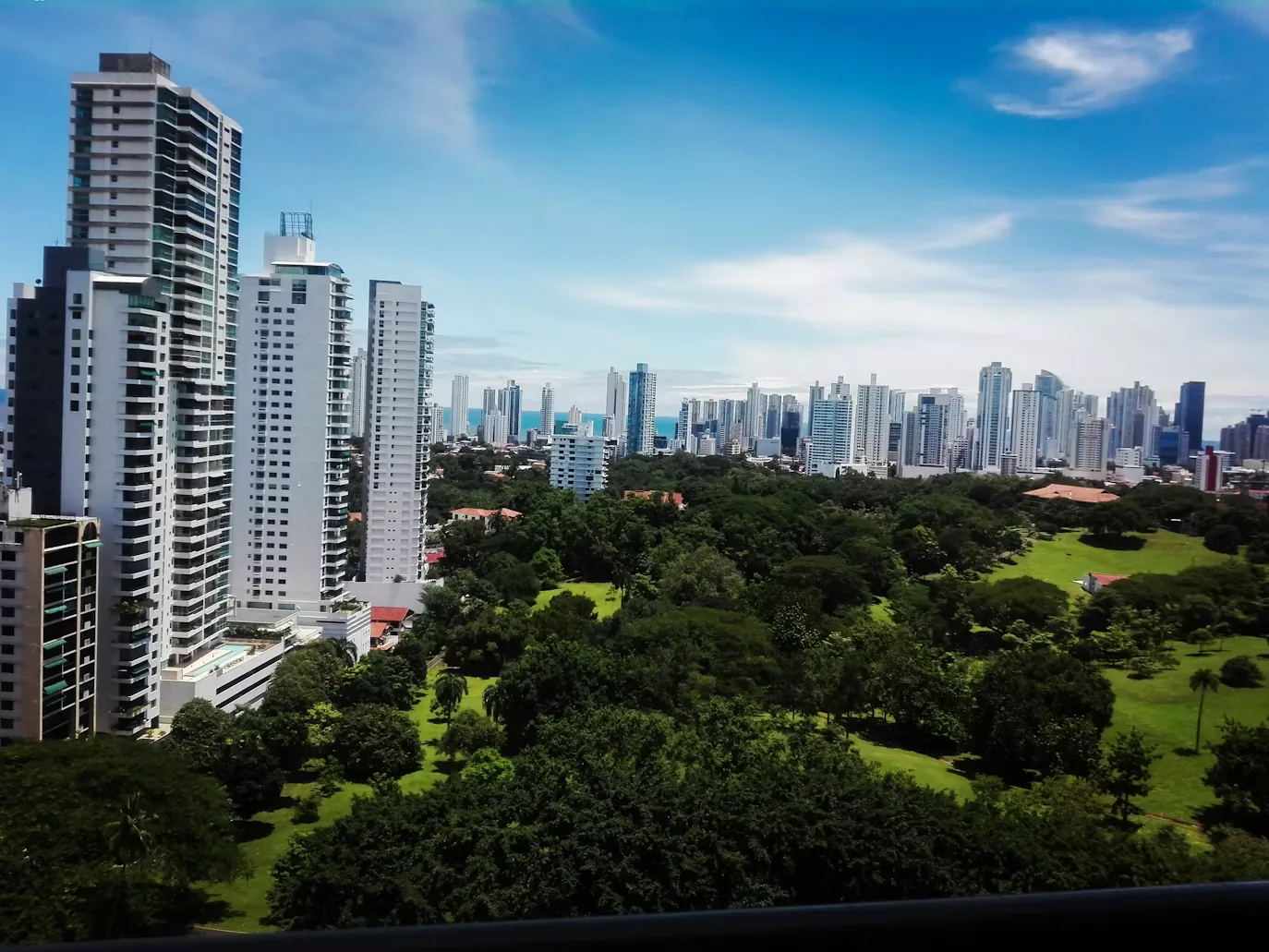

 Argentina
 Panama
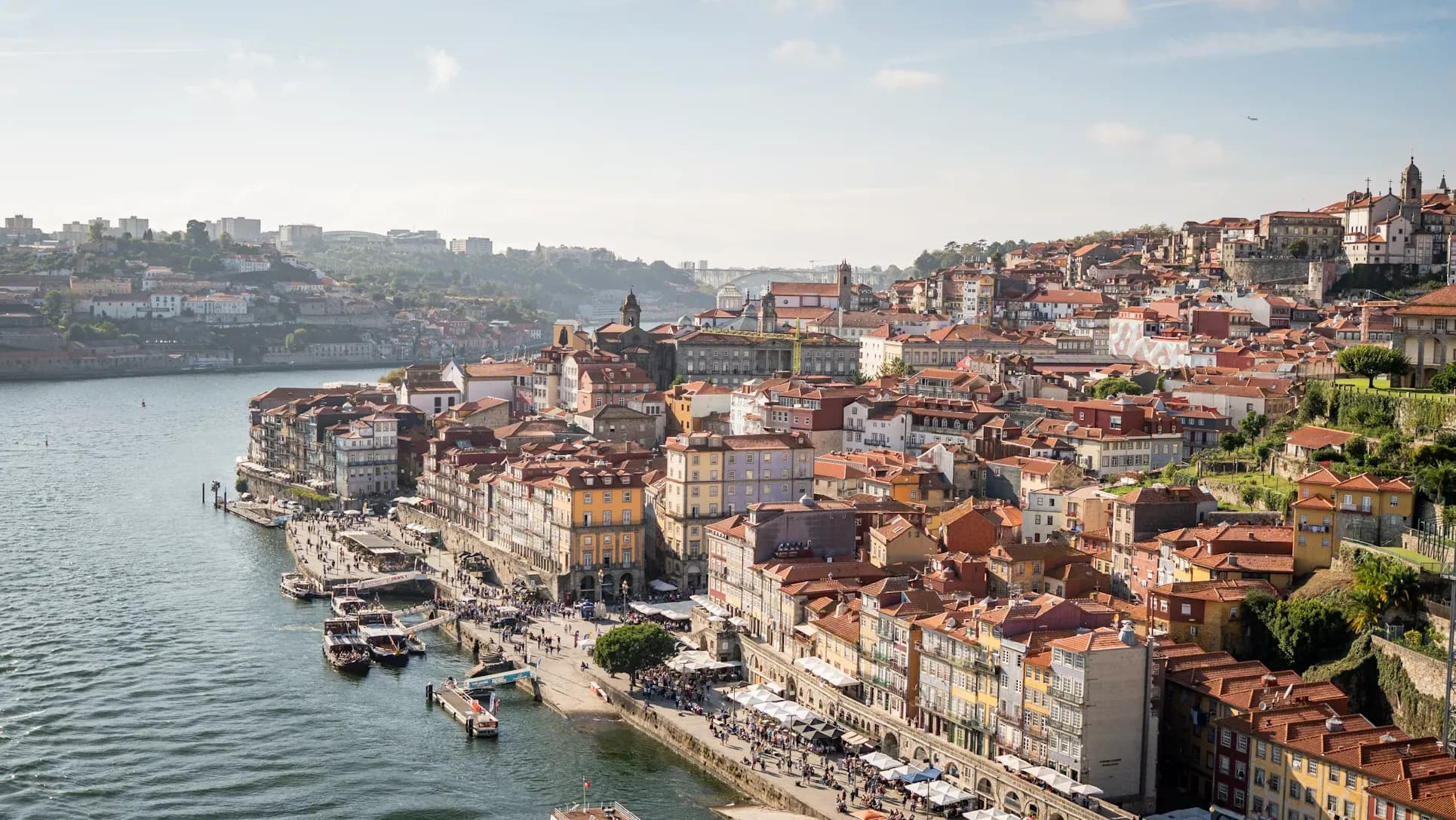
 Portugal
 Greece
 Turkey
 St Kitts & Nevis
In this article
Residency and citizenship sound alike, but the gap between them decides where you can live, bank, invest, and see a doctor, and for how long. If you're an American planning a second home or a Plan B abroad, the first thing to check in any program is which of the two it gives you.
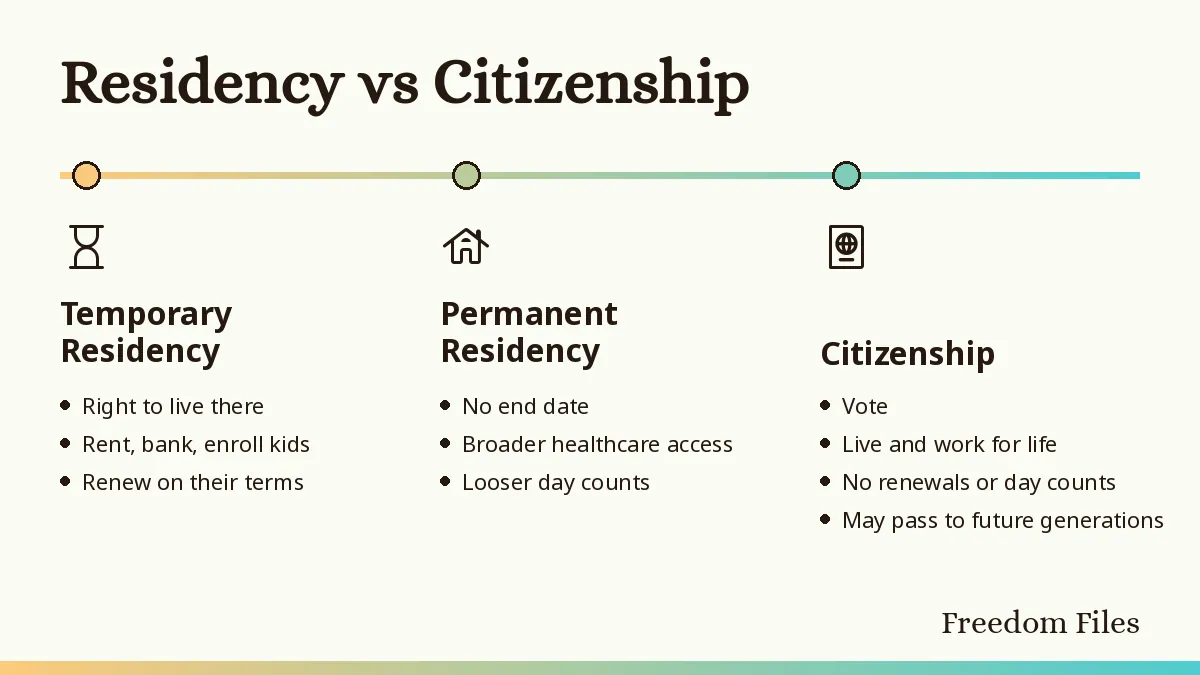
- Temporary residency: A permit to live in a country for a fixed term, usually 1 to 3 years at first, which converts to permanent residency once you've spent enough time there.
- Permanent residency: The right to live there with no end date, granted after a number of years in the country, after a qualifying investment, or both.
- Citizenship: Full membership, with the right to live, work, vote, and bank there for life.
- The shortcut: Many residency-by-investment and citizenship-by-investment programs skip the earlier phases and grant permanent residency or citizenship directly, usually in 3 to 18 months.
Temporary Residency: Your First Step In
Temporary residency is where most people start. You get the right to live in the country for 1 to 3 years at first, and you renew it on the government's schedule until you've spent enough time there to convert.
Every permit comes with rules. Portugal's Golden Visa requires 7 days a year in the country. Panama's Friendly Nations Visa starts with 2 years of temporary residency before you can convert. Miss a renewal or sell the qualifying investment early, and you start over.
But temporary residency opens things up. You can rent long term, open a local bank account in most countries, enroll your kids in school, and start the clock toward permanent residency and citizenship.
Permanent Residency: Fewer Strings
You earn permanent residency after a number of years in the country, through a qualifying investment, or both. The perks grow with it.
In most countries, permanent residents get broader access to the public health system, fewer trips to the immigration office, and looser rules on time spent in the country. Some programs hand it to you up front. Panama's Qualified Investor Visa grants permanent residency upon investment and approval, and the Cyprus Golden Visa issues it in 2 to 4 months.
Greece's Golden Visa comes close. It gives you a 5-year renewable permit with no minimum time in the country, so for most investors it works like permanent residency.
Permanent residents give up a few things, though. You can't vote, you travel on your US documents, and in many countries a long absence can cost you the status.
Citizenship: Full Membership
Citizenship puts you at the top of the food chain. You belong to the country, so the renewals end, and in most countries so do the rules on how many days you spend there.
The privileges stack from there. You can vote, bank like a local, buy property free of foreign-buyer limits where they exist, use public healthcare on the same terms as everyone else, and in some cases pass the citizenship to your children.
Six Ways to Become a Citizen
Naturalization is the route most Americans know, and it's one of several. Here's how each one works:
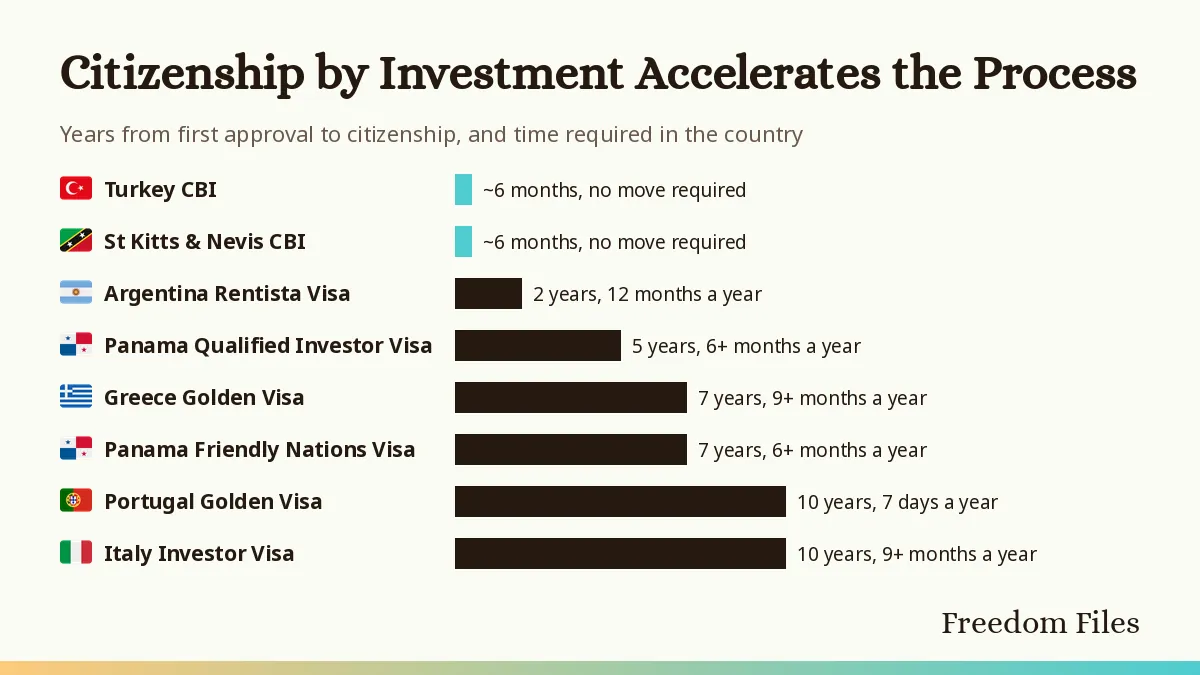
- Naturalization: You live in the country for a set number of years, pass any language or civics tests, and apply. Portugal requires 10 years of legal residency, Greece 7, and Argentina 2. But each country's rules for physical presence differ.
- Investment: You make a qualifying investment and receive citizenship directly, with no residency required. Turkey and St Kitts and Nevis take about 6 months.
- Descent: You claim citizenship through a parent or grandparent. Italy, for example, now limits this to people with an Italian-born parent or grandparent.
- Preferred nationality: Some countries shorten naturalization for citizens of favored countries. Spain cuts its 10-year wait to 2 years for citizens of Latin American countries.
- Marriage: Marrying a citizen shortens the naturalization clock in many countries.
- Merit: A government grants citizenship for an exceptional contribution, usually to athletes, scientists, or artists.
Investment Skips the Wait
The fastest way up is to invest. Residency-by-investment programs like Panama's Qualified Investor Visa put you directly into permanent residency, and citizenship-by-investment programs skip residency altogether. Most of them take 3 to 18 months.
The big difference is where you have to live. Turkey grants citizenship in about 6 months for a qualifying property purchase you own for 3 years, with no residency required. St Kitts and Nevis also takes about 6 months and requires 30 days in the country within your first 5 years as a citizen.
Every naturalization route requires a move. To become a citizen of Greece, Italy, or Panama, you live there for years. In Argentina, you live there and don't leave.
Argentina Lets You Skip Permanent Residency
Argentina is a unique case: You can become a citizen before you ever receive permanent residency. Two years of continuous legal residency on a temporary visa like the Rentista Visa qualifies you to apply, as long as you don't leave the country during those 2 years.
Argentina also announced a citizenship by investment program, with applications opening in the fourth quarter (Q4) of 2026, that removes the residency requirement.
Argentine citizenship opens up South America, too. Under the Southern Common Market (Mercosur) residence agreement, Argentine citizens can get a 2-year residency in member and associate countries like Brazil, Uruguay, Chile, and Colombia with far less paperwork.
EU Citizenship Is 30 Passports in Your Back Pocket
Citizenship in one EU country gives you the right to live and work across all 27 EU members plus the 4 countries of the European Free Trade Association (EFTA). Think of it as 30 passports in your back pocket.
As an EU citizen, you can move from Lisbon to Berlin without a visa, open a bank account in either city, invest anywhere in the bloc, use the public health system where you live, and pay local tuition at public colleges. Temporary residency in Panama, by comparison, gives you one country.
The trade-off is time. In Europe, the investor path goes through residency first, then the years.
Why a Second Citizenship Counts for Americans
If you're American or Canadian, a second citizenship gives you another place to live, another place to bank, and another government to count on if things at home ever stop working for you. Our clients bring it up more every year, and most of them lead with the pull factors: Better food, cheaper healthcare, warmer weather, and smaller communities.
A residency can lapse with a missed renewal or change with the next law. Citizenship lasts for life, which makes it the stronger Plan B.
Compare the Programs
Here's where each program puts you on day one, how long until citizenship, and whether you have to move.
| Program | You start as | Citizenship clock | Move required | Best fit |
|---|---|---|---|---|
| Panama Friendly Nations Visa | Temporary resident | 7 years | Yes, 6+ months a year | A first flag 3 hours from Miami |
| Portugal Golden Visa | Temporary resident | 10 years from first card | No, 7 days a year | EU residency with minimal time in the country |
| Greece Golden Visa | Permanent resident* | 7 years | Yes, 9+ months a year | EU residency with no minimum time in the country |
| Argentina Rentista Visa | Temporary resident | 2 years | Yes, 12 months a year | Families ready to move full time |
| Panama Qualified Investor Visa | Permanent resident | 5 years | Yes, 6+ months a year | Investors who want to skip temporary residency |
| Argentina citizenship by investment | Citizen | Applications open Q4 2026 | No | Fast citizenship with no move required |
| Turkey citizenship by investment | Citizen | 6 months | No | Fast citizenship backed by property |
| St Kitts and Nevis citizenship by investment | Citizen | About 6 months | No, 30 days in 5 years | Fast citizenship via donation: No strings attached |
*Greece's Golden Visa is a 5-year renewable permit with no minimum time in the country, so it works like permanent residency.
Choose Your Route
If you want EU rights and can wait, start with Greece or Portugal. Families ready to move full time reach citizenship fastest in Argentina.
For permanent residency on day one close to home, look at Panama's Qualified Investor Visa. And if you want a second citizenship in months with no move, Turkey and St Kitts and Nevis are the shortest routes.
If you want to map your own path from residency to citizenship, contact us for licensed support. This article is general commentary and contains no legal or tax advice.
FAQ
What Is the Difference between Residency and Citizenship?
Residency is permission to live in a country, and the government can renew or revoke it. Citizenship is full membership for life, with the right to vote and, in some cases, to pass it to your children.
Can You Get Citizenship without Permanent Residency?
Yes. Argentina lets temporary residents apply for citizenship after 2 years of continuous legal residency, and citizenship-by-investment programs in Turkey and St Kitts and Nevis grant citizenship directly.
How Long Does Citizenship by Investment Take?
Most programs take 3 to 18 months. Turkey and St Kitts and Nevis take about 6 months, with no residency required.
Can Americans Have Dual Citizenship?
Yes. The US allows dual citizenship, so a second citizenship adds to your US citizenship and replaces nothing.
Which Second Citizenship Gives Americans the Most Rights?
EU citizenship. One EU citizenship gives you the right to live, work, bank, and study in more than 30 European countries.