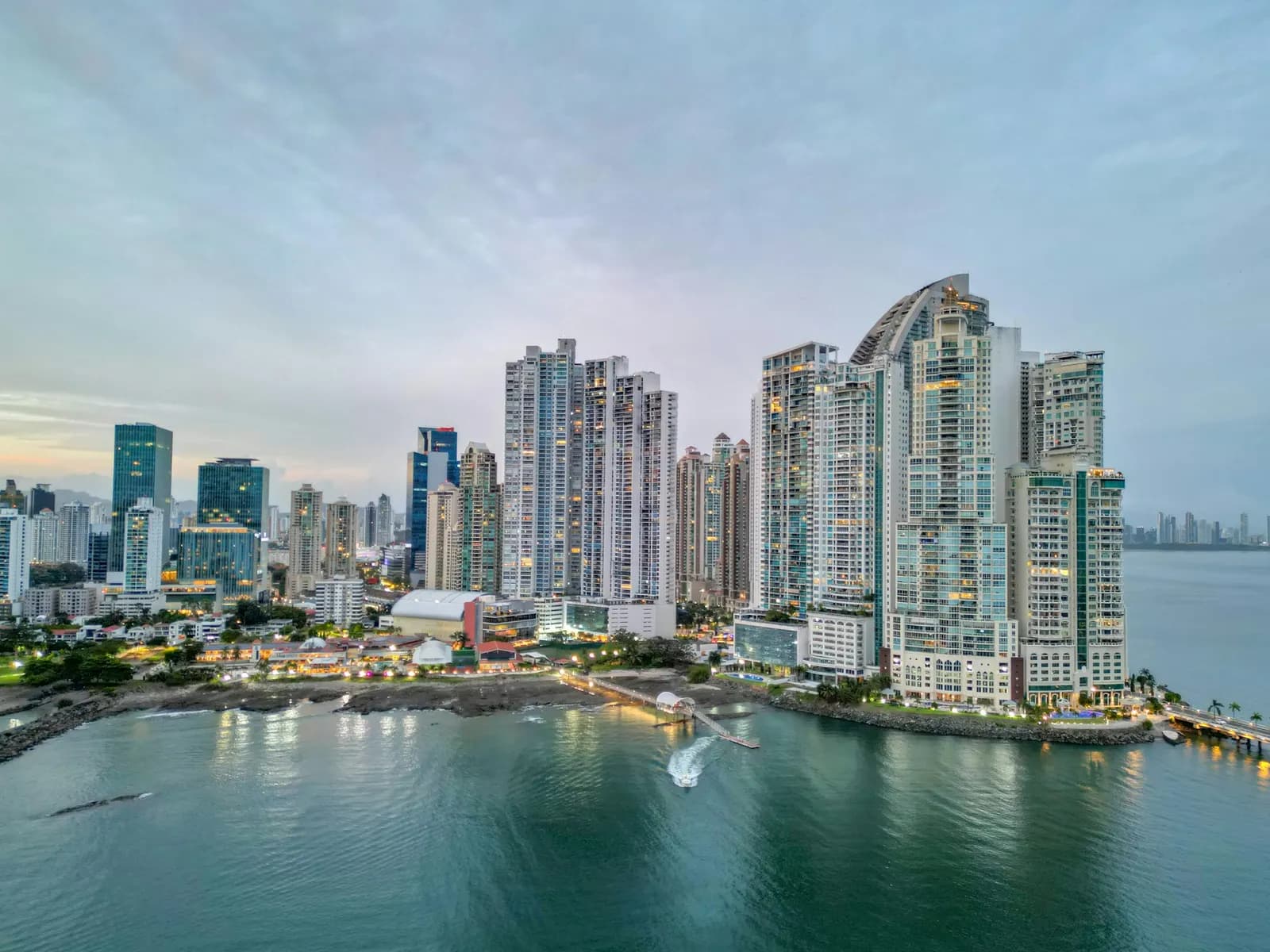
Zero tax on foreign income and a tropical lifestyle, anyone? Panama is the most popular country in the Americas among our clients, it ranks in the top 25 worldwide in our Expat Almanac, and moving there comes down to three residency routes in 2026: The Qualified Investor Visa, the Friendly Nations Visa, and the Pensionado Visa. This guide covers what each route requires, the territorial tax system that leaves foreign income untaxed locally, and the citizenship process at the end of the road, including the part where the President of the Republic personally signs every naturalization.
Or watch the full breakdown here:
Why Americans Move to Panama
The money: Panama has used the US dollar since 1904, so your accounts and spending never touch an exchange rate. No peso losing value underneath your feet, no conversion math on every purchase. (If your thesis calls for diversifying out of dollars, that same fact cuts the other way.) Banking is relatively strong for the region, from crypto-friendly accounts to private vaults.
The map: Panama sets its clocks to US Eastern and Central time with no daylight savings, and Tocumen airport is the hub of the Americas, 2.5 hours from Miami with direct service to most major US cities. When something goes wrong at home, you're back in hours, not the day it takes from Asia. Few plan B bases offer that proximity.
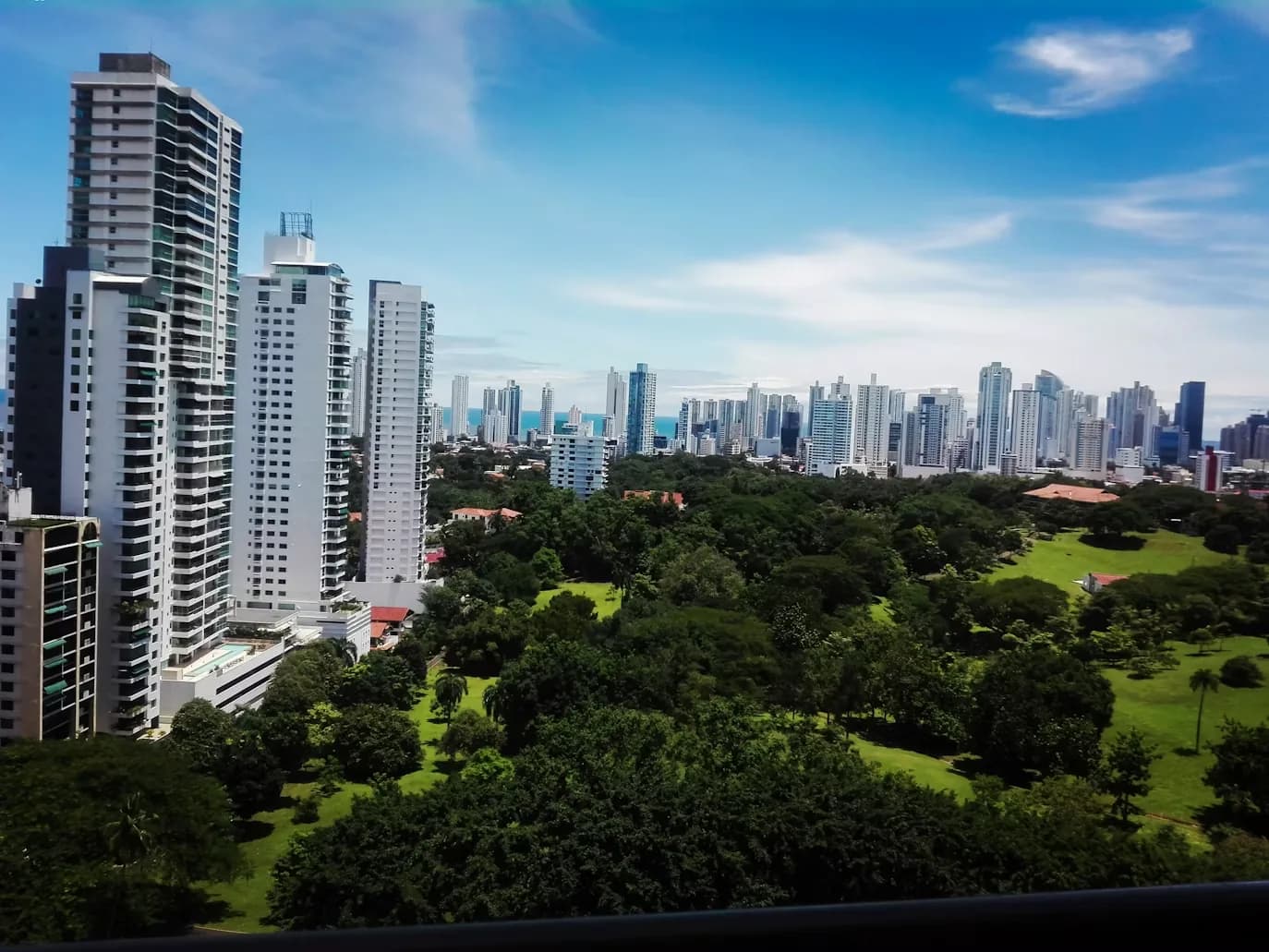
The climate: Panama City is hot and humid every month of the year, and the interior fixes it. Mountain towns like Boquete and El Valle de Antón trade the capital's heat for cool mornings, misty afternoons, and sweater weather after dark. Like Colombia and Mexico, Panama compresses many microclimates into one small country.
The plain-spoken caveat: Panama is not cheap. A modern one-bedroom in the neighborhoods you'd want costs about $2,000 a month at minimum, and Colombia, Nicaragua, and Ecuador all cost less month to month. What you're paying for is the platform: The dollar, the connectivity, the banking, and the residency speed below.
Route 1: The Qualified Investor Visa ($300,000 Until October 15, 2026)
Panama's Qualified Investor Visa is its golden visa, and it processes to direct permanent residency in under 90 days, the fastest investor residency in the Americas. Where most European golden visas issue a temporary permit you renew through a queue, Panama grants permanent status on the investment, with one or two quick trips covering biometrics and card issuance.
The three qualifying investments as of mid-2026:
- $300,000: Titled Panamanian property, residential or commercial, in your name and free of liens. Pre-construction qualifies if the full amount is wired; rights-of-possession beach lots do not, so the title check is critical.
- $500,000: Securities listed on the Panamanian stock exchange through a licensed local brokerage.
- $750,000: A 5-year fixed-term bank deposit, the most conservative position.
The deadline that decides the math: Under Executive Decree 193, the $300,000 property minimum expires on October 15, 2026, when the threshold rises to $500,000 permanently, a 67% increase for anyone who waits. Panama has extended this deadline before and may again. Maybe.
Fine print: The investment must be maintained for five years, and the card does nothing to your taxes by itself; Panamanian tax residency begins at 183 days a year on the ground. Presence is the headline: One entry every 2 years maintains the residency, and that is the entire obligation. The QIV works like a long-dated option on a second base: The premium is capital you'd deploy anyway, and you exercise only if life in the US pushes you to.
Route 2: The Friendly Nations Visa (from Zero Capital)
The Friendly Nations Visa serves the mid-tier: Zero capital with Panamanian employment, or $200,000 in local property, processing in roughly 6 months. The US and Canada are among Panama's 50 friendly-nations treaty countries, so most Americans qualify by nationality before qualifying with a wallet.
One myth to retire: The famous $5,000-bank-deposit-and-shell-company shortcut died in August 2021, when Decrees 197 and 226 rewrote the program. Half the internet never updated. The routes today:
- Employment: A contract with a registered Panamanian company, the only capital-free route in Panama's system. That includes forming your own company with local activity and hiring yourself, with the work permit processed alongside the residency.
- Property: Titled Panamanian real estate worth $200,000+, and local bank financing can cover part of the purchase.
- Deposit: A $200,000 three-year fixed-term deposit, recoverable at maturity.
The trade against the QIV is status and speed: A 2-year temporary permit first, converting to permanent at year two, with the same one-entry-every-two-years presence rule. The citizenship clock counts five years from the grant of permanent residency, so this route reaches a passport roughly 2 years later than the QIV.
Route 3: The Pensionado Visa ($1,000 a Month, Permanent on Day One)
Panama's retirement routes ask only for proof of income. The Pensionado Visa (sometimes called the jubilado visa) requires $1,000 a month of guaranteed-for-life pension income and grants permanent residency immediately, usually in under 4 months. Social Security qualifies, as do government, military, and private pensions and annuities, with one condition: Immigration wants the words "guaranteed for life" on the letter, and applications without it can get bounced. Buy Panamanian property worth $100,000+ and the threshold drops to $750 a month; each dependent adds $250. The package also unlocks Panama's mandated pensioner discounts on flights, dining, medical services, and utilities, with no investment required.
If your income is passive, stable, and recurring but not guaranteed for life, the rentista route fits instead at a similar threshold: You transfer the amount monthly to a Panamanian bank account, and the visa arrives as a temporary card that converts to permanent on continued income proof.
Panama Citizenship: 5 Years on Paper, 6 to 7 in Practice
Naturalization opens after 5 years of permanent residency, with a Spanish exam and a civics test. On paper that beats Portugal, Spain, and Italy by at least 5 years. In practice the grant is discretionary: Every naturalization is signed personally by the President of the Republic, a step the government itself describes as unique in the world, and petitions often take another 12 to 24 months after the 5-year clock matures. The current administration says it's clearing the backlog for the first time in decades, but plan on six to seven years from first card to passport and treat anything faster as a bonus.
On presence: The government's public position is that the one-entry-every-two-years maintenance rule leaves a qualified investor eligible at year five, and partners of ours are working to codify that into law. Until it's written down, the conservative play is substantial time on the ground in the two years before filing, real Spanish, and provable ties: A lease or title, a local bank account, a utility bill. One more wrinkle: Panama's naturalization oath formally renounces prior nationalities, but the United States does not recognize that oath as an act of renunciation, so American clients finish the process with both passports.
Panama's Territorial Tax System, and the American Layer
Panama taxes only locally sourced income. Your US dividends, portfolio, rental income, and online business serving American customers are taxed at 0% in Panama, whether you spend 10 days a year there or 365, permanently, with nothing to elect. It's why Panama anchors the territorial group in our free guide to 19 countries that don't tax foreign income. Local income plays by local rules: The first $11,000 a year is exempt, $11,000 to $50,000 pays 15%, and everything above pays 25%. Property owners get one of the friendliest regimes in the hemisphere: Register your home as a primary residence and the first $120,000 of value is exempt, with 0.5% up to $700,000 and 0.7% above, so a $300,000 QIV home costs about $900 a year.
The rule that never changes: A US citizen or green card holder files and pays the IRS on worldwide income wherever they live, and there is no US-Panama tax treaty. Panama shapes the Panamanian bill only; our citizenship-based taxation guide covers the American side. The primary lever is the Foreign Earned Income Exclusion: Spend 330 full days abroad in a 12-month window, or establish bona fide residence (about 6 months a year in Panama), and your first $130,000 to $135,000 of earned income comes off your US taxable income, per spouse when both earn. Earned means salaries and self-employment only; dividends and capital gains fall outside the FEIE. Canadians and Europeans fare even better: Sever ties correctly with your home country and Panama can be an essentially tax-free base.
Which Panama Residency Fits You
- Capital ready, permanent status on day one: The Qualified Investor Visa, discounted at $300,000 until October 15, 2026
- A Panamanian business or $200,000 in financeable property: The Friendly Nations Visa, temporary first, permanent at year two
- Recurring, stable, retirement-like income: The Pensionado or rentista route, from $1,000 a month
We're jurisdiction agnostic: We want the right country and the right fit for your plan B or your move. Take the 90-second Plan B Blueprint for a custom report on the routes that fit your goals, then book a free Freedom Consult and we'll map Panama against your alternatives with vetted local counsel. If your shortlist is Panama against Costa Rica, watch our Panama versus Costa Rica breakdown next, and for the wider field, our ranking of the 5 best emerging-market residency programs of 2026 puts Panama in context.