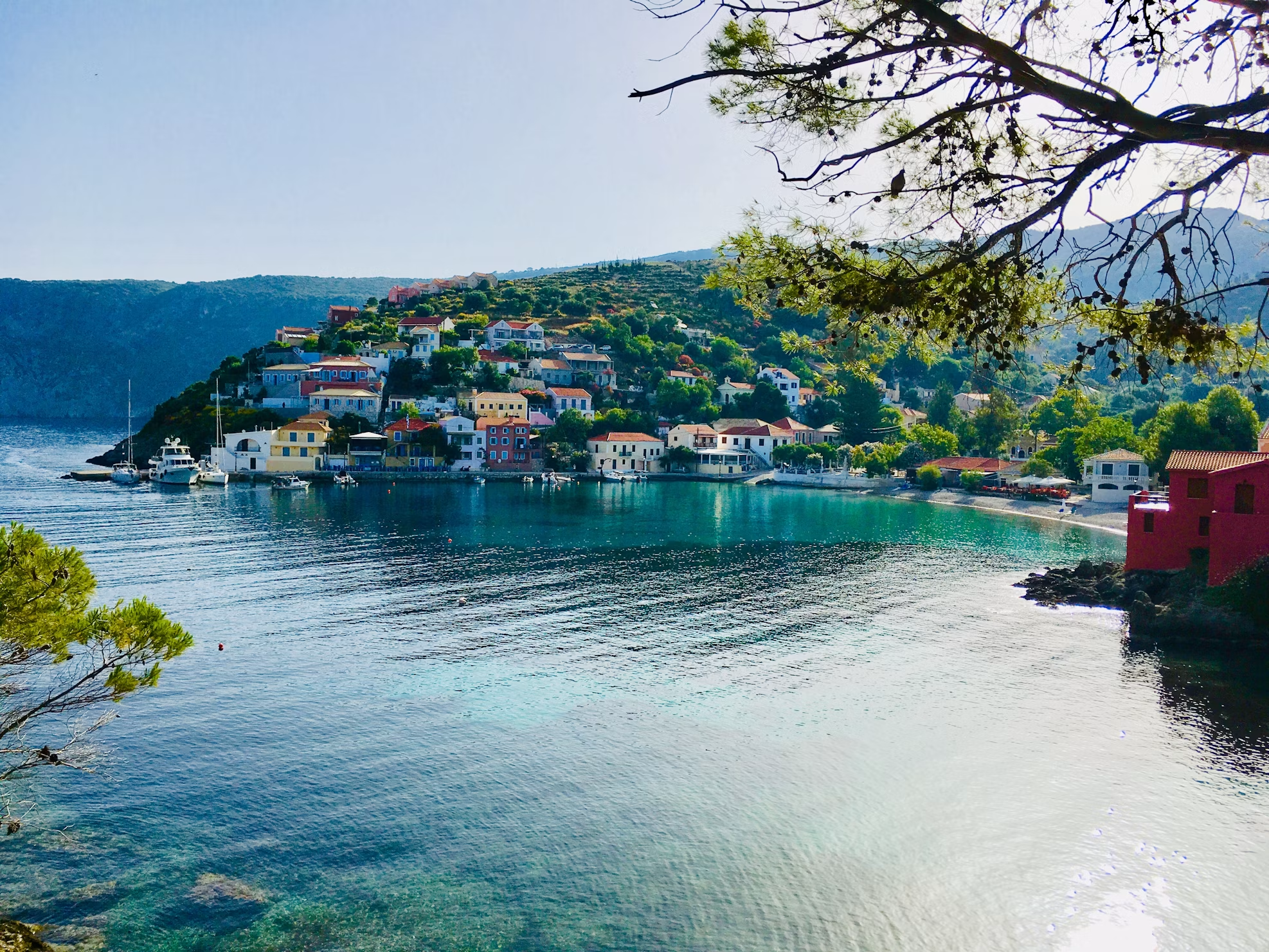
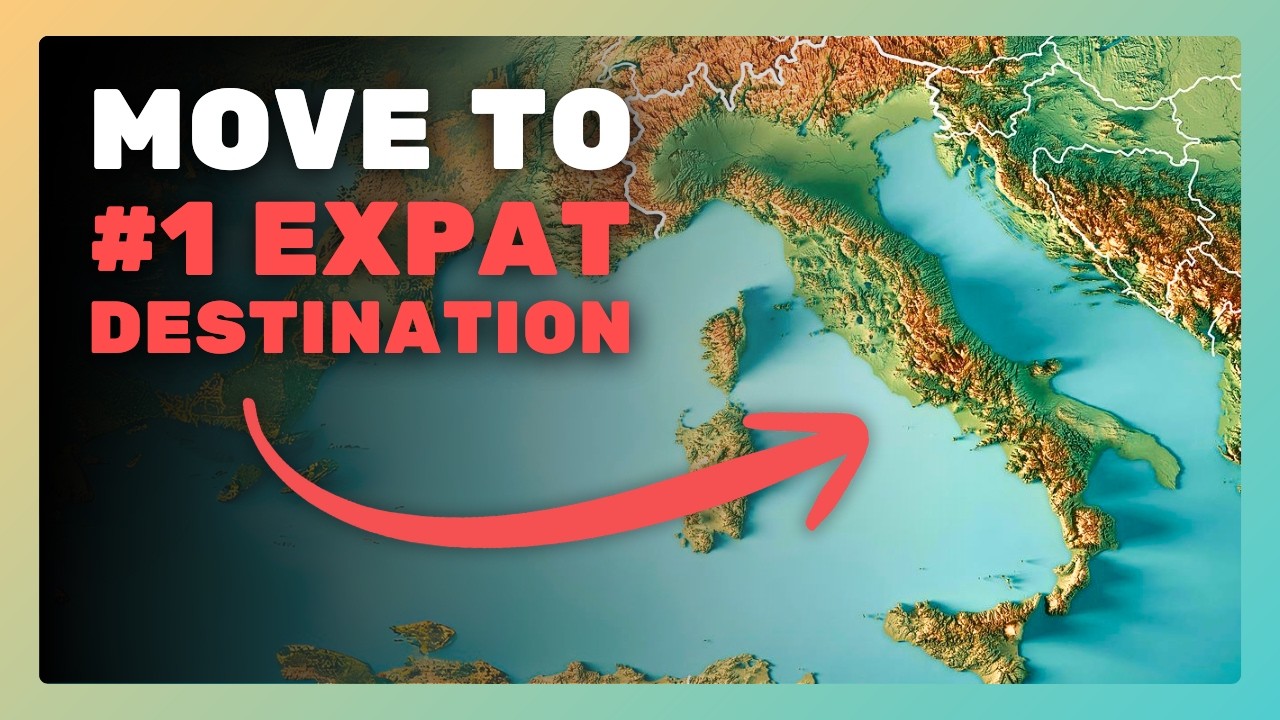
Uncle Sam is making you work harder and longer with crushing taxes, overpriced healthcare, and a forever increase in cost of living. But these five countries are begging for you with fasttrack visas, lower costs, and tax rates as low as 7% or even zero. One gives you complete EU access. Another grants residency in just 90 days. And number one, toward the end of the video. Most Americans are shocked it's tax friendly. Let's count them down. Starting with number five, Mexico. If you want culture, color, and comfort without leaving your time zone, Mexico might just be the easiest move you'll ever make. Why? Mexico isn't just easy to get to, it's next door. Thanks to its close proximity to the US, you can always hop on a quick flight home to see family or even grab an Americanstyle meal when you're feeling nostalgic. But the benefits go far beyond convenience. Mexico offers affordable top tier healthcare, even better than the US, with excellent hospitals and clinics in some of the most expat friendly cities, including Guadalajara, Maria, and Porto Ayarta. These are not second rate facilities. We're talking about modern hospitals with highly trained English-speaking doctors at a fraction of US prices. And when it comes to community, you won't be alone unless you want to be. Mexico is home to massive foreign expat communities in places like Baja, Samiguel de Aende, Inanaru, and Wajaka, offering built-in social circles, support networks, and a lifestyle that feels both familiar and refreshing. Perhaps the biggest draw, the cost of living, of course. Most US retirees can enjoy a far more comfortable and luxurious lifestyle in Mexico than they could ever afford back home, often on budgets as low as $3,000 per month. And here's the kicker. Mexico is a choose your own adventure kind of country. Whether you want the beach, mountains, city life, colonial charm, dry desert, or lush jungle, the diversity of climate, culture, cuisine, and pace of life means you can shape your retirement exactly how you want it. But here's what most people don't realize. Mexico is the top destination for Americans retiring abroad. 1.6 million US citizens live here. You can legally own property as a foreigner, including beachfront real estate, either through a bank trust called a felcomo or a Mexican corporation. And private healthcare insurance plans tailored for expats often start at under $1,000 per year, not per month. Okay, let's be clear about the Mexican tax situation. You will legally need to file taxes in Mexico if you spend more than 183 days in the country during a calendar year. It is not a territorial tax haven unlike a few other countries in this video. Stay tuned for those. However, if you have the rights set up or do not become a tax resident in the first place, you can avoid owing Mexican taxes on top of your American taxes. Plus, the United States does have a double tax treaty with its southern neighbor, so you won't be taxed twice on the same income regardless. This requires good tax advice, and the Freedom Files can help. Okay, here's the good news. Mexico's temporary residency visa is one of the easiest on earth to obtain. There are no language tests, no interviews, no required investments, and no bureaucratic rabbit holes. You simply show proof of a modest income or savings at a Mexican consulate in the US as low as $4,000 a month over a six-month period or $75,000 in savings over a 12-month period depending on the consulate. The visa lasts up to four years after which you can apply for permanent residency. And if you want a passport, too. We covered this in a previous video, but Mexico offers one of the fastest routes to citizenship, just 5 years or two if you're married to a Mexican citizen. And yes, they do allow dual citizenship. Unlike the path to permanent residency, citizenship eligibility does require boots on the ground presence to qualify. But what surprises most people is that a Mexican passport is an extremely powerful tool, often ranked in the top 15 of global passport indices. By the way, we spent weeks crafting a complete how to retire to Mexico guide. It's linked in the description below. So, that's the easily accessible Mexico. But what if you could live in Europe, drink wine on the Mediterranean Sea, and only pay 7% tax on your US retirement income? That's what our next country offers. Number four, Greece. You've seen the postcards, the whitewash villages, those beautiful blue dome churches, and the slower Mediterranean lifestyle. But here's what you haven't heard. Greece has a relatively little known retirement tax regime and one of the easiest paths to European residency for Americans. Before we dive into the details, why have upwards of 25,000 Americans retired in Greece? Obviously, Greece offers a fascinating culture, ancient history, and Mediterranean lifestyle that feels like a dream. The cost of living is significantly lower in mainland cities like Thessalaniki, Kalamata and Patras compared to Western Europe or the US. While public healthare is decent, private healthcare is excellent and surprisingly affordable. And with strong American expat communities across the country, you'll find friendship immediately. Here are a few lesser known perks. Greece has one of the lowest crime rates in Europe, offering retirees peace of mind. And as a member of the Shenhen zone, Greece residency gives you visa-free access to 27 other European countries, meaning you can spend your retirement hopping from one worldclass destination to the next. And perhaps more importantly, many retirees say they feel healthier and even happier after moving to Greece, thanks in large part to that blue zone lifestyle. So here's the tax situation. Under the nondom tax regime, Greece taxes your foreign sourced retirement income at just 7% per year for 15 years. That's not a typo. Even if the US tax laws change or your distributions increase, your Greek tax rate remains flat. It's one of the most retireefriendly tax deals in the entire developed world and few people know about it. So the question is, how do you move to Greece and take advantage of this tax deal? The financially independent person or FIP visa is a retireese's golden ticket. We'll talk about the actual golden visa as well in a second. You don't need to buy property, start a business, or jump through endless hoops. All you need to do is show proof of passive income, roughly €2,000 per month per person, and you'll be eligible for renewable residency permits that let you live in Greece year round. The downside of this visa, you must be physically present in Greece for more than 6 months a year to maintain the residency visa. So many opt for the Greek golden visa instead. In order to get immediate permanent residency in Greece, you must purchase at least a €250,000 property. And in this case, you must renovate it or convert it from a commercial property to residential. Or you could invest €400,000 in your own second home in lowdensity areas in Greece without the renovation requirement. Again, we've created a full how to retire in Greece guide, including your visa options and reasons to retire to Greece. You'll find the link in the description below. Getting Greek citizenship isn't impossible, but it's not a cakewalk. You'll need to live in Greece for at least seven years, at least 6 months in each year, pass a Greek language test, which is really difficult, and demonstrate your ties to the country. But here's the upside. Permanent residency on the Golden Visa gives you nearly all the same rights as citizenship without the extra paperwork and waiting. Greece could be your forever home, and taxes won't ruin the view. Before we hop back to a more off-thegrid option in Latin America, take the Plan B Blueprint at freedomfiles.co/begin. It matches you with the residency or citizenship program and destination that fit your situation and goals. It's the exact resource I wish I had when I started my journey abroad 10 years ago. All right, on to number three. Paraguay. This one flies under the radar, and for a lot of people, that's a very good thing. Paraguay quietly offers one of the simplest, most effective and tax friendly pathways to international retirement anywhere in the world. Paraguay operates on a territorial tax regime, similar to the next country on the list, which means you're only taxed on income earned inside the country. So, if your income comes from social security, pensions, investments, a remote business, or any other foreign source, you won't pay Paraguayan taxes on it. And the cost of establishing residency and the cost of living in the country are remarkably low. In fact, one of the lowest in the world. Most retirees can live like a king in Asunion or Su Abd on 50 to 75% less than what they spent in the United States. Paraguay also offers a pretty laid-back chill lifestyle with friendly locals, low crime, and very little red tape. If you're looking for a remote, off-the-grid lifestyle, Paraguay can definitely provide it. All right, so how do you move to Paraguay? Good news. This might be the easiest residency process on the planet. All you need to do is prove that you can support yourself and submit a few basic forms. Seriously, no investment, interview, language, or strict documentation required. Most applicants get their residency sedula, essentially a national ID, within 90 days. Now, if you want citizenship, Paraguay does not officially allow dual citizenship. But in practice, many expats simply opt for permanent residency in Paraguay, which they can get in just two years with minimal presence in the country. Citizenship generally requires 3 years of permanent residence, and the process, while a bit murky, is very much possible for those who stay long enough. Paraguay may not be as flashy as Europe or the tropics. It's landlocked after all, but it delivers where it matters. fasttrack residency, low taxes, and a low cost of living, meaning you keep more of what you've rightfully earned. Now, let's head to the country that's built its entire brand around welcoming foreigners with US dollars, tax-free living, and some of the best infrastructure in Latin America. Number two, Panama. Panama isn't just retirement friendly, it's retirement obsessed. The country has spent the last two decades building a reputation as one of the world's most welcoming places for retirees and it shows in the benefits they offer. Before we discuss how to move to Panama, first let's ask why retire to Panama in the first place. Much like Pawai, Panama operates on a territorial tax system, which means your foreign income, including your social security, pensions, or investment returns from the US is not taxed by the Panameanian government. That alone is a huge win for American retirees. But it doesn't stop there. The economy is stable, the currency is the US dollar, and the infrastructure, especially in Panama City, rivals anything you'd find in the States. Many people compare the capital to Miami. Actually, healthcare is world class with modern hospitals and English-speaking doctors. And if you qualify for Panama's Pension program, you'll even receive discounts on travel, entertainment, restaurants, and even medical bills. Bonus. You'll also find thriving expat communities, particularly in areas like Bokeete, Corona, and Alva Danon, where you can enjoy a slower pace of life without feeling isolated. Okay, so how do you move to Panama? The Pension visa is Panama's crown jewel. To qualify, all you need is proof of a monthly income of just $1,000 per month. There's no age limit, and the process is relatively fast and painless. If you're not yet retired or want more flexibility, a friendly nations visa is a fantastic alternative. It allows you to work, invest, and remain in the country long-term, and it's open to citizens from the US and several other developed countries. You gain immediate permanent residency by starting a local business in Panama and employing yourself, making a $200,000 local bank account deposit, or proving ownership of $200,000 in local real estate. Here's the catch, though. Getting Panameanian citizenship is possible but not easy. Even after 5 years of legal residency, the president of Panama must personally approve your application for naturalization. It's a political process, not a purely bureaucratic one. For that reason, most expats choose to remain as permanent residents, which still gives you long-term security and access to all the benefits of life in Panama. If you're looking for a low tax lifestyle in a modern, well-connected country that understands and celebrates retirees, Panama should be and is for thousands of expats at the very top of your list. All right, what you've all been waiting for. Number one is Italy. Yes, that Italy. The same Italy known for bureaucracy, taxes, and red tape is now offering one of the most generous and surprising retirement tax deals in all of Europe. Before I tell you the details, why retire in Italy? Italy is a dream destination for many, and for good reason. The culture is historic, the cuisine is legendary, and the countryside feels like a travel magazine. From the great-filled rolling hills of Tuskanyany to the beaches of Claudia, while the south of Italy resembles Latin America in its more chaotic, less organized feel, the north of Italy is home to some of the world's wealthiest, most sophisticated globe trotters in Lake Ko, Milan, and Tuskanyany. For retirees, there's even more to love. Italy's 7% flat tax regime is specifically designed for new foreign residents with foreign retirement income like social security, pensions, or investment income. Once approved, this ultra low tax rate applies to all your foreign retirement income for up to 10 years. Yes, it's real, and yes, many Americans are already taking advantage of it. To move to Italy, you have a few options. The elective residency visa is tailor made for retirees with passive income. There's no need to start a business or make an investment. All you have to do is show a stable income around €3,000 per person per month or savings of an equal annual value and commit to making Italy your primary residence. The process requires some planning and documentation, but it's absolutely within reach for most US retirees. Additionally, Italy also has a golden visa program like its southern European neighbors. Portugal, Greece, and Malta. After applying and being accepted to the program, which is rare among these programs, investors must commit $275,000 to an Italian startup or $550,000 to an existing business during the 2-year visa. Then, if you maintain the visa, you can renew it for another 3 years. And after 5 years of continuous residency, 270 days per year required, you can apply for permanent residency in Italy. Currently, Italy requires 10 years of legal residency before you can apply for citizenship. However, there's active debate in the Italian government to reduce that period to 5 years, especially for foreign nationals contributing to the economy. Either way, Italian residency gives you access to the entire EU, allowing you to travel and bank, invest across 26 countries without additional visas. If you've ever dreamed of sipping espresso in a medieval patza or buying fresh produce in a European market every other day, Italy could be your next and best chapter of all. So, which of these five countries speaks to you most? Leave a comment below and tell us why. Dreaming of a beach in Mexico, a vineyard in Italy, or a tax-free farm in Panama, your retirement can be richer, freer, and way more affordable than you've been led to believe. This is the message the Freedom Files is dedicated to sharing to millions. If you're serious about mapping out your next chapter abroad, book a freedom consult with us. We'll help you figure out the smartest country, visa, and tax setup for your lifestyle. You've worked hard for your freedom. Now, it's time to actually live it. [Music] [Music]