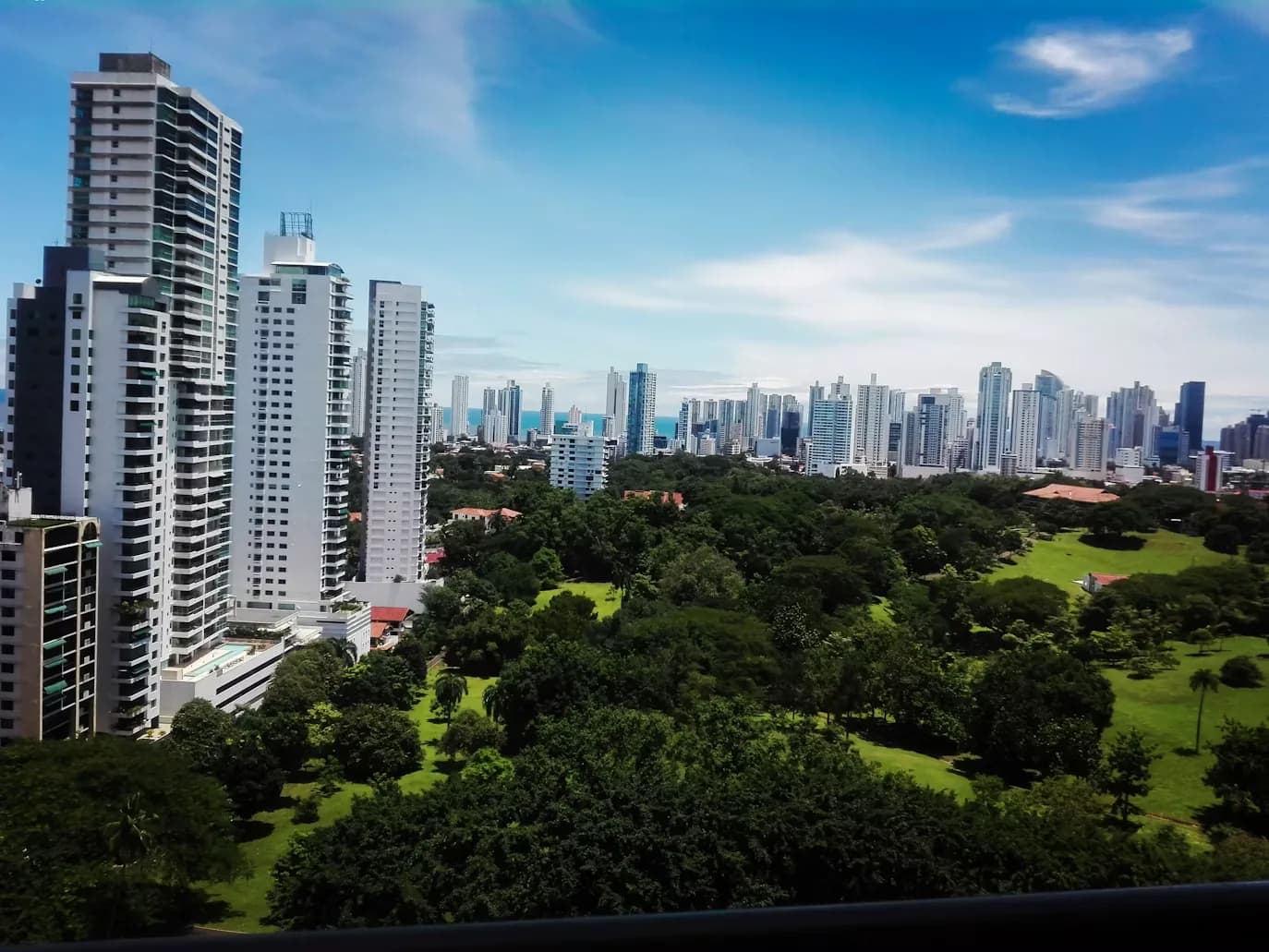
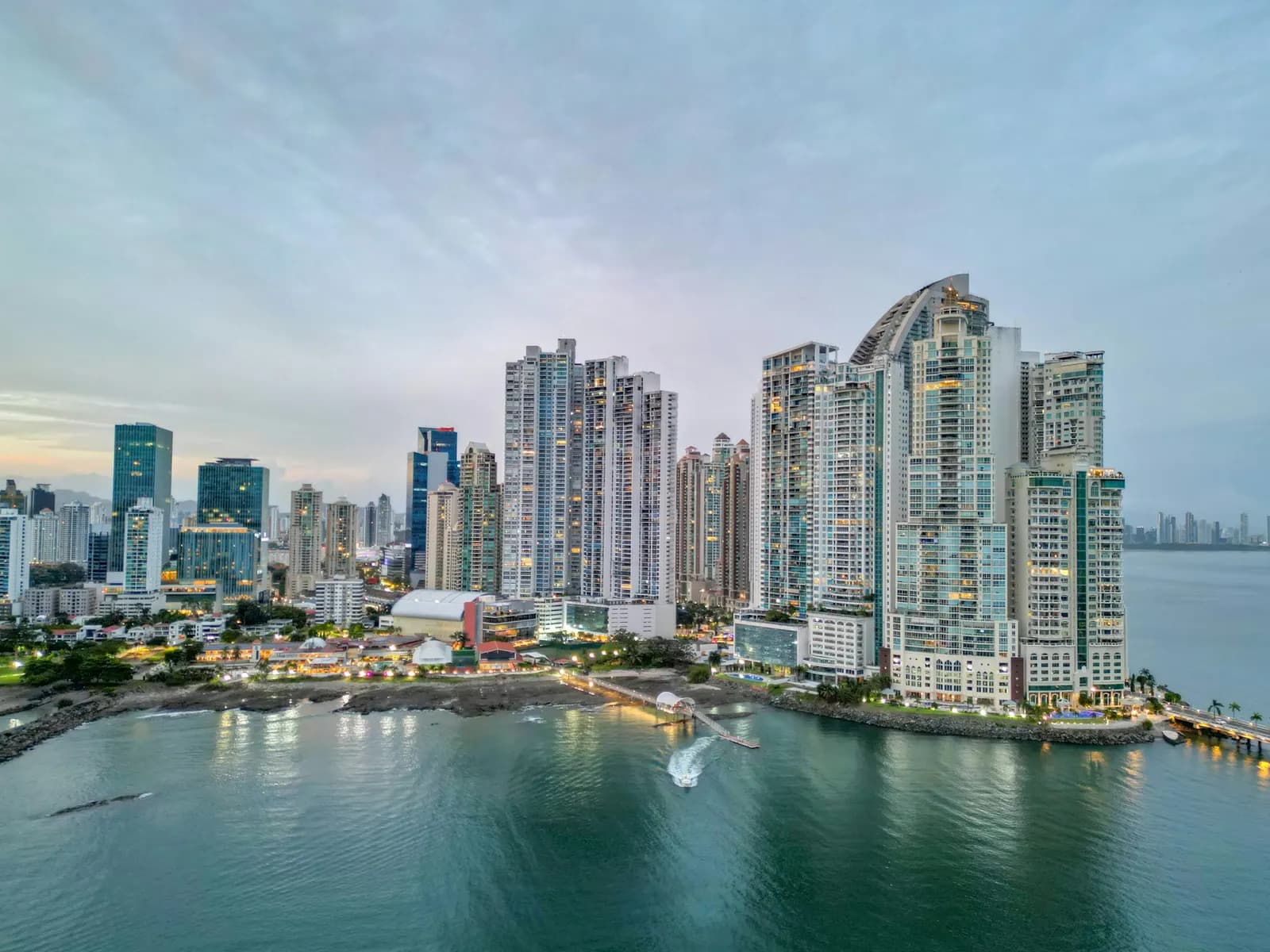
Why have 24,881 Americans retired to this small Latin American country? Because here, your money stretches way farther. Healthcare won't bankrupt you, and you could legally pay zero in taxes. It's not Costa Rica. It's not Mexico. It's not even Uruguay. But it might be the smartest move you'll ever make. Today I'm walking you through nine reasons tens of thousands of US retirees are subtly moving to Panama. Let's start with the number one reason retirees are ditching the US for Panama. Your dollars just go way further here. US retirees are being forced to downsize into bland suburbs or postpone retirement 5 10 years entirely. Why? Because basic living has become a luxury. In Panama, you could cut your monthly expenses in half and upgrade your lifestyle in the process. Full-time monthly maid service for less than what you'd pay for lunch in New York City. Walk into a beachside cafe and get fresh ceviche, a cold beer, and a bill for $450. 50 to 75% cheaper rent if you're comparing American cities with Panama City. No, you don't have to live in the jungle to get these prices. In fact, we just helped a couple find a two-bedroom ocean view apartment in Panama City with a modern kitchen, a pool, a gym, doorman, and concierge for $1,400 a month. I live just down the street from that apartment in Punta Padija, and I'd walk the prominade every morning past some flashy multi-million dollar yachts for free. Good luck finding an equally beautiful apartment for triple that in Miami. More cash left over means more travel, grandkids, hobbies, or just not worrying about money every time you open your banking app. A lot of our clients see this move as an escape from the rigged system and into one that rewards you for playing smart. But cost is just one reason Americans are moving here. It gets even better when you see where you're truly living. Let's talk about Panama's stunning geography and why you don't have to choose between mountain views and beach sunsets. Let's be candid, most places make you choose either the beach or the mountains, right? The peaceful countryside or the buzzing city. But Panama is a rare country that gives you all of it within a few hours of each other. Love the ocean and water sports? You have two coasts, Pacific and Atlantic, with warm water year round and beach towns where locals truly say hello and $2 fresh ceviche is the norm. Prefer the mountain environment? Move to Bokeet there. Alv temperatures hover around 70° F. The air is clean and the views look like my computer's desktop background. Or maybe you're a city person who wants an international cosmopolitan vibe. Rooftop cocktails, quasi Michelin dining. We're waiting on those stars. Private hospitals and monstrous ships crossing the Panama Canal. Yep, Panama City delivers that and then some. What makes this setup so rare is how connected it all is. One country, three completely different lifestyles. I spent nearly a year bouncing between all three. Surfing in Pao, hiking the cloud forest of Bokeete, and in a high-rise overlooking the Panama City skyline. And I'll tell you this, it never felt like I had to choose between them. Panama lets you design your retirement around your circumstances and goals. If you're curious which region of Panama fits your lifestyle best, we included a few top expat destinations in our how to retire to Panama guide linked below. Now, let's talk about another potential upgrade. Health care that won't bankrupt you. I know this leaves a lot of Americans up at night. Health care. In the US, even with good insurance, you're one hospital visit away from a second mortgage. In Panama, health care feels reasonable. You'll find worldclass hospitals, many of them affiliated with US institutions like John's Hopkins or the Puna Pacifica Hospital, which is considered the most technologically advanced in Latin America. Of course, you want to know the cost because world-class care doesn't sound cheap, right? But good news, it is. A private consultation with a specialist might cost you $50. Emergency room visits are anywhere from $30 to $200. Labs, imaging, even surgery, all dramatically cheaper than in the states. And if all these statistics weren't enough, private providers, who also have plans starting at just a few hundred bucks a year, a year, not a month, offer retirees discounts of up to 25% on healthcare expenses. No, Medicare doesn't cover you abroad, but you might not miss it. Okay, so you've got an affordable lifestyle, beautiful geography, and good affordable healthcare, but none of that counts if you can't get here easily, right? Let's talk about how connected Panama really is. What good is paradise if it's 22 hours and four layovers away? I'm looking at you, Thailand. Panama is one of the most connected countries in the Western Hemisphere thanks to the hub of the Americas and direct flights to Canada, Europe, Latin America, 18 major cities in the US and as far as Istanbul. Whether you're flying in friends, grandkids, or just popping back to the US for a visit or on business, Panama is not some remote island where getting home needs a 17-hour ordeal, sleeping pills, and a neck brace. Now, let's talk about what life truly feels like once you're here. Especially if you land in the beating heart of it all, Panama City. Panama City is not a sleepy flip-flop beach town. It's a cosmopolitan capital often described as the Miami of Central America. You've got skyscrapers on Aita Baloa and colonial charm in Costco Viejo. rooftop bars and rainforest hikes, private hospitals, international schools, craft cocktails, five-star dining and worldclass gyms, old food style supermarkets in the upscale and newly designed SA dee and a sushi scene that's truly shockingly good. Panama City is an international melting pot. You'll meet Venezuelans, Colombians, Spaniards, Chinese, Arabs from the Middle East, Canadians, Germans, and yes, a whole lot of Americans. English is widely spoken and the city caters well to newcomers, business people, and seasoned expats. So, if you're worried about missing conveniences like Amazon deliveries, Uber, or your go-to organic almond milk, almonds don't have utters, don't. It's all here. You get the vibrancy of a global city without the crime rates or drug crises, the cost of San Francisco, or let's say, the flavor of American politics. When I lived in Panama City, it didn't feel like I was giving anything up like it can in many other parts of the world. I had fiber internet, rooftop dinners, Uber rides under $10, and a modern complete gym in my building. Rarely did I feel as if I was in a life downgrade here. And none of this counts if you can't legally stay in Panama for more than 180 days. So, let's talk about residency in Panama and why it's one of the easiest countries to relocate to in the entire region, especially for retirees. Okay, get ready for this. I'm not making this up. I've spent significant time in the country, and the polls back me up, too. Gallup Global Well-being Index ranked Panama the happiest country in the world. Panama isn't just beautiful and affordable, it's welcoming, too, of foreigners. Panama rolls out the red carpet specifically for Americans. And here's how. The Pension Now visa is a favorite among retirees. If you have a monthly income of just $1,000, like social security, retirement income, investment dividends, etc., you qualify. And Panameanian Retirement comes with perks like discounts of up to 50% on health care, hotel stays, flights, entertainment, and utilities. You must only visit the country once a year to maintain your visa status. That's flexibility. Then there's the friendly nations visa designed for citizens of 50 plus countries, including the US. You're eligible if you start a local business in Panama and employee yourself, make a $200,000 bank account deposit in the country, or make a $200,000 investment in local real estate. Both options give you immediate permanent residency and start your pathway to citizenship in just 5 years, although your naturalization needs the president's sign off. In short, if you're financially self-sufficient and not trying to overthrow the government, Panama makes it really easy to stay. Plus, the process is far less painful than say Spain, Portugal, or even Costa Rica these days. The Freedom Files is here to help you through this process as well. finding the right pathway for you and your loved ones, legalizing your residency in Panama, sorting through tax implications, all of it. If you want a cheat sheet to retirement in Panama, remember it's linked below. Now, the question becomes, what kind of country are you signing up to live in? Let's talk about Panama's reputation and why that counts more than you think. Let's get one thing out of the way. Nobody hates Panameanians. Seriously, when was the last time Panama showed up in a negative headline? This is one of Latin America's most politically, economically, and socially stable countries. Very little civil unrest or daily drama. Just a country that minds its own business, plays host to international banking and trade, and doesn't try to reinvent the wheel every election cycle. Panama uses the US dollar, has a long-standing democratic system and close ties to the United States, and has one of Latam's highest credit ratings. When you walk around, you feel it. The energy is calm, respectful, and pragmatic. Is it perfect? Of course not. But remember, Panama's built around commerce, trade, and international relations, which means it has every incentive to remain safe, neutral, and open. I've lived in many parts of Latin America and Europe, where I'd think twice before pulling out my phone on the street. In Panama, whether I was walking through Costco VJO at night or along the beach in Benau, I never felt unsafe, and that counts. We've covered visas, safety, cities, and savings, but there's one more reason Panama has subtly become a retirement haven, and that's the way they do banking and taxes. Let's wrap with the two things Americans love to hate the most. Banking in Panama is what US banking used to feel like before everything required a password, two-factor authentication, a 2-hour phone call, invasive data collection, and a three-day pending period on transfers. This frustrates me thinking about it. Panama's financial system is robust, stable, and wait for it, not all up in your business. You can open a local bank account as a resident, pay bills online with ease, wire money internationally, and call customer service that truly helps. No, we're not talking about any shady offshore accounts or bond villain vaults. Panama has strong banking regulations, legitimate international banks, a good reputation, and most importantly, a US dollar-based system that avoids the currency risk that other Latin American countries have. The onboarding process takes a bit of paperwork, but once you're in, you're in. The Freedom Files can hook you up with a local account through your immigration process. Now, if Bano's banking system makes life easier, its tax system might just make you rethink everything you've ever known about retirement. You know what's better than a tax deduction? Not owing tax in the first place. Panama has a territorial tax system, which means if your income comes from outside of the country, Panama doesn't touch it. Now, let me say that again so you understand me clearly. If you earn retirement income, rental income, dividends, interest, employment income, capital gains, or any other income outside of Panama, but live here, you do not pay tax on it here in Panama. foreign earned income, regardless of how much is not taxed here. Compare that to the US, where you're taxed on everything, regardless of where you live. If you do earn income in Panama, local personal income tax rates are reasonable. This country has dozens of legal strategies to optimize your tax footprint even further. To be clear, as long as you're a US citizen, the IRS will want its cut every year. But Panama is not going to double dip. With proper planning, you can legally minimize your total global tax bill. In Panama, you live well, spend less, and retain more of what you earn. We broke taxes down a bit further in the how to retire to Panama guide linked below. But if you're serious about moving to Panama or retiring abroad more generally, book a freedom consult with us and we'll walk you through all your immigration, tax, banking, and citizenship options across the globe. This is what we do and we love it. We take on just five new clients per week. So, book while availability lasts. Thanks for watching these nine reasons 24,000 Americans have moved to Panama. If you're interested in Latin America, you might want to know more about the booming South American country of Colombia, where almost 60,000 US citizens live today. Enjoy. [Music]