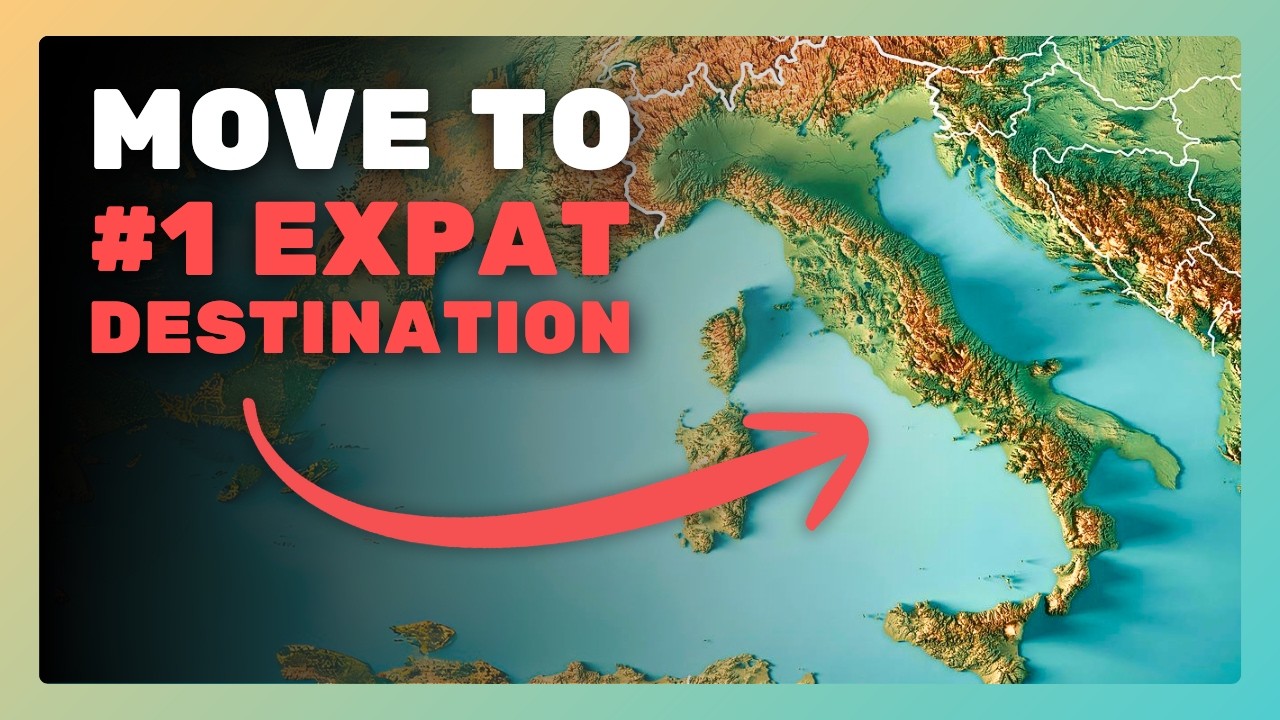
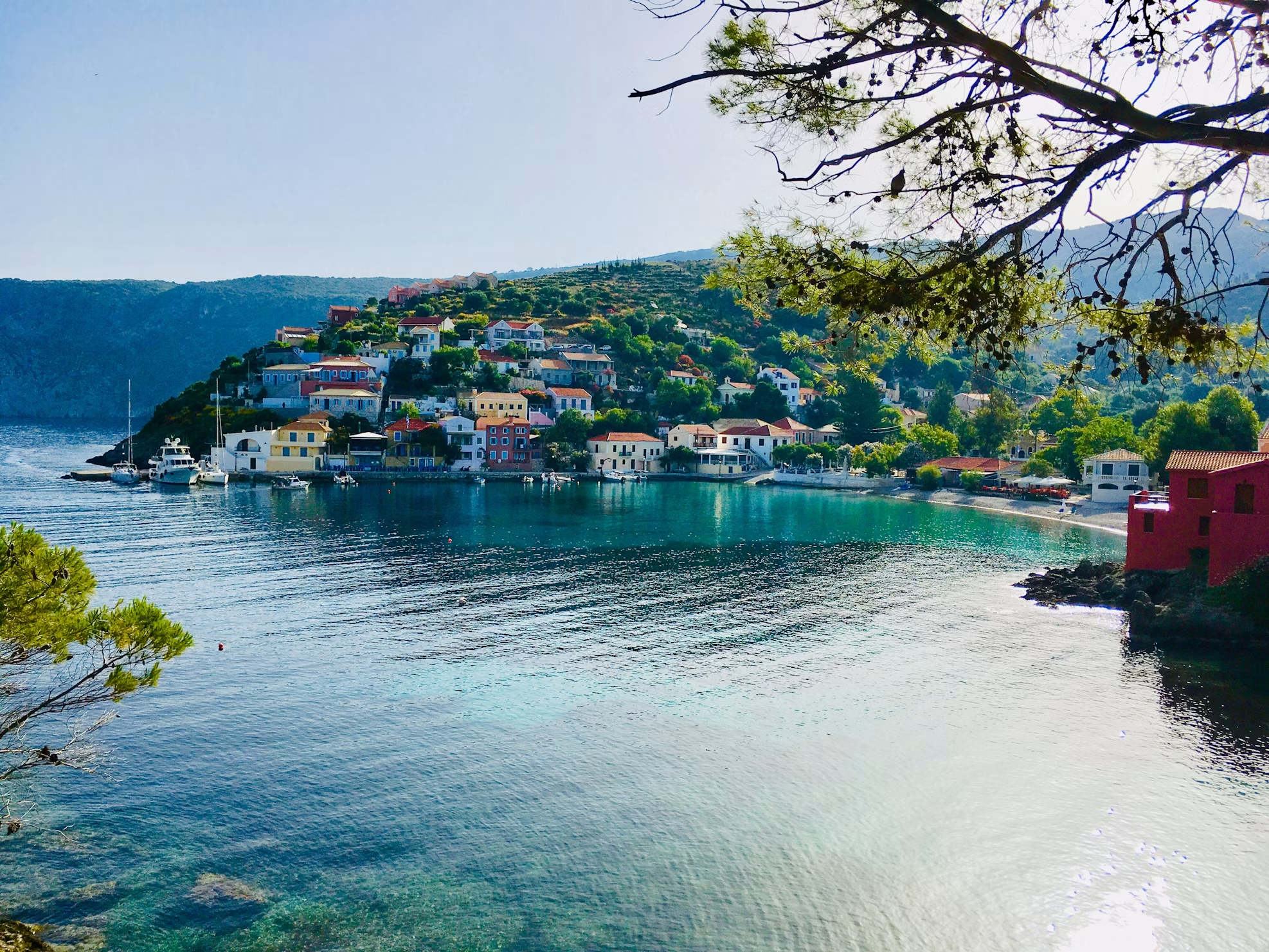
Through thousands of hours of investment research and immigration practice, I've learned a secret few Americans know about. Retiring in Europe does not mean giving up half of your income to taxes. There's a completely legal 7% tax trick, hiding in plain sight. And it could mean retiring a decade earlier while your friends back home keep working. In this video, you'll discover how this tax framework operates, which two Mediterranean countries offer this sweet deal, and what it actually takes to qualify. Let's start with Greece. If you want sunshine, simplicity, and a legal 7% tax on your foreign pension, life overseas in Greece is hard to beat. Here's how it works. If you retire in Greece on either the financially independent person's visa or the golden visa, we've covered both of these in a previous video and in our how to retire to Greece guide on the website. You can opt into a special flat tax regime, just 7% annually on all your foreign sourced pension income. No brackets, no headaches, just one number for up to 15 years. You pay that tax once a year in a lump sum each July and that's it. No additional liabilities, no sneaky deductions or surprise bills. To qualify, you'll need to spend at least 183 days a year in Greece, prove you haven't been a Greek tax resident for five of the last 6 years, and show that your pension or retirement income comes from abroad. And yes, Americans qualify thanks to a tax treaty between the US and Greece. Here's the kicker. You can rent a C view apartment in CIT for as little as $1,000 a month. Eat better, live healthier, and still pay less in taxes than you ever did in the States. And compared to other EU countries, Greece's bureaucracy is surprisingly manageable, especially if you work with someone who knows the ropes. Now, this regime is not perfect. You need to live in Greece for more than half of the year on a residency visa like the FIP visa or the Golden Visa, like I mentioned before. So, if you're looking for maximum travel flexibility, that's a consideration. And this regime only applies to foreign pension income, not broader investment portfolios or earned income. But if your goal is to retire with peace of mind, lower taxes, and a better lifestyle, Greece checks a lot of those boxes. So, what's the alternative? Well, there's another Mediterranean country offering a similar 7% tax deal, but with some key differences. And depending on your lifestyle, it might be the better fit. Let's talk Italy. So, if Greece offers flexibility, Italy's tax regime offers something even more powerful. More ways to protect and keep your money. Here's how it works. Italy offers a 7% flat tax on all foreign source retirement and passive income, but only if you live in a small town of fewer than 20,000 residents in southern Italy. Here's a map that shows all the eligible regions of Italy. Think charming hilltop villages in Calabria or Basilicata or Sicily. Unfortunately, residents of Rome, Florence, Venice, or Milan would not qualify for this flat tax regime. But for you to qualify for the 10-year renewable program, you must not have been an Italian tax resident for nine of the last 10 years, and you'll need to establish residency in one of these eligible towns. But the benefits go beyond the 7% flat rate. Unlike Greece, Italy throws in some serious tax perks. No wealth tax, no inheritance tax, no requirement to report foreign assets, and the ability to include both passive and retirement income in that 7% tax rate. That means rental income, dividends, and your pension. And if you're retiring with significant savings or property back in the States, this is a big deal that I don't want to understate. And in some cases, you can even include your spouse or dependence for an additional cost, giving the whole household tax relief. The lifestyle obviously pretty attractive. Southern Italy has some of the lowest real estate prices in Western Europe. You can buy a project home in an aging village for a single euro or a renovated town home for under €100,000. Access to the blue zone lifestyle and a pace of life that's really hard to beat. There's a reason Italy is home to so many centinarians. But there are trade-offs. Unlike Greece, where you can settle in nearly any city, Italy limits you to these more under the radar towns in the south. And while the quality of life can be high, don't expect the world's fastest internet or the best travel accessibility or a wide variety of English-speaking neighbors in every village. The application process is also a bit longer. Italian bureaucracy lives up to its reputation. You'll want good legal and tax help, and the Freedom Files can support you. But still, if you're craving culture, food, a slower life, and one of the most favorable tax setups in Europe for retirees, Italy might be your move. Before we compare the two programs, which sounds more appealing to you? Comment down below and let us know why. So, how do Greece and Italy really compare? Here's a sidebyside breakdown, but I'll walk you through the key differences you need to know. Greece's 7% flat tax only applies to foreign pension income, your social security, 401k, military retirement, maybe an annuity, but that's it. Italy's version, on the other hand, is more extensive. It covers all of your foreign source retirement and passive income. That includes not just your pension, but also dividends, rental income, and interest. For some retirees, that could be a huge difference. Greece's flat tax regime is valid for 15 years, no renewals, while Italy's program lasts 10 years, but is renewable, so you can potentially stretch it much longer. In terms of residency, Greece requires you to spend 183 days or more each year in the country in order to become a tax resident. Italy doesn't have a daycount rule, but you do have to formally register and live in a qualifying town. Then there's location. Greece gives you options from islands to cities, mountains to coastlines. You can live almost anywhere and still qualify. Italy restricts you to smaller towns in the south, fewer than 20,000 people. These places are stunning, authentic, and incredibly affordable, but they're not for everyone. I was just in Sicily and the Amalfi Coast and enjoyed my time, but I can see why some would be turned off by life in this region. By the way, don't forget to hit like if you're finding this helpful. It really helps us out, of course, but also more of your fellow expats discover this info as well. All right, before you pack your bags and get ready for your Mediterranean move, here's what could potentially trip you up and how to avoid mistakes that cost some expats thousands. This 7% tax rate doesn't just happen. You have to apply properly. Submit the right documents, prove your pension income qualifies, and do it on time. And remember, until the US government ends citizenshipbased taxation, Uncle Sam still taxes you on your worldwide income, no matter where you live. That's where these double tax treaties come in. Both Greece and Italy have agreements with the US that help you avoid double taxation. Also, as a US citizen, you still have to report your foreign bank accounts. FBAR, FATKA, these are the IRS's way of saying we miss you. I know, real charming. But ignoring these serious regulations could cost you up to half of your income. And then there's healthare. It's cheaper in both countries. Way cheaper. But the systems work differently. You'll want to know how to access coverage, what's public, what's private, and what to do in an emergency. To see which of these routes fits your situation and goals, take the Plan B Blueprint at freedomfiles.co/begin. So, how do you actually make this happen? Here's what I would do step by step. Step one, choose Greece or Italy based on your lifestyle. You want flexibility and islands, go Greece. prefer broader tax perks, small town Italian charm, and maybe a pathway to citizenship, go Italy. Now, step two, apply for the right visa for your situation and establish legal residency. Then, apply for the 7% flat tax regime in the respective country. In Greece, we'd recommend either the FIP visa or the golden visa. And in Italy, the elective residency visa or investor visa. And we cover both of these in our retire to Greece and retire to Italy guides linked below. Step three, once approved, celebrate and file taxes with both your new country and the IRS back home using the treaty to avoid double taxation. So, if you did this right, your taxes can drop significantly. And obviously, you're in the Mediterranean. Your lifestyle just got a whole lot better. If all this immigration and tax planning sounds overwhelming, don't worry. That's exactly what the Freedom Files does. Book a one-on-one freedom consult and we'll walk you through the whole process personalized to your situation and goals. You don't have to figure this out alone. And if you found this breakdown helpful, you'll love this video about the top five low tax countries begging you to retire there, where we explore even more affordable, beautiful places with generous tax perks and easy residency options. [Music] [Music]