

Freedom FilesFreedom Files
Turkey editorial photograph
← 🇹🇷 Turkey

Turkey Citizenship by Investment

Citizenship by investment through a $400K qualifying property purchase, paired, under Law No. 7582 gazetted June 2026, with a 20-year exemption on foreign-source income and capital gains for new Turkish tax residents. The longest non-dom regime currently active anywhere, alongside a passport that opens roughly 110 destinations.

Investment from
$400K
Processing
3 to 6 months
Naturalization
Immediate upon approval
Presence required
None

Turkey Citizenship by Investment: The basics

Turkey editorial photograph

What it is

Turkey's Citizenship by Investment program (operational under Decree 106 of 2018, restructured in subsequent years) grants Turkish citizenship in exchange for a $400K qualifying property purchase, held for a minimum three-year period before resale. After due diligence and government approval, you swear an oath of allegiance (administered remotely through a Turkish consulate or during a single brief visit to Turkey for biometric capture), receive a Turkish passport, and hold citizenship for life. The whole engagement typically runs three to six months. As of June 2026, Law No. 7582 pairs the citizenship route with a 20-year exemption on foreign-source income and capital gains for new Turkish tax residents, a structural upgrade that turns the program from a pure passport play into one of the most efficient global wealth-planning combinations currently available.

Who it’s for

  • Families wanting a CBI passport that preserves the underlying capital as an asset rather than a donation
  • Clients seeking the longest active non-dom regime anywhere, 20 years of foreign-income exemption, paired with citizenship in months
  • Globally mobile investors building both Plan-B optionality and a credible long-term wealth-preservation base
  • Real estate investors comfortable with Turkish-property risk and a three-year hold
  • High-net-worth families with $400K+ to deploy and broad family inclusion needs
  • Patrons who value zero physical-presence obligation and Turkish-Airlines connectivity

Why it’s beneficial

Turkey is now one of the very few jurisdictions where the passport and the long-term tax shelter sit in the same hand. The $400K property route preserves underlying capital as a recoverable asset rather than a donation, and Law No. 7582 (gazetted June 2026) adds a 20-year exemption on foreign-source income and capital gains for new tax residents, materially longer than Europe's typical 10-to-15-year non-dom equivalents. Pair the two and you naturalize in three to six months, optionally relocate, and shelter foreign income for two decades. Turkish Airlines flies to more countries than any other carrier, which makes Istanbul one of the world's most strategically connected hubs. The trade-offs: Turkish lira and macro volatility introduce currency risk into the resale economics, and the passport is materially weaker on Europe-direction mobility than Caribbean-CBI or European passports.

Key benefits

The outcomes the Citizenship by Investment actually delivers, beyond the headline numbers. The six that matter most to our clients.

  1. 20-year foreign-income tax shelter (Law No. 7582), Turkey

    20-year foreign-income tax shelter (Law No. 7582)

    Gazetted June 4, 2026, Law No. 7582 exempts new Turkish tax residents from Turkish tax on foreign-source income and capital gains for 20 years. Qualification: no Turkish domicile or tax liability in the three prior calendar years. Inheritance during the window is taxed at a flat 1% (versus a progressive schedule reaching 10%). Materially longer than every European non-dom equivalent (typically 10-15 years), and the structural reason a growing share of CBI holders now also relocate.

  2. Property as a recoverable asset, Turkey

    Property as a recoverable asset

    The $400K buys real estate, not a donation. The asset retains underlying value, can generate rental yield during the qualifying three-year hold, and is saleable after the hold without affecting citizenship status. Past clients have generally recovered 70-110% of original USD outlay over the three-year hold depending on entry timing and asset selection.

  3. Three-to-six-month timeline, Turkey

    Three-to-six-month timeline

    Engagement to oath typically runs three to six months for clean files. The Turkish CBI program is mature, well-staffed, and has processed tens of thousands of files since the 2018 restructure. Process predictability is materially better than newer-entrant CBI programs.

  4. Zero physical-presence requirement, Turkey

    Zero physical-presence requirement

    No minimum visit before applying, no minimum stay after applying, no requirement to live in Turkey to maintain citizenship. The oath can typically be administered remotely; some engagements require one brief visit for biometric capture. Citizenship is held for life regardless of where you live.

  5. Visa-free to ~110 destinations, Turkey

    Visa-free to ~110 destinations

    The Turkish passport grants visa-free or visa-on-arrival access to roughly 110 destinations, including Singapore, Hong Kong, Japan, South Korea, and most of Latin America. Materially weaker on Europe-direction mobility (Schengen and UK require a visa) than Caribbean-CBI passports, but stronger on Asia and Latin America than most.

  6. Family in one application, Turkey

    Family in one application

    Spouse, dependent children under 18, and disabled adult children regardless of age qualify under a single application. Family pricing is included in the principal $400K investment rather than added on a per-dependent basis, which makes Turkey one of the most family-efficient CBI programs on cost.

  7. Istanbul connectivity, Turkey

    Istanbul connectivity

    Istanbul Airport is one of the world's busiest, with Turkish Airlines flying to more countries than any other carrier. Direct service to most major US cities, every European capital, and across Asia and the Middle East. The connectivity advantage is among the program's structural assets.

Investment options

4 routes into the same residency. Each fits a different financial picture.

Most popular

Real Estate Investment

$400,000

Purchase of qualifying Turkish real estate with a verified market value of at least $400K, held for a minimum three-year period before resale. Property must be purchased from a Turkish-licensed developer or seller and registered with the Turkish Land Registry at the qualifying valuation. The underlying asset retains value, can generate rental yield during the hold, and is saleable after the three-year mark without affecting citizenship.

Bank Deposit

$500,000

Deposit of at least $500K in a Turkish bank account, held for three years before withdrawal. Lower friction than property purchase (no developer selection, no property-management considerations), at a higher upfront capital threshold. The deposit earns standard Turkish bank interest in lira, introducing currency exposure during the hold.

Government Bonds

$500,000

Purchase of at least $500K in Turkish government bonds, held for three years before redemption. Operationally similar to the bank-deposit route with comparable currency dynamics; the bond yield is typically more attractive than the deposit rate but introduces equivalent lira exposure.

Foreign Direct Investment

$500,000

Investment of at least $500K in a qualifying Turkish business, with capital injection registered through the Turkish Ministry of Industry and Technology and held for three years. The most operationally intensive route; appropriate for clients with an active business interest in Turkey rather than pure CBI.

Choosing the right route is half the work. We model the comparison against your portfolio in the Consult.

Get my Blueprint

How the process works

  1. Contact us

    Reach out and tell us about your situation. From there, you'll either book a 60-minute Freedom Consult (if you're weighing options across countries) or get started on this route directly (if you already know it's the right fit).

  2. Engagement and property selection

    We coordinate the document pack (passports, birth and marriage certificates, FBI background check, source-of-funds documentation, biometrics) and work with vetted Turkish real estate counsel to identify properties with qualifying valuations and resaleable market characteristics. Typically 4 to 6 weeks.

  3. Property purchase and valuation

    Property is purchased through our partner counsel and registered with the Turkish Land Registry. An independent state-licensed valuation confirms the $400K threshold. Title is encumbered with a three-year resale restriction noted on the deed.

  4. Application submission

    Our Istanbul partner counsel files the citizenship application with the General Directorate of Population and Citizenship Affairs. Filing triggers the government-engaged due-diligence and security review.

  5. Due-diligence period

    Government due diligence covers criminal record, prior visa refusals, source of funds, and political-exposure status. Typically 6 to 12 weeks. We pre-screen the same criteria at engagement so there are no surprises.

  6. Oath of allegiance

    Swear the oath of allegiance, typically administered remotely through a Turkish consulate. Some engagements require one brief visit to Turkey for biometric capture. No required ongoing residency in Turkey after the oath.

  7. Citizenship and passport

    Turkish citizenship is granted, followed by passport issuance. Passports are valid for ten years and renewable indefinitely. After three years from property purchase, the underlying real estate can be sold without affecting citizenship status.

Application

Due diligence

Approval & oath

Citizenship

Months 0-2

Months 1-5

Months 3-6

Immediate upon approval

Turkey Citizenship by Investment versus the alternatives

How this program stacks against the closest credible options for the same visitor. We don’t earn more if you choose one over another.

DimensionTurkey citizenship by investmentSt Kitts & Nevis citizenship by investmentLearn moreEgypt citizenship by investmentLearn more
Minimum financial bar$400K property$250K donation$250K donation
Recoverable capitalYes (after 3-yr hold)No (donation)No (donation)
Tax regime for new residents20-yr foreign-income exemptionNo personal income taxTerritorial-leaning
Processing3-6 months6 months6-9 months
Presence required1 brief visit possibleNoneNone
Visa-free destinations~110~150~50
Family inclusionSpouse, children under 18Spouse, children, parents, siblingsSpouse, children, parents
Currency exposureYes (TRY-denominated)No (USD-priced)No (USD-priced)

Turkey is now the strongest CBI for clients who want recoverable capital AND a long-term tax shelter in one package, Law No. 7582 (2026) adds a 20-year foreign-income exemption that beats every active European non-dom regime. St Kitts has materially stronger visa-free mobility (Schengen and UK on the Caribbean side), no personal income tax, and forty years of institutional history. Egypt is the lowest-cost CBI but with a substantially weaker passport. We don't earn more if you pick one over another.

Want a Turkey briefing covering everything on this page plus the comparison framework we use internally?

No spam ever! Unsubscribe in one click.

Why clients work with us

Three reasons families pick Freedom Files over the do-it-yourself path or a single-jurisdiction agent.

Turkey editorial photograph

First-hand experience

We work with Turkish counsel who handle property selection for resaleable assets, not just any-property-clears-the-valuation deals. The recovery economics at year three depend entirely on entry property selection; the wrong asset costs 30%+ of the principal at exit.

Turkey editorial photograph

Honest recommendations

About a third of Turkey inquiries end with our recommendation against engagement. We tell you when Caribbean CBIs fit better (stronger passport mobility, no currency exposure), when Egypt is the better budget play, or when a property-style program in Greece or Portugal makes more sense.

Turkey editorial photograph

Pro counsel from the start

Every engagement runs with US-licensed counsel from the first call, plus Turkish tax counsel for clients exploring the Law No. 7582 20-year exemption. The IRS-side implications of acquiring a second citizenship, the Turkish-side qualification test, and the property structure are planned together before the application is filed.

What is the new 20-year foreign-income tax exemption?

Law No. 7582, gazetted June 4, 2026, exempts new Turkish tax residents from Turkish tax on foreign-source income and capital gains for 20 years from the date of becoming resident. Qualification turns on one test: no Turkish domicile or tax liability in the three calendar years before relocation (with a carve-out for those who paid Turkish tax on local rental income, securities income, or capital gains). The window also brings a 1% inheritance rate (versus a progressive schedule reaching 10%) on assets transferred on death during the period, lifetime gifts sit outside it. A separate asset-repatriation amnesty runs through July 31, 2027, with a 0-5% rate on declared cash, gold, foreign currency, and securities, dropping to 0% for a five-year hold in qualifying instruments. The regime is materially longer than every active European non-dom equivalent (typically 10-15 years), and it pairs naturally with the CBI passport: naturalize through the $400K property route in three to six months, optionally relocate to become a tax resident, and shelter foreign income for two decades.

Will my $400K be recovered after the three years?

Underlying market value is recoverable through resale after the qualifying three-year hold. The actual recovery depends on Turkish real estate market conditions, lira-USD exchange rates at sale, and the specific property's appreciation trajectory. Past clients have generally recovered between 70% and 110% of original USD outlay over the three-year hold, depending on entry timing and asset selection. We model the conservative case during the consult; we do not promise appreciation.

How strong is the Turkish passport?

The Turkish passport currently grants visa-free or visa-on-arrival access to roughly 110 destinations, including Singapore, Hong Kong, Japan, South Korea, and most of Latin America. Schengen and UK access requires a visa for Turkish nationals. The passport is materially weaker on Europe-direction mobility than European or Caribbean-CBI passports, but stronger on Asia and Latin America than most. For families building a Plan-B with Asia or Latin America exposure, the mobility profile aligns well; for European-direction mobility, Caribbean CBIs are stronger.

Do I have to visit Turkey at any point?

The oath can typically be administered remotely through a Turkish consulate. Some engagements require one brief visit to Turkey for biometric capture or property-purchase logistics; the visit can be compressed to a single week. After the citizenship is granted, no further presence is required to maintain it.

Who counts as family for one application?

Spouse and dependent children under 18 are included under the principal $400K investment with no per-dependent fee, plus disabled adult children regardless of age. Adult children over 18, dependent parents, and other relatives are not eligible under the standard CBI framework. This makes Turkey one of the most cost-efficient CBI programs for nuclear families with younger children.

Will I have to give up my US citizenship?

No. Turkey has permitted dual citizenship since 2009, and the United States permits dual citizenship as a matter of practice. You hold both passports indefinitely.

What are the tax consequences for me as an American?

Acquiring Turkish citizenship alone does not change your US tax residency or your worldwide-income filing obligation, you remain a US person and the IRS keeps its hand on your worldwide income regardless. Acquiring citizenship without establishing Turkish tax residency keeps you outside the Turkish tax net entirely (holding Turkish property may still trigger rental-income and property-tax obligations there). The bigger move available now: if you do relocate and become a Turkish tax resident under Law No. 7582 (2026), Turkey gives you a 20-year exemption on foreign-source income and capital gains, which eliminates the Turkish-side overlay on your US-sourced income for two decades. The US-side filing continues; the Turkish-side disappears. We coordinate with US-licensed and Turkish tax counsel on the structure.

What about Turkey's political and economic environment?

Turkey has had volatile macroeconomic conditions and an active political environment over the past decade, with lira depreciation and high inflation as recurring features. The CBI program itself has remained operational and policy-stable across multiple political cycles since the 2018 restructure, and Law No. 7582 (June 2026) materially strengthens the program's structural value by adding a 20-year foreign-income tax exemption alongside the passport. The recoverable-asset structure of the property route partially insulates against macro volatility relative to non-refundable donation programs. We monitor the program closely and brief active clients on any material movement.

Read & watch on Turkey

Deeper coverage of Turkey from the Freedom Files library - long-form articles and short video deep-dives.

Articles

Videos

  • 23 min

    7 Ways to Get a Second Passport in 2026: Citizenship by Descent, Birth, Marriage, Naturalization, Investment, and Merit

    There are 7 ways you can get a second passport in 2026: Through citizenship by descent, birth, marriage, naturalization, a preferred nationality fast track, citizenship by investment, and citizenship by merit, and 4 of them cost almost nothing. This breakdown covers how each one works, how long it takes, and which ones fit your goals. The last route is the one I expect to replace citizenship by investment in the future.

    • Citizenship
  • 35 min

    Pay Zero Tax on Foreign Income in These 19 Countries: Residency and Citizenship Routes for 2026

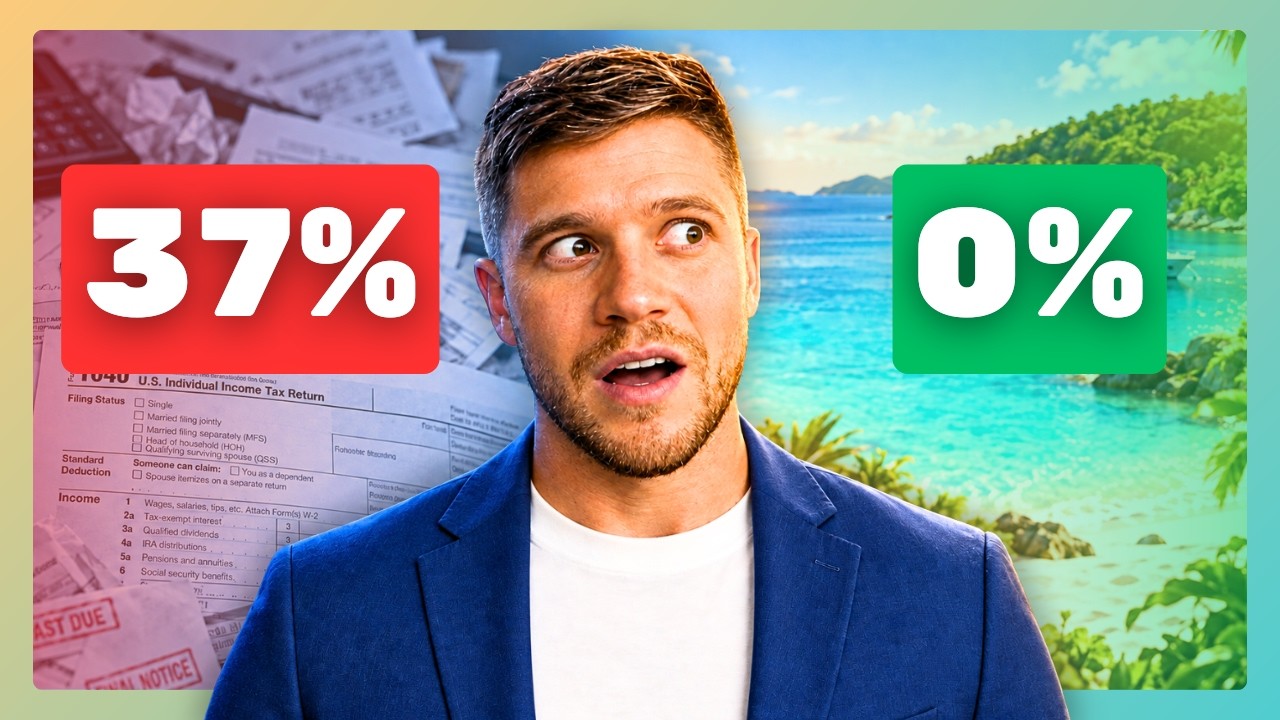
    If you're not a US citizen and don't have a green card, you can drop your tax bill to zero by establishing tax residency in a zero-tax jurisdiction; if you're a US person, these countries simply won't add a second tax bill to your US one. This breakdown covers 19 tax-friendly countries worldwide across 4 systems, zero income tax (UAE, St Kitts and Nevis, Antigua and Barbuda, Vanuatu, Nauru), territorial tax (Costa Rica, Georgia, Paraguay, Grenada, Panama), tax holidays from 3 to 20 years (Chile, Uruguay, Cyprus, Turkey), and conditional non-dom systems (Dominica, St Lucia, the Dominican Republic, Ireland, Malta), plus how to get residency or citizenship in each and reduce your total tax bill to as close to zero as possible.

    • Residency
    • Citizenship
    • Tax
  • 20 min

    8 Countries Where a Bank Deposit Gets You Residency or Citizenship in 2026

    You can simply move your money from one domestic bank account to an international one and walk away with legal residency in 6 countries and even direct citizenship in 2 more. This breakdown covers residency by bank deposit in Panama ($200,000 Friendly Nations Visa or the $750,000 Qualified Investor Visa), the Dominican Republic ($200,000 CD with a 2-year citizenship clock), Ecuador ($48,000, the cheapest deposit residency anywhere), Latvia (€280,000, Europe's last bank-deposit golden visa, closing soon), the UAE (2 million dirhams for a 10-year Golden Visa), and Thailand ($100,000 LTR visa), plus citizenship by bank deposit in Egypt and Turkey at $500,000 each, and the currency fine print that decides whether those two make sense. This is likely the easiest way to qualify for residency overseas, apart from simply showing your income.

    • Residency
    • Citizenship
    • Banking
  • 16 min

    How Americans Open Offshore Bank Accounts Legally in 2026: FBAR, FATCA, CRS, and the 6 Steps

    The price of doing offshore banking wrong can reach $165,000 per account, per year. This breakdown shows how Americans open foreign bank accounts 100% legally in 2026: What an offshore account really is, why wealthy investors bank abroad (from the 2023 US bank failures to the Cyprus bail-in), the FBAR, FATCA, and CRS reporting rules that define the game, the 5 reasons offshore banking might be wrong for you, and the 6 steps to open an account that fits your profile, from defining the job of the account to the filings that follow the deposit.

    • Tax
    • Banking

Ready to talk?

Two paths in. If the Citizenship by Investment is clearly the right program for your family, start with the Blueprint and qualified applicants receive a Freedom Consult invitation inside the report. If you’re weighing this against other programs, the Blueprint routes you to the right conversation faster.

The consult is free for qualified applicants while we onboard our first cohort.

Click for access to a full Turkey briefing

Get your custom Plan B Blueprint

Most people spend 100+ hours researching residency and citizenship options before they realize they were looking at the wrong programs. We compress that into 10 questions, 90 seconds, and a single report.

“You come across as very genuine, authentic, and easy to deal with. Most experiences I've had with others are like, 'Send me money and I'll tell you what to do.'”
Tony · California