Americans are moving more capital into Turkey's citizenship-by-investment program than into almost any other second-passport route on earth right now, and the reason has less to do with travel than most explanations lead with. The Turkish passport is a recoverable-capital play, a geopolitical hedge, and, since the June 2026 gazetting of Law No. 7582, one of the most efficient long-term tax bases available in any CBI jurisdiction. That combination is why the calls come in without stop.
This piece walks through how the program works in practice, where the plain risks live, and how to know whether Turkey belongs in your Plan B, or whether a European golden visa or a Caribbean CBI is the cleaner fit.
Or watch the deep dive here:
What Makes Turkey Different
Turkey is a nation of 85 million people that straddles Europe and Asia, with Istanbul as its commercial and cultural heart. Unlike most CBI destinations, this is somewhere you can build a real life around, deep expat infrastructure in Istanbul, international schools, private healthcare that competes with US-coastal-city quality at a fraction of the cost, and Turkish Airlines flying to more countries than any other carrier on the planet. The Aegean and Mediterranean coasts around Bodrum and Antalya do most of what a European golden-visa retirement offers, at prices that are meaningfully lower.
The deeper draw is geopolitical. Turkey is one of the very few countries that refuses to pick a side. It has been a full NATO member since 1952, deeply inside the Western military alliance, and it has spent the past few years courting BRICS. Turkey was offered partner-country status in 2024, President Erdoğan appeared at the BRICS summit in Kazan, and Ankara has pushed for full membership since. For most governments, that non-alignment reads as a liability. For an American investor building a Plan B, non-alignment is the whole point. When your capital, your legal identity, and your tax home all live inside one Western system, a passport that deliberately straddles both worlds hedges a risk another EU-facing document cannot.
How the Investment Works, Recoverable Capital, Not a Sunk Donation
The core contrast with the Caribbean CBI programs is that Turkey's main route is a recoverable asset rather than a one-way donation. In St Kitts and Nevis, Dominica, and São Tomé and Príncipe, the cheapest route is a contribution to a government fund, you wire the money, it is gone, and you get a passport. In Turkey, the main route is a productive asset that can pay you rent or appreciate while you own it.
The four qualifying routes:
- Real estate, $400,000 (the main route). One or several properties, registered at a state-verified valuation, locked in for three years before resale. Rental income across the lockup period is yours to retain. You can sell after the three-year mark without affecting your citizenship, you own something at the end.
- Turkish bank deposit, $500,000, three-year lockup
- Turkish government bonds, $500,000, three-year lockup
- Foreign direct investment in a Turkish business, $500,000, three-year lockup
Most engagements choose the property route. It costs less than the three $500K alternatives, preserves value as a hard asset that can generate income across the lockup period, and the resale market for CBI-qualifying properties in Istanbul and Antalya has matured meaningfully since the 2018 program restructure. The three $500K routes lock capital for thinner upside, especially against the lira's devaluation over the past decade, which is the plain downside covered further down this piece.
The 2026 Tax Deal, Law No. 7582 and the Twenty-Year Window
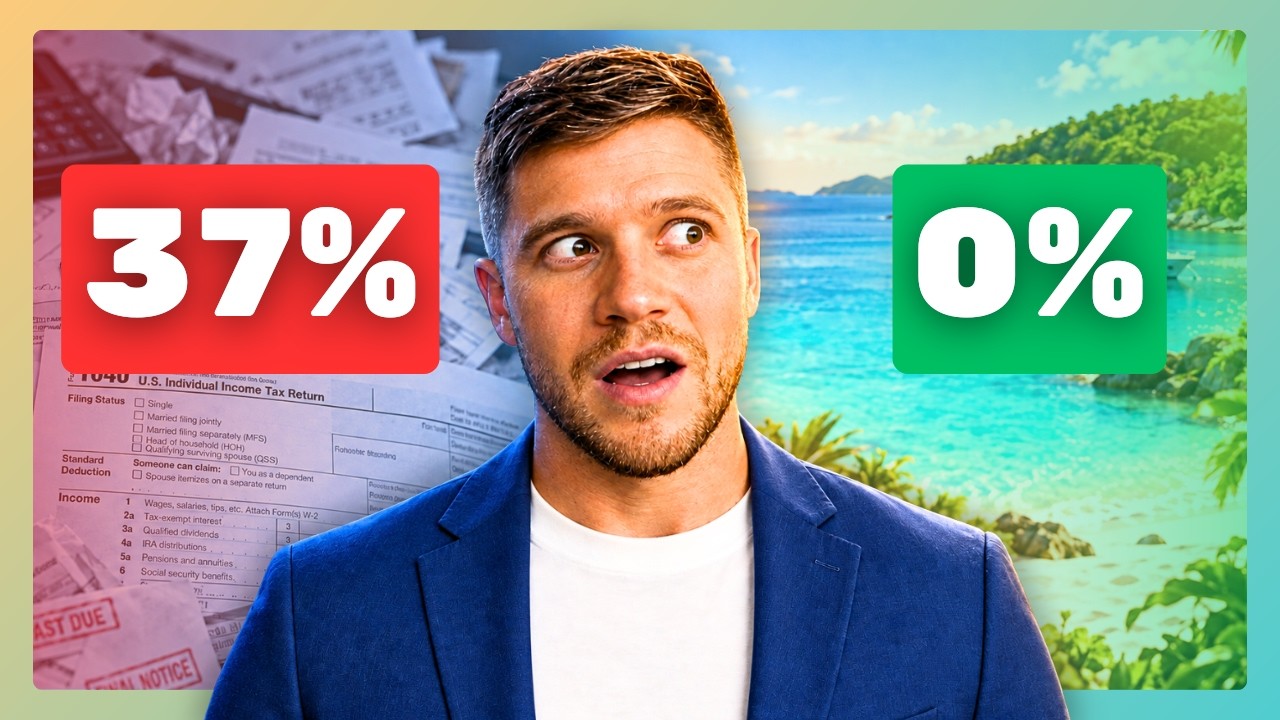
The single largest 2026 development for Turkey's program came from an unrelated bill. In June 2026, Turkey gazetted Law No. 7582, which exempts new Turkish tax residents from Turkish tax on foreign-source income and capital gains for twenty years. That is materially longer than every active European non-dom regime, Italy's fifteen-year flat tax, Spain's six-year Beckham Law, Greece's fifteen-year pensioner regime, and the sunset Portuguese NHR. Combined with the sub-six-month CBI timeline, the passport and the tax shelter now live in the same hand for the first time.
Two conditions are important for Americans:
- You have to relocate in earnest. The exemption only switches on if you become a Turkish tax resident, which requires spending more than 183 days per year in Turkey. Take citizenship without relocating and the exemption does nothing for you, which is fine if the passport is what you came for, but do not price in the tax benefit unless the move is in the plan.
- Your US filing does not change. The United States taxes its citizens on worldwide income regardless of how many passports you own or where you live. A move to Istanbul and full qualification for the twenty-year Turkish exemption does not touch your US obligations. Treaty and foreign-tax-credit mechanics soften the double-taxation exposure on both sides, but the planning has to happen with US-licensed counsel and Turkish counsel in the room together, a foreign-tax step you map with only one side of the equation is a misstep.
The full mechanics of Law No. 7582, including the 1% inheritance rate for exemption beneficiaries, the asset-repatriation amnesty available through July 31, 2027, and the salary-exemption expansion for internationally experienced staff, live in our standalone piece on the law.
The Process, Six Months, Five Steps
The Turkish CBI is one of the cleanest processes in the CBI world, in part because the 2018 restructure ironed out most of the rougher edges. A typical engagement lasts three to six months, with most clean files closing closer to the back end of that range.
- Documents and property selection. We work with vetted Turkish counsel to find a property that qualifies on state-verified valuation and, more importantly, one that resells cleanly at the three-year mark. Asset selection is where the program gets won or lost in practice, more on that below.
- Purchase, land registry, and state-licensed valuation. The property is registered in your name at the land registry, and an independent state-licensed appraiser confirms the value meets the $400,000 threshold. Both documents feed into the citizenship application.
- Filing with the Citizenship Directorate. Filing triggers government due diligence on every adult applicant, criminal record, prior visa refusals, source of funds, political-exposure status. Six to twelve weeks.
- Oath of allegiance. Usually administered remotely through a Turkish consulate, with one short in-country visit for biometrics. The visit is typically two to three days.
- Citizenship and passport issuance. The Turkish passport is valid for ten years and renewable. Spouse and dependent children under 18 are included on the single investment, no per-dependent fee, which makes Turkey among the most family-efficient CBIs in absolute-dollar terms.
The Two Plain Risks, Currency and Passport Reach
Most content on Turkey's program buries these. We do not.
The lira. The $400,000 property (or the several properties adding up to that threshold) is priced in Turkish lira at purchase. Your return at the three-year exit depends on two forces you do not control: Turkish property values on sale day and the lira-to-dollar rate. On the strong end, you recover the capital, retain the rental income, and get citizenship effectively for free. On the weak end, principal takes a meaningful haircut and citizenship costs the delta. Investors can lose money here, that is the plain read, and the lira is the reason. Asset selection counts more here than in any other CBI program, and the conservative case has to be modeled before a single dollar moves.
The passport's visa-free profile. The Turkish passport opens roughly 110 destinations visa-free or visa-on-arrival. That is lighter than St Kitts (~150) or the Caribbean-Five average. Where Turkey is strong: Asia (Singapore, Hong Kong, Japan, South Korea) and much of Latin America, regions where the US passport gets visa-required treatment for tourism and short business travel. Where Turkey is weaker: Schengen access, which requires a visa. If EU mobility is the primary need, this is not the program.
Turkey Versus Its Closest Alternatives
Four programs live in the same conversation as Turkey for most American clients, and Turkey wins a narrower, specific lane rather than winning on every dimension.
Versus St Kitts & Nevis. St Kitts hands you a stronger passport (~150-155 destinations), no currency risk (dollar-priced), and a family-inclusion tree that reaches parents and dependent siblings, not just spouse and minor children like Turkey. The trade is that the $250K SISC route is a non-refundable donation. The St Kitts real-estate route recovers capital after a seven-year lockup, but the resale market for approved-development inventory is thinner than Istanbul's. Pick St Kitts for the passport-first buyer who values Caribbean lifestyle and family breadth. Pick Turkey for the buyer who wants a recoverable-asset structure and a lifestyle relocation option in a real metropolis.
Versus São Tomé and Príncipe. São Tomé is the entry-price play, around $95K for the whole family, with a weaker passport (~50-60 destinations). Nobody buys São Toméan citizenship for travel value. It is a portfolio hedge and a Lusophone-world door opener. Turkey and São Tomé rarely compete on the same client's shortlist; they answer different questions.
Versus European golden visas. The Portuguese, Greek, Italian, Maltese, and Hungarian golden visas are residency-by-investment programs, not citizenship-by-investment. The prize is the right to live in the EU, with a naturalization clock that lasts anywhere from seven to fifteen years depending on the country. If EU access is the objective, one of these is the correct answer, Portugal's Golden Visa is our most-recommended fit for most clients. Turkey wins the narrower lane of "sovereign second passport in six months, recoverable capital, non-aligned geopolitics, and a twenty-year foreign-income tax base if you relocate."
Who Turkey Fits, and Who It Doesn't
Turkey is the right call for the Plan B buyer whose Plan A is staying in the US and whose insurance needs to live outside the Western economic, political, and military system. Non-alignment is the feature, not a bug. The twenty-year foreign-income exemption gives that same buyer a real relocation option later, you can take the citizenship now and switch on the tax base when the political weather demands it, with no relocation pressure in the interim.
Turkey is the wrong call for the buyer whose first priority is EU access, dollar-denominated capital certainty, or the shortest possible passport process on a fixed budget. If any of those describes you, a European golden visa or a Caribbean CBI (St Kitts, Antigua, Grenada) is the plain answer, and we will tell you so on the first call. That is what jurisdiction-agnostic means in practice.
How to Start
Two ways in. If Turkey is already the answer for you and the question is process, property selection, due-diligence prep, US-side tax structuring, the fifteen-minute chat is the fastest way to walk through the specifics of your situation. If you are yet weighing Turkey against the Caribbean, a European golden visa, or somewhere else entirely, the Freedom Consult is the better fit; we work backward from your goals and map the right jurisdiction and the right program to your specific picture.
Book a call when you are ready.