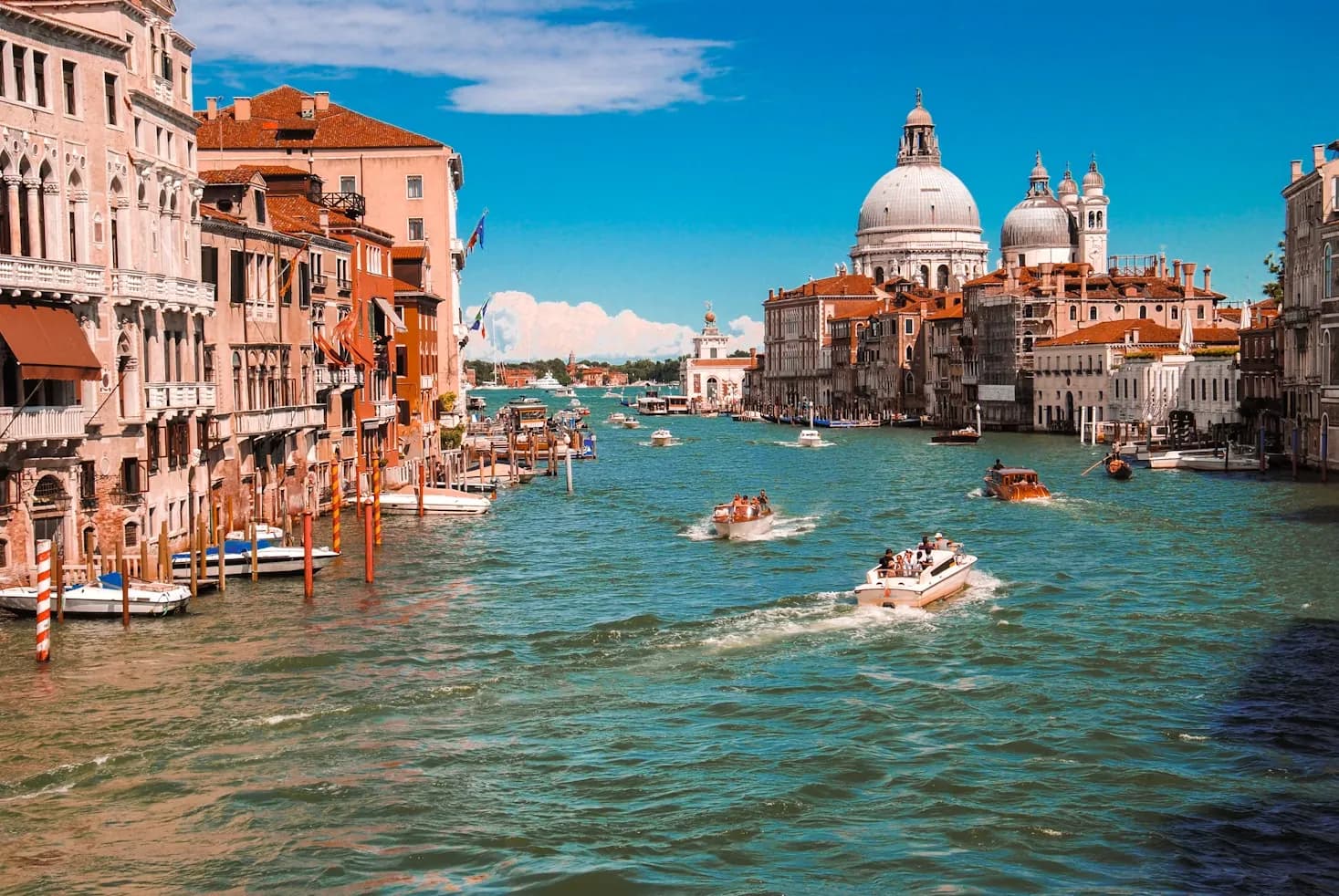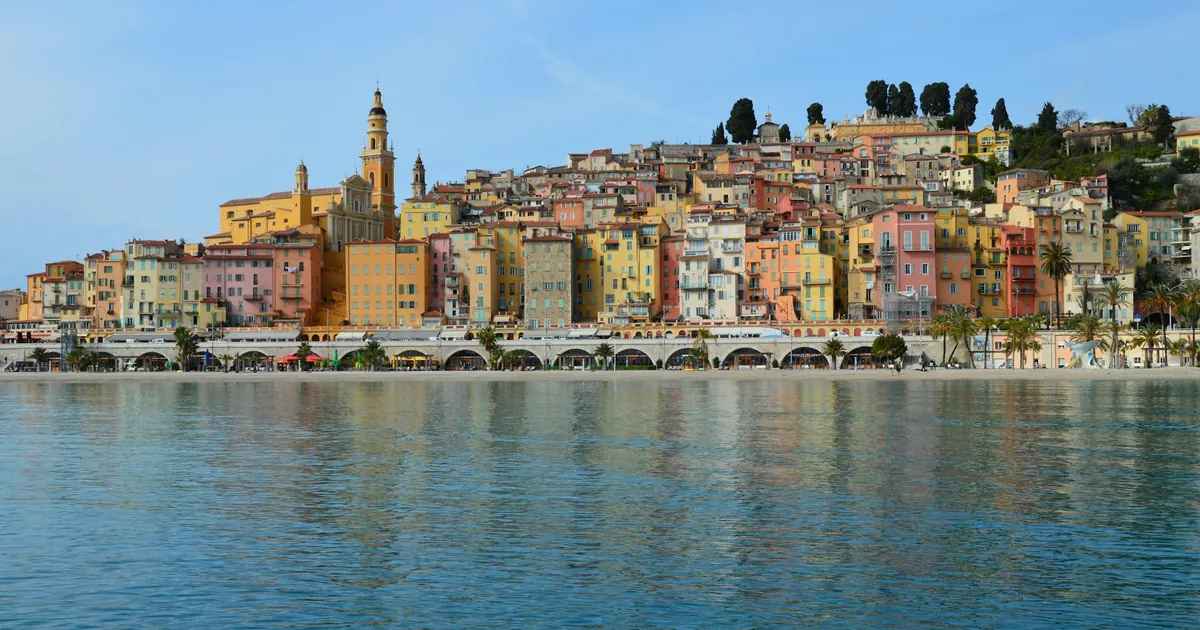
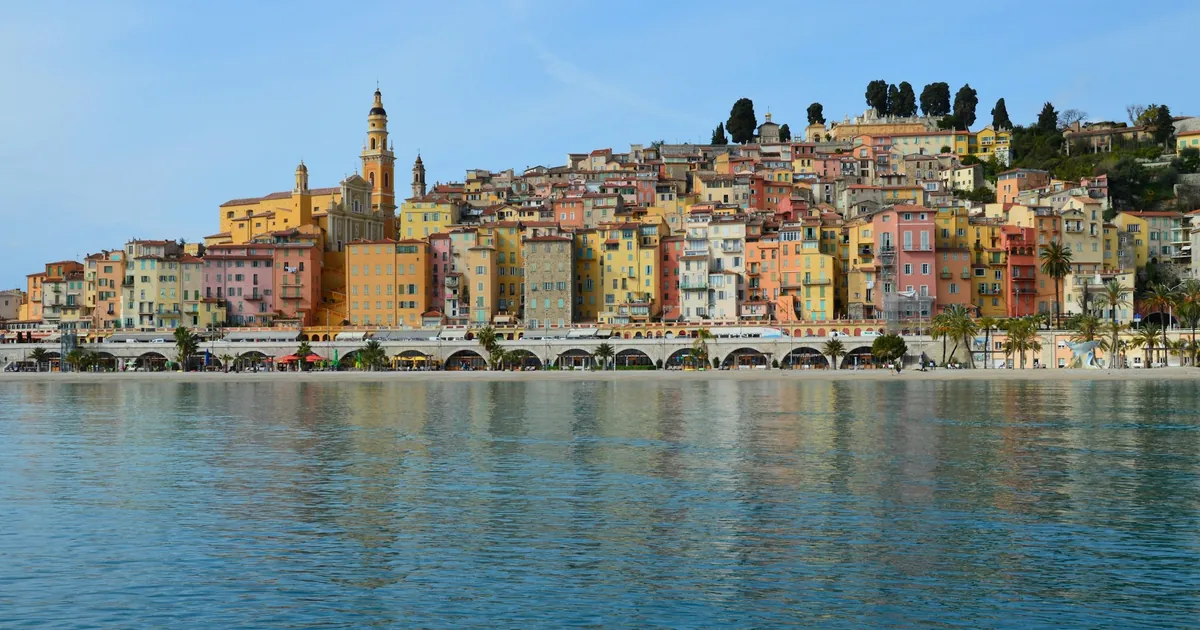
 France
 Panama
 Greece
 Italy
 Uruguay
In this article
Where you retire decides how much of your pension and savings you get to spend, and how well you live on it. Our 2027 ranking of the best countries to retire for Americans has a new leader. A tax treaty most retirees haven't read put it there.
Greece took first place in our 2025 ranking, but for 2027 France enters at the top, Panama is second, and Greece drops to third, ahead of Italy and Uruguay, our other newcomer. Greece's 7% tax is as good as it was, but France's treaty with the US protects your retirement income with no special regime or qualifying village required. Let me explain.
- France, first: The US-France treaty leaves your Social Security, pensions, and individual retirement account (IRA) withdrawals to the Internal Revenue Service (IRS) alone, in a country with some of the best health care in the world.
- Panama, second: Panama taxes no income you earn outside the country, uses the US dollar, and flies to 93 international destinations from one airport.
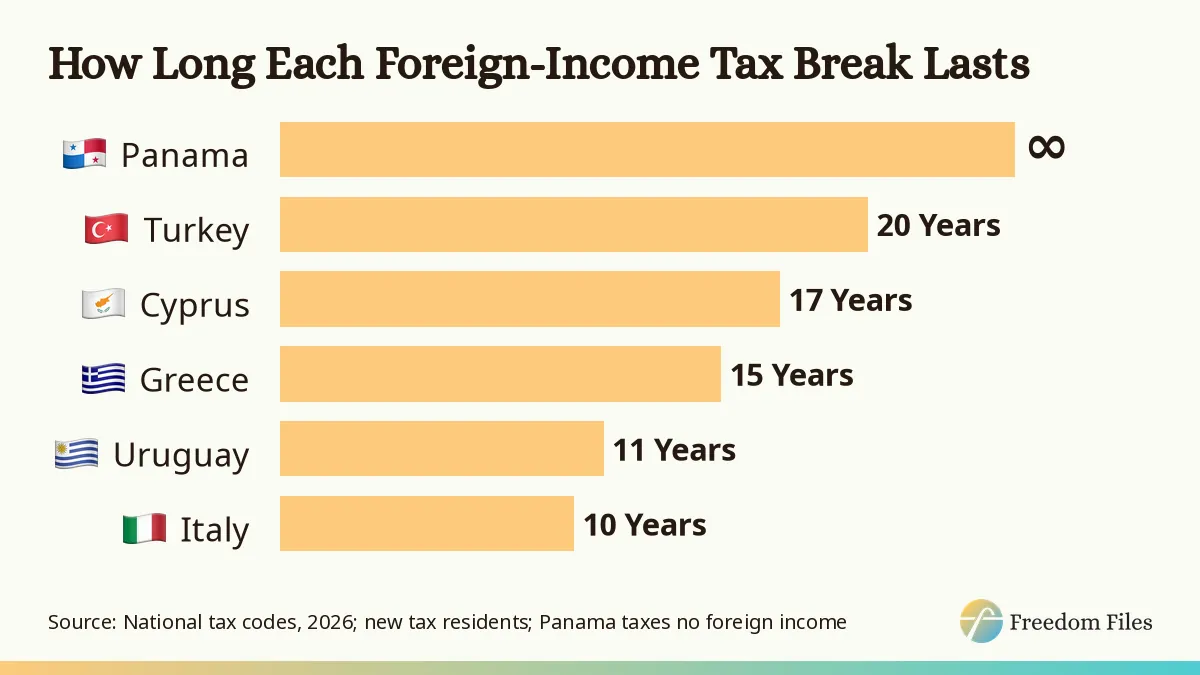
- Greece, third: Retirees pay a 7% flat tax on all foreign income for 15 years, and Greece credits what you pay the IRS against it.
- Italy, fourth: The same 7% rate lasts 10 years, but only in small southern towns, and Italy gives no credit for US tax.
- Uruguay, fifth: You get 11 years with no tax on foreign investment income in the calmest country in Latin America, at the cost of a long flight home.
France Takes the Top Spot
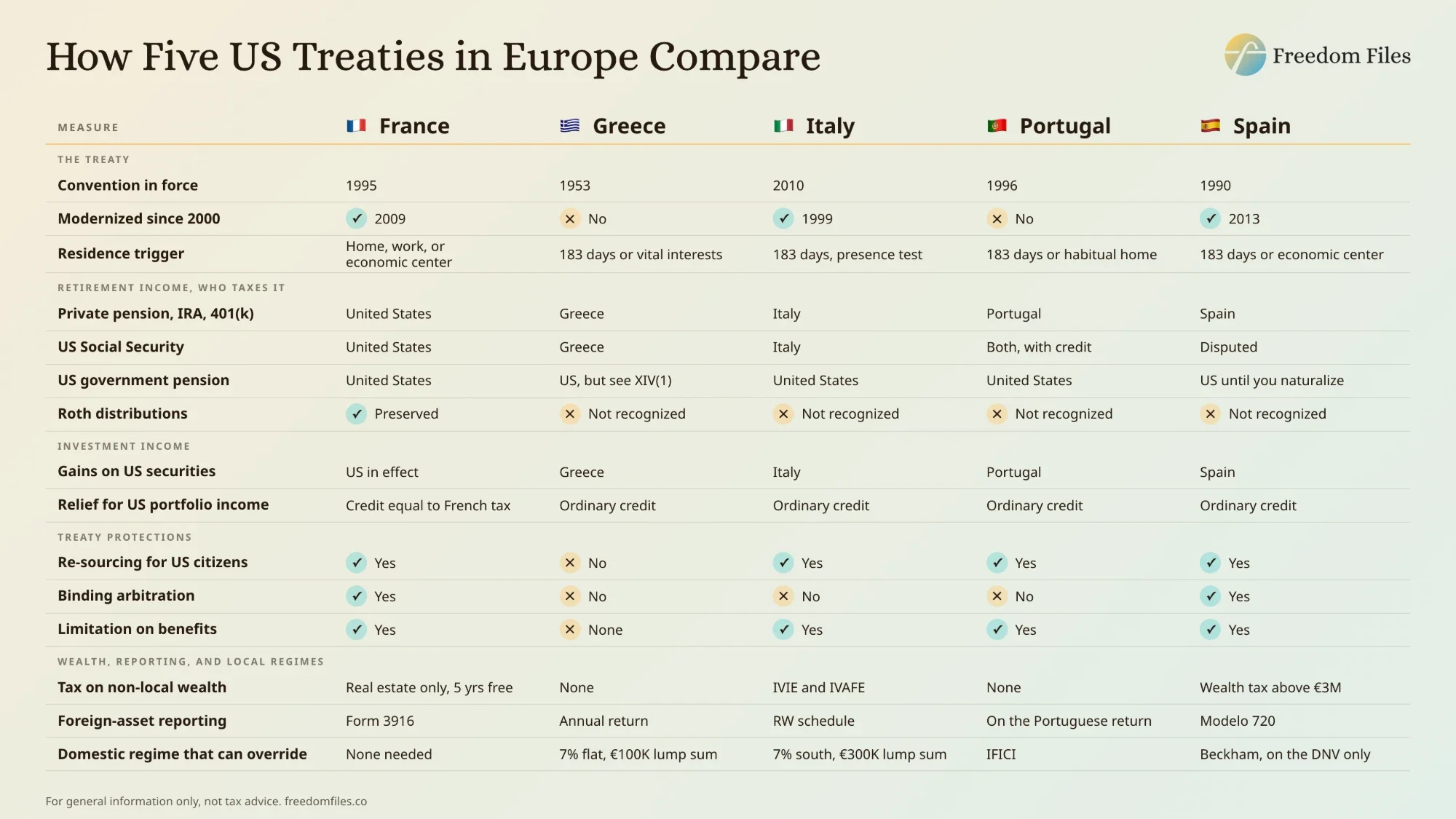
France wins because the treaty does the work for you. Under the US-France tax treaty, as amended in 2004 and 2009, US Social Security, US pensions, and 401(k) and IRA distributions paid to a resident of France are taxable only in the United States (2004 protocol). The treaty also shields that rule from the clause that lets the US tax its citizens as if no treaty existed.
So France credits back its own tax on that income, though it counts the income when setting the rate on anything else it taxes, and the IRS taxes it the way it would at home. For your US portfolio, France goes further: It gives US citizens a credit equal to the French tax on US dividends, interest, and gains on listed US shares (2009 protocol).
As I said in my video on the US-France treaty, "If you're living in France and collecting US social security, only Uncle Sam will tax it."

The treaty alone wouldn't earn first place. The gastronomic meal of the French is on the United Nations Educational, Scientific and Cultural Organization (UNESCO) list of intangible cultural heritage (UNESCO), and the health care matches the table. The World Health Organization ranked France's health care first among 191 countries in its last full ranking, with the US at 37th (WHO).
The results show up in how long people live. French women live to 85.9 on average and French men to 80.3 (INSEE), against 81.4 for American women and 76.5 for American men (CDC).
Getting in is simple for a retiree. France's visa for people who live on their own income asks you to show enough passive income to live on and to agree not to work in France. Residency, the legal right to live in a country without being a citizen, gives you the public health system after three months (Service-Public).
The card renews each year. After five years you can apply for a 10-year card or for citizenship, which since January 2026 asks for upper-intermediate (B2) French (Service-Public).
French tax offices sometimes ignore their own treaty, so your French return has to claim the treaty credit each year. The 3.8% US Net Investment Income Tax applies to you in France, and gains on US real estate face full French rates. France suits a retiree who lives on Social Security, pensions, and retirement accounts and wants Europe's best table and health care.
Panama Is the Best-Connected Base
Panama is second only because its roads and services outside the capital don't match France's. On the things retirees feel each day, it's hard to beat. Panama taxes income produced inside the country (Fiscal Code Article 694), so your Social Security, pension, and US dividends owe Panama nothing for as long as you live there under current law.
A new law, Law 526, taxes foreign passive income from 2027, but it targets companies in multinational groups and leaves individuals out (Panamá América). Panama has no tax treaty with the US, so the IRS taxes you as it would at home, and Panama adds nothing.
As I put it in my video on retiring in Panama, "Panama has a territorial tax system, which means if your income comes from outside of the country, Panama doesn't touch it."

Then there's the connection to everything else. Tocumen airport served 93 international destinations in August 2026 (La Estrella), Miami is about three hours away, and the US dollar has been legal tender since 1904.
Living costs help too. Prices are about a third below the US, and rent about 40% below (Numbeo). Forest covers 62% of the country, and 18 national parks spread from the Pacific to the Caribbean.
You also don't have to choose between beach and mountains. "Up in the central mountains, in towns like Boquete or El Valle de Antón, elevation does the job of air conditioning," as I said in my Panama residency video.
The Retirement Visa asks for a pension guaranteed for life and grants permanent residency upon approval, with no renewals. Permanent residency means your right to live in Panama doesn't expire.
By law, retirees also get discounts across the economy, such as 25% at restaurants and on airfare and 20% on medicines and medical consultations (La Estrella). Panama suits a retiree who wants a short flight to family in the US and no local tax on income from home.
Greece's 7% Gives Way to the IRS
Greece offers the strongest flat-tax deal in Europe for an American retiree. Under Article 5B of its tax code, a retiree who moves to Greece pays 7% on all foreign income for 15 tax years, anywhere in the country. You qualify with a foreign pension if you weren't a Greek tax resident in five of the previous six years.
The calendar changed in 2026: You now apply by the end of October and pay the year's tax by the end of December (AADE decision A.1192/2026).
What makes it work for Americans is the treaty. Greece credits the tax you pay the IRS on US-source income against its 7% (US-Greece treaty, Article 14), and the Greek tax authority confirmed in September 2026 that the credit applies inside the 7% regime. So the Greek share of the bill falls to 6%, 5%, 4%, or less as your US tax rises.
For example, if your US tax on US dividends or interest works out to 3%, Greece charges the other 4%. If it's 12% or more, Greece charges close to nothing. Your total comes out near 7% or your US tax, whichever is higher, and Greece doesn't refund the difference.
On top of that, Greek prices are about 44% below US prices (Eurostat). "I've had clients tell me they're living better on $3,000 a month in Greece than they were on $6,000 a month in Arizona," as I said in my Italy versus Greece video.
Retirees usually come in on the Financially Independent Person (FIP) visa, for people who live on passive income and don't work in Greece.
Greece is third for two reasons. Its health care is a tier below France's, and Greece hasn't ruled on how it treats US Social Security and federal pensions under the regime, or confirmed that its credit covers US tax on private pensions.
If you plan to buy a home, the test for Greece's new 15% transfer tax from July 2027 is tax residency, so read our breakdown before you sign. Greece suits a retiree with a private pension or a US portfolio who wants Athens or a seaside village at a low flat rate.
Italy's 7% Comes with Fine Print
Italy offers the same 7% rate on narrower terms. You must receive a foreign pension, live in a town of up to 30,000 residents in Sicily, Calabria, Sardinia, Campania, Basilicata, Abruzzo, Molise, or Puglia (or in listed earthquake-zone towns), and not have been an Italian tax resident in the previous five years (Law 34/2026).
The regime lasts 10 tax years with no renewal. From January 2027 it moves into Italy's new income tax code on the same terms.
The bigger gap is the treaty. "Unlike Greece's flat tax for retirees and passive income earners, if you elect that southern Italy 7% flat tax, Italy gives you no credit for what you pay the IRS," as I said in my video on US tax treaties in Europe. On US dividends, that means a retiree who pays the IRS 15% on qualified dividends pays about 22% all in, against about 15% in Greece.

On pensions and Social Security, the treaty gives Italy the first claim and the IRS credits Italy's tax, so the result can come out close to Greece's. The towns are the other limit: Naples, Bari, Palermo, and Cagliari are all too big, and a move to a larger town ends the regime.
Search all 2,424 qualifying towns on our map.
"Our clients consistently tell us the quality of life in Italy feels more intentional, more connected than they had ever even expected," as I said in my Italy versus Greece video. Italians live longest of the five countries here, 83.7 years on average (Eurostat), and the food culture shapes how you live.
"If retirees could settle anywhere in the country and access the same tax incentives, man, Italy would be number one," as I said in our 2025 ranking. Retirees come in on the Elective Residency Visa, for passive income only.
Italy suits a retiree on a foreign pension who wants a small southern town and has little US portfolio income.
Uruguay Trades Distance for Calm
Uruguay earns its place with a long tax break and a calm society. New tax residents can choose 11 years, the year they arrive plus 10, in which Uruguay doesn't tax foreign dividends, interest, or gains on foreign assets (DGI).
After that, foreign dividends and interest pay 12%, or 6% for five years if you meet investment conditions. A budget law that took effect in 2026 closed the older option of a permanent 7% rate to new arrivals.
Uruguay taxes work income, pensions included, only when it comes from Uruguay, so under our reading of the law your US pension and Social Security fall outside its tax. You need to remain a Uruguayan tax resident each year to use the break, through 183 days in the country or an investment route.

Uruguay ranks as the most peaceful country in Latin America (Uruguay's investment agency) and the least corrupt (Transparency International).
"Overall, Uruguay offers a calm, peaceful, stable, and, for lack of a better term, boring lifestyle," as I said in my video on the safest cities in Latin America. Citizenship follows three years of residency if you have a family in Uruguay and capital, property, or a profession there, or five years otherwise. Uruguay calls it legal citizenship and treats it apart from nationality by birth, and a bill to close that gap hasn't passed.
The only nonstop flight to the US is American Airlines' seasonal Montevideo-Miami route, from December to March, at about nine hours (Ministry of Tourism). The rest of the year you connect through Panama, São Paulo, or Bogotá.
Uruguay residency asks you to prove stable income. Uruguay suits a retiree with a US portfolio who wants a decade of low tax and doesn't fly home often.
What It Means for Your Money
If most of your income is Social Security, pensions, and IRA withdrawals, France and Panama ask the least of you. France leaves that income to the IRS, and Panama and Uruguay don't tax income from home. If you live on a US portfolio, Greece absorbs its 7% into your US tax while Italy adds its 7% on top, which is why Greece ranks higher.
A retiree with $40,000 of US dividends taxed at 15% by the IRS pays about $6,000 in total in Greece, where the US tax covers the 7%, and about $8,800 in southern Italy, where both apply. In Panama, and in Uruguay for 11 years, the $6,000 US bill is the only one.
The Freedom Files has local licensed teams for the tax and legal analysis each of these moves needs. Contact us for licensed support before you pick a country. This article is general commentary and contains no legal or tax advice.
Each Country Changed Something in 2026
All five countries changed their rules in 2026, and none of the changes knocked one off the list.
| Country | Latest Move | Our Read |
|---|---|---|
| France | Citizenship applicants need B2 French since January 2026 (details) | The treaty protects retirees whatever the language rule |
| Panama | Law 526 taxes foreign passive income of multinational groups from 2027, individuals excluded (details) | Retirees owe Panama nothing on income from home |
| Greece | New filing deadlines and a 15% transfer tax on homes for buyers who are tax resident outside the European Union (EU), from July 2027 (details) | The 7% regime is intact |
| Italy | Town cap raised from 20,000 to 30,000 residents (details) | More towns qualify under the same limits |
| Uruguay | A budget law reworked the tax break for new residents (details) | The 11-year break survives |
Our 2025 list also ranked Mexico, Portugal, Spain, and Thailand. See the full 2025 ranking to compare the two years.
FAQ
What Is the Best Country to Retire in 2027?
France, in our ranking for Americans. Its tax treaty with the US leaves Social Security, pensions, and IRA withdrawals to the IRS alone, and it pairs that with some of the best health care in the world.
What Is the Best Country for Americans to Retire Tax-Free?
Panama comes closest, because it taxes no income earned outside the country. No country frees a US citizen from the IRS, so tax-free here means no second tax bill on top of your US one.
Which Countries Don't Tax US Social Security?
France leaves US Social Security to the US under the treaty, Panama taxes no foreign income, and Uruguay taxes pensions only when they come from Uruguay. Italy taxes it at 7% under its regime, and Greece hasn't yet ruled on how its regime treats it.
How Long Does Greece's 7% Flat Tax Last?
Fifteen tax years in total, with no extension. Greece credits the tax you pay the IRS on US income against the 7%, so many Americans owe Greece little or nothing on that income.
Does Italy's 7% Flat Tax Work with the US Tax Treaty?
Not as well as Greece's. Italy gives no credit for US tax under the regime, so US dividends can face both taxes, about 22% all in for a retiree who pays the IRS 15% on qualified dividends.
Can Americans Retire in Uruguay?
Yes. Uruguay grants permanent residency to retirees who prove stable income, and new tax residents can pay no tax on foreign investment income for 11 years.
Why Isn't Portugal on the 2027 List?
Portugal was fifth in our 2025 ranking. It closed its tax break for new residents in 2024, and since 2026 citizenship takes 10 years counted from your first residence card, so France's treaty and Uruguay's 11-year break now give an American retiree more.
Is Panama Good for Retirees?
Yes. It ranks second in our 2027 list for its territorial tax, its connections to the US, and its Retirement Visa, which grants permanent residency upon approval.