Freedom FilesFreedom Files
← All destinations
EuropeResidency

France

La vie française with two parallel routes in: the Passeport Talent for founders and investors, or the FIP visa for those who simply want to live well in France on foreign income.

Population
68 million
Language
French (English in business)
Currency
Euro (€)
Time zone
CET / CEST (UTC+1 / UTC+2)
Capital
Paris
GDP per capita
~US$45K
  1. The lifestyle most countries borrow from

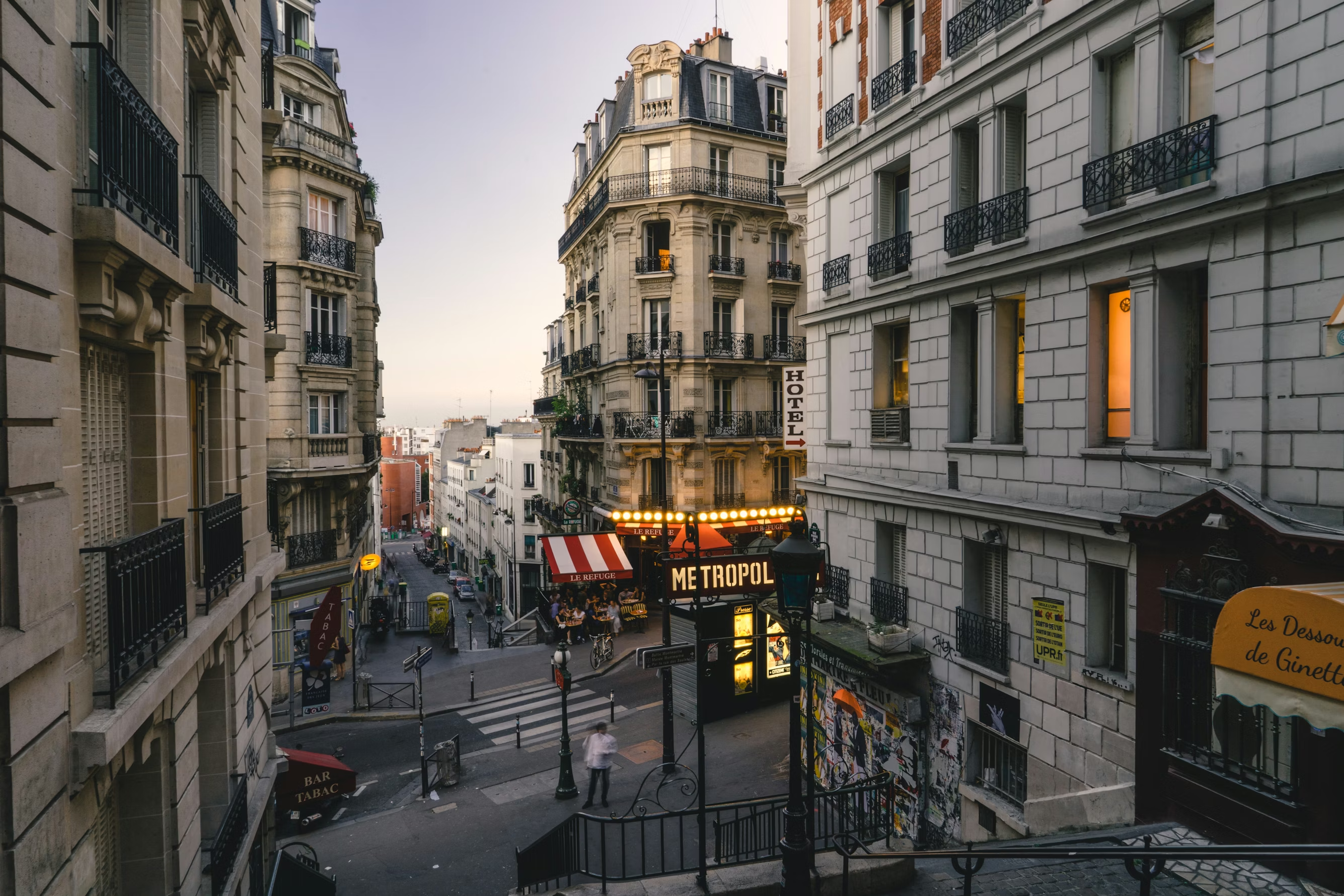
    France is the cultural reference point against which the rest of the West measures food, wine, civic life, art, and public design. Paris alone receives more international visitors than any other city on earth, and that is before counting Provence, Bordeaux, the Côte d'Azur, the Loire, or the Alps. Most clients describe their first six months as recalibrating what daily life can feel like.

  2. Five years to citizenship

    France allows naturalization after five years of legal residency, reduced to two years for graduates of French higher education and those with exceptional contributions. The clock runs through both the Passeport Talent and the FIP routes. A B1-level French exam and a civics interview are part of the application.

  3. Among the world's top healthcare systems

    France's universal health service ranks consistently in the global top three by WHO measures, with private complementary insurance available at low premiums. Most American expats carry the public coverage as residents plus a private top-up for hospital comfort and faster specialist access.

  4. EU residency with continental connectivity

    French residency unlocks the Schengen Area immediately and gives a base from which the rest of Europe is one to three hours away. Paris-Charles de Gaulle is one of the world's largest air hubs, with direct service to twelve major US cities and dense intra-EU connectivity.

  5. Established American communities outside Paris

    Paris's American population numbers in the tens of thousands. Beyond the capital, Provence, the Dordogne, the Côte d'Azur, and the Loire each host substantial American expat communities. The international schools, bilingual healthcare networks, and English-speaking attorneys already exist.

  6. Cost of living that surprises outside Paris

    Paris is expensive. Once you leave Paris, France often costs less than equivalent US locations. A premium house in the Dordogne or Provence runs $1,500 to $2,500 per month in rent. Healthcare and household help are materially cheaper. The cost story works in the regions, not the capital.

Programs

Two routes into France

Each route below is a live client engagement we have advised. Figures and timelines reflect the current state of each program; we update them whenever policy moves.

  • Passeport Talent

    Residency

    Four-year multi-entry residency for founders, recognized investors, and high-skill workers. The €300K business-investment route is the cleanest path for clients deploying capital into French operations; salary-based and recognized-talent routes are alternatives. Family inclusion built in; EU mobility from day one.

    Financial requirement
    €300K business investment
    Timeline
    2 to 4 months
  • FIP Visa

    Residency

    Long-Stay Visitor (Visiteur) visa for those with sufficient financial means who agree not to work in France. €20K in liquid savings or equivalent passive income is the working baseline. One-year initial visa, renewable in successive increments, with the five-year naturalization clock running through renewals.

    Financial requirement
    €20K in savings
    Timeline
    2 to 3 months
  • France editorial photograph

Several routes, several ideal profiles. Which is right for you? The Freedom Consult is where we figure out your ideal path forward – and whether France is even the right country.

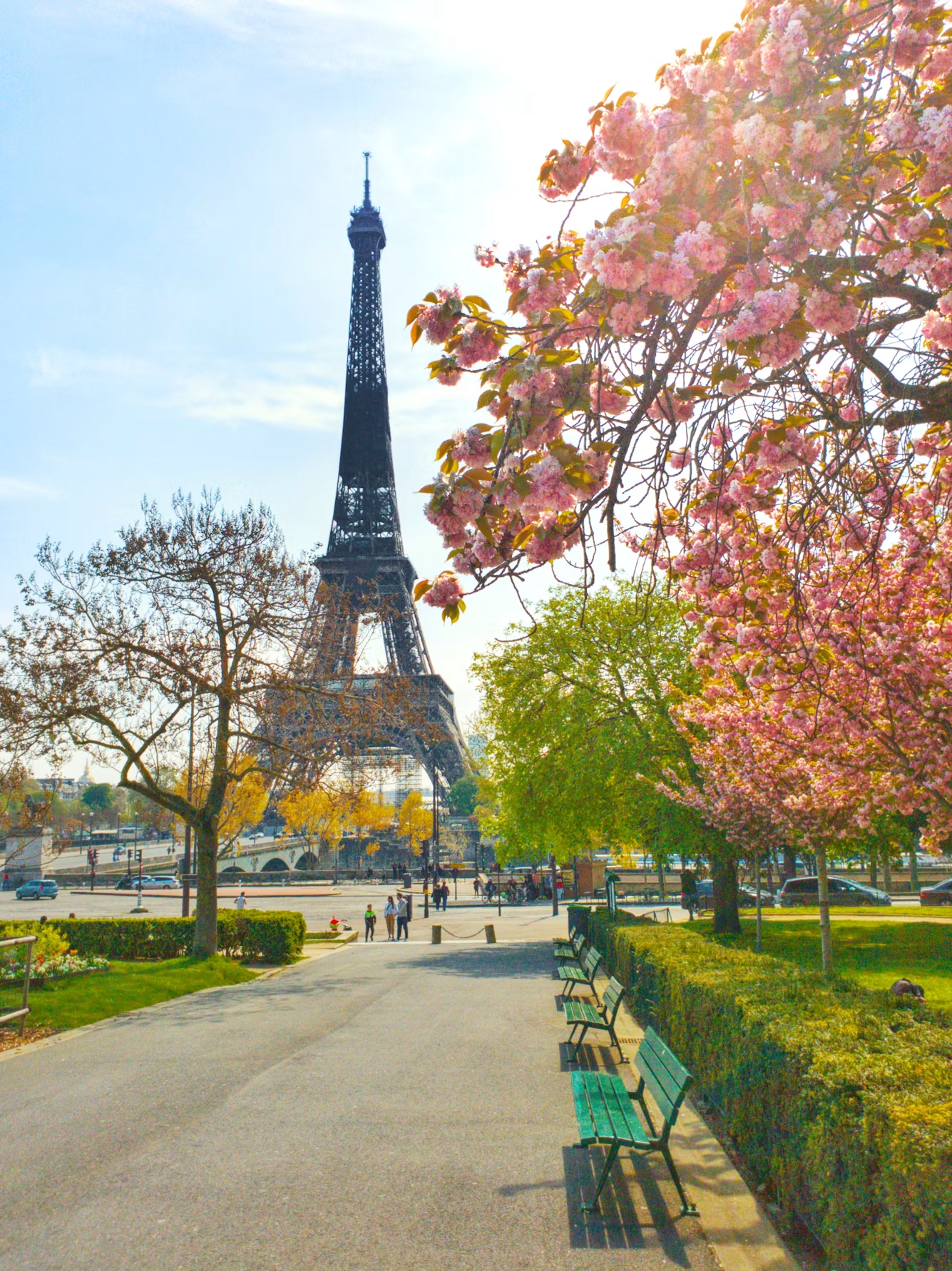
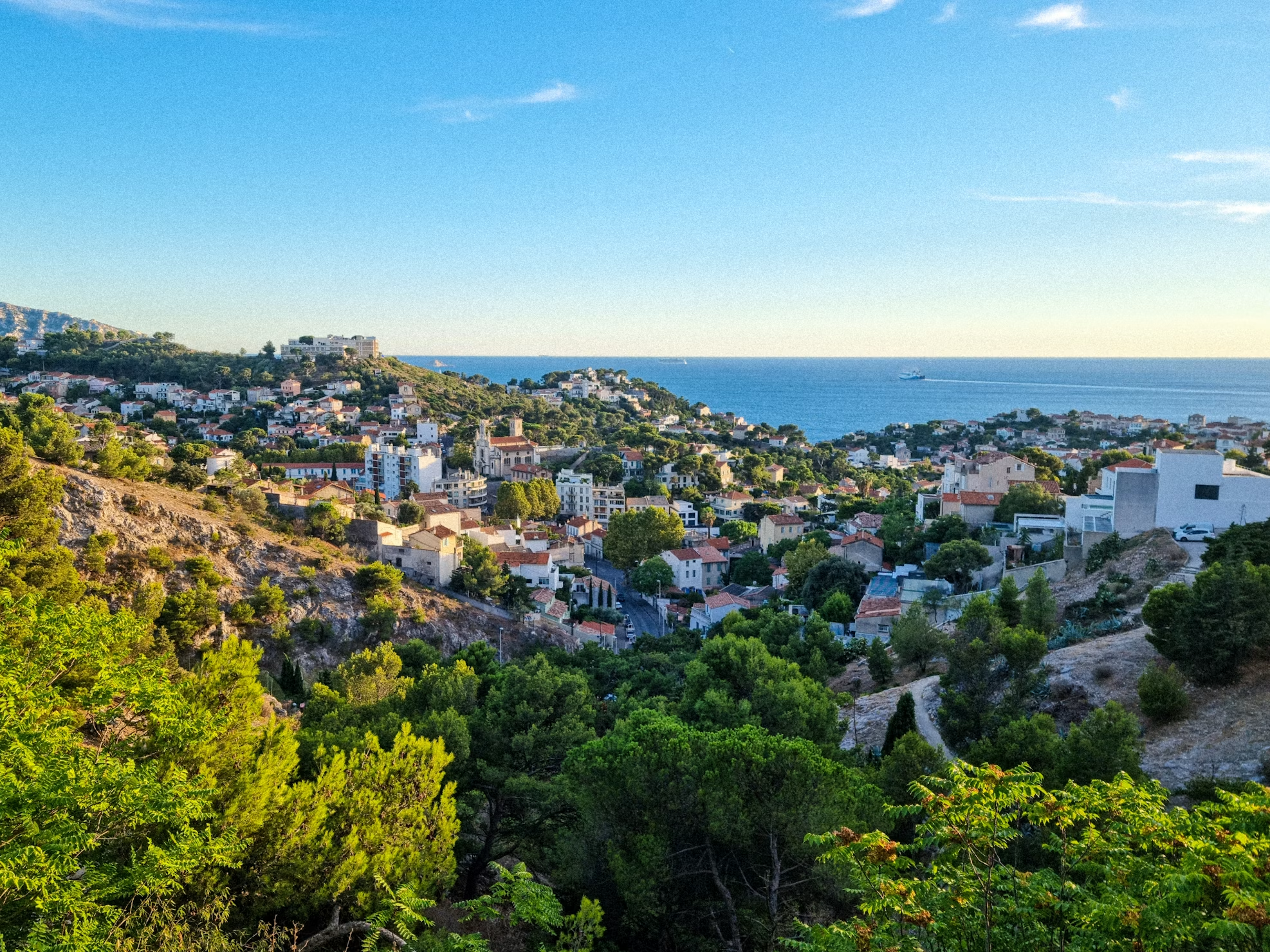
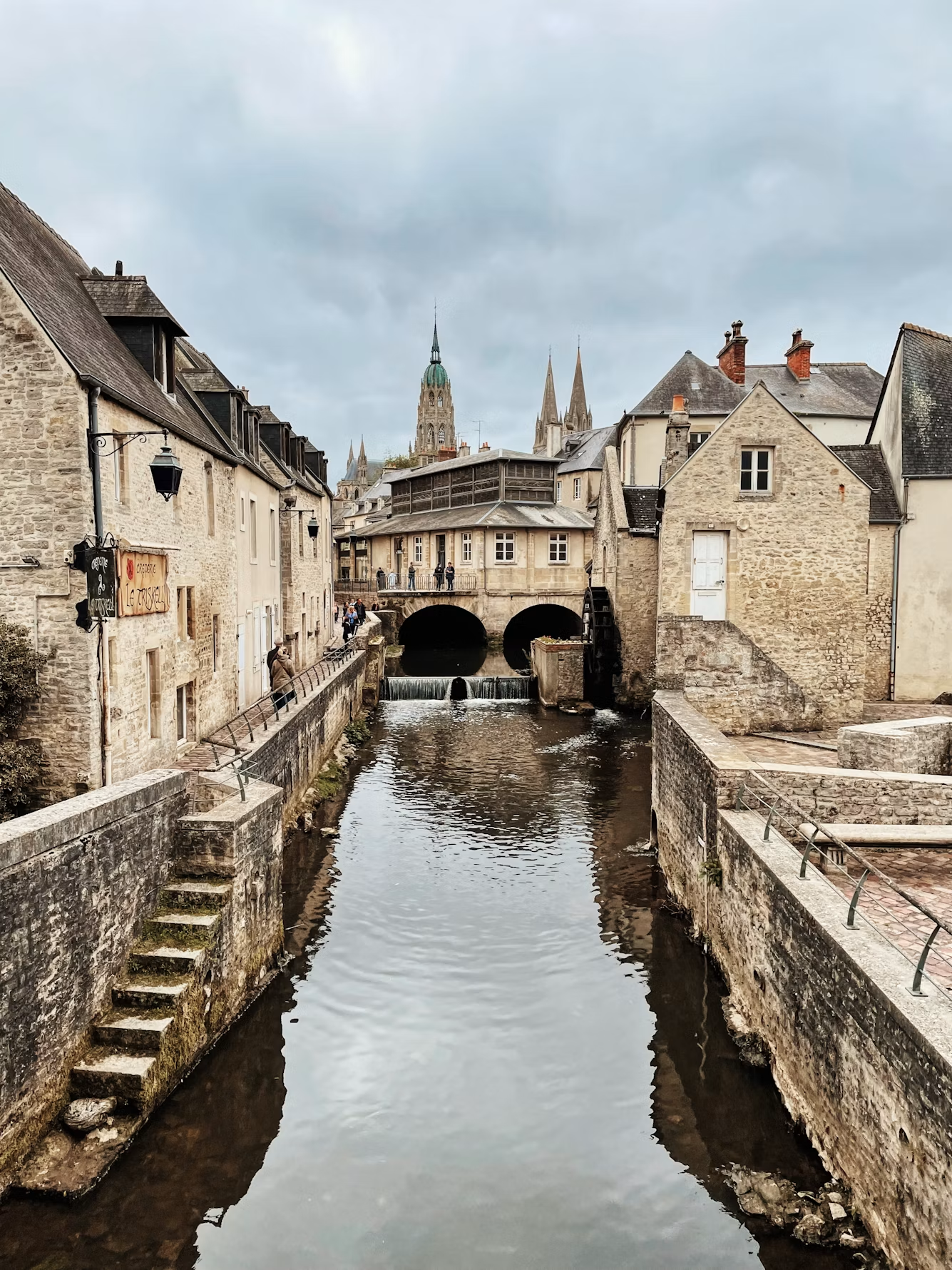
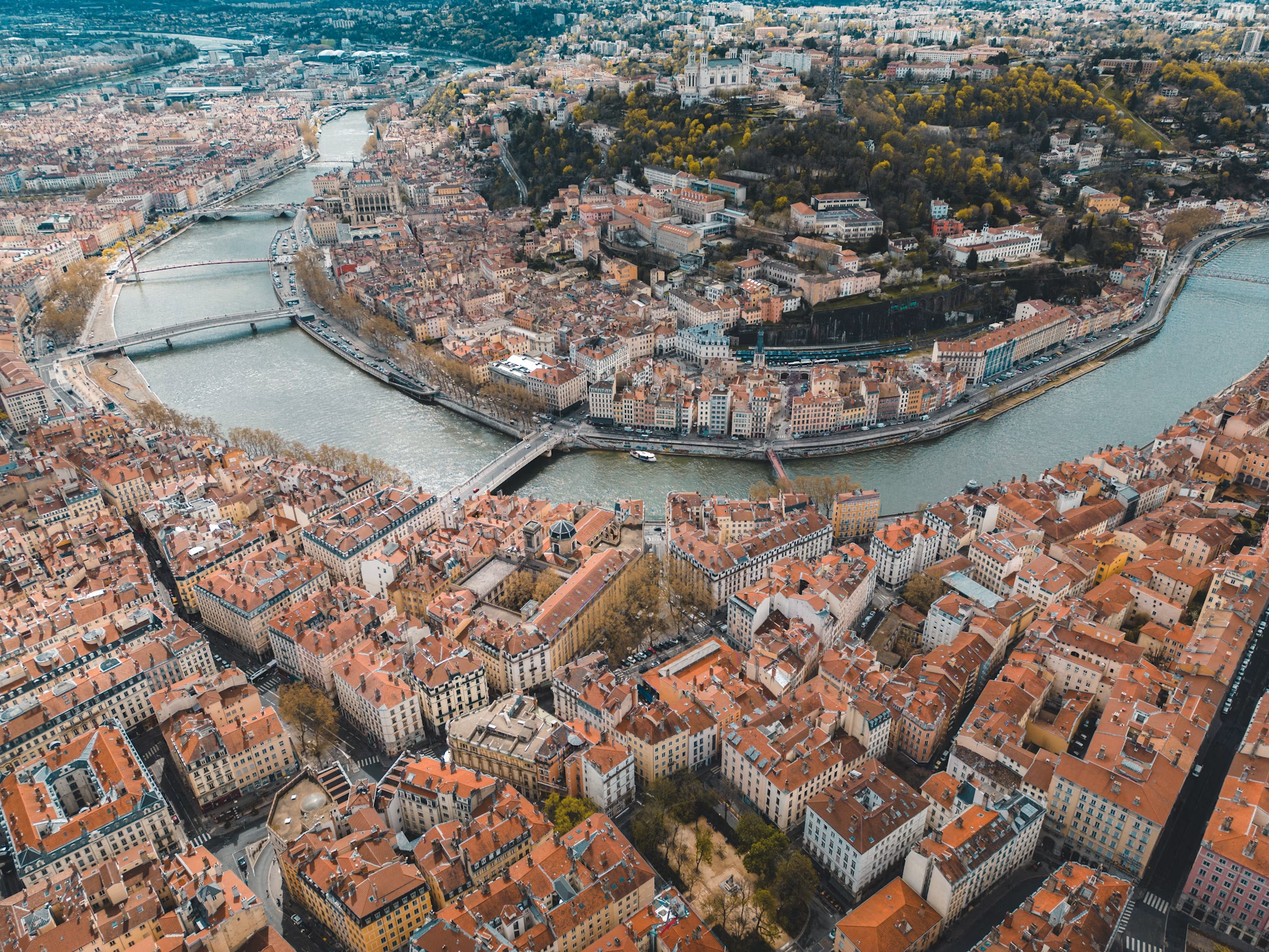
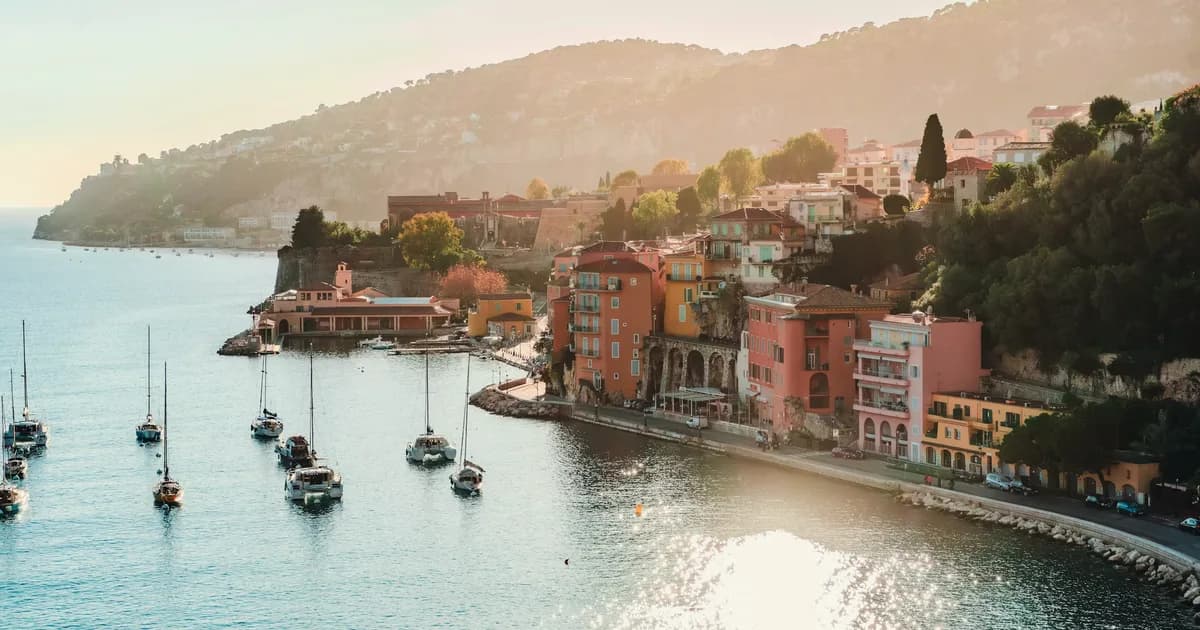
A taste of France

France editorial photograph 1
France editorial photograph 2
France editorial photograph 3
France editorial photograph 5France editorial photograph 6France editorial photograph 7

How does the five-year clock to citizenship actually work?

France allows naturalization after five years of legal residency, reduced to two years for graduates of French higher education and certain qualifying categories. The clock runs through both the Passeport Talent and the FIP route. The application requires a B1-level French-language exam, a civics interview, demonstrated integration, and consistent tax filing. Petition-to-decision typically runs 12 to 24 months after the five-year clock matures.

What is the difference between Passeport Talent and the FIP visa?

Passeport Talent is built for active operators: founders deploying €300K into a French business, recognized investors, or salaried high-skill workers. Holders can work in France and have stronger family-inclusion provisions. The FIP (Long-Stay Visitor) visa is built for those who do not want to work in France. It requires sufficient passive means but no business activity, and you commit to not taking employment in France. Both routes lead to permanent residency at five years and citizenship at five.

Do I have to learn French?

Daily life in central Paris, the Côte d'Azur, and the major business districts runs comfortably in English, but France rewards French speakers materially more than its neighbors do. The citizenship application requires a B1-level French exam, which most clients prepare for in the eighteen months before filing. Most successful five-year clients exit with conversational French regardless.

What happens to my US taxes once I move?

The United States taxes citizens on worldwide income regardless of residency. France taxes residents on worldwide income at progressive rates topping at 45% plus social charges. The US-France tax treaty provides credit and tie-breaker mechanics that, properly structured, prevent double taxation in most cases. The interaction is technical; we coordinate with US-licensed counsel.

Can my family come with me?

Yes. Spouses or registered partners, dependent children, and certain dependent parents qualify under a single application. Each family member receives the same residency rights and the same five-year clock to citizenship. The Passeport Talent has stronger family-inclusion provisions for working spouses.

Is Paris really as expensive as people say?

Yes for central Paris. Premium one-bedrooms in the 6th, 7th, or 8th arrondissements run $3,000 to $5,000 per month. The cost story works in the regions: Provence, the Dordogne, the Loire, Lyon, Bordeaux, and most of provincial France cost materially less than US coastal cities. Most engagements that prioritize cost-efficient living base outside the capital and use Paris as a frequent visit.

Will I have to give up my US citizenship?

No. The United States and France both permit dual citizenship. You can hold both passports indefinitely.

How life compares

Eight factors, against the US baseline

The dimensions that decide whether a place is workable once the visa lands.

English

Strong in Paris, weaker outside

Central Paris, the Côte d'Azur, and major business districts run comfortably in English at most professional contexts. Provincial France leans French. French rewards effort more than its neighbors' languages do.

Cost of living

Paris expensive, regions reasonable

Central Paris runs at US-coastal-city levels or above. Provincial France (Provence, Dordogne, Loire, Bordeaux, Lyon) runs 20 to 40% below US coastal-city benchmarks for equivalent quality of life.

Taxes

High but treaty-mitigated

Progressive resident rates topping at 45% plus social charges. The US-France tax treaty mechanics, properly structured, prevent double taxation in most cases. US worldwide-income filing continues regardless.

Quality of life

The global reference standard

France ranks consistently among the world's top-ten on quality-of-life indices. The food, healthcare, civic life, public infrastructure, and cultural depth combine to deliver an outcome most countries spend decades trying to imitate.

Safety

Among Europe's safer

Low violent-crime rates across the country. Petty theft is the urban-tourist standard concern in Paris and the major southern cities. Provincial and residential areas are statistically safer than most US small cities.

Travel connectivity

Excellent across Europe and the US

Paris-Charles de Gaulle is one of the world's largest air hubs with direct service to twelve major US cities and most European and African capitals. The TGV high-speed rail connects most of France in three hours or less.

Infrastructure

Top-tier across the board

EU-standard utilities and internet across the country. The TGV rail network is among the world's best. Healthcare and education infrastructure consistently rank top-ten globally.

Healthcare

Top three by WHO

Universal public coverage available to legal residents; most expats add private complementary insurance for faster specialist access. French medical training and outcomes consistently rank among the world's best.

The France briefing

The facts, programs, and comparison

A four-page PDF covering everything on this page plus the comparison framework we use internally. Delivered to your inbox, and the next briefing every week.

No spam ever! Unsubscribe in one click.

Get your custom Plan B Blueprint

Most people spend 100+ hours researching residency and citizenship options before they realize they were looking at the wrong programs. We compress that into 10 questions, 90 seconds, and a single report.