 Panama
In this article
Zero tax on foreign income and a tropical lifestyle, anyone? Panama is the most popular country in the Americas among our clients, it ranks in the top 25 worldwide in our Expat Almanac, and moving there comes down to three residency routes in 2027: The Qualified Investor Visa, the Friendly Nations Visa, and the Pensionado Visa. This guide covers what each route requires, the territorial tax system that leaves foreign income untaxed locally, and the citizenship process at the end of the road, including the part where the President of the Republic personally signs every naturalization.
Why Americans Move to Panama
The money: Panama has used the US dollar since 1904, so your accounts and spending never touch an exchange rate. No peso losing value underneath your feet, no conversion on every purchase. (If your thesis calls for diversifying out of dollars, that same fact cuts the other way.) Banking is relatively strong for the region, from crypto-friendly accounts to private vaults.
The map: Panama sets its clocks to US Eastern and Central time with no daylight savings, and Tocumen airport is the hub of the Americas, 2.5 hours from Miami with direct service to most major US cities. When something goes wrong at home, you're back in hours, not the day it takes from Asia. Few plan B bases offer that proximity.
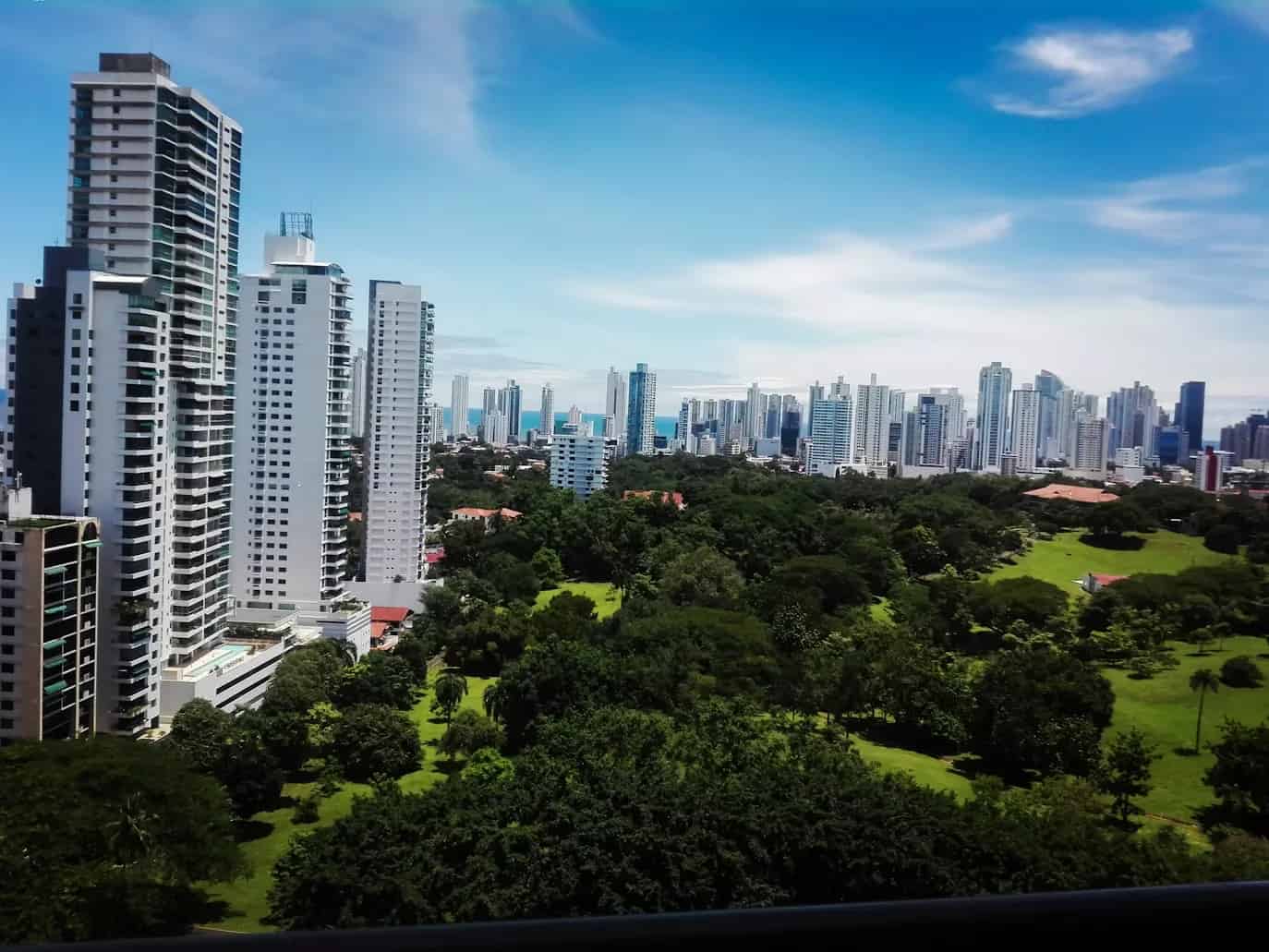
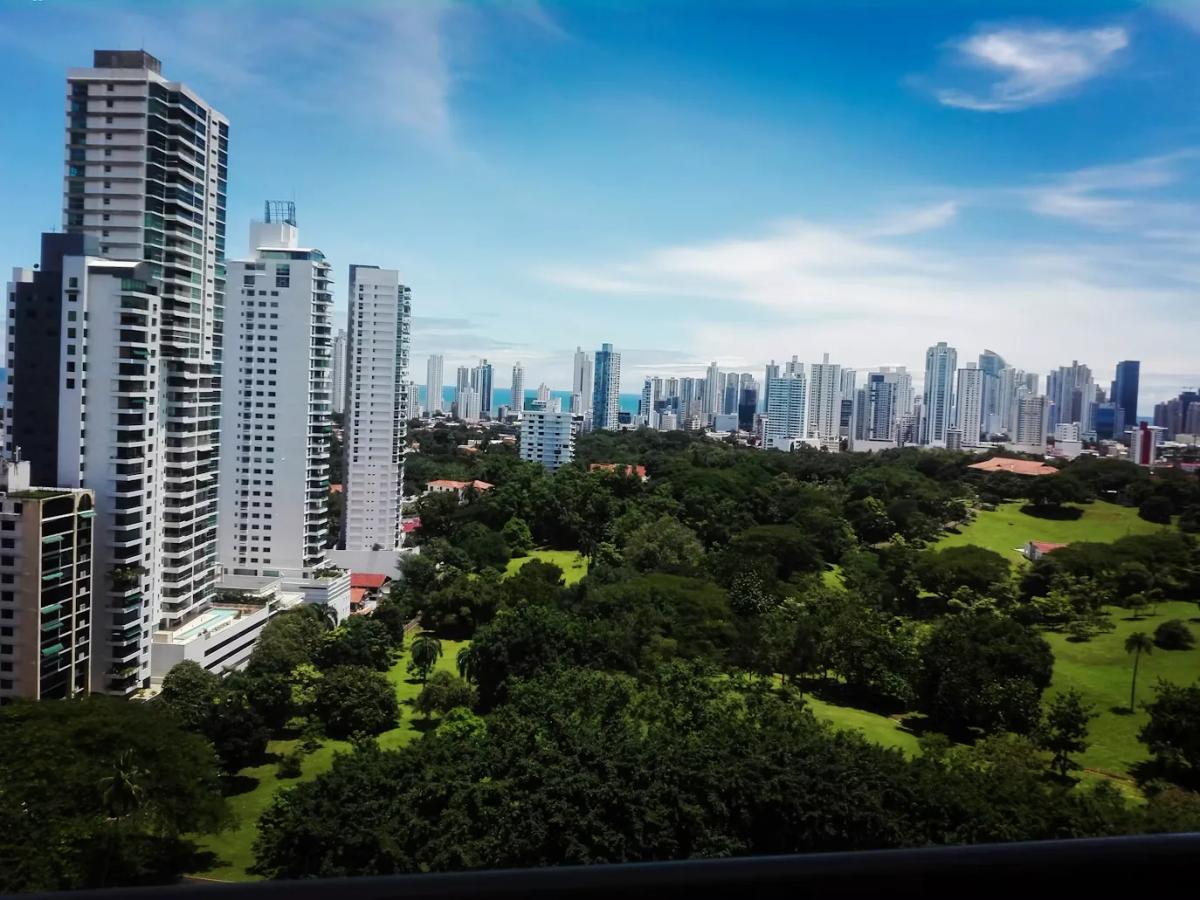
The climate: Panama City is hot and humid every month of the year, and the interior fixes it. Mountain towns like Boquete and El Valle de Antón trade the capital's heat for cool mornings, misty afternoons, and sweater weather after dark. Like Colombia and Mexico, Panama compresses many microclimates into one small country.
The plain-spoken caveat: Panama is not cheap. A modern one-bedroom in the neighborhoods you'd want costs about $2,000 a month at minimum, and Colombia, Nicaragua, and Ecuador all cost less month to month. What you're paying for is the platform: The dollar, the connectivity, the banking, and the residency speed below.
Route 1: The Qualified Investor Visa (a Lower Tier for New Builds)
Panama's Qualified Investor Visa is its golden visa, and it processes to direct permanent residency in about four months, one of the fastest investor residencies in the Americas. Where most European golden visas issue a temporary permit you renew through a queue, Panama grants permanent status on the investment, with one trip of about three days for your fingerprints, photo, and residency card.
Executive Decree 17 took effect in September 2026, replaced the old Qualified Investor rules, and gave property two prices. Five investments qualify, each made with your own money from abroad and in place for five years:
- New home from its developer: A home bought first-hand from the developer, finished or off-plan, qualifies at the lowest tier. Off-plan works through a bank trust or with full payment backed by a bank guarantee. Rights-of-possession beach lots don't qualify, so the title check is critical.
- Resale home: A home sold before, rented out, or lived in needs a higher minimum.
- Panamanian securities: Securities registered in Panama qualify at the same higher minimum as a resale home.
- Term account at a state bank: A five-year term account at Banco Nacional or Caja de Ahorros qualifies at that same higher minimum.
- Term account at a private bank: The highest minimum of the five, and the most conservative choice.
If you signed a property contract in Panama before September 16, 2026, you can file under the old rule, which qualified any home, resale included, at the lower price. That window closes about mid-March 2027, six months after the decree. Our breakdown of Panama's new golden visa rules covers each tier and who each route suits.
Fine print: The investment must be maintained for five years, and the card does nothing to your taxes by itself; Panamanian tax residency begins at 183 days a year on the ground. Presence is the headline: One entry every 2 years maintains the residency, and that is the entire obligation. The QIV works like a long-dated option on a second base: The premium is capital you'd deploy anyway, and you exercise only if life in the US pushes you to.
Route 2: The Friendly Nations Visa (from Zero Capital)
The Friendly Nations Visa serves the mid-tier: Zero capital with Panamanian employment, or $200,000 in local property, processing in roughly 6 months. The US and Canada are among Panama's 50 friendly-nations treaty countries, so most Americans qualify by nationality before qualifying with a wallet.
One myth to retire: The famous $5,000-bank-deposit-and-shell-company shortcut died in August 2021, when Decrees 197 and 226 rewrote the program. Half the internet never updated. The routes today:
- Employment: A contract with a registered Panamanian company, the only capital-free route in Panama's system. That includes forming your own company with local activity and hiring yourself, with the work permit processed alongside the residency.
- Property: Titled Panamanian real estate worth $200,000+, and local bank financing can cover part of the purchase. A resale home qualifies here, which gives resale buyers below the golden visa's resale tier a way in.
- Deposit: A $200,000 three-year fixed-term deposit, recoverable at maturity.
The trade against the QIV is status and speed: A 2-year temporary permit first, converting to permanent at year two, with the same one-entry-every-two-years presence rule. The citizenship clock counts five years from the grant of permanent residency, so this route reaches a passport roughly 2 years later than the QIV.
Route 3: The Pensionado Visa ($1,000 a Month, Permanent on Day One)
Panama's retirement routes ask only for proof of income. The Pensionado Visa (sometimes called the jubilado visa) requires $1,000 a month of guaranteed-for-life pension income and grants permanent residency immediately, usually in under 4 months. Social Security qualifies, as do government, military, and private pensions and annuities, with one condition: Immigration wants the words "guaranteed for life" on the letter, and applications without it can get bounced. Buy Panamanian property worth $100,000+ and the threshold drops to $750 a month; each dependent adds $250. The package also unlocks Panama's mandated pensioner discounts on flights, dining, medical services, and utilities, with no investment required.
If your income is passive, stable, and recurring but not guaranteed for life, the rentista route fits instead at a similar threshold: You transfer the amount monthly to a Panamanian bank account, and the visa arrives as a temporary card that converts to permanent on continued income proof.
Panama Citizenship: 5 Years on Paper, 6 to 7 in Practice
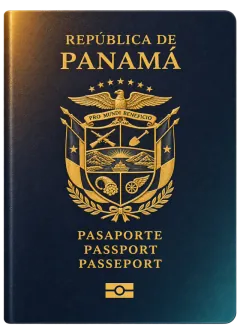
Naturalization opens after 5 years of permanent residency, with a Spanish exam and a civics test. On paper that beats Portugal, Spain, and Italy by at least 5 years. In practice the grant is discretionary: Every naturalization is signed personally by the President of the Republic, a step the government itself describes as unique in the world, and petitions often take another 12 to 24 months after the 5-year clock matures. The current administration says it's clearing the backlog for the first time in decades, but plan on six to seven years from first card to passport and treat anything faster as a bonus.
On presence: The government's public position is that the one-entry-every-two-years maintenance rule leaves a qualified investor eligible at year five, and partners of ours are working to codify that into law. Until it's written down, the conservative play is substantial time on the ground in the two years before filing, real Spanish, and provable ties: A lease or title, a local bank account, a utility bill. One more wrinkle: Panama's naturalization oath formally renounces prior nationalities, but the United States does not recognize that oath as an act of renunciation, so American clients finish the process with both passports.
Panama's Territorial Tax System, and the American Layer
Panama taxes only locally sourced income. Your US dividends, portfolio, rental income, and online business serving American customers are taxed at 0% in Panama, whether you spend 10 days a year there or 365, permanently, with nothing to elect. It's why Panama anchors the territorial group in our free guide to 19 countries that don't tax foreign income. Local income plays by local rules: The first $11,000 a year is exempt, $11,000 to $50,000 pays 15%, and everything above pays 25%. Property owners get one of the friendliest regimes in the hemisphere: Register your home as a primary residence and the first $120,000 of value is exempt, with 0.5% up to $700,000 and 0.7% above, so a $300,000 QIV home costs about $900 a year.
The rule that never changes: A US citizen or green card holder files and pays the IRS on worldwide income wherever they live, and there is no US-Panama tax treaty. Panama shapes the Panamanian bill only; our citizenship-based taxation guide covers the American side. The primary lever is the Foreign Earned Income Exclusion: Spend 330 full days abroad in a 12-month window, or establish bona fide residence (about six months a year in Panama), and up to $137,300 of earned income comes off your US taxable income for tax year 2027, or $274,600 for a married couple who both earn and qualify. Earned means salaries and self-employment only; dividends and capital gains fall outside the FEIE. Canadians and Europeans fare even better: Sever ties correctly with your home country and Panama can be an essentially tax-free base.
One change arrives in 2027: Panama's Law 526 taxes foreign passive income, such as dividends and interest, at 15% in companies without economic substance in Panama, and penalties can apply on top. If you plan to own foreign investments through a Panamanian company, give it substance, such as an office and business activity in Panama.
Which Panama Residency Fits You
- Capital ready, permanent status on day one: The Qualified Investor Visa, with a lower tier for new homes bought from their developer
- A Panamanian business or $200,000 in financeable property: The Friendly Nations Visa, temporary first, permanent at year two
- Recurring, stable, retirement-like income: The Pensionado or rentista route, from $1,000 a month
We're jurisdiction agnostic: We want the right country and the right fit for your plan B or your move. Take the 90-second Plan B Blueprint for a custom report on the routes that fit your goals, then book a free Freedom Consult and we'll map Panama against your alternatives with vetted local counsel. If your shortlist is Panama against Costa Rica, watch our Panama versus Costa Rica breakdown next, and for the wider field, our ranking of the five best emerging-market residency programs of 2027 puts Panama in context.
Video Transcript
Click to read the full transcript
Video Transcript
Click to read the full transcript
Moving to tax-free Panama comes down to three residency routes in 2026. I've personally lived in Panama and have helped several families move and invest there. In this video, you'll learn why Americans are moving to Panama, which ranks in the top 25 of our Expat Almanac, and how they're doing it 100% legally.
Panama is the most popular country in the Americas for our clients, and the reasons are pretty practical. Let's start with the money. Panama has used the US dollar since 1904, so your accounts and your spending never touch an exchange rate. There's no peso losing value underneath your feet and no conversion math on every purchase, which removes a lot of risk and mental weight, both. That said, many of our clients want to diversify out of US dollars, so this can be an advantage or a disadvantage depending on your investment thesis and your view of the world's reserve currency. Whether you need a crypto-friendly bank account or a highly secure private vault, banking is relatively strong here compared to Panama's Latin neighbors, and we can help you set that up.
Second, the map. Panama is on US Eastern and Central time zones with no daylight savings, so if you have business dealings or work in the US, there's no schedule gap like there is with Thailand or even Europe. Tocumen airport in Panama City is the hub of the Americas, 2 and a half hours from Miami with direct service to most major US cities. They've made some recent upgrades, and Terminal 2 is stunningly beautiful. I've logged more miles through Tocumen than through any other airport in Latin America, apart from the region's most trafficked airport in Bogotá. The value shows up when something goes wrong at home: You can be back in the US or Canada in a few hours rather than a day, as with Asia. Few plan B bases give you that proximity.
Third, the climate, and I'll be straight about this since I've lived here. Panama City is hot and humid every month of the year. You step out of the shower, you towel off, and by the time you reach the kitchen you've earned another one. If you love heat, and plenty of our clients do, the country delivers it daily. If you don't, no sweat, literally: The interior is a great option. Up in the central mountains, in towns like Boquete or El Valle de Antón, elevation does the job of air conditioning. Cool mornings, misty afternoons, coffee farms outside the window, sweater weather after dark. That range is the quality Panama gets too little credit for. Like Colombia and Mexico, it compresses many microclimates into one small country: The capital gives you the cosmopolitan layer, with international banking, a deep restaurant scene, and an expat-heavy community, and the mountains give you the opposite.
Now, I don't know what you've heard about Panama, but it's not as cheap as some people on YouTube make it out to be. A modern one-bedroom in the neighborhoods you'd want to live in goes for about $2,000 a month at minimum, and a nice dinner out can cost what you'd pay in a midsize US city. I've lived in more than 10 countries in Latin America, and I used to travel the region with just a backpack, so I know what inexpensive Latin America looks like. Panama is not it. Even outside the capital, Boquete is not cheap. Colombia, Nicaragua, and Ecuador all cost less month to month. What you're paying for is the platform: The dollar, the connectedness, the banking, and the residency speed we're about to cover.
And when you talk about cost of living, you also have to talk about taxes, which is where Panama wins big over its neighbors. Panama taxes only locally sourced income, which leaves most of an American's foreign income, capital gains, business revenue, interest, and dividends outside Panamanian liability. Near the end, I'll show how that interacts with your US tax bill, including the exclusion that can take multiple six figures off your American taxable income. Small aside: If you're weighing Panama against your other options, and you have many, go to freedomfiles.co/begin, answer 10 quick questions in 90 seconds, and you'll get a custom report on the residency and citizenship routes that fit your goals.
So how can you invest in or move to Panama right now? Three routes.
First, Panama's Qualified Investor Visa, essentially its golden visa. It begins at $300,000 in property and processes to direct permanent residency in less than 90 days, the fastest investor residency in the Americas. Notice the middle word: Permanent. Most golden visas in Europe issue a temporary residency you renew every few years through a queue. Panama issues direct permanent status on the investment, and one or two quick trips usually cover biometrics and card issuance.
Here's the pricing as of mid-2026. At $300,000: Titled Panamanian property, residential or commercial, anywhere in the country, in your name and free of liens. Pre-construction real estate can qualify as long as you wire the full $300,000; rights-of-possession beach lots cannot, so the title check is important. At $500,000: Securities listed on the Panamanian stock exchange through a licensed local brokerage. At $750,000: A 5-year fixed-term deposit in a Panamanian bank, the most conservative of the three qualifying positions.
Now, the deadline, and it depends when you're watching this, but I'll say it anyway. Under Executive Decree 193, the $300,000 property minimum expires on October 15, 2026. From that date, the threshold rises to $500,000 permanently, a 67% increase for anyone who waits. Deadlines like this, especially in Panama, get pushed, and they may extend it again like they did a few years ago. Maybe.
Two more pieces of fine print. One: The investment has to be maintained for five years, so this is committed capital, and selling early jeopardizes your residency. Two: The card does nothing to your taxes by itself. Panamanian tax residency begins at 183 days a year on the ground, so a permit you visit briefly leaves your tax picture wherever you left it. That isn't an issue in itself, because Panama doesn't tax foreign income either way.
Presence is where this program separates from the other two. One entry every 2 years maintains your residency, and that's the whole obligation. A Panama QIV works like a long-dated option on a second base: The premium is capital you'd deploy anyway, the maintenance cost is one trip every two years, and you exercise only if life in the US pushes you to. A great low-presence golden visa, if you ask me. If you can deploy $300,000 or more and want permanent status without uprooting your life, this is one of the cleanest and fastest programs in the hemisphere, and before October 15 it's discounted. This is typically the program we shortlist for clients who want a low-maintenance, low-tax, friendly-time-zone base in the Americas. If breakdowns like this are useful, subscribe and turn on notifications. We cover jurisdictions like Panama, Greece, Italy, and Spain, warts and all.
That's the capital-intensive permanent-residency route into Panama. But what if you're looking for a more accessible business base? The Friendly Nations Visa requires zero capital if you have Panamanian employment, which we can help you set up, or $200,000 in local property, and processes in a month or two longer than the Qualified Investor Visa, closer to 6 months. The US and Canada are on Panama's list of 50 friendly-nations treaty countries, so most of you qualify by nationality before qualifying with your wallet.
You might say: Wait, I read that I could get this with a $5,000 bank deposit in a shell company. You could, before August 2021. Decrees 197 and 226 rewrote the program, and half the internet never updated. The bank-deposit shortcut is no longer valid.
Option one under the Friendly Nations Visa is an employment contract with a registered Panamanian company, the only capital-free route in Panama's system. That includes building your own venture: You form a company with local activity, hire yourself, and the employment route opens, with the work permit processed alongside the residency. We can help you incorporate and handle the paperwork. Option two is titled Panamanian property worth $200,000 or more in your name, and what's interesting here is that local bank financing can cover part of the purchase. Option three is a $200,000 fixed-term deposit, three years, in a Panamanian bank, recoverable at maturity.
The trade against the Qualified Investor Visa is status and speed. The QIV is direct permanent residency; the Friendly Nations Visa is a 2-year temporary permit first, converting to permanent at year two. Presence follows the same accessible rule, one entry every two years. And the citizenship clock we'll cover in a minute counts five years from the grant of permanent residency, not from the temporary card.
By the way, if you're comparing Panama and Costa Rica, and we get a ton of questions about the difference, here's some inside baseball: Bureaucracy is the widest gap on the comparison card. A residency application in Costa Rica takes over 8 months on a good day. I spent a year of my life between these two countries, and we put them head to head in our Panama versus Costa Rica video, including which one expats are leaving. I'll point you there at the end.
The next route asks only for proof of income and is essentially free. Panama has two retirement visas with a similar MO. The Pensionado Visa requires $1,000 a month of guaranteed-for-life pension income and grants permanent residency immediately, usually in less than 4 months. If you ever hear about a jubilado visa in Panama, that's the same thing. Social Security qualifies, and so do government pensions, military pensions, annuities, and private pensions, with one condition: Immigration wants the words guaranteed for life on the letter, and applications without it can get bounced. In another twist, if you buy Panamanian property worth $100,000 or more, the monthly threshold drops from $1,000 to $750, and each dependent adds $250 a month to the requirement. A neat perk of the retirement route is the mandated discounts on flights, dining, medical services, utilities, and more throughout Panama, and the whole package requires no investment.
If your income is passive, stable, and recurring but not guaranteed for life, the rentista route is the better fit at around the same income threshold. You open a Panamanian bank account and transfer the amount to yourself monthly, and the result arrives as a temporary card that converts to permanent on continued income proof, designed like the Friendly Nations Visa rather than the Pensionado's immediate permanence.
Now, if your goal is permanence and a plan B, Panama citizenship may be the target, and this is where Panama requires your patience. Naturalization opens after 5 years of permanent residency, not temporary, with a Spanish exam and a civics test on Panamanian history and government. On paper, that beats Portugal, Spain, and Italy by at least 5 years and is one of the fastest timelines anywhere. In practice, the grant is discretionary, and I owe you the unvarnished version. Every naturalization in Panama is signed personally by the President of the Republic, a step the government itself describes as unique in the world. Files have historically waited in that queue for years, and the petition often takes another 12 to 24 months after your 5-year clock matures, with no guaranteed approval. The current administration says it's clearing the backlog and prioritizing citizenship grants for the first time in decades, but plan on six to seven years from first card to passport and treat anything faster as a bonus.
Then there's presence. The government's own public position is that the one-entry-every-two-years maintenance rule leaves a qualified investor eligible for citizenship at year five. We have partners working on codifying that minimal-presence position into law so it survives changes of administration, since the presidential term here is 5 years. Until it's written down, our advice is conservative: Show substantial time on the ground in the two years before you file, learn Spanish (you should anyway), and be able to prove the ties that make you truly part of Panama, meaning a lease or property title, a local bank account, a utility bill, and tax filings if any. The passport rewards people who made Panama part of their lives. Fair enough, right?
One more wrinkle: Panama's naturalization oath formally asks you to renounce your prior nationality. The United States does not recognize that oath as an act of renunciation, so in practice American clients can finish the citizenship process with both passports.
And a quick word on figuring out where you fall in all this: Don't spend 100 hours researching what many people, including us, already know. Our residency and citizenship experts will recommend jurisdictions and programs based on your goals in a Freedom Consult. It's free right now, so jump on that while it lasts.
Okay, taxes. First, the rule that never changes, and I mention it in every video: If you're a US citizen or green card holder, you file and pay the IRS on worldwide income every year, regardless of how many residencies or citizenships you collect or where you live, earn, or bank. Short of renouncing, which is a big, irreversible decision, Panama shapes your Panamanian tax bill only. And unlike Greece, Spain, Portugal, or Italy, there is no US-Panama income tax treaty.
Panama has a territorial tax system, which means income from outside Panama, your US dividends, your portfolio, your rental income, your online business serving American customers, is taxed at 0% in Panama, whether you spend 10 days a year there or 365. Income from inside Panama plays by its own rules: If you work for a Panama-based employer, as you would on the Friendly Nations employment route, or serve Panama-based clients while in Panama, personal income up to $11,000 a year is exempt, the band from $11,000 to $50,000 pays 15%, and everything above that pays 25%.
Property owners get one of the friendliest regimes in the hemisphere. Register your home as your primary residence and the first $120,000 of value is exempt from property tax, with 0.5% on value up to $700,000 and 0.7% above that. A $300,000 home, which is what you'd buy under the Qualified Investor Visa, registered as primary, costs about $900 a year. Fantastic if you're comparing Florida or Texas property taxes.
If you're looking to reduce your American bill as well, your primary lever is the Foreign Earned Income Exclusion. Spend 330 full days outside the US in a 12-month window, or establish bona fide residence abroad, which requires about 6 months a year in Panama, and your first $130,000 to $135,000 of earned income comes off your US taxable income, per spouse when both of you earn. Note the word earned: Salaries and self-employment income only; dividends and capital gains fall outside the FEIE. Put the two systems together and Americans can be in for huge tax savings. If you're Canadian or European, even better: Sever ties correctly with your original country and you can live in Panama essentially tax-free while earning foreign income elsewhere. Pretty cool, right?
So if you're convinced Panama is for you, let's put you in a lane. Capital ready and a preference for permanent status on day one: The Qualified Investor Visa. A company and self-employment, or $200,000 in local real estate, for the mid-tier: The Friendly Nations Visa, temporary first, permanent after 2 years. And if you have recurring, stable, passive or retirement-like income: The Pensionado or rentista visa. We're jurisdiction agnostic at the Freedom Files. We simply want the right country and the right fit for your plan B or your move abroad. If you want an accelerated start, contact us on our website, or take the Plan B Blueprint and get a free Freedom Consult. Excited to meet and chat with you.
Now, if your shortlist is Panama against Costa Rica, and for many of you it is, watch our Panama versus Costa Rica breakdown next. It covers both countries in depth, including the one expats are leaving. That video is on your screen now. Talk to you soon, and thanks for watching.
 Italy
 Costa Rica
 Greece
 Turkey