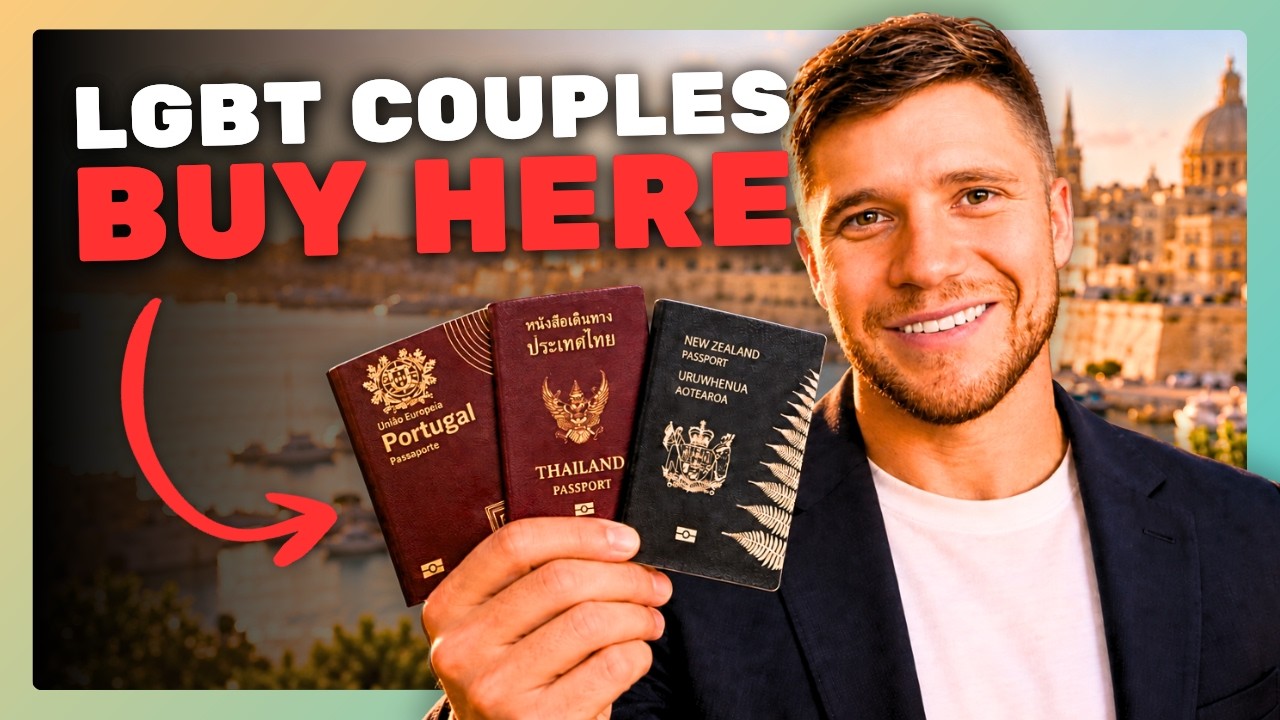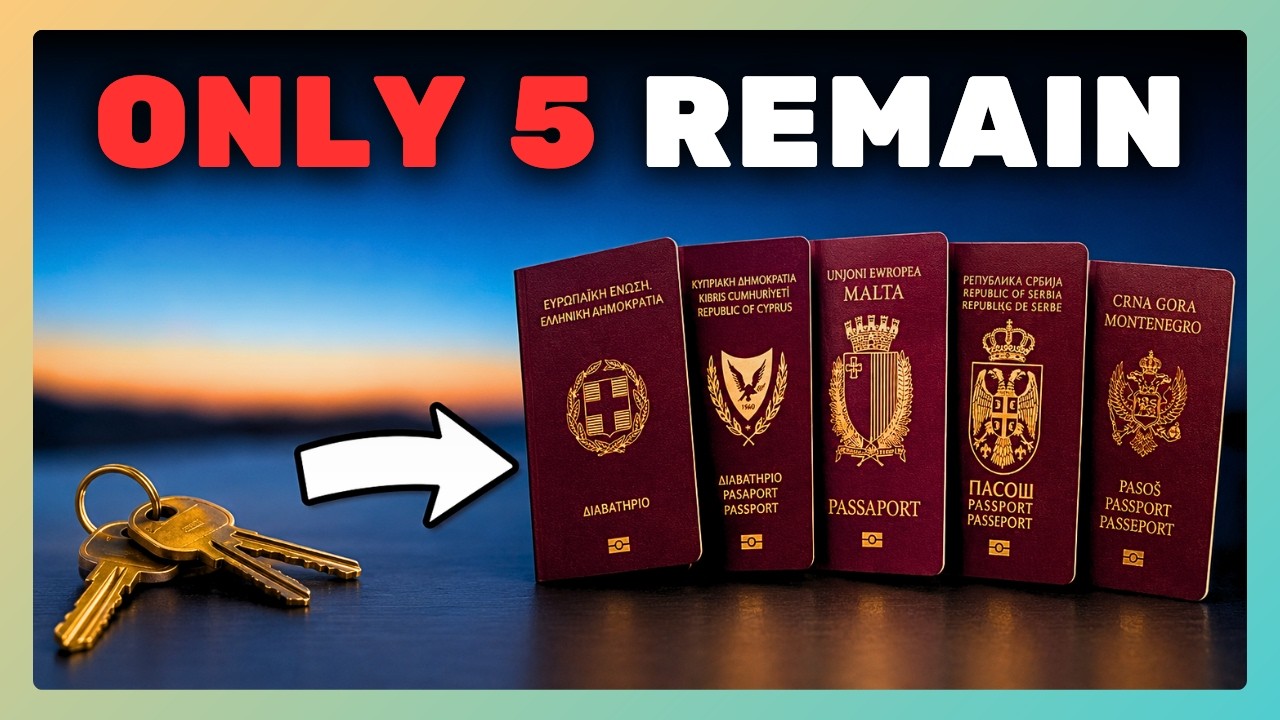
In the Caribbean, a married gay couple pays twice for a passport: $500,000 across two applications, where an opposite-sex couple pays $250,000 on one. Most citizenship-by-investment programs define the family unit as a husband and wife. Seven residency programs work differently. They put both partners on a single application, backed by a single investment, and several accept an unmarried partner with proof of a shared life.
This guide covers how each of the seven works, what it costs, how the law treats your relationship, and how accepting each country is in practice. The Freedom Files is apolitical, so what follows is the law on the books and how it applies to you.
Or watch the full breakdown here:
The 7 programs at a glance
- Greece Golden Visa: From €250,000. Married couples qualify directly; unmarried couples can use a notarized cohabitation agreement.
- Thailand LTR visa: Income and asset tests, no investment on most routes. Same-sex spouses qualify; unmarried partners don't.
- Spain non-lucrative and digital nomad visas: About €30,000 a year in passive income, or about €3,000 a month in remote income. Registered partners qualify, or 12 months of documented cohabitation.
- Portugal Golden Visa and D7: From €200,000 or about €1,000 a month. Partners qualify through a união de facto after two years together.
- New Zealand Active Investor Plus: From NZ$5 million. Married or de facto partners qualify after 12 months of living together.
- Austria citizenship by merit: Typically €10 million or more in an active business. Spouses can be included.
- Malta permanent residence and citizenship by merit: From €75,000 to €100,000 in government fees plus property. De facto partners qualify with evidence.
Why citizenship by investment is harder for same-sex couples
Citizenship by investment is where many same-sex couples hit a wall. St Kitts and Nevis spells out its definition most directly: A family unit is a husband and wife, and families of any other composition apply as individuals. That's the shared baseline across all five Caribbean programs, and Turkey and Vanuatu take the same position. Nauru's new program is the first in the world to list a de facto partner as a dependent, but only for opposite-sex couples.
Nobody is barred from investing. Both partners can qualify by making separate contributions, and both end up with passports. What changes is the price, roughly double. For the full field of direct citizenship programs and what each costs, see our guide to the cheapest citizenships by investment in 2026. The seven programs below avoid the double cost entirely.
1. Greece: A €250,000 golden visa and the 2024 marriage law
In 2024 Greece became the first Orthodox-majority country to legalize same-sex marriage, with adoption rights, and its Council of State has since upheld both as constitutional. Greece is one of six European jurisdictions whose hate crime and hate speech protections cover sexual orientation and gender identity. It scored 68% on the 2026 ILGA-Europe Rainbow Map, 11th of 49 countries, and Athens and Mykonos have some of the most visible LGBT-friendly scenes in the Mediterranean.
The Greek Golden Visa processes in roughly 8 to 12 months. Property thresholds are €800,000 for a home of at least 120 square meters in Attica, Thessaloniki, Mykonos, Santorini, and larger islands, and €400,000 elsewhere. The lowest entry is €250,000 anywhere in the country, including central Athens, for a commercial-to-residential conversion or a listed-building restoration; a €350,000 fund and €250,000 startup routes also qualify. Married couples qualify directly. Unmarried couples can sign a cohabitation agreement before a Greek notary once the main applicant has a permit, and both cards are typically issued together. That agreement creates a legal family relationship with property and inheritance consequences, so plan it with tax counsel first.
2. Thailand: The LTR visa after marriage equality
Thailand's Marriage Equality Act took effect in 2025, making it the first country in Southeast Asia and the third in Asia, after Taiwan and Nepal, to recognize same-sex marriage. The Board of Investment now confirms that same-sex spouses qualify as dependents, and the same reforms removed the cap on dependents and added parents. Bangkok, Chiang Mai, and Phuket are among the warmest places in Asia for LGBT residents, though anti-discrimination protections are thinner than Europe's.
The Long-Term Resident visa is a 10-year permit with income and asset categories, including routes for wealthy global citizens and for retirees or passive-income earners. Unmarried partnerships aren't recognized under Thai law, so the marriage certificate is essential, and Thai citizenship through the LTR is close to impossible. It fits a married couple with portable income that wants a base in Asia for a fraction of European capital.
3. Spain: Europe's most protective country, without a golden visa
Spain took first place on the 2026 Rainbow Map with 89%, displacing Malta for the first time in a decade, and shares second place with Malta on the Spartacus Gay Travel Index. Same-sex marriage has been legal since 2005, and Spain is one of nine European countries whose anti-discrimination law covers sexual orientation in full.
Spain's golden visa was repealed in 2025, so property no longer earns residency and there's no low-presence option. Two routes remain, both requiring more than six months a year in the country: The non-lucrative visa (about €30,000 a year in passive income or savings for one person, €50,000 for a couple, plus private health cover with no co-pays) and the digital nomad visa (a little under €3,000 a month for the main applicant, with the right to work and access to the Beckham Law regime). Spain recognizes registered partnerships, and a 2024 regulation accepts 12 months of documented cohabitation instead of formal registration. The US-Spain tax treaty also works in an American's favor; our free guide to US tax treaties in Europe explains how.
4. Portugal: The lightest route to an EU passport
Portugal legalized same-sex marriage in 2010 and joint adoption in 2016, and Lisbon's Príncipe Real and Porto's Vitória district are established gay-friendly neighborhoods. Portuguese law's união de facto covers two people who've lived together for more than two years in conditions comparable to marriage, and it qualifies a partner on the same footing as a spouse, proven with leases, joint accounts, shared bills, and sworn declarations. Portugal scored 67% on the 2026 Rainbow Map, 12th, and shares fourth place on the Spartacus index.
The Portugal Golden Visa takes €500,000 in a regulated fund or a €250,000 cultural donation, or €200,000 in low-density areas, with just 7 days in the country in the first year and 14 every two years after. Permanent residency comes at year 5 and citizenship eligibility at year 10. It also helps couples in one more way: A new rule makes most residents wait two years before sponsoring family, but golden visa residents are exempt. The D7 visa asks for only about €1,000 a month in passive income, but requires full presence and tax residency, and D7 residents face the two-year family wait.
5. New Zealand: The Active Investor Plus visa
New Zealand legalized same-sex marriage in 2013, the first in the Asia-Pacific region, and ranks in the top 10 of the Spartacus index while Canada, Australia, and Denmark lost points on social acceptance. Immigration New Zealand accepts a married or de facto partner of either sex who can show a committed relationship and at least 12 months of living together, with no registration or ceremony required.
The Active Investor Plus visa is the most expensive program here. The growth category takes NZ$5 million, roughly $3 million, for 36 months with 21 days of presence over the three years. The balanced category takes NZ$10 million, roughly $6 million, for 60 months with 105 days of presence.
6. Austria: Citizenship by merit on one application
Austria answers a question same-sex couples ask often: Is there any way to obtain a passport together on a single application? Article 10(6) of the Austrian Citizenship Act lets the government grant citizenship for extraordinary services to the republic, with no residency requirement and no German test. Austria normally forbids dual citizenship, but this route is the exception, so your original passport survives, and a spouse and minor children can be included. Austria has recognized same-sex marriage since 2019.
There's no published price. Practitioners commonly cite a direct, job-creating business investment of at least €10 million; passive investments like property, bonds, and funds don't qualify, and the grant is fully discretionary. It fits a married couple with eight figures for an active business who wants EU citizenship for both partners.
7. Malta: Our first shortlist for LGBT investors
Malta topped the Rainbow Map for 10 consecutive years before finishing second to Spain in 2026 at 88%, less than a point behind. It legalized divorce only in 2011 and passed marriage equality six years later by 66 votes to one, then added IVF access for same-sex couples and single women. Joint adoption is legal, and Malta is among the six European jurisdictions with hate crime and hate speech protections covering sexual orientation and gender identity. Residency Malta Agency accepts a partner in a relationship it recognizes as equivalent to marriage, including de facto partnerships with adequate evidence, and dependent children up to age 29, parents, and grandparents from both sides can join the same application.
The Malta Permanent Residence Programme asks for €75,000 to €100,000 in government payments, plus a lease from €14,000 a year for 5 years or a purchase from €375,000, and €500,000 in assets with €150,000 liquid, or €650,000 with €75,000 liquid. The permit needs no time on the ground to maintain. Malta's citizenship by investment program ended in 2025 after the EU's top court ruled against it, but its citizenship by merit route, from roughly €1 million to €1.5 million, reaches a passport in a little over 18 months. For strong legal protections, the lowest entry on this list for permanent residency, and a path to EU citizenship, Malta is where we'd start.
How to choose: Four questions
- Are you married? Thailand requires a marriage certificate. Greece, Spain, Portugal, New Zealand, and Malta each offer a route for unmarried partners with proof of a shared life.
- Do you want to relocate, or stay where you are? Spain and Portugal's D7 require living there; the Greek and Portuguese golden visas and Malta's permanent residence need little or no time on the ground.
- Temporary residency, permanent residency, or citizenship? Malta grants permanent residency directly; Austria and Malta's merit routes lead to citizenship.
- How long will you wait for a passport? From about 18 months in Malta by merit to 10 years in Portugal.
To turn the answers into a shortlist, take the 90-second Plan B Blueprint, then book a free Freedom Consult for a personalized recommendation. Couples building residencies, a second citizenship, banking, and tax planning together can work with a dedicated case director through our Private Client Engagement.