Europe's most overlooked golden visa is hiding in the last country you would expect. High-tax by reputation, world-famous for quality of life, and on several important factors it now beats Portugal. When Americans picture an EU investor residency, they picture Portugal, maybe Greece. Almost nobody pictures France. That is the arbitrage.
Or watch the deep dive here:
Why the Timing Counts
The European map has moved fast. Spain shut its golden visa in 2025. Ireland pulled the plug on its Immigrant Investor Programme years earlier. Portugal stretched its citizenship timeline from six years to ten, and once you factor in golden-visa processing backlogs, some clients are looking at closer to fifteen years for the passport.
France, meanwhile, naturalizes long-term residents after five years. The clock moves slowly, there is real bureaucracy, but the program has been in French law since 2016. It is not a temporary window that vanishes when the political mood shifts. It is called the Passeport Talent, and the investor track was refreshed by the 2024 immigration law and a 2025 decree. Every other bloc is closing doors; France's door remains open.
How the Passeport Talent Investor Track Works
The number is €300,000. That is the minimum you commit to a productive French company, meaning an active business, not a passive real-estate fund or a hedge-fund allocation like Portugal offered under its old regime. The investment has to create or protect jobs within four years, and you have three legal wrappers to structure it in: as an individual investor directly, through a company you control, or through a company where you own at least 30%.
In return, you get a four-year residence card, renewable, covering your spouse and your children. Your spouse gets an independent permit with the right to work in France. Processing takes two to four months, usually landing near the back end of that window.
There is no French language requirement to receive the card. None. The language exam only enters the picture if you later chase citizenship, more on that below.
At renewal, the préfecture checks that the business remains active and the jobs remain in place. It does not ask how many days you spent in France. That is a critical structural detail we come back to when we talk about tax.
What the Investment Really Looks Like
The Passeport Talent is not a fill-in-a-form program. We work through a vetted French partner that sources and structures the deal, places the capital in a lawyer-regulated escrow account until residency is approved, and positions you as a capital participant rather than an owner who has to move to France to manage a business. The companies belong to sectors France is actively protecting: luxury and heritage houses, healthcare, advanced manufacturing, and technology. One example is a French silver house founded in the 1690s that has a national heritage label.
Depending on the specific opportunity, the structure can include a contractual revenue share or a buyback of your position at the end of the lock-in period, with KPMG oversight on the mechanics. Budget a little beyond the €300,000, government and family fees, legal fees, and processing costs bring the all-in closer to €320,000 by the time you receive the card.
Your capital is committed to a productive business for five years, which is the minimum lock-in period. That comes with real business risk. This is not a Caribbean citizenship-by-investment donation where you write a check and forget about it. You come in as an investor, and investors can lose money. We tell every client that before a single euro moves.
The Tax Picture, Residence Card Versus Tax Residency
The question we get the second we say "France" is almost always: won't France tax me to death?
The answer turns on a distinction that most articles never explain. Having a French residence card does not, by itself, make you a French tax resident. The Passeport Talent has no minimum physical-presence requirement. You are not required to move to France to have the card.
Under French law, you become a tax resident only if one of these is true:
- France is your main home (your foyer, your primary personal and family base).
- You spend more than 183 days per year on French soil.
- Your main economic and professional life is centered in France.
The third test is the subjective one, it looks at where your income is generated and where you conduct your active professional life, not just where your assets live. If your family, your income, and your business are all based outside France, none of the three tests apply, and you are not a French tax resident.
That means you can have the card, spend meaningful time in France, and owe France nothing on your global income.
Now the part that makes it accurate. As a US citizen, the IRS taxes you on your worldwide income regardless of how many passports or residency permits you own or where you live. French residency does not change that. Zero French tax does not mean zero tax, period, it means you are not stacking a second country's tax bill on top of your American one.
When you do trigger French tax residency, which will be required if citizenship is your goal, the US-France tax treaty is one of the most favorable ones for Americans, particularly for retirees. It uses a credit method that prevents double taxation in most cases, and we cover the mechanics in a separate deep dive on the France-US treaty. Every client we walk through the Passeport Talent program speaks with licensed US and French tax counsel before the wire goes out.
One important caveat: if you move to France and personally manage the business as your main job, you can pull yourself into tax residency through the economic-interest test even without crossing 183 days. That is why the passive, structured version of the deal is the version that protects your zero-French-tax position. The whole point of the passive structure is optionality, you preserve the right to move later without giving up the exemption today.
The Citizenship Trade-off, and What Changed in 2026
For a lot of clients, the perfect stopping point is exactly what we described above: EU residency, French lifestyle when you want it, no forced presence, no French tax. If that is your plan, you can stop reading here.
Some of you will want the French passport. The five-year clock is truly appetizing, less than half of Portugal's current timeline. But that clock only counts if you really live there. Naturalization asks for five years of continuous, habitual residence, and long absences reset it. The flexibility that lets you have the card from a distance disappears the moment citizenship becomes the goal. You move. You pay French taxes for years. You commit to the country.
The rules also tightened on January 1st, 2026. Three changes to know:
- Language. The citizenship language bar moved from B1 to B2, upper-intermediate French. You are tested in reading, writing, listening, and speaking, and you have to pass all four skills, not just three.
- Civics exam. A new written test on French history and values, scored 32 out of 40 to pass, on top of the language exam.
- Préfecture interview. A local interview in your commune, in French, before the file is forwarded.
And a fourth wrinkle worth flagging: in 2025, the Interior Ministry instructed préfectures to scrutinize applicants whose income is generated primarily outside France. Naturalization has always been discretionary in France, and 2026 is a tighter year to file than 2024 was.
None of that kills the French case. It means you decide up front which game you are playing.
- Plan A, EU foothold. Manage the card from a distance. No new tax residency, no language test, preserve your current life, use France as a base whenever you want it.
- Plan B, Full naturalization. Move, pay French taxes for years, learn upper-intermediate French, take the civics exam, and apply after five years on the ground.
- Middle option. At year five you can also apply for permanent residency, a ten-year card, without going all the way to citizenship, and revisit the passport question later on your own timeline.
Where France Stands Versus the Alternatives
The pure US-alternative-to-Portugal case for France comes down to three axes:
- Speed to citizenship: five years in France against Portugal's ten, Italy's ten, Greece's seven, or Malta's varying route.
- Structure of the investment: France requires productive, job-creating capital. That is a feature if you want an active, structured position with revenue-share potential; it is a bug if you were expecting a passive fund allocation.
- Optionality on tax residency: France uniquely lets you own the card without becoming a tax resident, so long as you structure the investment passively and don't move.
France is the wrong tool for three specific profiles. First, if you want a pure write-a-check, never-show-up second passport, this is not that, if the passport is the goal you have to move. Second, if your capital cannot be locked into a business for five years, this program is not for you, five years is the minimum lock-in period. Third, if you want a flat-tax retirement deal like Italy's 7% regime or Greece's 7% pension regime, France does not offer that; the US-France treaty is powerful for retirees, but it works through credits, not a headline flat rate.
A Note on Lifestyle
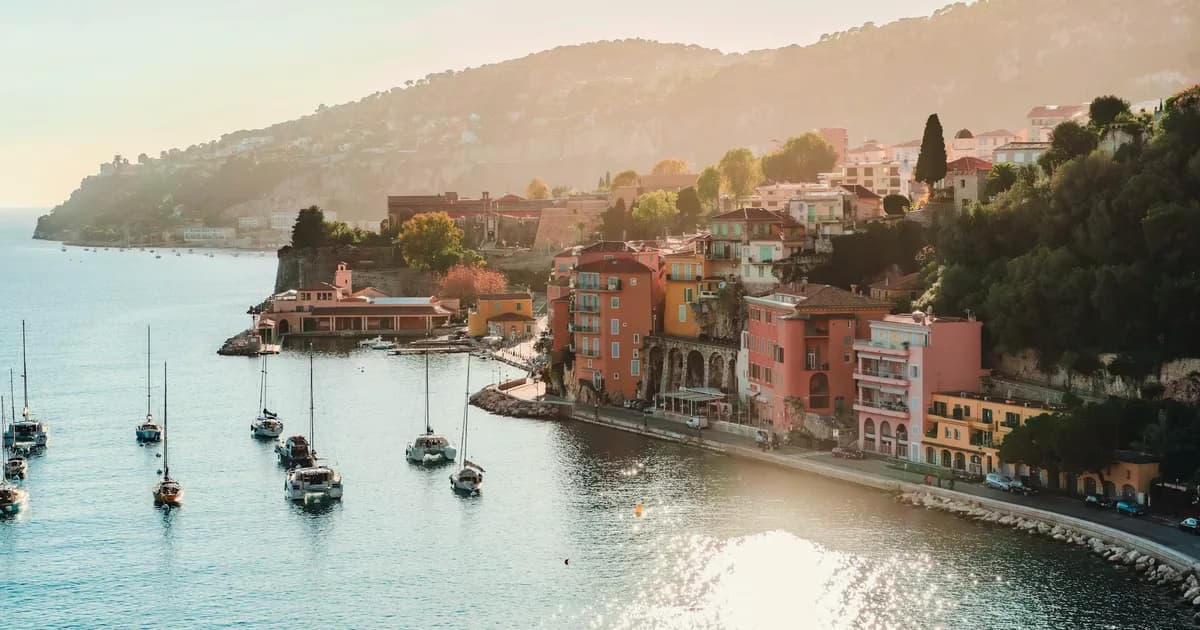
Paris is the postcard, and for a lot of Americans the postcard is the point. It is not the only France. The French Riviera, Nice, Antibes, Menton, the villages between them, is a different experience: slower, sunnier, Mediterranean, and far more relaxing than the capital. Lyon, Bordeaux, and the Dordogne each have their own case. The lifestyle is the payoff, and it is the reason a lot of clients go through with the program even when the pure tax math would send them somewhere else.
How to Take the Next Step
Two ways in. If your questions are specifically about France or the Passeport Talent program and you're ready to move on it, book a free fifteen-minute call and ask us directly. If you're weighing France against three or four other jurisdictions, Portugal, Italy, one of the Caribbean CBIs, a low-tax option like the UAE, that is what the Freedom Consult is built for. Sixty minutes, we work through your goals, your tax picture, your family situation, and we point you at the right jurisdiction and program, which is not always France.
Book a call when you are ready. Or read our Passeport Talent program page and our Long-Stay Visitor (FIP) alternative for a full comparison of the two French residency routes.