


 Turkey
In this article
If most of your income comes from investments or a business outside Turkey, Turkey tax residency can now cost you nothing on that income for 20 years. Turkey has moved newcomers onto a territorial tax system: Once you're a Turkish tax resident, Turkey taxes what you earn inside Turkey and exempts your dividends, interest, rent, and gains from abroad.
We think this is the most generous tax deal on offer to new residents anywhere near Europe, with no annual fee and a longer window than any European regime. But the whole benefit depends on one certificate, and if you file for it late, you lose all 20 years. Let me explain.
Five Rules Set Your 20 Tax-Free Years
Turkey put the exemption in its income tax law, which makes it harder to undo than a ministry decree.
- 20 Years at 0%: Anyone who becomes a Turkish tax resident from January 1, 2026 onward pays no Turkish income tax on foreign-source income and gains for 20 years, under the new law.
- No Fee and No Return: You pay no lump sum to join, and you file no Turkish tax return for the exempt income.
- Three Clean Years: You qualify only if you didn't live in Turkey, or owe Turkish tax on a job or business there, in the three calendar years before you moved.
- One Certificate Deadline: You apply to your Turkish tax office for an exemption certificate by December 31 of the year you become resident, or by the end of February if you arrive in November or December. If you moved this year, that's December 31, 2026.
- 1% Inheritance Tax: Inheritances inside the 20-year window are taxed at 1%, against a normal schedule that reaches 10%.
Turkey Now Taxes Newcomers Only on Turkish Income
Until this year, Turkey taxed its residents on their worldwide income at rates up to 40%, which made it a hard sell for anyone with a portfolio. A territorial system flips that: The country taxes only what you earn on its soil.
Turkey applies that logic to newcomers only. Families who have lived in Turkey for years go on paying tax on worldwide income, while a family that arrives now pays Turkish tax on Turkish income alone.
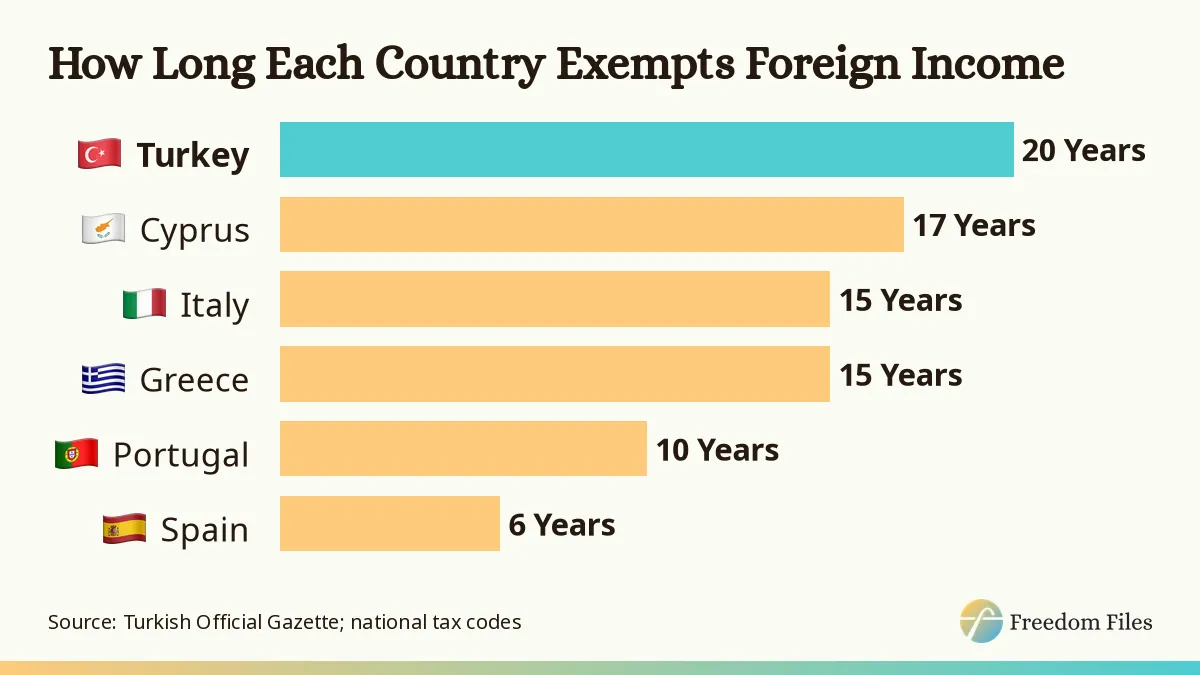
The obvious reading is that Turkey wants foreign currency in its banks. I, however, see a country competing head-on with Italy and Greece for wealthy families, and pricing that fight at zero.
Italy now charges new residents a flat €300,000 a year to shelter foreign income, after raising the charge for 2026 arrivals, and Greece charges €100,000 a year. Turkey charges nothing, and its window lasts five years longer than both.
Three Clean Years Decide Who Qualifies
The test covers the three calendar years before the year you become resident, and in each one you must not have lived in Turkey or been liable for Turkish tax.
The Treasury's implementing rules give a clear example: A person who lived in Turkey until November 2024 and moves back in 2027 is refused, because 2024 falls inside the lookback.
Nationality plays no part, so a Turkish citizen returning after years abroad qualifies on the same terms as an American. Only individuals can use the exemption, not companies.
Some earlier ties to Turkey are fine. If you already owned a Turkish rental apartment, or earned Turkish dividends or gains on Turkish assets, and paid tax on them, you can qualify.
A Turkish job or business in the lookback years disqualifies you. The rules refuse a person who drew a Turkish salary from a single employer two years before moving, and another who ran a Turkish business.
Tax Residency Takes More than a Permit
Residency is the legal right to live in a country without being a citizen. Tax residency is separate: Turkey treats you as a tax resident once you settle there or spend more than six months of a calendar year in the country.
So a Turkish residence permit or citizenship doesn't start your 20 years on its own. Living in Turkey does, and the permit or citizenship is what gives you the right to live there.
You also need to be a tax resident on the day you apply for the certificate, so you move to Turkey before you file, within the same calendar year.
The two routes the Freedom Files' clients ask about most are citizenship by investment and the new investor residence permit.
Turkish Citizenship by Investment Lets You Choose When
Turkish citizenship by investment suits families who want the tax regime and a citizenship they can pass to their children. The main route is a US$400,000 real estate purchase that you can sell after three years, and Turkey sets no minimum time in the country to become or remain a citizen.
Citizenship gives you the right to live in Turkey for life, so you can start your 20 years in any year you choose. If you plan to spend a few years elsewhere first, your citizenship waits for you.

Our guide to Turkish citizenship covers who it suits and the lira risk on the property.
The Investor Residence Permit Is the Lighter Route
Turkey's new investor residence permit suits families who want the tax regime without Turkish citizenship. US$150,000 buys a three-year permit and US$200,000 buys a five-year one, invested in a Turkish bank account, Turkish government bonds, investment funds, or an approved private pension plan. A real estate purchase isn't required, but you're able to buy property if you'd like.
The main applicant can't take a job in Turkey, which fits the tax regime well: The people who gain most live on income from abroad. Our breakdown of the investor permit covers the terms.
Work You Do in Turkey Is Taxed
The exemption covers income earned outside Turkey, and Turkey decides where income comes from by where the asset or the work is.
The Treasury's own example shows the split. A resident who earns dividends from a Spanish company and rent from a home in Monaco pays no Turkish tax on either, while rent from an apartment in Istanbul and dividends from a Turkish company are taxed as usual.
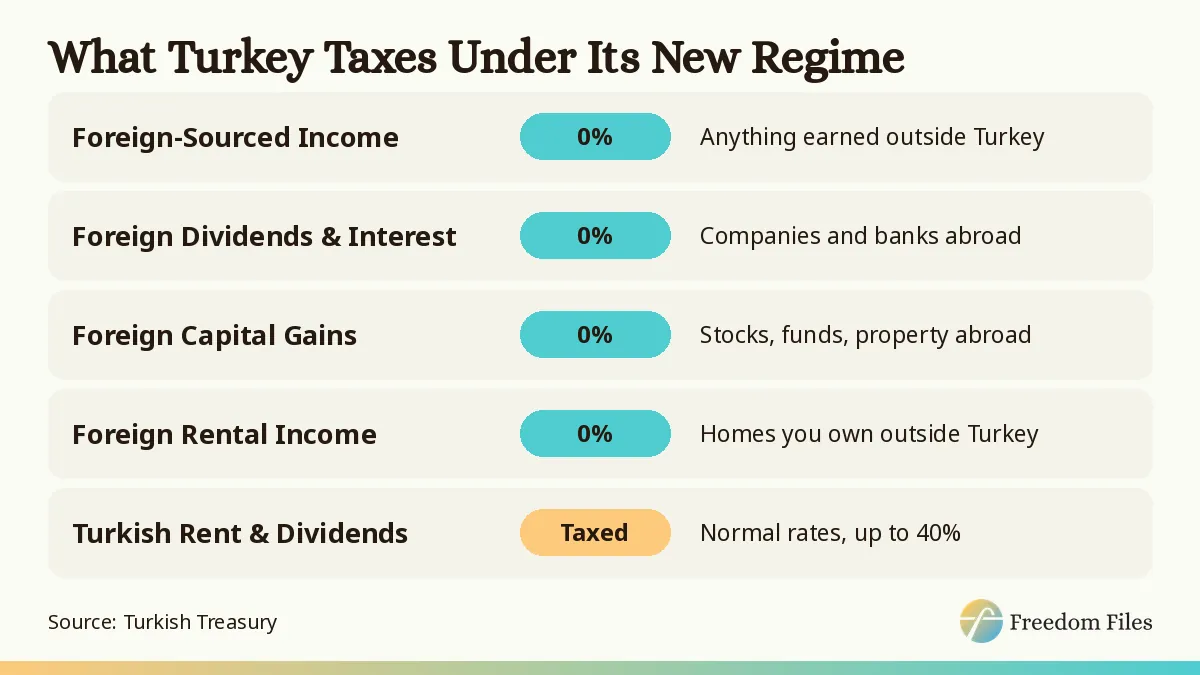
Remote workers lose the most here: The rules give the example of an engineer in Turkey who serves foreign clients, and that fee is Turkish income because the work happens in Turkey. A remote employee or freelancer working from an Istanbul apartment should expect the same treatment, at rates from 15% to 40%.
The same goes for your company. If you manage a foreign company from Turkey, Turkey can treat the company itself as Turkish, so business owners need the company's management set up with care before they move.
The exemption depends on where you earn the money, so we read the rules as letting you bring your foreign dividends into a Turkish bank account and spend them there. You can't deduct costs or claim credits for foreign tax against exempt income, which costs most investors nothing.
Miss the Deadline and You Lose 20 Years
The certificate is the step that trips up late movers. You apply to the tax office for your area by December 31 of the year you become resident. If you become resident in November or December, you have until the end of February of the next year.
The Treasury's example is blunt: A person who became resident in March and applied two years later is refused, even though they met the other conditions.
If Turkey later finds you didn't qualify, it cancels the certificate from the start and collects the tax with a tax-loss penalty and late interest. So file away the paperwork that proves your clean three years and the foreign source of your income.
If you became a Turkish tax resident this year, apply by December 31, 2026, or by the end of February 2027 if you settled in November or December.
Inheritance Tax Drops to 1%
Turkey normally taxes inheritances on a progressive schedule that reaches 10%. For people inside the regime, it's 1% on inheritances during their 20 years.
The new rate covers transfers by inheritance only. Lifetime gifts fall under Turkey's normal gift tax rates, so families who plan to give assets away while alive should plan that separately.
The Asset Amnesty Mostly Helps Turkish Families
Turkey's asset amnesty mostly helps Turkish families with undeclared money abroad, and Americans who already report their foreign accounts to the US government each year gain little from it.
The amnesty is open until July 31, 2027. You can declare cash, gold, foreign currency, and securities through a Turkish bank, bring them into Turkey, and pay a one-time 5% with no tax audit on what you declare.
The rate falls to 0% if the money goes into Turkish time accounts, government bonds, lease certificates, or venture capital funds for five years. Declarations from January 1, 2027 cost half a percentage point more.
Who Gains Most from the Regime
Take a retired American couple who live on US$250,000 a year of dividends and gains from a US brokerage account. Before 2026, Turkey could tax that income at up to 40%. Now Turkey taxes none of it, and the couple files no Turkish return for it.
A software engineer who works remotely from Istanbul for a US employer gains far less, because the salary counts as Turkish income. The regime rewards people who live off investments, and owners whose companies are based and managed outside Turkey.

A 20-year promise is only as good as the governments that follow. But Turkey put it in its income tax law and built the citizenship and residency routes around it, which tells us it plans to compete on tax for a long time.
If Turkey's tax regime is on your shortlist, contact us for licensed support before you move or file anything.
This article is general commentary and contains no legal or tax advice.
FAQ
Does Turkey Tax Foreign Income?
Not for new residents who qualify. Anyone who becomes a Turkish tax resident from 2026 onward, who didn't live in Turkey or owe Turkish tax in the three prior calendar years, pays no Turkish income tax on foreign income and gains for 20 years.
Is Turkey a Territorial Tax Country?
For newcomers, yes. Turkey taxes qualifying new residents only on income earned in Turkey, while long-term residents pay tax on their worldwide income.
Who Qualifies for Turkey's 20-Year Tax Exemption?
Individuals who become Turkish tax residents on or after January 1, 2026 and didn't live in Turkey or owe Turkish tax in the three calendar years before. Earlier Turkish rent, securities income, or capital gains don't disqualify you, but a Turkish salary or business does.
How Do You Become a Tax Resident in Turkey?
You settle in Turkey or spend more than six months of a calendar year there. You need a right to live there first, such as Turkish citizenship or a residence permit.
Does Turkish Citizenship Make You a Tax Resident?
No. Citizenship gives you the right to live in Turkey, but Turkey treats you as a tax resident only once you settle there or spend more than six months of a year in the country.
Can You Get Turkey's Foreign Income Exemption on a Residence Permit?
Yes. The exemption depends on tax residency, so a residence permit, such as the US$150,000 investor residence permit, works as long as you live in Turkey long enough to become a tax resident.
Do You File a Turkish Tax Return for Foreign Income?
No. Exempt foreign income goes on no Turkish return, and if you file one for Turkish income, you leave the foreign income out.
What Is the Deadline for Turkey's Foreign Income Exemption Certificate?
December 31 of the year you become a Turkish tax resident, or the end of February of the next year if you become resident in November or December. A late application is refused.
Does Turkey Tax Remote Work for a Foreign Employer?
Yes. Turkey treats pay for work you do while in Turkey as Turkish income, so a remote salary earned from Turkey is taxed at rates from 15% to 40%.
Does Turkey Have Inheritance Tax?
Yes, on a progressive schedule that reaches 10%. People inside the new regime pay 1% on inheritances during their 20 years, but lifetime gifts don't get that rate.
Does Turkey Tax US Social Security?
No. Under the US-Turkey tax treaty, US Social Security benefits are taxable only by the United States.
What Happens to the Exemption If You Leave Turkey?
Once you stop being a Turkish tax resident, Turkey stops taxing your foreign income anyway. The rules don't say whether the 20 years pause while you're away, so plan any return before you leave.
How Does Turkey's Tax Regime Compare with Italy and Greece?
Turkey's lasts 20 years with no annual charge. Italy charges new residents €300,000 a year for 15 years, and Greece charges €100,000 a year for 15 years.



 Argentina
 Greece


 Colombia
 France

 Panama

 Costa Rica

 Malta


 Italy