Is Portugal dead? In five years, it has killed many of the things that Americans like you and me used to enjoy about the country. In this video, you will learn about every change in detail, the three ways you can yet get residency in Portugal, and whether it even fits your situation, because one type of investor is walking away with one of the best deals available in Europe. Let's get into it.
So, what did Portugal change? The country has spent the last decade as the default answer for Americans who wanted a European base. Just ask your neighbors. Then over five years, it took apart most of what made it the default. Four significant changes.
One, the NHR tax regime is gone for new arrivals. That was the program that let new residents pay no tax on foreign income for ten whole years if they relocated, and it closed to new applicants in 2024. What replaced it, called IFICI or NHR 2.0, only helps a narrow slice of tech and research professionals. Not exactly the second coming of the program. So if you live off pension, dividends, active income, or your investment portfolio, it really does nothing for you.
Two, the property route into the Golden Visa is now gone. Buying a home no longer earns you residency despite what you might read or watch here on YouTube. That one option drove about three quarters of all Golden Visa applications before they cut it in 2023.
Three, the remaining investment thresholds are €500,000 in the investment fund route or €250,000 as a cultural donation.
Four, and potentially putting the nail in the coffin of Portugal, the wait for citizenship went from five years to ten years for most Americans. That last one deserves its own breakdown because the headline number of ten is not all you should care about.
That law came into force on May 19th, 2026, so just a couple months ago, and two things changed at once. The wait doubled, yes, but they also moved the starting line, which might be more important here. The naturalization clock used to start from the day you filed your application with IMA, the immigration authority. Now it begins the day IMA physically issues your first residence card. That sounds like a technicality, but watch what it does.
Say you file a Golden Visa today and issue your investment or donation. IMA has a backlog it inherited from the old agency. So between filing, biometrics appointments, and the card in your hand, two to four years is a normal wait right now. Some investors who filed in 2021 did not have cards until 2026. Under the old rule, every one of those years counted towards citizenship. Under the new rule, none of them do. Your clock has not started. And worse, there was no grandfathering either. So two to four years to get the card, then ten years of residency on top of that. Then you file for naturalization, and that file goes to a registry with its own queue, which can add another two years before a passport shows up and citizenship is granted. Add it up and you are looking at 14 to 16 years from application, and again, this is for the Golden Visa specifically, to passport. Not five, not even ten.
Now the part that has investors organizing lawyers is this. They did not protect the people already in line. The only people who retained the old five-year rule are those who had already filed a citizenship application before the cutoff. So if you had been living in Portugal since 2021, four years deep, doing everything you thought was right, and you had not filed that specific piece of paper by May 18th, you were on the new ten-year clock like everyone else. Parliament was offered protection for people in the naturalization pipeline, but it voted it down. More than 500 investors, many of them American, who invested €500,000 or more in the country on the old standards are now preparing a lawsuit against the Portuguese state for this naturalization change.
So yes, the government took a great deal and has made it a significantly worse one for some investors, for some profiles. But that raises the obvious question, is Portugal dead? For two types of people, this country is no longer the perfect fit. Generally speaking, of course, your situation might differ.
First, anyone here for a fast passport. If your plan was a European passport in five or six years, Portugal cannot do that for you any longer and you should look elsewhere. But I will also say something uncomfortable here. The Golden Visa, the D7 visa, the D8 visa also never promised citizenship. The nationality law could have always changed. These are residency programs. Citizenship was always a separate process that the government could change at will, and like we saw, it did. Many lawyers and agents and YouTubers sold a passport program, a citizenship-by-investment program, which it was not. The program was only ever residency. Remember that difference because we will come back to it in a second.
Second, anyone here for a tax cut. I want to be specific about what is left because NHR being gone does not tell you the full story of Portugal and the tax system there. Once you become a Portuguese tax resident, you are taxed on worldwide income at standard rates. The income tax scale is progressive and the top tax bracket of 48% starts at roughly €80,000 to €81,000 in income. That is not a rich-person bracket. That is a working professional. Above €80,000 there is a solidarity surcharge of 2.5% as well. Above €250,000 it goes to 5%. So the top of this scale really pushes past 50%, 53%, almost 55%. Investment income is taxed separately at a flat 28%. So you do get a little haircut there. Dividends, interest, capital gains on securities, your crypto gains, if you sold a big business or a big investment position, Portugal wants a bite.
There is one thing worth knowing on the other side of the ledger, and it is why Portugal yet works for some Americans on the tax question. The US and Portugal have a double taxation treaty. US Social Security and US government pensions are taxed by the United States, not Portugal, even if you become a tax resident there. So if your income is mostly Social Security or a federal or military pension, Portugal will not tax you in most cases. Private pensions and IRA distributions, however, are a different story as the Portuguese tax authority considers those income rather than retirement distributions. The treaty helps a specific profile, but not a general one. And of course, talk to a real financial adviser for all of this. This is just informational purposes.
Remember when this applies. Portuguese tax residency triggers at more than 183 days in the country, or, and this is important because most people leave this out, by maintaining a habitual home there. So if you don't spend six months a year there and don't live there, none of this affects you.
So that is who should skip Portugal. Here is who it yet fits. Two groups.
The first is the investor who wants a foothold in the European Union without moving. Most residency programs in Europe, including the D7 and D8 visa, which we will talk about again in a second, make you show up and live there. Move to most places and you become a tax resident by default, on the hook for local tax on your worldwide income, including your US income. Portugal's Golden Visa requires presence for seven days in the first year, then 14 days in each two-year renewal after that. That is a week of vacation in Lisbon or Madeira, the Hawaii of Europe, and you retain legal EU residency for you and your family. Also, to the point of tax at that level of presence, you are not a Portuguese tax resident. So none of those high tax rates we just mentioned touch you. You get permanent residency at year five, and the citizenship path, slow as it now is, remains open on that same light-presence structure. Almost nowhere else in Europe gives you that type of deal. Greece and Italy want significantly more presence for the citizenship track, about nine months per year in Italy and just over six months per year in Greece. Both would incur tax. So ten years of one or two weeks a year is a very different ask than ten years of habitually living somewhere.
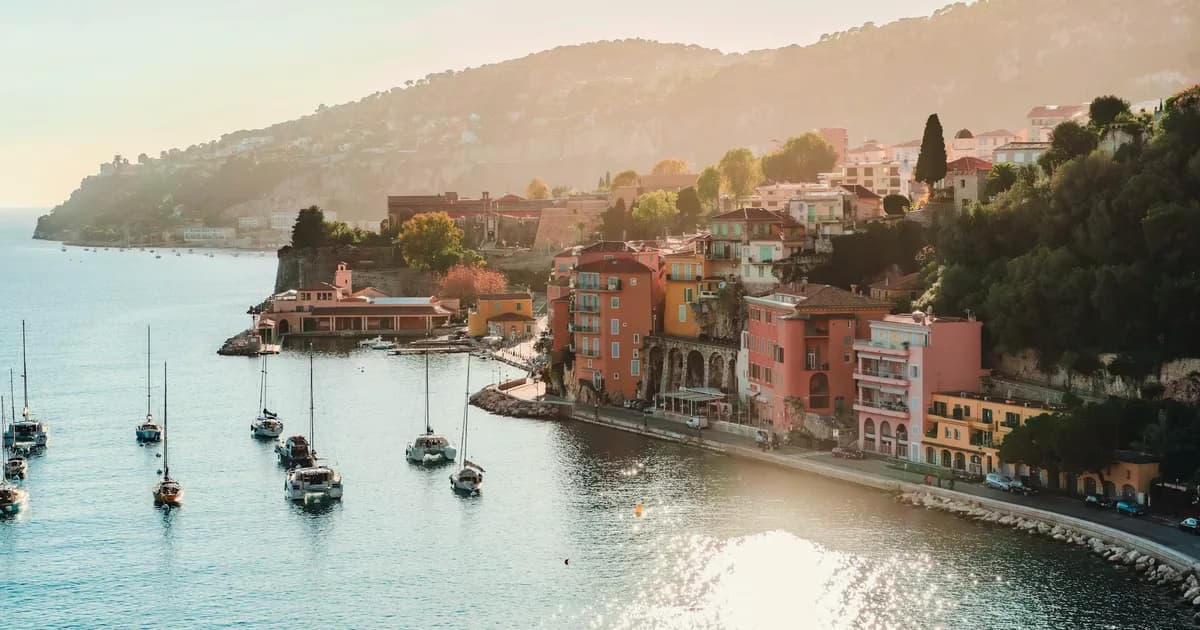
The second group is the family who wants to move to Europe and live well. This is where Portugal is underrated right now. Well, maybe not underrated, but accurately rated because everyone is arguing about the citizenship changes and nobody is talking about Portugal itself. If you want a European lifestyle, Portugal is even now one of the best places on the continent to have one. The closest comparison for an American is California. You have long Atlantic coastline, mountains an hour inland, wine regions that go back centuries, a Mediterranean climate with more sunshine than almost anywhere in Europe, and a food and surf culture. Add English spoken widely across the country, decently low crime, good private healthcare at a fraction of US prices, direct flights from the US East Coast, and one of the largest and most settled American expat communities in Europe. Take that as you wish. That could be a good or bad thing depending on how you feel. We cover the warts too. Winters are damp and Portuguese homes are poorly heated as well as air conditioned in the summer. The indoor cold can surprise people. The Atlantic is cold year round. So if you are picturing warm swimming, that is Spain's Mediterranean coast, not the Atlantic in Portugal. Lisbon is not cheap anymore. And the bureaucracy, the service level and speed at which things move, will certainly test your patience. But if the goal is a good European life rather than a fast passport, Portugal is a phenomenal choice and the rule changes don't really dent that lifestyle.
By the way, if you are weighing Portugal against Greece, Italy, Spain, Malta, or Cyprus, and you can't tell which fits your tax or presence tolerance, book a Freedom Consult with us. It's a 60-minute working session where we map out your situation. We talk about all these different programs and tell you which one fits your situation best.
Now, let's separate the three ways into Portugal because mixing them up can be a really expensive mistake. You've got the Golden Visa, the D7 visa, and the D8 visa. Three pathways. The single most important line in this whole video is the difference between them.
First, the Golden Visa. This is the investment route. Property is out. What qualifies now is €500,000 into a CMVM-regulated fund, like the Portuguese SEC-regulated fund, and this is what most of our clients use to get the Golden Visa. The funds invest in Portuguese companies, not property, and you are typically locked in for six to ten years before you can redeem. The other option is €250,000 as a cultural or arts donation. It is the lowest entry price, but of course the money is gone. It is a donation, not an investment. Finally, €500,000 into scientific research, which again would be kind of a donation, or creating ten jobs in Portugal. This option is not widely used.
How this works: one, you get a Portuguese tax number. Two, you open a Portuguese bank account. Three, you wire and place your investment or donation. Four, you then file your application with IMA. Then come biometrics, background checks, and the residency card. Your spouse, dependent children, and dependent parents can all come on that same application. Then seven days in year one of physical presence, 14 days per two-year renewal. No relocation means no Portuguese tax residency if you don't want to. If you do want to relocate, you can certainly do that.
Second, the D7 passive income route, built for people living off a pension, dividends, rental income, or royalties. The bar is low here. Roughly €920 to €950 a month in qualifying income for the main applicant with modest bumps for a spouse or children dependents on the application. You just have to prove you have that income. There is no investment required for the D7 visa. You apply to a Portuguese consulate in the US. Freedom Files can help you with all this. Show your income, show you have a place to live in Portugal, and then you get an entry visa. You land, you go to IMA, and you get a two-year residence permit that renews. The difference here is the D7 expects you to move and pay taxes in the country. You spend more than 183 days a year in Portugal and, like we mentioned earlier, that makes you a Portuguese tax resident. Worldwide income included at the rates we discussed earlier.
Finally, the D8 digital nomad route for remote workers, freelancers, and remote professionals earning from outside Portugal. The bar is higher here, around €3,700 a month, which is four times the Portuguese minimum wage, plus savings in the bank. Your income has to come from a non-Portuguese employer or non-Portuguese clients and has pretty much the same permit structure as the D7. Same presence rule too. You relocate, you cross 183 days, and you are a tax resident. If your work falls into a qualifying tech or research field, you might land that 20% IFICI rate, but most people will not.
What's the difference between these programs? The Golden Visa is for the investor who wants EU residency and maybe a passport a long way down the line without moving and without paying Portuguese tax. The D7 and D8 are for people who want to move to Portugal, live there, and accept that they will pay tax there as well. If you pick wrong, you either trap yourself in a tax residency you never wanted, invest in a situation where you don't have to invest or donate, or you move expecting a tax break that no longer exists.
So back to the original question: is Portugal dead? For the fast passport, yes. Portugal is gone and no amount of marketing changes the math the government has calculated. For anyone who moved the family there to cut a tax bill, also gone. But if you want a foothold in Europe, a plan B or potentially a plan A, and you can plan for a week or two weeks a year and no tax exposure, and you can be patient about citizenship, Portugal remains one of the best deals on the continent. If you want to build a life in Europe rather than collect a document, Portugal remains one of the finest places in the world to do it from a lifestyle standpoint.
If that's you and you already know which pathway is your move, you can book a free 15-minute call with us and we'll get you started. If you're weighing Portugal against the rest of Europe or Panama, take a 60-minute Freedom Consult instead. Either way, we won't push a program that isn't right for you.
Next, watch my comparison of Portugal and Spain to learn more about these two countries. Which one fits your situation? That video is on your screen right now. Enjoy it and talk to you very soon.