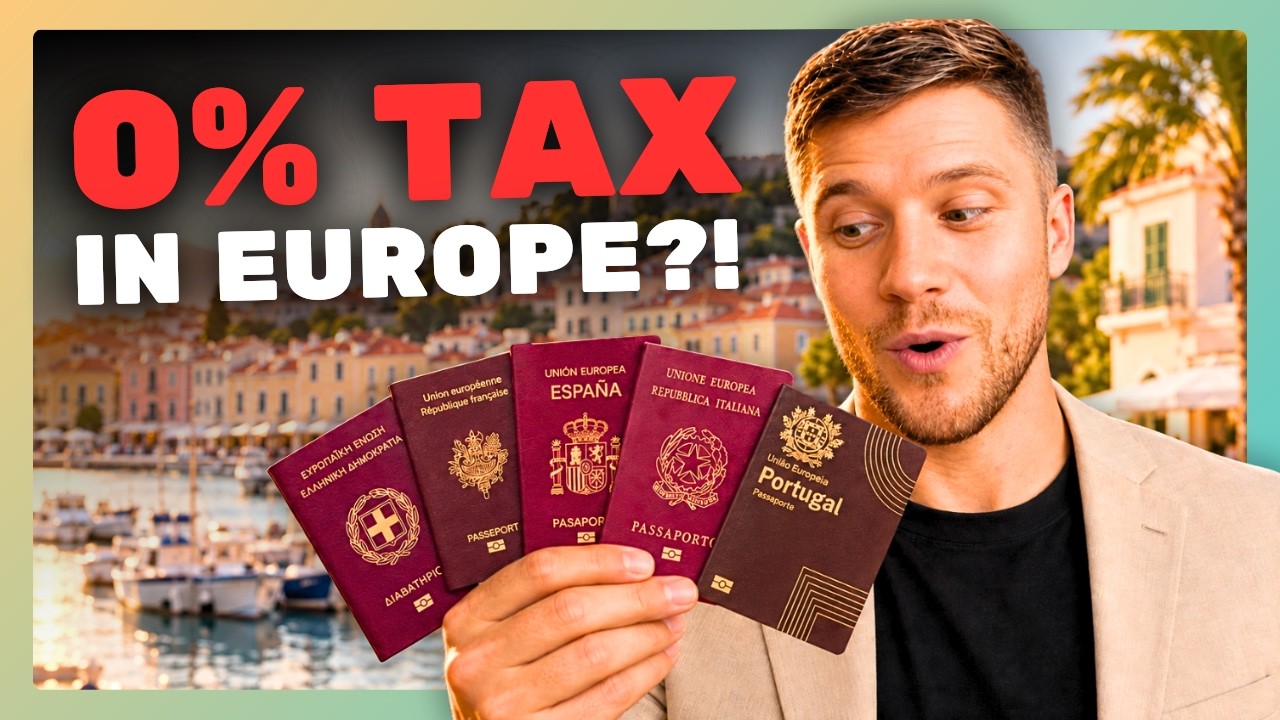
Americans, yes, even you, can open a bank account overseas 100% legally. The rules have tightened and the bureaucracy has grown, but the option is available. In this video, you'll learn why investors do this, the reasons you might not (we're always balanced over here), and finally, the steps to do it legally and privately. Before we start: I'm not a financial adviser and not a tax adviser. This video is for information purposes only. If you take action, make sure it's legal.
With that out of the way, let's deal with the phrase itself first, because "offshore account" sounds illegal to a lot of American ears. Yet it simply means a bank account in another country. That's it. A checking account in Toronto is technically an offshore account for an American citizen, and opening it is no more illegal than opening one in Ohio. What is illegal is hiding it from the US government. Cross that fine line, no pun intended, and the fine starts at $165,000 per account, per year. Later in this video, I'll show you where that number comes from and how to avoid paying it.
So why bother with a bank account internationally? It's the same move you already make in your portfolio. You would never put your whole net worth into one stock, yet most American families have every dollar they own inside one legal system, one currency, one culture, one political system, one banking sector. Same with your citizenship, which is why we always recommend our clients build a portfolio of citizenships instead of putting all the metaphorical eggs in a single basket. That's over-concentration, and 2008 and 2023 showed what it costs. Just 3 years ago, Silicon Valley Bank, Signature, and First Republic failed within 7 weeks of each other, three of the four largest bank failures in US history. Depositors got rescued, but the lesson survives either way. And in 2013, EU member Cyprus reached into individual accounts above €100,000 to recapitalize its banks. Yikes.
A foreign account spreads that risk across borders, and it opens options a US account might not. Multicurrency accounts are a standard feature at banks across most of the world, so a single account can house dollars, euros, and pesos. Some of the strongest banks on the planet accept American clients. A bank deposit can even anchor an application for residency or citizenship: A handful of programs grant residency, as in Panama, or citizenship, in Turkey's case, in exchange for a fixed-term or open deposit in the country's banking system. If most of your net worth lives in one currency and one court system, a foreign account is a cheap form of diversification and an easy early step in a plan B strategy. Drop a comment, by the way, if this resonates. Do you already have any international accounts?
Now, I left the US almost 10 years ago and have invested across a few jurisdictions abroad, which also means I've opened offshore accounts. Some finished in an afternoon; some dragged across a few weeks of paperwork. If you want to know which routes fit your goals and timeline, go to freedomfiles.co/begin, answer 10 quick questions, and you'll have a custom report in about 90 seconds.
Let's talk about the rules, because this is critical for American citizens. Two filings define offshore banking for Americans, and skipping them brings fines that can be monstrous.
The first is the FBAR, FinCEN Form 114. It applies once your foreign accounts add up to more than $10,000 at any point in the year, across all accounts combined. A checking account in Lisbon with $6,000 plus a savings account in Panama with $5,000 puts you over the line. You file it with the Treasury's financial crimes unit, separate from your tax return. Miss it by accident and the fines can reach more than $16,000 per year. Miss it willfully and the fine is the greater of $165,000 or half the account balance, per account, per year, with no limit on how far back they can reach. That's where the number from the top of this video comes from.
The second piece arrived in 2010, when Congress passed the Foreign Account Tax Compliance Act, FATCA, and turned every foreign bank into an unpaid reporting agent for the IRS. Any bank that wants access to the US financial system must identify its American clients and report their balances to the IRS every year, or lose 30% of its US-source income to an automatic tax. More than 110 countries signed agreements to comply. Some banks decided Americans weren't worth the extra paperwork, and much of Swiss and Liechtenstein private banking turns US citizens away before any deposits are made. So no, not every bank will take you. But many of the world's banks will.
Finally, there's one more form: 8938, filed with your tax return once your foreign assets cross either $50,000 at year end if you live in the US and file single, or $200,000 if you live abroad, with both figures doubled for married couples filing jointly.
You might say: Come on, if the IRS sees every account anyway, what's the point? Fair question. Mandatory reporting tells the tax agency where your money is. It doesn't give anyone your money, and it doesn't shrink your options. A US creditor can freeze your Chase account with one court order, while reaching your account in Singapore requires a foreign legal process, in a foreign court, under foreign law. Disclosure costs you none of that protection, because the protection comes from distance and jurisdiction.
One thing to nail down before we go further: If you have US citizenship or a green card, the IRS taxes your worldwide income regardless of where the account is. Interest earned in Tbilisi goes on your 1040 just like interest earned in California.
Now, the rest of the world built its own version of FATCA a few years ago, and this is where the privacy question gets interesting. In 2014, the OECD launched the Common Reporting Standard, CRS. Banks report foreign clients' account data to their tax residency's government, and governments swap those files with each other automatically, without a request or your consent. More than 110 jurisdictions participate as of 2026, and the web of exchange relationships now counts over 2,700 country-to-country links.
For an American, there's a tweak. CRS is organized around tax residency, and the US never joined it, interestingly, because FATCA already delivers everything Washington wants from other governments. So the CRS map touches you less than the marketing suggests, if you're a US citizen. Where it does affect you is data exposure. Every one of those 2,700 links is a database handoff, and every handoff is a place where your name, balance, and account number can leak, get misrouted, or get pulled by a government you've never dealt with. Banking in a jurisdiction outside CRS shrinks that surface, and as of early 2026, some familiar names remain outside the framework: Cambodia, El Salvador, Egypt, Paraguay, the Philippines, and Serbia. Remember that these windows close, though. Georgia joined CRS in 2023 and Armenia followed in 2025, and both used to be hot private-banking destinations.
Which brings us to the answer I promised at the top. The largest non-CRS banking jurisdiction on Earth is the United States. A German or Brazilian investor can bank in Miami or Delaware with more privacy from their home government than an American can find anywhere on the planet. Very ironic. As an American, you cannot shop for secrecy, because it doesn't exist for you. Investors seek access and diversification instead. And if part of you bristles at how much reach the state has here, plenty of our clients, me included, feel the same. You don't have to like the rules to follow them. One practical recommendation: Avoid asking a bank whether your government can see its data. Frame the concern with the institution's compliance officer as data security. Ask how your information is protected, and when and with whom it's shared. You get the same answers. If this breakdown is earning its minutes, subscribe and turn on notifications. We publish deep dives like this every single week.
Now the other side of the ledger, because this move can be wrong for plenty of people. One: Minimum deposits can be high at the name-brand banks. Singapore's banks generally want six figures, often multiple six figures, before they accept a non-resident. Two: Much of Switzerland, Liechtenstein, and Monaco would rather skip American clients than file paperwork to the IRS every year. Three: Your investment menu shrinks. SEC rules block foreign banks from selling most of their funds to US persons, and PFIC rules on foreign mutual funds can levy a punitive tax bill. Granted, a cash and multicurrency account sidesteps most of that. Four: Compliance has a price. Between more tax forms and a CPA who knows international rules, who we can connect you with, budget extra fees every year. And five, the big one: If the goal is hiding income from the IRS, no jurisdiction on this list will save you. Secrecy died with FATCA, and people pay massive fines, or worse, go to prison, every year for testing its limits. This is a diversification tool that helps you access more of the world. It is definitely not a tax loophole for Americans.
Here's the process if you'd like to set up your own offshore account, which we can help with through our partner network.
Step zero, before anything else: One idea decides most outcomes here. Get your house in order. Your nationality, source of funds, and deposit size all must add up to a resounding yes from a bank, because this is an application, not a formality. Before you consider banks or even jurisdictions, start with yourself: Do you make an appealing client? You don't want a mismatch between your profile and the bank's risk appetite.
Step one: Define the job of the account. A small transactional foothold, a six-figure cash fortress, or a platform for regional investments? The job picks the jurisdiction, not the reverse.
Step two: Decide how much you'd like to deposit and shortlist jurisdictions that accept Americans. As of 2026, retail banks in Georgia open accounts for non-residents with small deposits, though we've learned in recent weeks that the privacy in Georgia is not what we expected, and my perspective on it has changed quite a bit. Several Caribbean banks open accounts remotely by correspondence, though correspondent banking is thin in that tier, so wires are slow and fees rise quickly. Singapore is in the fortress tier. The thing to watch out for is fintechs: Many app-only providers are simply payment processors with no deposit insurance behind them, so meaningful balances belong at licensed banks. Last note: A residence permit abroad unlocks a far wider list of eligible banks almost everywhere.
Step three: Build your file before you fly. Your travel document, a second ID, proof of address, source-of-funds evidence like tax returns or sale contracts, and expect the bank to hand you a W-9. At the premium tier, some banks also want a short professional bio, a CV, and a reference letter from one of your current banks. Retail accounts rarely ask, but be on the safe side. Send documents ahead and book an appointment: Non-residents who walk in cold get slow answers and wait days, if not weeks, if the account ever opens at all.
Step four: Show up in person where you can. You'll read the institution better, the process moves faster, and you can skip a pile of notarizations. Where travel doesn't make sense, some banks allow remote opening or a power of attorney through local counsel.
Step five: Make your deposits, then mark your calendar for the tax filings. We generally recommend two professionals in the loop: A US CPA with international experience, and licensed counsel or a banker in the account's jurisdiction. And avoid a few things once the account is live: A sudden jump in activity you can't document, money arriving from unfamiliar third parties, and neglecting the institution's notifications and emails. The Freedom Files can help with all of this. We have trusted partners in the jurisdictions we work in and a global banking and asset protection partner.
So, is an overseas bank account right for you? If you want a first foothold with less than $10,000, a retail jurisdiction gets it done. If you're placing six figures of cash and want it inside a stronger system than the one you left, Singapore-class priority banking could be your lane, and Swiss banking as well. If privacy is the driver, your lever is jurisdiction selection plus proper structure with counsel on both sides, never concealment. And if you have residency abroad, or want it, and you'd like a local account for ease of access, that's typically nice and easy.
If you're weighing where your first flag abroad should go, head to freedomfiles.co/begin, and the Plan B Blueprint will match your goals with residency and citizenship programs. Matching your profile to a bank's appetite is what our partners do, and we have trusted partners all over the world. If you already know your country and you're ready to move or invest, book a call with us on the contact page.
Now, in the video on your screen, we revealed the top 7 cheapest citizenships you can buy in 2026, with a funny quirk in the ranking that I think you'll appreciate. Check that out now, subscribe, and I'll see you later. Thanks for watching.