
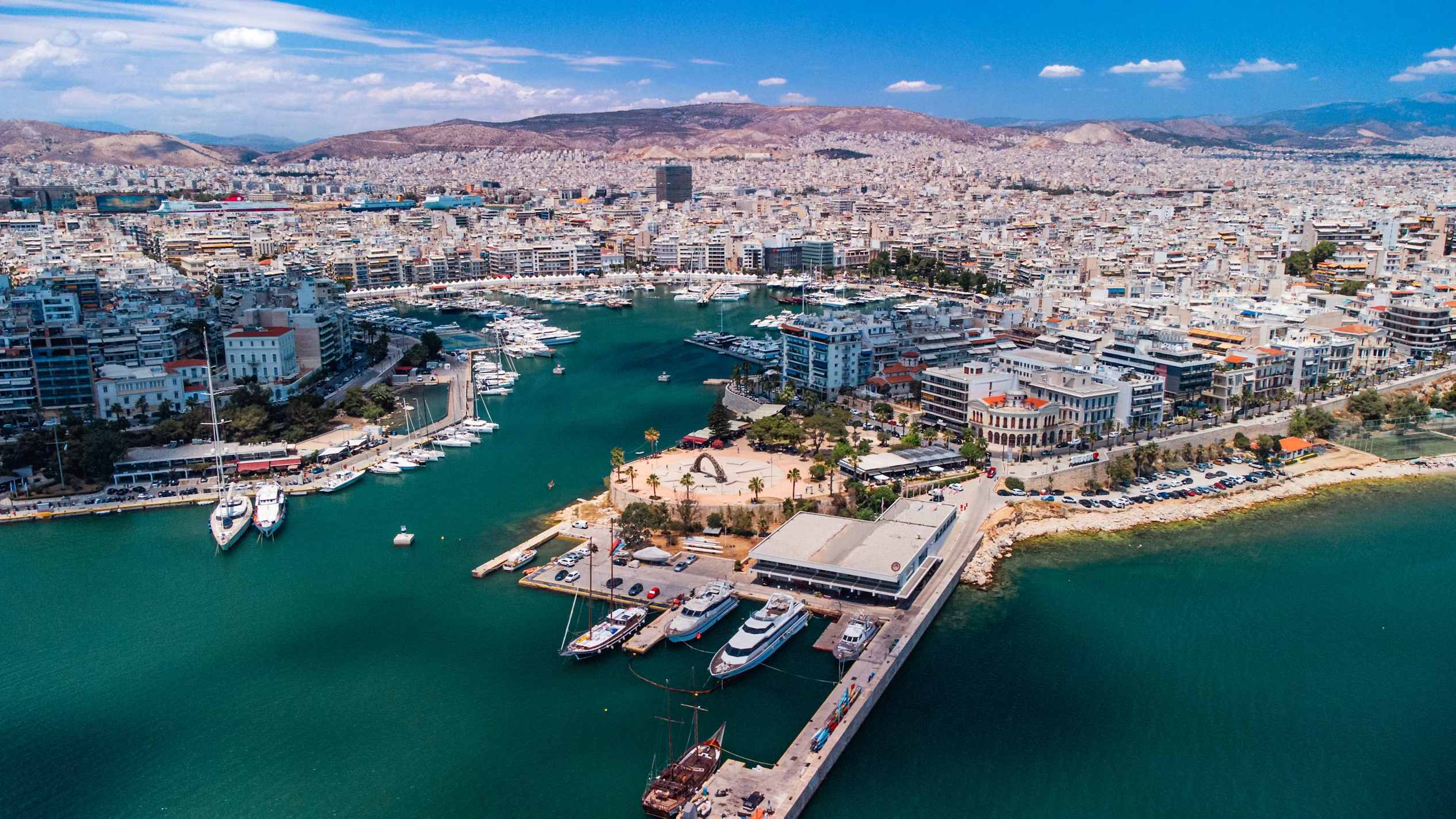
Keep your US job or clients
The DNV explicitly permits employment by or contracting for non-Greek entities. Your W-2 from a US employer or your 1099s from US clients qualify, provided work is performed remotely.

Keep your US job, build a Greek base. €3,500/month in foreign-source active income, two-month consular processing, and a 50% Greek-source tax discount during the visa term for those who shift tax residency.

Greece's Digital Nomad Visa (DNV) is a one-year temporary residency permit for non-EU citizens earning foreign-source active income through remote employment, contracting, or remote ownership of a foreign-incorporated business. You demonstrate €3,500/month in foreign-source income, apply through the Greek consulate that covers your US state, and receive a residency card within two months of arrival. The visa is renewable for a second year; to reach the seven-year naturalization clock, most clients convert to the FIP visa or another long-term residency category at renewal.
The DNV is Greece's fastest residency route and includes a meaningful Greek-source tax discount during the visa term for those who shift tax residency. It's the right entry point for clients who want to live in Greece for one to two years before deciding whether to commit to the longer-term Greek lifestyle. The EU mobility from day one and the access to Greece's 50% Greek-source tax discount make it an unusually efficient short-term EU base.
The outcomes the Digital Nomad Visa actually delivers, beyond the headline numbers. The six that matter most to our clients.
The DNV explicitly permits employment by or contracting for non-Greek entities. Your W-2 from a US employer or your 1099s from US clients qualify, provided work is performed remotely.

If you shift tax residency to Greece while holding the DNV, you qualify for a 50% income-tax discount on Greek-source earnings for up to seven years. Foreign-source income is taxed under standard Greek rates outside the non-dom regime.
Consular processing of complete DNV files typically runs 30 to 60 days. The fastest residency-by-investment route Greece offers.

Greek residency unlocks Schengen travel immediately. Athens has direct service to most European capitals; intra-EU travel is functionally domestic.

Spouse or registered partner and dependent children qualify on the principal application. Family income threshold steps up modestly per dependent.

At renewal, you can convert to the FIP visa or other long-term residency categories. The conversion preserves accumulated time toward the seven-year citizenship clock.
The financial threshold to qualify, with the documentation we walk every client through.
€3,500/month
Demonstrate active-source foreign income of at least €3,500/month for the principal applicant (family thresholds scale: +20% for spouse, +15% per child). Eligible sources: salary from a foreign employer with documented remote-work authorization, contractor income from foreign clients, founder distributions from a foreign-incorporated company you actively run.
Choosing the right route is half the work. We model the comparison against your portfolio in the Consult.
Get my BlueprintReach out and tell us about your situation. From there, you'll either book a 60-minute Freedom Consult (if you're weighing options across countries) or get started on this route directly (if you already know it's the right fit).
We coordinate the document pack: FBI background check (apostilled), birth and marriage certificates, twelve months of bank statements, employment letter or contractor agreements, remote-work authorization, US tax returns, Greek health insurance, and the Greek-counsel power of attorney.
Submit the DNV application through the Greek consulate covering your US state. Most consulates process complete files in 30 to 60 days.
You enter Greece on the visa stamp within three months of issuance. Within three months of arrival, register at the Decentralized Administration to receive your residency card.
If you intend to shift tax residency to Greece, file the election with the Greek tax authority. The 50% Greek-source discount is available for up to seven years from the date of election. Election is optional.
The DNV renews for a second year. At the end of year two, decide whether to convert to the FIP visa or another long-term residency category to continue accumulating time toward the seven-year citizenship clock.
Processing
Temporary residency
Permanent residency
Citizenship
2-3 months
Years 1-2
Year 5+ (post-conversion)
Year 7+
How this program stacks against the closest credible options for the same visitor. We don’t earn more if you choose one over another.
| Dimension | Greece Digital Nomad | Greece Golden VisaLearn more | Greece FIP VisaLearn more |
|---|---|---|---|
| Minimum financial bar | €3,500/mo active income | €250K property or startup | €3,500/mo passive income |
| Processing | 2-3 months | 2-4 months | 2-3 months |
| Presence required | 183+ days / year | None | 183+ days / year |
| Time to citizenship | 7 years (post-conversion) | 7 years | 7 years |
| Tax incentive | 50% Greek-source discount (7 yr) | €100K/yr non-dom (15 yr) | 7% pensioner (15 yr) |
| Right to work locally | No (foreign income only) | No (passive only) | No (no Greek employment) |
| Family inclusion | Spouse, children | Spouse, children, parents | Spouse, children, parents |
The DNV fits remote workers in the short term. The Golden Visa fits investors who want EU residency without day-count obligations. The FIP fits retirees and passive-income holders with the strongest pensioner tax regime. We don't earn more if you pick one over another.
Want a Greece briefing covering everything on this page plus the comparison framework we use internally?
Three reasons families pick Freedom Files over the do-it-yourself path or a single-jurisdiction agent.
We know which consulates move DNV files cleanly and which bounce them. The remote-work authorization letter is the most common stall point.
About a third of DNV inquiries end with our recommendation against engagement. We tell you when the Golden Visa, FIP, or Portugal D8 fits cleaner.

Every engagement runs with US-licensed counsel from the first call. Treaty positions and the 50% Greek-source discount mechanics are planned before tax residency triggers.
Active-source foreign income: salary from a foreign employer (typically your US W-2 employer) with documented remote-work authorization, contractor income from foreign clients on 1099s, or founder distributions from a foreign-incorporated company you actively run. The consulate weights stability heavily; twelve months of consistent income from a single primary source carries more weight than a patchwork of gig income.
Not directly. The DNV is a one-year visa renewable for a second year, and Greek naturalization requires seven years of legal residency. To reach the seven-year clock, most clients convert to the FIP visa or another long-term residency category at renewal. The time accumulated on the DNV counts toward the seven-year clock when you convert.
If you transfer tax residency to Greece while holding the DNV and meet eligibility criteria (including not having been a Greek tax resident in five of the previous six years), you can elect a 50% income-tax discount on Greek-source earnings for up to seven years. Foreign-source income is taxed under standard Greek rates outside the €100K non-dom regime. The interaction with US worldwide-tax filing is technical; we coordinate with US-licensed counsel.
Not initially. The DNV is built specifically for foreign-employer or foreign-client income. If your situation changes, you would need to convert to a Greek work permit or another category at renewal.
The US taxes citizens on worldwide income regardless of residency. Greece taxes residents on worldwide income at progressive rates topping at 44% outside the special regimes. The US-Greece tax treaty mechanics, properly structured, prevent double taxation in most cases. We coordinate with US-licensed counsel before residency triggers.
Plan on €2-3K in government and administrative fees (visa, residency card, family-member fees), €4-6K in Greek legal fees through our partner counsel, and €500-1,500 in translation and apostille costs. Total non-investment cash outlay typically lands in the €7-11K range.
Yes. Spouse or registered partner and dependent children qualify on the principal application. The income threshold scales modestly per dependent. Dependent parents are not typically included on the DNV (unlike the FIP and Golden Visa routes).
Deeper coverage of Greece from the Freedom Files library - long-form articles and short video deep-dives.

Greece plans a 10% crypto tax, under a third of Italy's 33%. We think it beats most of Europe, and a 7% regime for new residents can beat it.

Americans who move to Europe don't pay full tax twice. A double tax treaty and the foreign tax credit decide who taxes your pension, Social Security, and portfolio. Here's how the US treaties with Portugal, Greece, Italy, Spain, and France work, why France is the most generous, and the residency routes into each.

Greece plans to raise its transfer tax on non-EU home buyers from 3% to 15% in July 2027. We think it punishes investors and adds no housing.
Most citizenship-by-investment programs make a married gay couple apply and pay twice. These 7 residency routes, from the Greek and Portuguese golden visas to Thailand's LTR and Malta's permanent residence, put both partners on one application with one investment. Here's what each costs and how each treats your relationship.

With Portugal's property route closed since 2023 and Spain's golden visa gone entirely, only 5 European residency programs remain where buying real estate earns the permit: Cyprus at €300,000, Serbia with no minimum at all, Montenegro at €150,000 ahead of possible EU accession, Greece from €250,000, and Malta's permanent residence program. Here is what each costs, what the fine print says, and the tax regimes that reward relocating.

Greece offers 3 residency routes in 2026: A Golden Visa from €250,000 with zero days of required presence, the FIP visa for financially independent retirees on €3,500 a month, and a Digital Nomad Visa, all leading to EU citizenship at year 7. Here is how each works, who qualifies, and the 3 special tax regimes, including the 7% flat tax on foreign pensions, that make Greece surprisingly tax friendly.
 31 min
Europe doesn't have to be the tax trap most Americans think it is. As a US citizen living in most European countries, you avoid double taxation thanks to a bilateral tax treaty between that country and the United States. In this video, James from the Freedom Files covers how tax treaties and the foreign tax credit save you money, how 5 popular destinations treat your pension, IRA, 401(k), Social Security, and investment income when you move there, and how to get residency in Portugal, Greece, Italy, Spain, and France.
 22 min
Gay couples aren't welcome in most residency and citizenship programs worldwide. But the 7 residency programs covered in this video offer open arms to LGBT investors. Instead of having to double your investment and file two applications for some programs, these allow you to invest and apply together.
 18 min
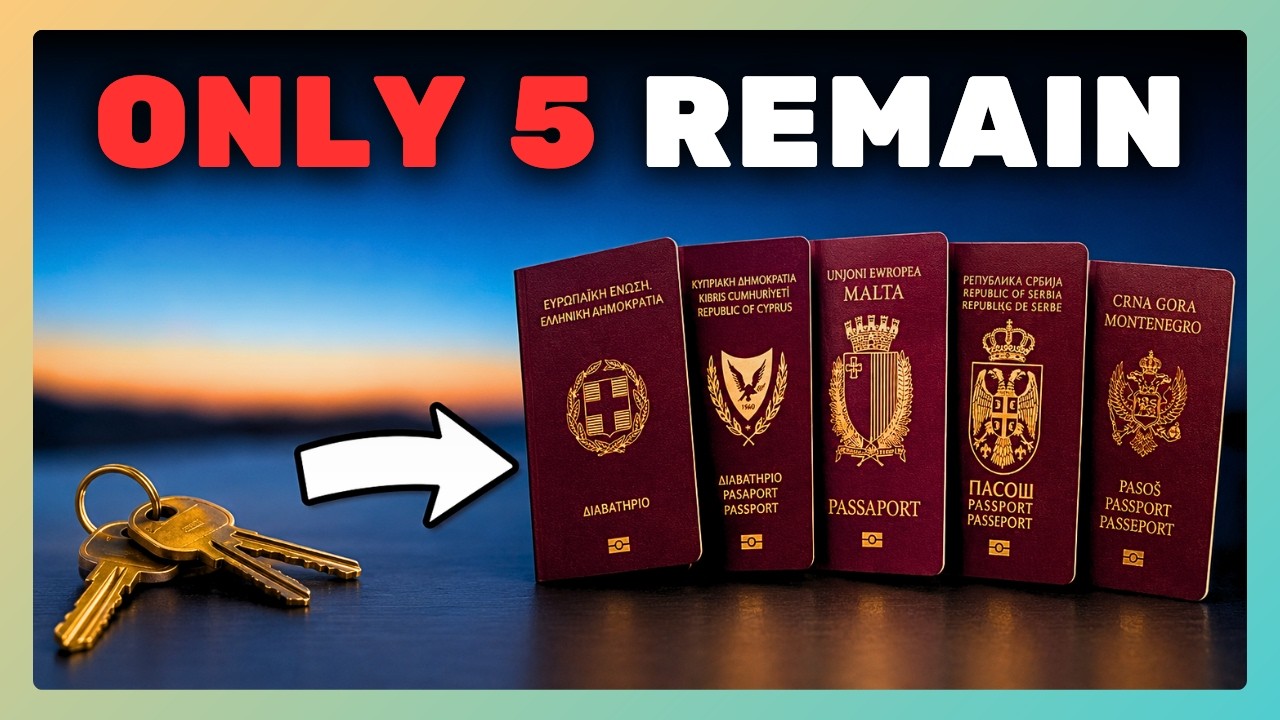
Investors ask us often how to invest in tangible assets in Europe and get residency or even citizenship, and with Portugal's property route closed since 2023 and Spain's program gone entirely, only a few real estate-based European golden visas remain. This breakdown covers all 5: Cyprus permanent residency at €300,000, Serbia's no-minimum property permit, Montenegro's €150,000 EU-accession play, the Greece Golden Visa from €250,000, and Malta's permanent residence program from a €14,000-a-year lease, plus the non-dom and flat-tax benefits that come with relocating to the region.
 25 min
High-quality-of-life Greece offers 3 residency routes in 2026, a Golden Visa from €250,000 with zero days of required presence, the FIP visa for retirees on €3,500 a month of passive income, and a Digital Nomad Visa, and all three lead to EU citizenship at year 7. This breakdown covers what makes Greece unique, how to qualify for each residency, which fits your goals, and the 3 special tax regimes, the €100,000 non-dom lump sum, the 50% employment exemption, and the 7% flat tax on foreign pensions for 15 years, that may make your relocation even more viable.
Two paths in. If the Digital Nomad Visa is clearly the right program for your family, start with the Blueprint and qualified applicants receive a Freedom Consult invitation inside the report. If you’re weighing this against other programs, the Blueprint routes you to the right conversation faster.
The consult is free for qualified applicants while we onboard our first cohort.
Most people spend 100+ hours researching residency and citizenship options before they realize they were looking at the wrong programs. We compress that into 10 questions, 90 seconds, and a single report.
“You come across as very genuine, authentic, and easy to deal with. Most experiences I've had with others are like, 'Send me money and I'll tell you what to do.'”