Freedom FilesFreedom Files
← All destinations
AfricaResidencyCitizenship

Egypt

Two parallel routes at one of the lowest thresholds in the world: residency from $50K, or full citizenship via donation, property, or a refundable bank deposit. A bridge between the Mediterranean and the Red Sea.

Population
110 million
Language
Arabic (English in business)
Currency
Egyptian Pound (EGP)
Time zone
EET (UTC+2, no DST)
Capital
Cairo
GDP per capita
~US$4K
  1. A refundable route into a sovereign citizenship

    Egypt's CBI program is unusual in one important respect: the $500K bank-deposit route is refundable after three years. You commit capital, you receive citizenship, and you can repatriate the principal once the holding period ends. No other major citizenship-by-investment program offers a refundable structure at this price point.

  2. Two parallel routes for two different goals

    If you want low-cost regional residency for travel, business operations, or family optionality, the residency route opens at $50K. If you want a full second passport, the citizenship routes start at a $250K donation. The two programs share the same legal framework and the same administrative infrastructure.

  3. Strategic positioning between continents

    Egypt sits at the corner of Africa, Asia, and Europe. The Suez Canal handles roughly 12% of global trade. For families building a Plan-B presence with exposure to the Middle East, North Africa, and the eastern Mediterranean, no other jurisdiction offers this geographic leverage at this price.

  4. A cost of living that rewards the dollar

    Cairo, Alexandria, and the Red Sea coast run 70-80% below US coastal-city benchmarks. A premium apartment in Zamalek or New Cairo runs $800 to $1,500 a month. Cost-conscious families with USD earnings find their lifestyle floor lifts substantially.

  5. Strong American and Western expat communities

    Zamalek, Maadi, and New Cairo each host substantial Western expat communities going back decades, with international schools, English-speaking healthcare, and bilingual legal services already well established. Most engagements arrive into existing infrastructure rather than building it.

  6. Cultural and historical depth few countries match

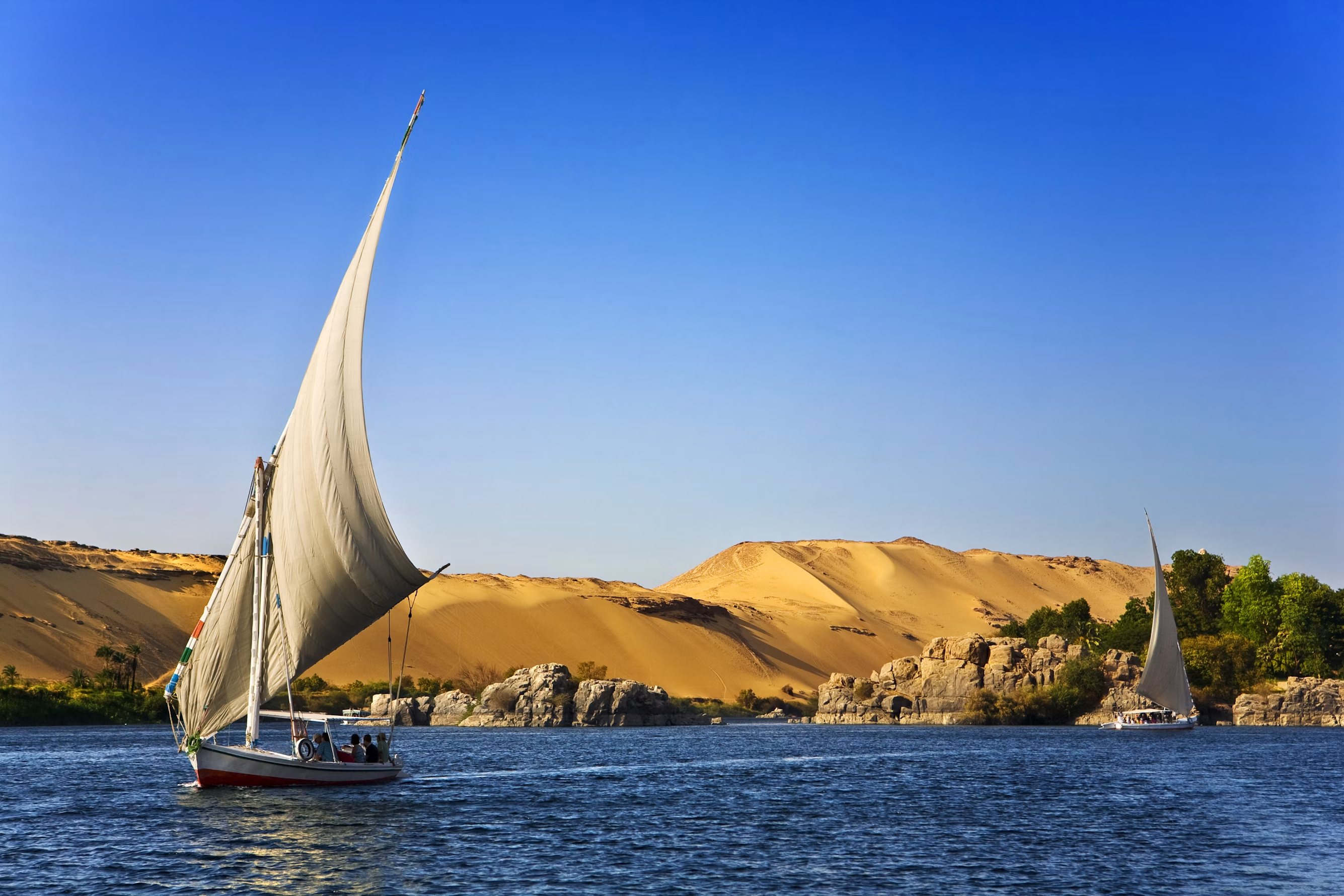
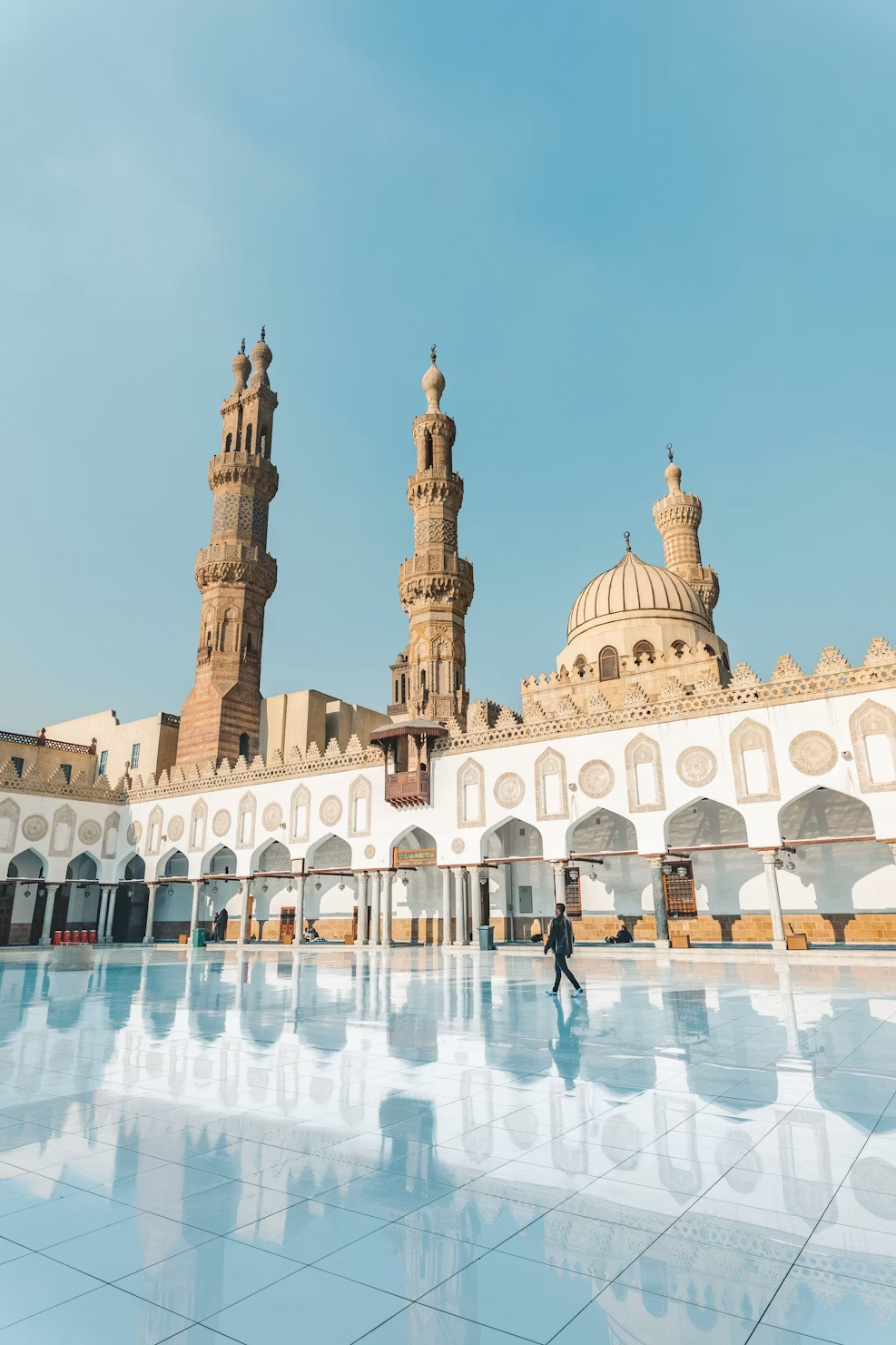
    5,000 years of continuous civilisation, world-class museums, the Nile, the pyramids, the Red Sea reefs, and a food culture few visitors expect. The lived experience routinely exceeds the imagined one for clients on their first visit.

Programs

Two routes into Egypt

Each route below is a live client engagement we have advised. Figures and timelines reflect the current state of each program; we update them whenever policy moves.

  • Citizenship by Investment

    Citizenship

    Three parallel paths to the same Egyptian passport. The $250K donation route is the cleanest and fastest; the $300K property route requires a five-year holding period; the $500K bank deposit route is refundable after three years. All three deliver the same citizenship status.

    Financial requirement
    $250K donation, $300K property, or $500K refundable deposit
    Timeline
    6 to 9 months
  • Residency by Investment

    Residency

    Renewable residency via $50K in qualifying Egyptian property or a $50K bank deposit, with a five-year permit on the property route and three-year on the deposit route. Does not convert into Egyptian citizenship; the parallel CBI route above is the only passport path.

    Financial requirement
    $50K in property or bank deposit
    Timeline
    3 to 6 months
  • Egypt editorial photograph

Several routes, several ideal profiles. Which is right for you? The Freedom Consult is where we figure out your ideal path forward – and whether Egypt is even the right country.

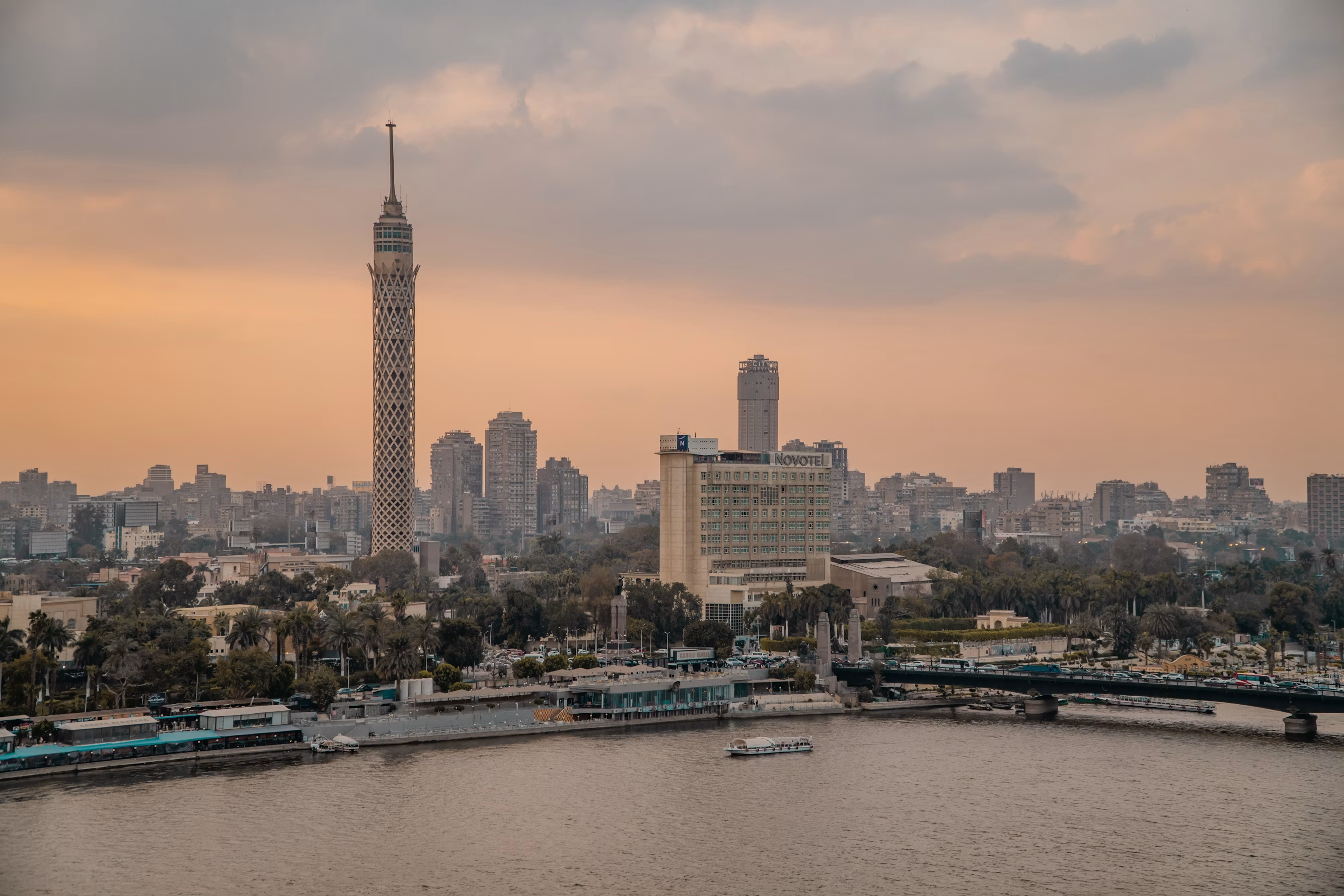
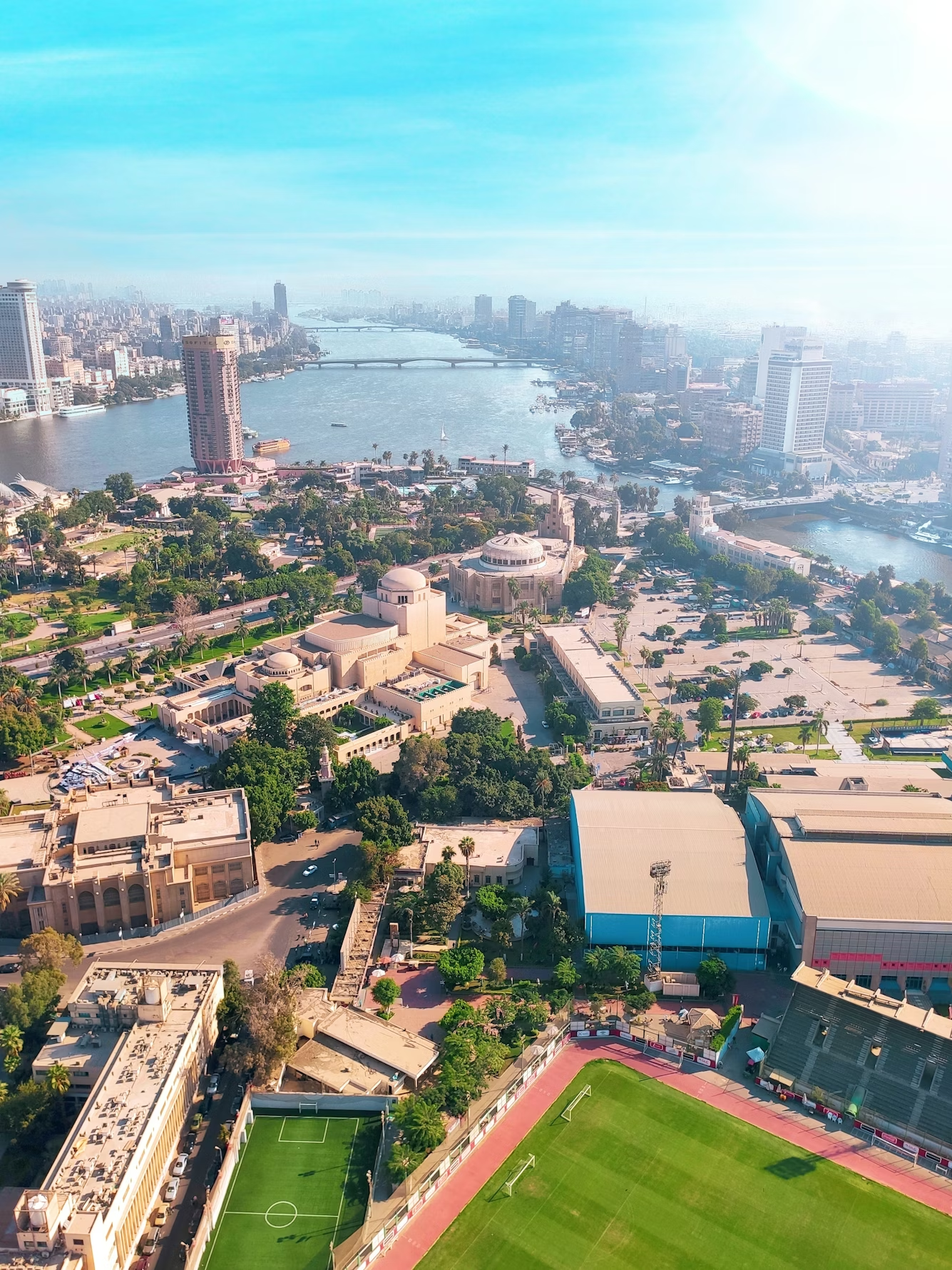
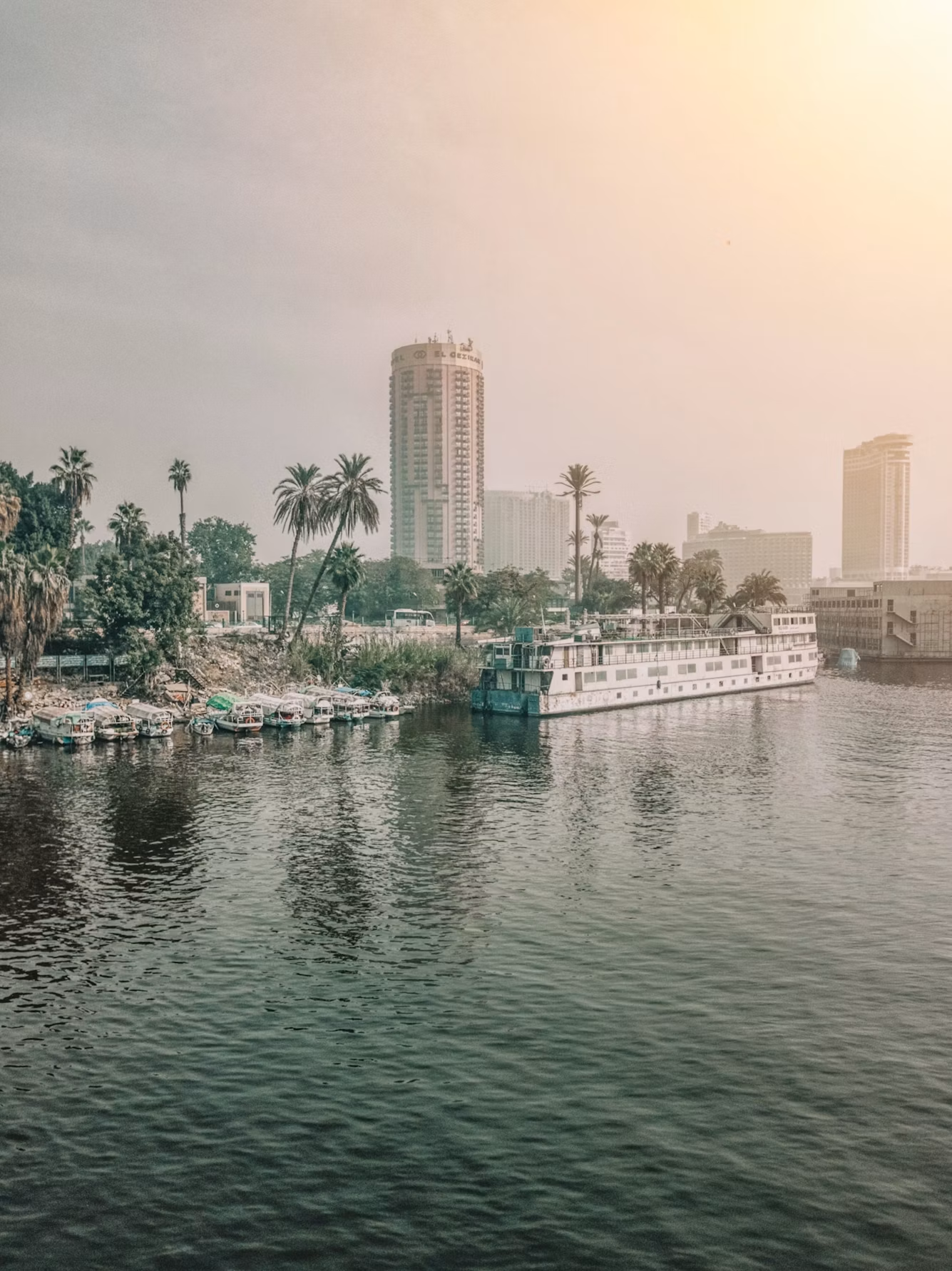
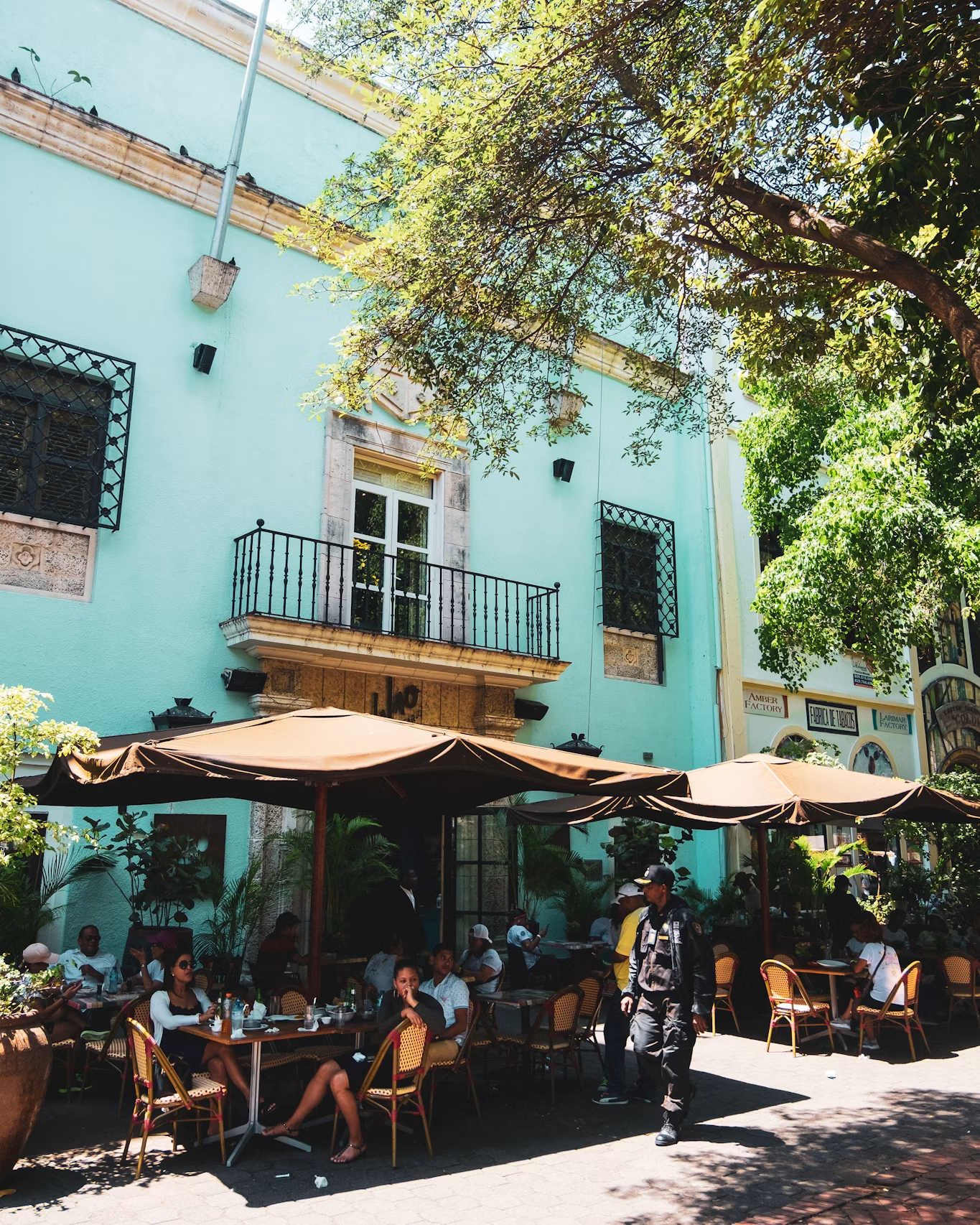
A taste of Egypt

Egypt editorial photograph 1
Egypt editorial photograph 2
Egypt editorial photograph 3
Egypt editorial photograph 4Egypt editorial photograph 5

How does the refundable bank-deposit route actually work?

Under the $500K bank-deposit citizenship route, the applicant deposits the qualifying amount with an approved Egyptian bank, the deposit is locked for three years, and during that period the citizenship is granted. After three years, the principal is repatriable. This is a genuine refund, not a fee waiver. The opportunity cost is the interest-rate spread between Egyptian and US deposit rates during the holding period; we model the trade-off during the consult.

How strong is the Egyptian passport?

The Egyptian passport currently grants visa-free or visa-on-arrival access to roughly 50 destinations. It is materially weaker on raw mobility than European or Caribbean-CBI passports. The strategic value of Egyptian citizenship is the geographic optionality (Africa, Middle East, eastern Mediterranean) and the refundable-deposit structure, not standalone visa-free travel. The passport sits alongside your US passport.

What is the difference between the residency and citizenship routes?

The residency route ($50K) provides renewable legal residency, the right to live and work in Egypt, and the right to bring dependents. It does not provide a passport. The citizenship routes ($250K to $500K depending on the structure) deliver full Egyptian citizenship with a passport. Most families looking for travel flexibility choose citizenship; those looking for low-cost regional residency choose the smaller program.

Do I have to live in Egypt to maintain the residency or citizenship?

No. The citizenship is granted for life with no ongoing physical-presence requirement. The residency route requires you to visit Egypt periodically to maintain status, but no minimum-day-count rule applies in practice for most clients. Most engagements use the structure for optionality rather than relocation.

Do I have to learn Arabic?

There is no Arabic-language requirement for either the residency or citizenship route. The application process, government interviews, and legal documentation can all be conducted in English with translation support. We pair every engagement with a bilingual Egyptian counsel who handles the language interface.

What about the political environment?

Egypt has a stable, centralized government and runs the CBI program as a meaningful contributor to the national budget. Programs of this scale at this price point are politically supported across the spectrum. We track every public consultation and brief active engagements within hours of material policy moves. We do not place engagements into jurisdictions whose stability we cannot underwrite.

Will I have to give up my US citizenship?

No. The United States and Egypt both permit dual citizenship. You hold both passports indefinitely.

How life compares

Eight factors, against the US baseline

The dimensions that decide whether a place is workable once the visa lands.

English

Strong in business and expat zones

Cairo's Zamalek, Maadi, and New Cairo districts run in English at most professional and service contexts. International schools and major hospitals operate bilingually. Outside those zones, Arabic becomes essential.

Cost of living

Dramatically lower than US

Egypt runs 70-80% below US coastal-city benchmarks. A premium expat-zone life for a couple costs $1,800 to $3,500 a month including housing, household help, and private healthcare.

Taxes

Territorial system

Egypt taxes only Egyptian-source income for individuals. Foreign-source earnings are generally not taxed by Egypt. The Egyptian side is light. US worldwide-income filing continues regardless.

Quality of life

Underrated, urban-focused

Cairo is one of the world's great megacities with the energy that implies. Alexandria delivers a more Mediterranean rhythm. The Red Sea coast offers world-class diving and resort lifestyle. Pick your geography.

Safety

Expat zones are secure

Zamalek, Maadi, New Cairo, and Western Alexandria are statistically safer than many US small cities. Egypt invests heavily in tourism and expat security. Border areas and certain Sinai regions require care; we steer engagements toward the major urban hubs.

Travel connectivity

Major regional hub

Cairo is one of the busiest air hubs in Africa and the Middle East, with daily direct service to most European capitals, the Gulf, and the major US cities (via New York and DC). Strong intra-African and intra-Middle East connectivity.

Infrastructure

Modernising rapidly

New Cairo and the New Administrative Capital deliver modern utilities, internet, and transit. Older Cairo districts have functional infrastructure with occasional friction. Tourism zones operate at international standard.

Healthcare

Strong private system in cities

Major private hospitals in Cairo and Alexandria are high quality and inexpensive by US standards. Comprehensive private insurance runs $100 to $300 per month per adult. Most expats add international evacuation coverage for the most complex procedures.

The Egypt briefing

The facts, programs, and comparison

A four-page PDF covering everything on this page plus the comparison framework we use internally. Delivered to your inbox, and the next briefing every week.

No spam ever! Unsubscribe in one click.

Get your custom Plan B Blueprint

Most people spend 100+ hours researching residency and citizenship options before they realize they were looking at the wrong programs. We compress that into 10 questions, 90 seconds, and a single report.