

 United States
In this article
If you plan to give up your US citizenship, or you already have, flying back for a wedding, a family reunion, or a business meeting just got harder. Since June, Americans who renounced and now travel on a second citizenship have been refused the quick online approval they used to get, and told to apply for a full visa.
We think this is deliberate, and we expect Washington to put it in writing. Renouncing US citizenship in 2026 now comes with a travel price that used to be a footnote.
Two Ways into the US
Before we get to what changed, it helps to know how a former American gets back into the US in the first place. The whole story turns on which route you take.
The first route is visa-free access. Citizens of 42 countries can enter the US for tourism or business trips of up to 90 days without a visa, under the Visa Waiver Program. That program is the permission itself: It waives the visa requirement for your citizenship.
The Electronic System for Travel Authorization (ESTA) is how you use that permission. It's an online pre-travel check managed by US Customs and Border Protection (CBP), the agency that guards the border. You fill out the form, it usually comes back approved within minutes, and the approval covers trips for up to 2 years.
Put another way, visa-free access is what your citizenship gives you, and ESTA is the gate you pass through to use it. Without an approved ESTA, a Visa Waiver Program citizen can't board a flight to the US.
The second route is a B-1/B-2 visa, the regular US tourist and business visa that everyone outside the program needs. You apply at a US embassy or consulate, attend an in-person interview, and wait for a decision. In many cities, the interview alone takes months to book.
That difference is the heart of this story. When a former American gets refused ESTA, a 10-minute form turns into a consular process that can stretch for months.
Expect a Written Rule Next
The easy reading is a glitch in a government database. But in late October, CBP told the American Immigration Lawyers Association that anyone who once held US citizenship "may not be eligible" for ESTA. CBP also told the association the change was intentional.
So we think this is policy, published or not. No public notice, criteria, or appeal path has appeared, but the legal hook is old. Since 1996, the Reed Amendment has let the US bar any former citizen it finds gave up citizenship to dodge tax.
For 30 years that check happened at a consulate window, once in a while, with a human across the counter. Today a database applies it to every ESTA application.
Then there's the mood around citizenship in Washington. In our view, the government has grown stricter about citizenship in general, and people who give it up get less benefit of the doubt.

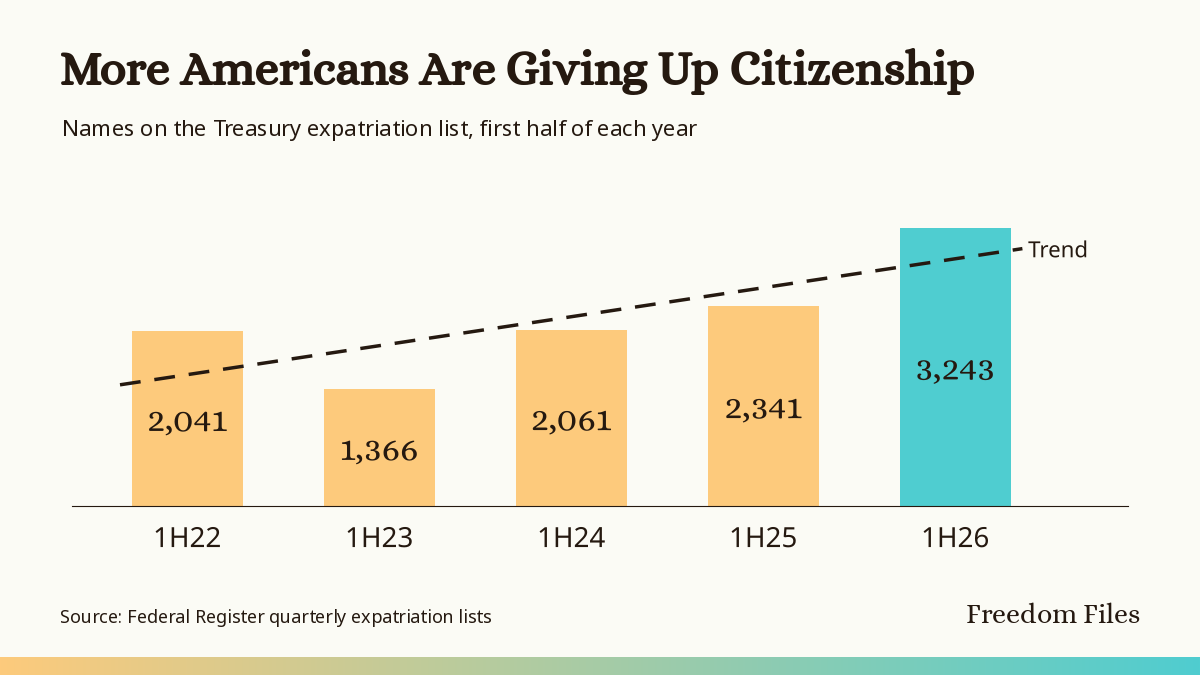
Meanwhile, more Americans are heading for the exit. The Treasury's expatriation list named 3,243 people in the first half of 2026, up 38.5% on a year earlier and the most for any first half since 2020 (Federal Register). In April, the State Department also cut the cost to renounce by about four-fifths.
Picture someone who renounced last year, travels on a European citizenship, and owns a condo in Florida. Her old trip took a 10-minute form. Her next one takes a consular interview and months on a waitlist.
You could argue a former citizen chose to leave and should queue like any other foreigner. But her fellow citizens who were never American get ESTA in minutes, so she now faces a slower path than her own neighbors.
Your US Ties Set Your Risk
If your second citizenship is Canadian, this change may not affect you, because Canadians need neither ESTA nor a visa for short trips to the United States. If you're Colombian or Mexican, you needed a visa all along.
The people hit hardest renounced, travel on a citizenship from one of the 42 Visa Waiver Program countries, and have family, property, banking, or a company in the US. A parent's surgery or a house closing now waits on a consulate calendar.

A denied ESTA leaves you the B-1/B-2 visa route, so plan for it from day one. Apply for ESTA before you book anything non-refundable, and if it comes back denied, go directly to the visa application.
Bring your Certificate of Loss of Nationality (CLN), the State Department document that proves you renounced, on every trip. CBP could publish criteria or reverse course at any time, but neither has happened yet.
If you plan to renounce, or you already have and fly to the US often, contact us for licensed support before you book anything. This article is general commentary and contains no legal or tax advice.
Your Second Citizenship Sets the Route
We sorted ex-Americans by the citizenship they travel on, because that now sets the route back.
| Second citizenship | Latest move | Our read |
|---|---|---|
| Canada | No ESTA or visa needed for short trips (details) | Least exposed |
| Any of the 42 Visa Waiver Program countries | ESTA refusals for ex-Americans since June 2026 (details) | Plan on a B-1/B-2 visa |
| Colombia, Mexico, and Brazil | Visa required all along (details) | No change |
| Renunciation pending, no CLN yet | Status unclear in the database (details) | Worst spot to be in |
Our View: Diversify Before You Renounce
We think most Americans who renounce give up more than they gain. A US passport comes with the deepest capital markets, the best universities, and top private healthcare, and the tax bill shrinks a lot once you use the planning tools the law already allows.
Renouncing also makes the choice for your children, who may want to study, work, or settle in the US one day. As more people leave, Washington has every reason to make the trip back harder, and the ESTA denials show it's willing.
So add citizenships and residencies first, and plant flags in a second and third country while the programs are open. Treat renunciation as a last step, taken only once the rest of your plan is in place and your family's needs are clear.
FAQ
Can Former US Citizens Get an ESTA in 2026?
Many cannot. Ex-Americans with a Visa Waiver Program citizenship report automated denials since June 2026, and CBP has confirmed they may be ineligible. Plan for a B-1/B-2 visa.
Can I Travel to the US after Renouncing My Citizenship?
Yes. You enter like any foreign national, which now often means a visa interview. A finding that you renounced to avoid US tax can bar you under the Reed Amendment.
What Is the Difference between ESTA and a B-1/B-2 Visa?
ESTA is an online approval for Visa Waiver Program citizens, usually granted in minutes. A B-1/B-2 visa needs an embassy or consulate interview and can take months.
Is My Old ESTA Valid After I Renounce?
CBP has not said. We treat an approval issued before renunciation as unreliable and apply again before booking any non-refundable travel.
What Is the Reed Amendment?
It's a 1996 section of the Immigration and Nationality Act, 212(a)(10)(E), that bars former citizens found to have renounced to avoid US tax. We think automated screening now puts every ex-citizen in front of it.