
Freedom FilesFreedom Files
🇵🇷 Puerto Rico

Puerto Rico Act 60

A 0% capital gains and 4% business income regime on qualifying Puerto-Rico-sourced earnings, available to American citizens who establish bona fide PR residency. Same US passport, same federal residency, materially different tax math.

Financial req
$10K/yr + $300K property
Processing
Within first PR tax year
Naturalization
Not applicable (US territory)
Presence required
183+ days / year
Download the briefing

The basics of the Act 60

What it is

Act 60 is a Puerto Rican law that consolidates two principal tax decrees for new bona fide PR residents: an individual-investor decree exempting qualifying Puerto-Rico-sourced capital gains, dividends, and interest from both PR and US federal tax, and an export-services decree taxing qualifying business income from PR-based operations serving non-PR clients at a flat 4% rate. You apply for the decree during your first PR tax year, establish bona fide residency under the IRS three-part test (183 days of presence, closer-connection, tax-home), purchase a $300K+ residential property within two years, and make a $10K annual donation to a qualifying Puerto Rican charity. This is a US-territory tax structure, not an immigration or citizenship program.

Who it’s for

  • US citizens with substantial investment portfolios accruing material capital gains
  • Service-business operators (consulting, software, asset management) with relocatable operations
  • Clients ready to commit to bona fide PR residency (183+ days, closer-connection, tax-home)
  • Buyers prepared to purchase a $300K+ Puerto Rican residence within two years
  • Clients who want to retain US citizenship and US passport while restructuring tax exposure

Why it’s beneficial

Act 60 is the most aggressive legal US tax structure currently available to US citizens. 0% on qualifying PR-sourced capital gains, dividends, and interest under the individual-investor decree; 4% on qualifying export-services business income with 0% on dividends to bona fide residents. No passport change, no immigration filing, no naturalization clock — you stay a US citizen with a US passport. The entire program is a tax structure, executed within US territory. The trade-offs are real: bona fide residency requirements are strict, IRS audit scrutiny is active, and the facts pattern has to actually support the structure.

Key benefits

The outcomes the Act 60 actually delivers, beyond the headline numbers. The six that matter most to our clients.

  1. 0% on qualifying capital gains

    Act 60's individual-investor decree exempts Puerto-Rico-sourced capital gains accrued after you become a bona fide PR resident from both Puerto Rican and US federal capital gains tax. Dividends and interest from PR-sourced investments are similarly exempt.

  2. 4% on qualifying export-services business income

    Act 60's export-services decree taxes qualifying business income from PR-based operations serving non-PR clients at a flat 4% Puerto Rican corporate rate, with a 100% exemption from local dividends tax on distributions to bona fide residents.

  3. No passport change, no visa

    Puerto Rico is US territory. American citizens move to PR the same way they move from Texas to Florida. No immigration filing, no visa process, no language test, no naturalization clock. You stay a US citizen with a US passport.

  4. Short flight from the US East Coast

    San Juan's Luis Muñoz Marín International runs daily direct service to most major US cities. Two and a half hours from Miami, four from New York, four and a half from DC. Maintaining mainland US business and family relationships stays simple.

  5. Established Act-60 community

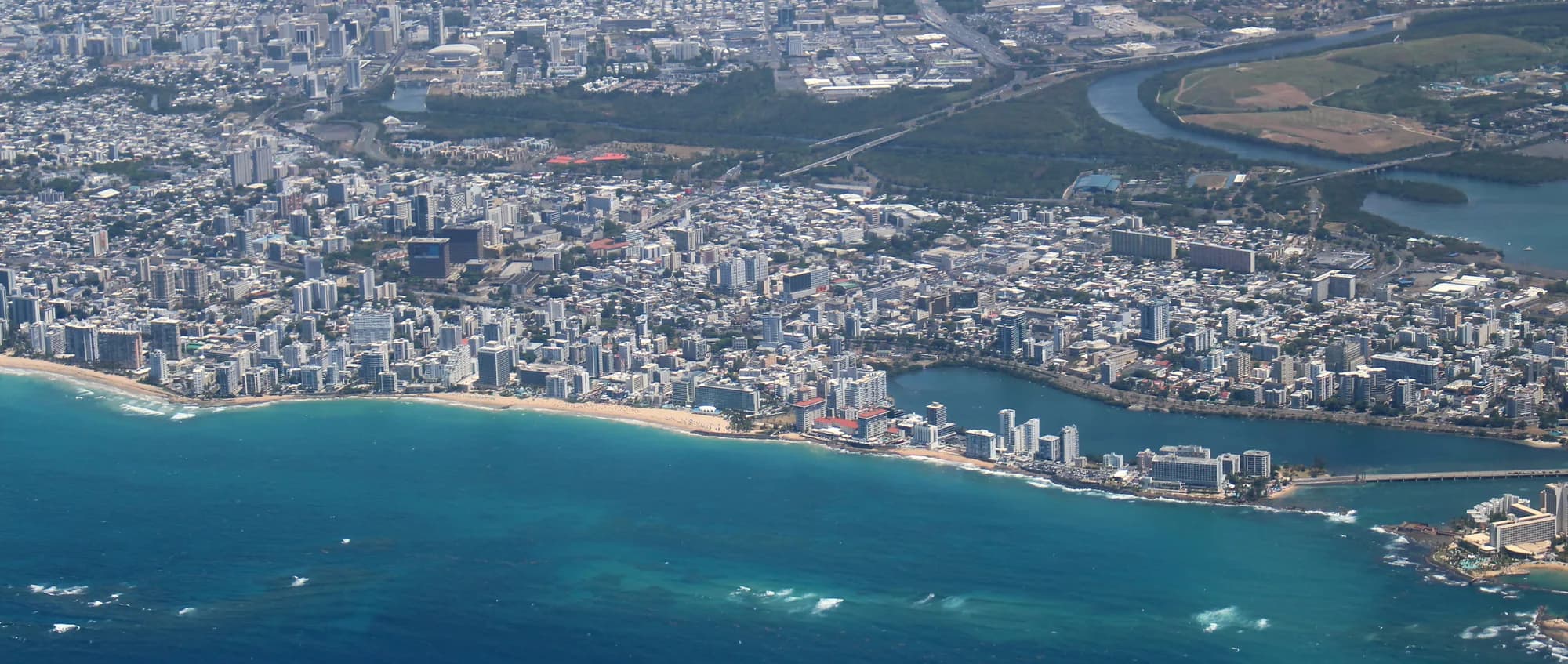
    The Act-60 community in Dorado, Condado, and the eastern gated communities has grown materially since 2012. The professional-services infrastructure — tax counsel, structuring attorneys, accountants, real estate brokers familiar with the property requirement — is well-established.

  6. English-language administration

    English and Spanish are both official. San Juan's Act-60 districts (Condado, Old San Juan, Dorado) run primarily in English at most professional, banking, and service contexts. No language barrier at the decree application level.

Financial requirements

The financial threshold to qualify, with the documentation we walk every client through.

Most popular

Individual Investor Decree

0% capital gains

Act 60's individual-investor decree exempts qualifying Puerto-Rico-sourced capital gains, dividends, and interest from both PR and US federal tax for bona fide PR residents. Only gains accrued after you become a bona fide resident on qualifying assets sourced to PR qualify; gains accrued on pre-move assets are partially taxed at federal rates based on a time-of-holding allocation. The cleanest fit for clients with substantial investment portfolios who can plan acquisition or sale around the residency transition.

Export Services Decree

4% business income

Act 60's export-services decree taxes qualifying business income from PR-based operations serving non-PR clients at a flat 4% rate, with a 0% rate on dividends paid to bona fide PR-resident shareholders. Designed for service businesses (consulting, software, asset management, professional services) that can credibly relocate substantive operations to the island. Both decrees can be elected simultaneously by clients with both investment and business-income profiles.

Choosing the right route is half the work. We model the comparison against your portfolio in the Consult.

How the process works

  1. Contact us

    Reach out and tell us about your situation. From there, you'll either book a 60-minute Freedom Consult (if you're weighing options across countries) or get started on this route directly (if you already know it's the right fit).

  2. Engagement and facts review

    We coordinate with US-licensed tax counsel to walk through your facts pattern: residence, business operations, asset holding periods, sources of qualifying income, and the IRS three-part test exposure. We do not place engagements where the facts cannot support the structure.

  3. Bona fide PR residency establishment

    Relocate to Puerto Rico and establish bona fide residency under the IRS three-part test: 183 days of PR presence per year, closer-connection (social and economic center of life in PR), and tax-home (principal place of business in PR). Most Act-60 audits center on closer-connection facts.

  4. Decree application filing

    File the appropriate decree application (individual-investor, export-services, or both) with the Puerto Rican Department of Economic Development and Commerce during your first PR tax year. Application includes the engagement plan, source-of-funds documentation, and the bona fide residency commitments.

  5. Property purchase within two years

    Acquire a $300K+ residential property in Puerto Rico within two years of decree issuance and use it as your primary residence. The property purchase is a condition of maintaining the decree.

  6. Annual $10K charitable donation

    Make a $10K annual donation to a qualifying Puerto Rican charity each year the decree is active. Both the property purchase and the donation are conditions to maintaining the decree; failure to comply triggers decree termination and potential clawback.

  7. Maintain compliance through 2035

    Continue to meet the IRS three-part test each tax year and file the annual decree compliance reports. The 2019 consolidation extended decrees through 2035. We coordinate with US-licensed counsel on ongoing IRS audit posture.

Decree application

Property purchase

Bona fide residency

Decree active

Year 1

Within 2 years

Ongoing

Through 2035

Act 60 versus the alternatives

How this program stacks against the closest credible options for the same visitor. We don’t earn more if you choose one over another.

DimensionPuerto Rico Act 60Antigua & Barbuda CBILearn moreDominican Republic InvestorLearn more
Path typeUS-territory tax structureDirect sovereign CBIResidency → citizenship
US citizenship statusUnchanged (US citizen)Add second passportAdd second passport (Year 2+)
Tax structure0% capital gains, 4% businessTax-neutral (no income tax)Territorial system
Presence required183+ days / year5 days / 5 years183+ days / year (2 years)
Property requirement$300K within 2 years$300K project (5 yr hold) optional$200K property (optional route)
Ongoing fees$10K/yr charitable + decree feesNone after issuanceRenewal at year three
Audit exposureActive IRS scrutiny since 2021Minimal post-issuanceMinimal post-issuance

Act 60 is a US-domestic tax structure, not a passport program. Caribbean CBI programs deliver a second sovereign passport but don't address US-federal tax exposure. The DR Investor Visa is a relocation-based residency that earns Caribbean citizenship after two years of presence. The right answer depends on whether tax restructuring or passport optionality is the actual goal. We don't earn more if you pick one over another.

Want a four-page Puerto Rico PDF covering everything on this page plus the comparison framework we use internally?

No spam ever! Unsubscribe in one click.

Why clients work with us

Three reasons families pick Freedom Files over the do-it-yourself path or a single-jurisdiction agent.

First-hand experience

We work with US-licensed counsel who has handled Act-60 audits directly. We know which facts patterns survive IRS scrutiny and which don't, from active engagements rather than from secondary sources.

Honest recommendations

About a third of Act-60 inquiries end with our recommendation against engagement. We do not place engagements where the facts pattern cannot support the structure under audit.

Pro counsel from the start

Every engagement runs with US-licensed tax counsel and Puerto Rican counsel together from the first call. The IRS three-part test and the asset-level source attribution are mapped before the decree is filed.

What does bona fide Puerto Rican residency mean?

Bona fide PR residency is a three-part test under the Internal Revenue Code: (1) the 183-day presence test, requiring you to spend at least 183 days in PR per tax year; (2) the closer-connection test, requiring your social and economic center of life to be in PR rather than the mainland; and (3) the tax-home test, requiring your principal place of business to be in PR. Failing any one of the three voids the regime for that year and triggers US federal taxation on the prior year's PR-sourced gains. Most Act-60 audits center on closer-connection facts.

What about IRS scrutiny?

Act 60 has been a focus of IRS audit programs since 2021, with the IRS and DOJ collectively investigating prior filers for substantive bona fide residency failures and aggressive PR-source attribution. The regime itself is legal and operating; what gets audited is the facts pattern. We do not place engagements where the facts cannot support the structure, and we work with US-licensed counsel who has handled Act-60 audits directly.

Does the 0% rate apply to all my capital gains?

Only gains accrued after you become a bona fide PR resident on qualifying assets sourced to PR. Gains accrued on assets held before you moved are partially taxed at federal rates based on a time-of-holding allocation. Gains on US-sourced investments (US stocks held in US accounts, US real estate, etc.) remain US federal taxable. The structure works best for clients who can plan acquisition or sale of qualifying positions around the residency transition. We map the asset-level analysis during the Consult.

Can I keep my mainland US business?

Yes, but the income from a mainland US business remains taxed at federal rates regardless of your PR residency. To get the 4% export-services rate, you need to actually relocate substantive business operations to PR and serve non-PR clients from a PR-based entity. The structure is designed for service businesses with relocatable operations, not for shifting income from an unchanged mainland operation.

What are the property and donation requirements?

Within two years of acquiring your decree, you must purchase a $300K (or greater) residential property in Puerto Rico and use it as your primary residence. You must make a $10K annual donation to a qualifying Puerto Rican charity each year the decree is active. Both are conditions to maintaining the decree; failure to comply triggers decree termination and potential clawback.

Is Act 60 sustainable politically?

Act 60 has been politically debated within Puerto Rico (whose tax base it reduces) and in Washington (which views it as an aggressive structure). The 2019 consolidation extended decrees to 2035. Future legislative changes are possible but typically include grandfathering for existing decree-holders. We track every public consultation and brief active clients on material movement.

Will I have to give up my US citizenship?

No. Act 60 is a US-territory tax structure for US citizens. You remain a US citizen with a US passport, file US federal returns annually, and retain all rights and obligations of US citizenship. The structure changes what is taxed federally on certain qualifying PR-sourced income; it doesn't change your nationality.

Ready to talk?

Two paths in. If the Act 60 is clearly the right program for your family and you’re ready to engage, contact our team directly. If you’re weighing this against other programs and want an honest read on the right move, the Freedom Consult is the sixty-minute conversation that ends the loop.

Contact our team →

We take a small number of new families each quarter.

Get your custom Plan B Blueprint

Most people spend 100+ hours researching residency and citizenship options before they realize they were looking at the wrong programs. We compress that into 10 questions, 90 seconds, and a single report.